
Key learnings
Victor’s experience highlights that pasture improvement is a gradual process built through consistent management.
Key learnings include:
- strong control of grass competition is critical for legume establishment
- seed-to-soil contact and adequate sowing rates are essential
- timing operations with rainfall improves success
- maintaining appropriate stocking rates supports pasture recovery, and
- weed pressure is higher initially but declines as pasture improves,
“It’s a long-term game… you can’t expect miracles in a year or two.”
Background
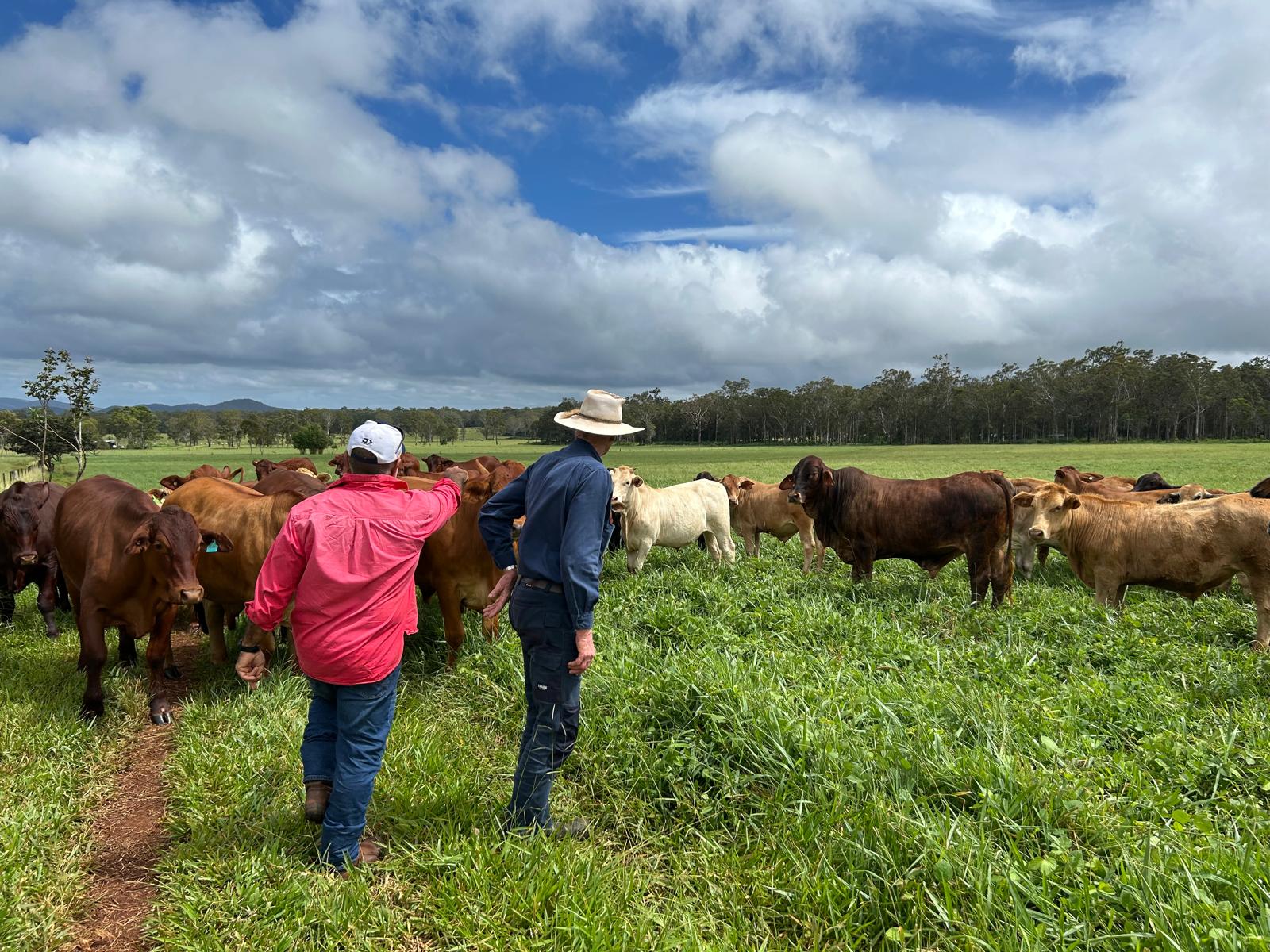
Victor Maccrone runs a small grass-fed steer finishing enterprise on 90 acres at Wondecla on the Atherton Tablelands. He buys cattle at around 200 kg and finishes them on pasture over approximately 18 months, turning them off at around 580–600 kg liveweight, depending on season and conditions.
Stock numbers fluctuate with the season due to feed availability and market prices. He typically destocks in April ahead of winter, reducing numbers from around 50 head to closer to 30 head to match declining pasture yield through the dry season.
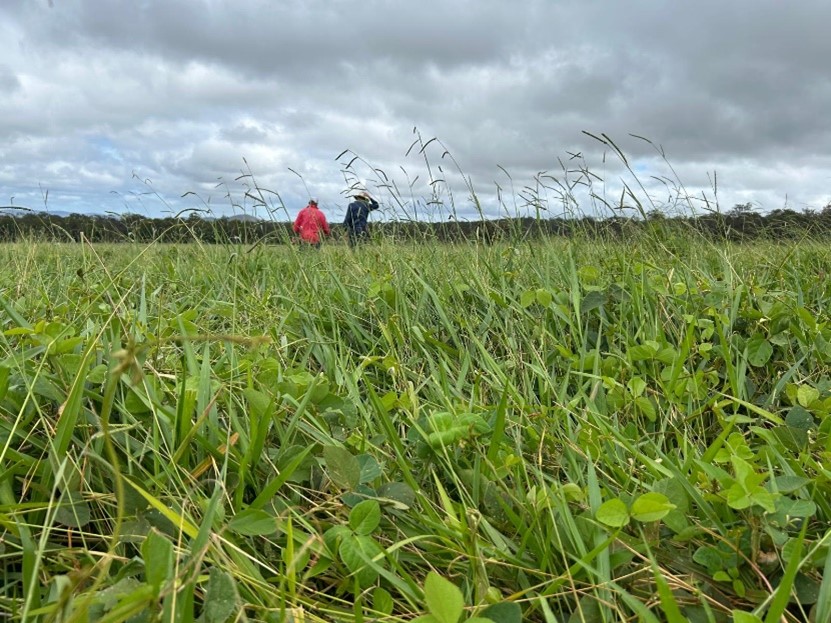
Victor has been on the property for over 14 years. When he first arrived, the pasture condition was poor. The property was dominated by brachiaria, a well-adapted and productive grass, but there were only scattered legumes which limited overall productivity.
The property has several natural advantages for pasture production, including high rainfall and fertile basalt soils. At around 980 m elevation, it also experiences regular frosts, particularly across lower parts of the property which limits pasture growth and shortens the effective growing season.
“We do get frosts and particularly (at) my place… most of my place gets frosted every year.”
With no background in cattle, Victor sought advice early from DPI Principal Extension Officer Bernie English to improve pasture productivity. Initial recommendations focused on fully renovating the poorest paddocks. In his first year, Victor fully cultivated approximately 40 acres, nearly half the property, and established a pasture mix including setaria and legumes such as stylo, glycine and desmodium.
While the initial renovation improved pasture condition, it also highlighted some limitations. The pasture took time to re-establish, meaning that paddocks were out of production for extended periods, and it brought up a lot of weeds
“It took a long time… you had to leave the cattle out of there a long time.”
Victor said this experience shaped how he now approaches pasture improvement.
“I’ve learnt a lot since then.”
Practice change
Over time, Victor’s pasture improvement has centred on three connected practices:
- rotational grazing
- legume establishment into existing pasture
- soil fertility management based on soil testing.
Rather than relying on full pasture renovation each time, Victor gradually developed a lower cost, more flexible method for introducing legumes into existing grass paddocks using his own equipment. This allowed him to avoid contractor delays, improve timing around rainfall, and make steady improvements across the farm.
“I wanted to be self-reliant, and timing wise, get it done exactly on time.”
Rotational grazing
Victor manages the property as five paddocks and rotates cattle on a fixed weekly schedule. Cattle move every Sunday, regardless of season, and have become very accustomed to the routine.
This time-based rotation allows Victor to plan ahead and also gives him the flexibility to take one paddock out of the rotation each wet season for pasture improvement or spelling. In years when legume content is already strong, he may simply wet season spell a paddock rather than reseed it.
Legume establishment into existing pasture
After his initial full cultivation experience, Victor wanted a pasture improvement approach that was cheaper, easier to time, and could be done with equipment he already owned.
He also wanted to make use of the existing brachiaria base, which he found was very persistent and quick to recover after disturbance.
“It’s pretty hard to kill it, so might as well use it if you can”
Victor developed a method based on knocking pasture competition down first, then disturbing the soil surface enough to create seed to soil contact without fully cultivating the paddock.
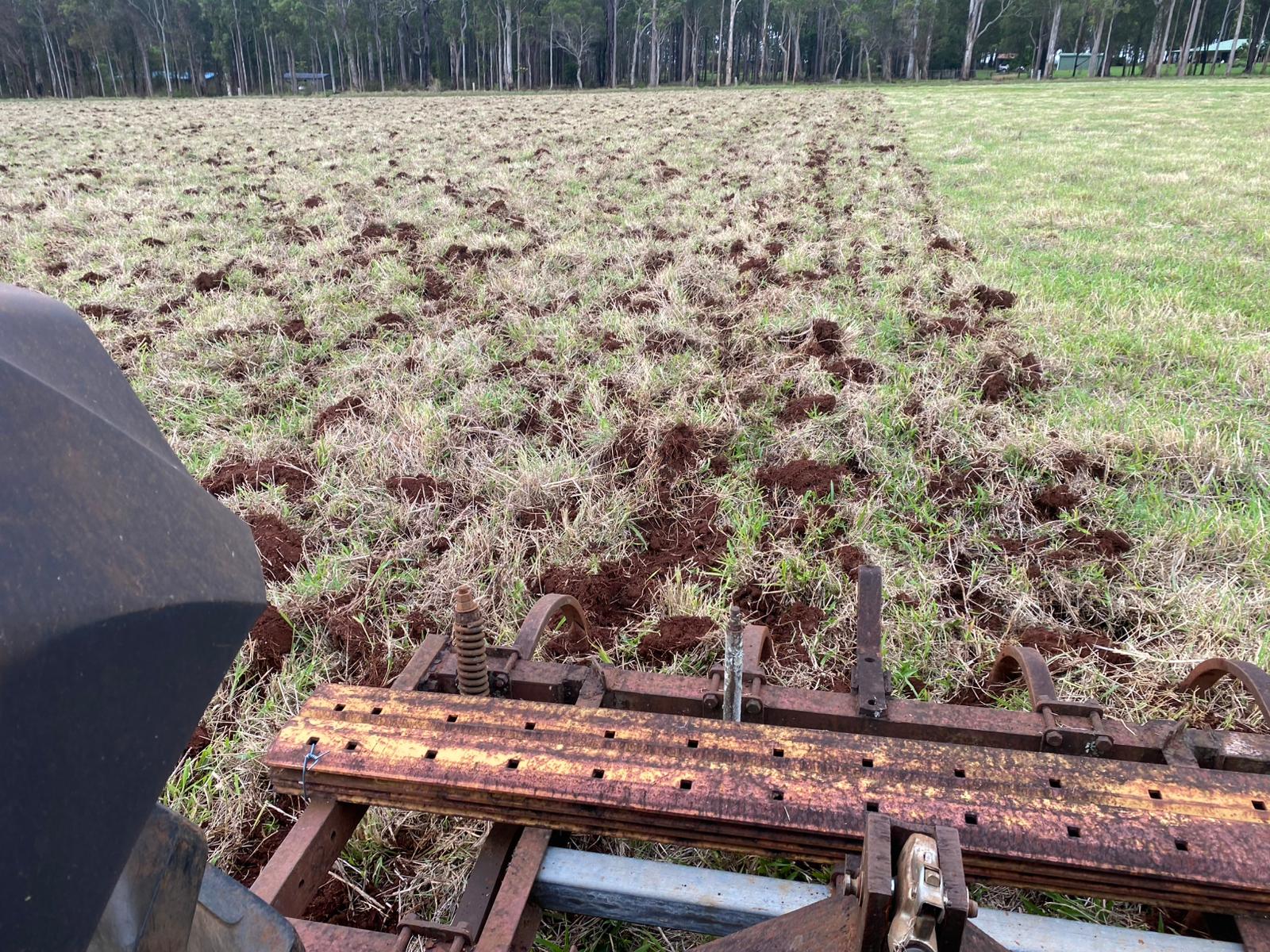
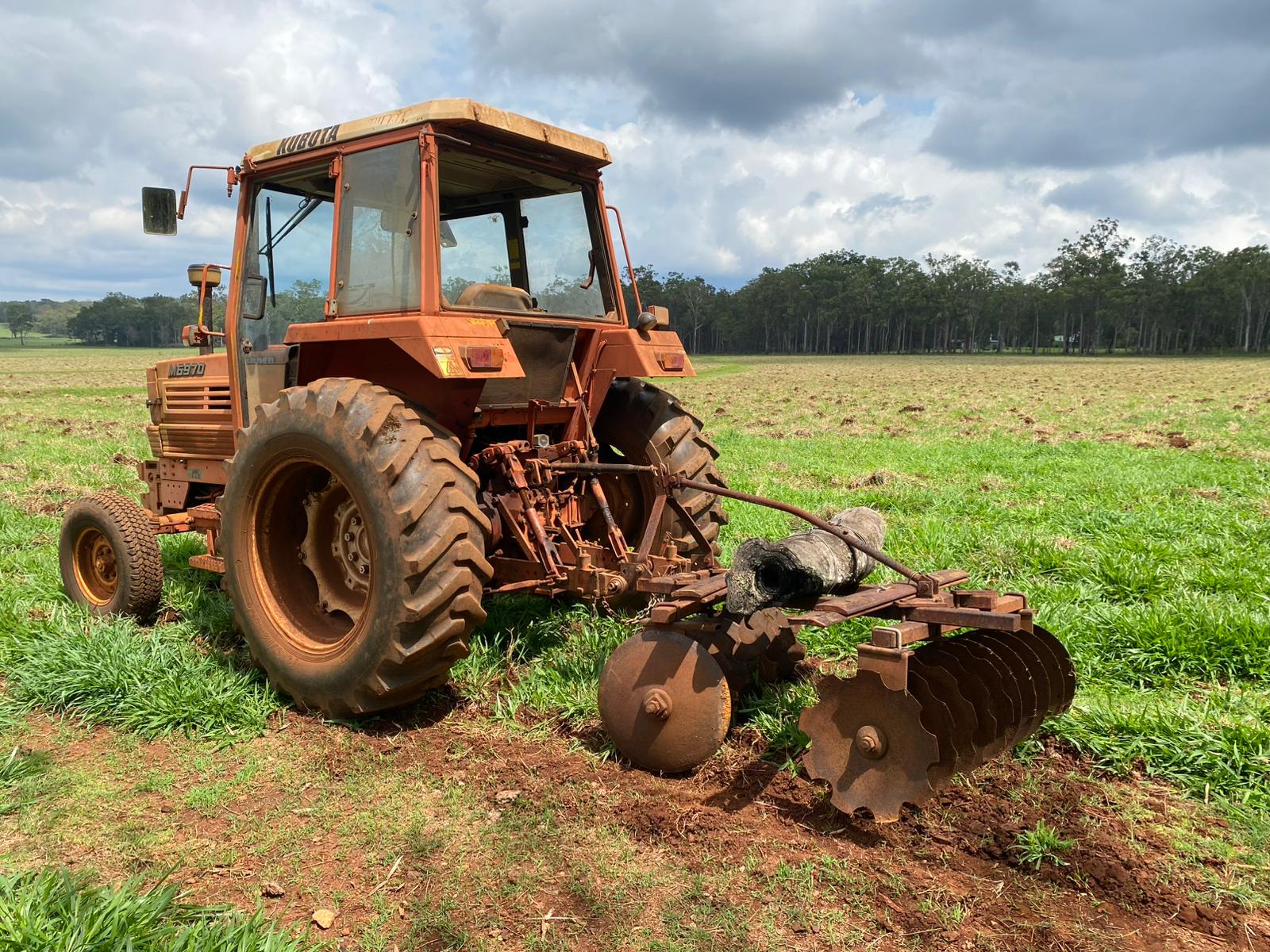
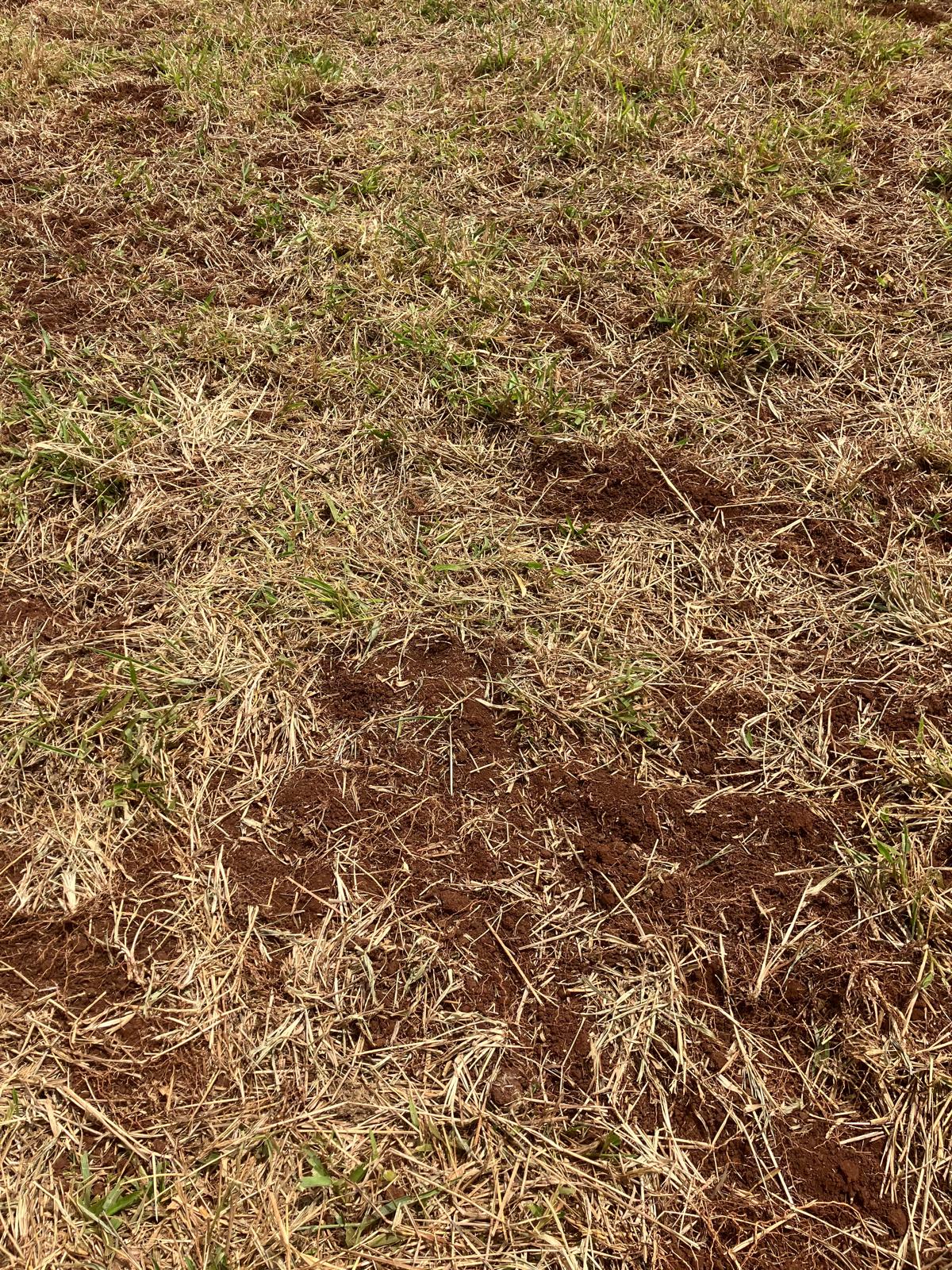
The process begins with a paddock being grazed hard, then slashed heavily. After receiving a couple of inches of rain, Victor chisel ploughs the paddock aggressively enough to break up the dense brachiaria mat and bring some soil to the surface. In more recent years, he has then used a light offset disc to break up clods before sowing.
“What I’m trying to do is get a bit of soil onto the surface so the seed has something to stick into.”
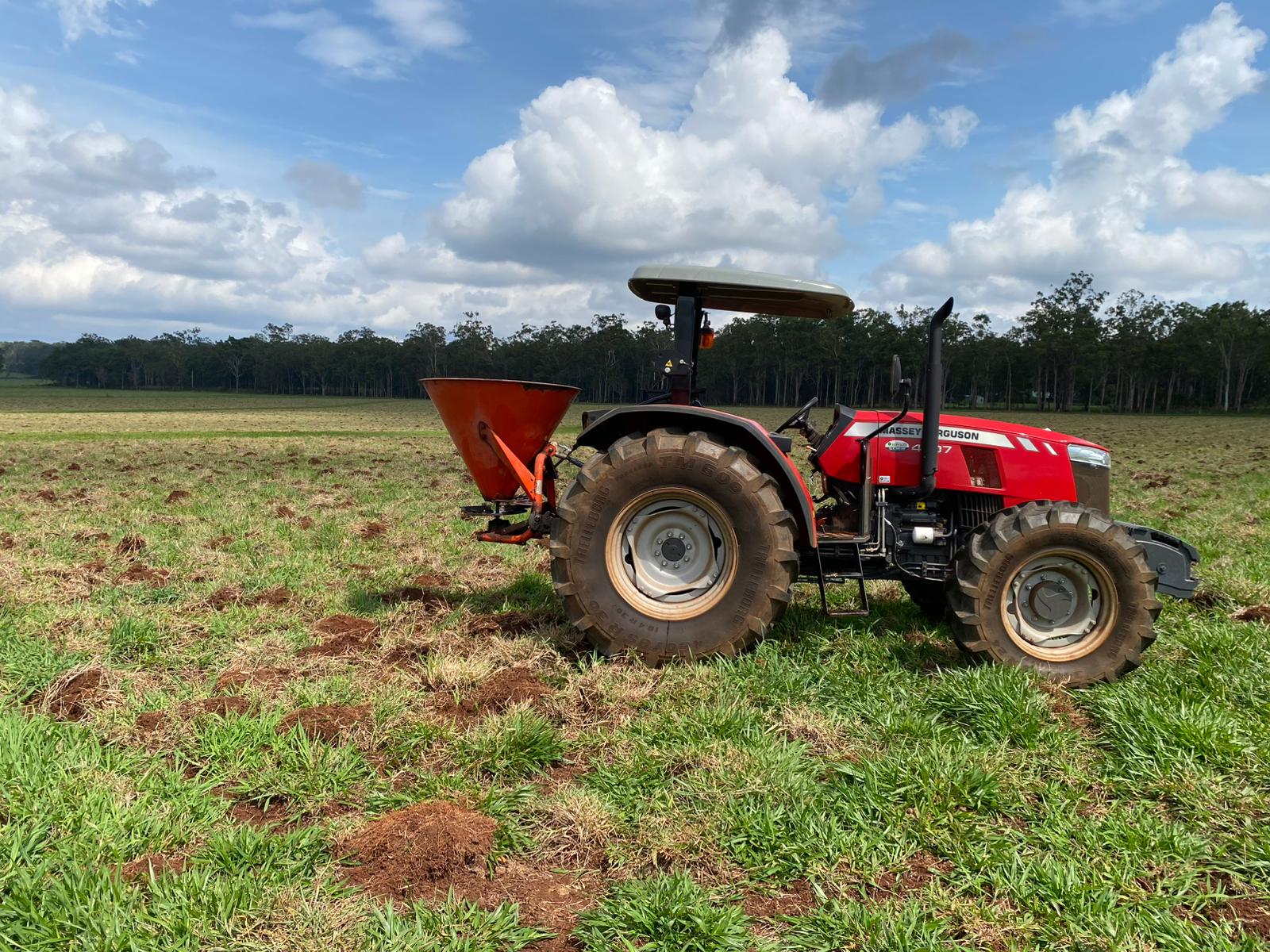
He generally uses uncoated legume seed, inoculates it with the appropriate bacterial strain for nitrogen fixation, and spreads it with a small fertiliser spinner. Where possible, the paddock is then rolled to improve seed to soil contact.
Victor believes sowing rate is important and deliberately avoids underdoing seed rates.
“Don’t skimp on it. If you can afford it, put more .”
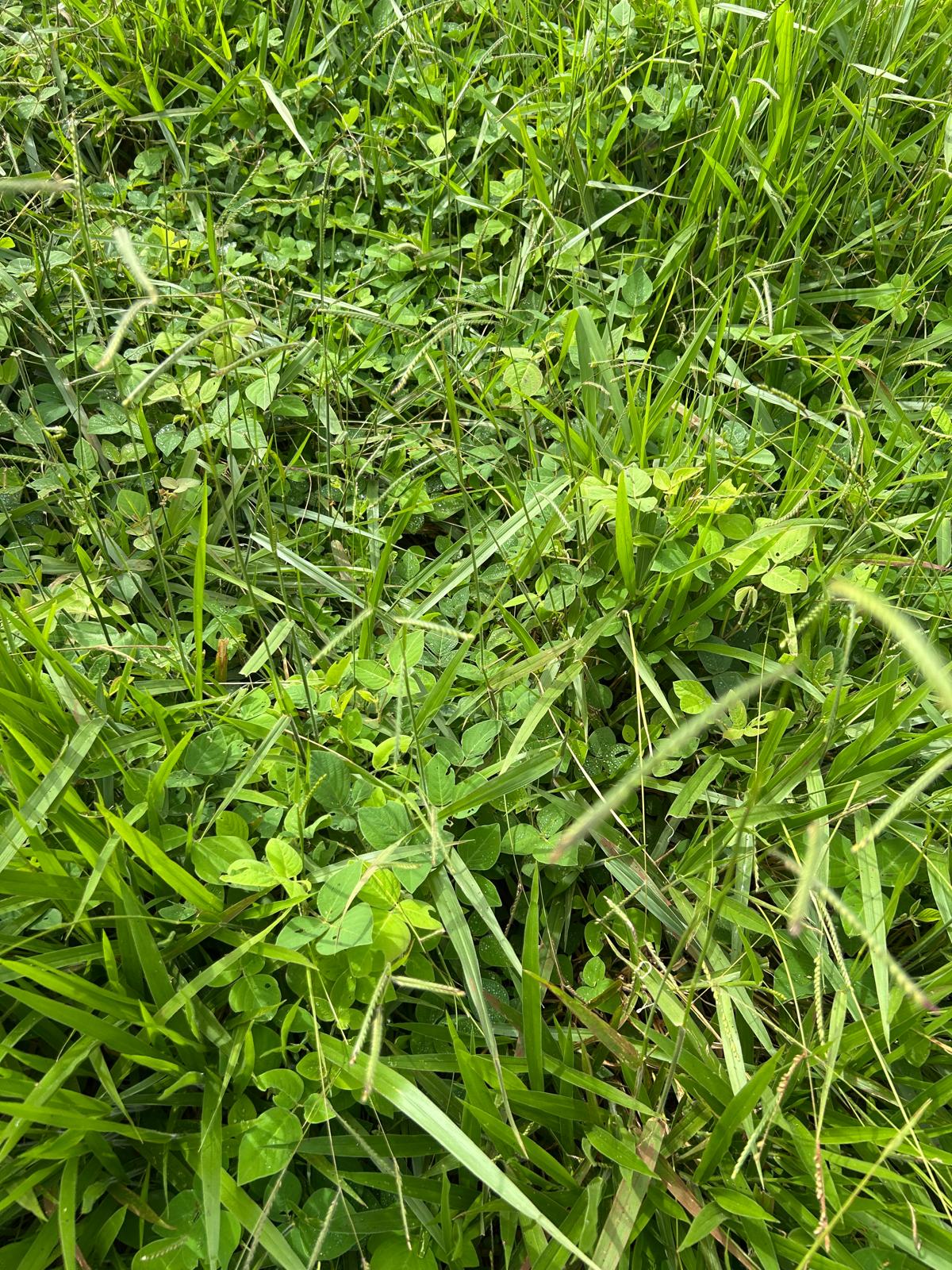
Species selection has also become more targeted over time. Earlier mixes included grasses and a wider range of legumes, but Victor found that the regular frosts limited persistence of some species. He found creeping and deep rooted legumes such as glycine and desmodium have performed well under his conditions and have shown strong recovery after frost.
“Because of the frost every year, I’ve found that the desmodium and glycines, that type of creeping deep rooted legume, seem to come back the best.”
Early competition control
A major part of Victor’s system is reducing grass competition during early legume establishment. He said many failed attempts occur because grass is not knocked back hard enough, and legumes are quickly shaded out.
During establishment, Victor either slashes or uses grazing to suppress grass growth and to allow light into the developing legume seedlings. In setaria paddocks, he found “topping” the pasture helped not only with fertiliser spreading, but also with opening up the canopy and giving legumes a better chance.
“It just gives that legume a chance to get the sun during that period of time.”
He generally allows about three to four months of rest before reintroducing cattle; depending on seasonal conditions. When cattle do go back in, he monitors paddock conditions closely and removes them quickly if the paddock is too wet or vulnerable to damage.
Soil fertility
Soil testing has been an important part of Victor’s management from the start. Early soil tests confirmed that the property had strong inherent fertility, with phosphorus being one of the main nutrient limitations.
“I did some soil tests as well. That was another important thing to do.”
Victor now fertilises according to soil test results and has mainly uses combinations of Di-Ammonium Phosphate (DAP) and coated urea blends. He prefers to apply fertiliser later in the wet season, around March, rather than right at the break of the season. In his experience, early fertiliser application can create an excessive flush of grass growth when combined with the first storms and natural nitrogen release from the soil.
Applying fertiliser later helps maintain growth into the dry season and better matches his production system. He also noted that coated products reduce the risk associated with uncertain follow-up rainfall.
Weed management
Victor’s more aggressive establishment method can bring up weeds, particularly in the first year after disturbance. He said this is one of the main reasons many producers avoid disturbing the soil surface.
“You do get weeds, so don’t be frightened of that.”
On his property, rattlepod has been a major issue, reflecting the paddocks’ previous history of corn and peanut cultivation. He has also dealt with woody weeds such as sida, along with patches of sensitive weed.
Victor’s approach has been to combine pasture competition, slashing, targeted spot spraying and consistent manual removal over time. He believes the best long-term weed control has come from improving pasture vigour and avoiding overgrazing, rather than relying only on herbicides.
“I’m finding my best weed solution is looking after my pasture and outcompeting weeds.”
Outcomes
Victor said carcass weights have improved over time, although he noted that seasonal conditions have also played a role. In recent years, he has been turning off cattle at heavier weights than when he first started, with carcass weights moving from just over 300 kg to around 330 to 340 kg.
He believes better pastures, stronger legume content and improved pasture management have all contributed to those gains.
Victor has also built a system that suits the scale of his operation. By using his own equipment and working around rainfall, he has been able to improve pastures progressively without relying heavily on contractors or taking large areas out of production for long periods.
Written by Shannon Byrnes from Mareeba DPI, as part of the Queensland Pasture Resilience Program which is a partnership between the Department of Primary Industries, Meat & Livestock Australia and the Australian Government through the MLA Donor Company.