
When was the last time you stopped to really look at your pastures? In the hustle of fixing fences, branding calves, weaning, and preg testing, it’s easy to let pasture management slip down the priority list, especially after such a good season in the North-West. But in May, a group of producers and advisors took a moment to do just that, gathering for a Stepping Stones Forage Budgeting Workshop at Barnsdale in the McKinlay Shire.
The ‘Stepping Stones’ workshops are founded on insights gained from 28 years of research at the Wambiana Grazing Trial, south of Charters Towers. These workshops focus on two key grazing land management strategies: forage budgeting and wet season spelling. Feedback from producers and extension staff has shaped the workshops to assist graziers in identifying practical steps to incorporate these strategies into their operations.
Barnsdale, managed by Clifton and Rebecca Brewer and owned by Tom and Tamara Scholes, provided the perfect backdrop for this neighbour day. The property has been implementing the ‘Grazing Naturally System’ under the guidance of Dick Richardson, offering a unique opportunity to showcase their approach to forage budgeting and spelling. You can read more about Barnsdale’s journey here.
The workshop brought together 13 producers, station hands, and public advisors from the McKinlay district to explore multiple methods of forage budgeting which filled the day with practical demonstrations and discussions.
Wambiana Grazing Trial learnings
After settling in with a cuppa in hand, Peter O’Reagain set the scene, presenting on the key learnings of the Wambiana Grazing Trial over the last 28 years. Megan Munchenberg, a seasoned expert in assessing pasture and land condition across the North, joined the workshop as a producer mentor. She said, “The excellent presentation by Peter O’Reagain really highlighted how valuable this long-term work has been for the northern beef industry, especially in showing the real link between stocking rates, pasture condition and long-term business performance. It was a good reminder that sustainable grazing management isn’t just about looking after country, it also lays a major role in maintaining productivity and resilience through highly variable seasonal conditions.”
Learning from experience:
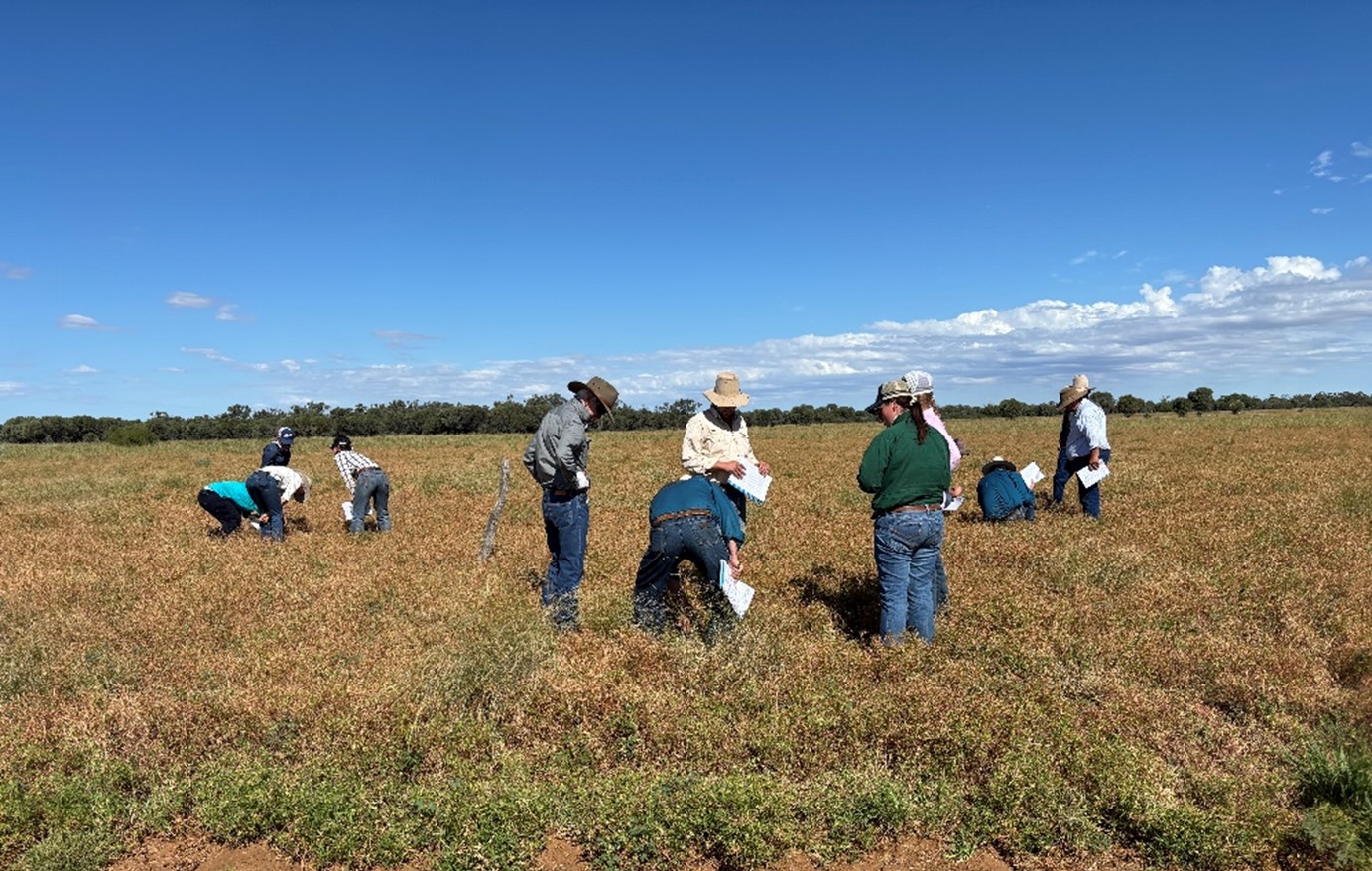
Clifton and Rebecca Brewer shared their expertise in the ‘Grazing Naturally System’ and their use of the STAC method for forage budgeting. This simple yet effective approach helps assess pasture availability.
STAC stands for Sole, Toe, Ankle, Calf, referring to pasture height relative to your boot. It’s a straightforward visual reference that avoids complex calculations. The Brewers demonstrated how they use the STAC method regularly, assessing pastures when moving cattle from paddock to paddock.
Keeping it simple
Megan emphasised the importance of simplicity, especially when time is limited. “If the tool is not easy to use, you are less likely to use it!” She said. She highlighted the use of photo standards and land type sheets as one of the easiest and most effective methods for forage budgeting.
Megan also encouraged participants to prepare in the office before heading into the paddock.
Pastures toolbox
Brad Hough, DPI Senior Pasture Scientist showed us our pastures from space, using tools such as The Long Paddock (FORAGE), QLD Globe, CliMate, the Australian Feedbase Monitor and Pasturekey. These tools provided valuable insights to producers around land condition trends, whole of property biomass and ground cover before going out to the paddock and getting their hands dirty.
Pasture identification and beyond
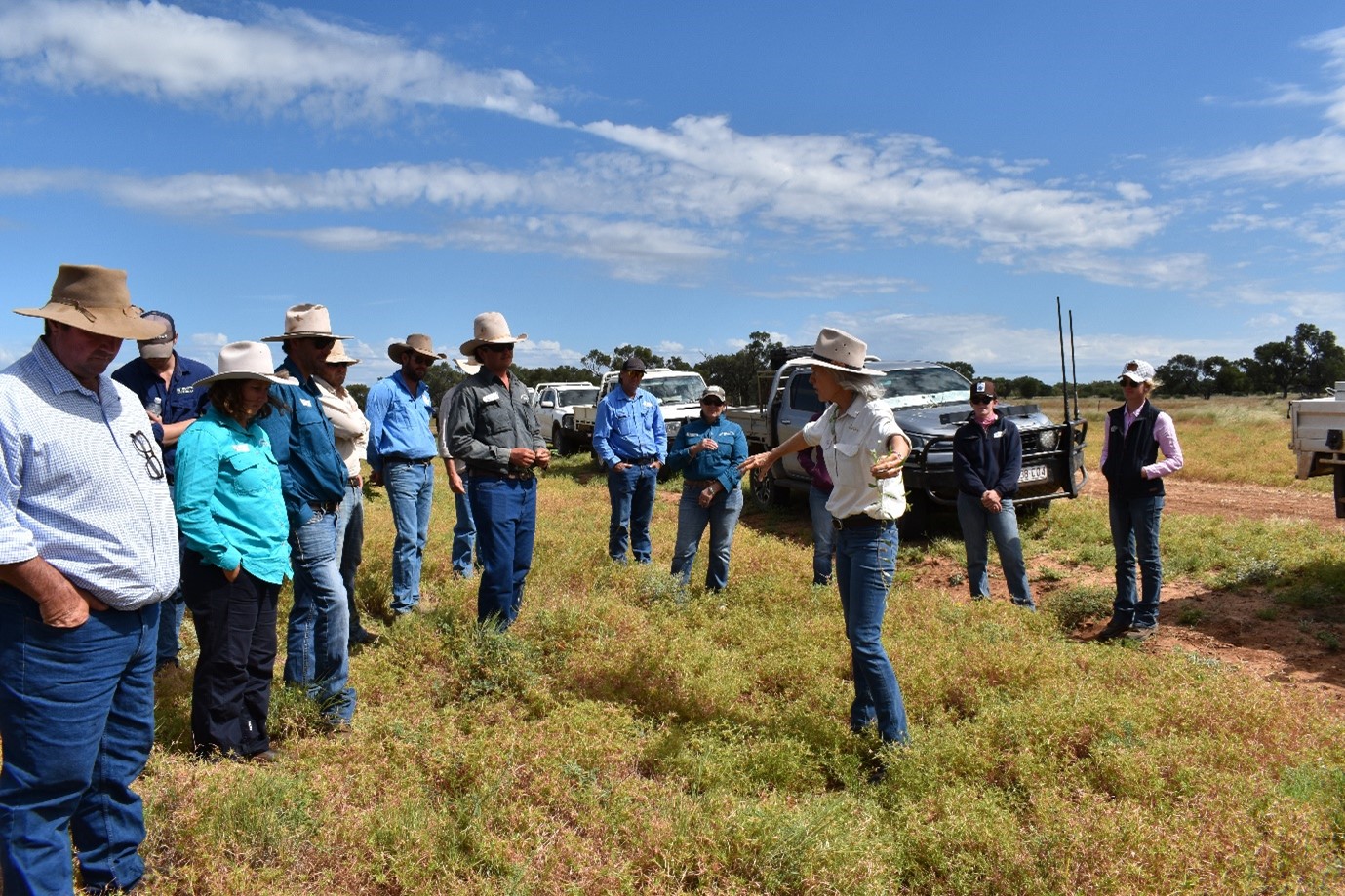
The cherry on top may have been Jenny Milson from Paddock Plants who led an engaging session on pasture identification. Participants learnt about 3P pastures (perennial, productive, and palatable) and the growth phases of plants, deepening their understanding of pasture management. Station hand Emily Dingle said, “I thoroughly enjoyed the workshop overall, but Jenny Milson’s session stood out to me the most. She provided a visual breakdown of the components of grass, from root to leaf, and explained in clear, simple terms why livestock favour certain types of grass over others.”
Success
The workshop was an overwhelming success, with participants praising the wealth of knowledge shared. Participant Kelsey Smith said, “one of her biggest highlights from the Stepping Stones day was seeing how small changes in grazing management can make a big difference overtime.”
Neighbour days like this one at Barnsdale remind us of the power of collaboration and shared learning. By bringing together producers, mentors, and advisors, the Stepping Stones Forage Budgeting Workshop provided practical tools and insights that will help businesses thrive. Whether it’s the STAC method, photo standards, or simply taking the time to assess your pastures, the message is clear, small steps can lead to big improvements.
Written by Greta Dunne from Cloncurry DPI, as part of the Queensland Pasture Resilience Program which is a partnership between the Department of Primary Industries, Meat & Livestock Australia and the Australian Government through the MLA Donor Company.
