
Paul Smith
 2026 is the International Year of Rangelands and Pastoralists, offering a unique opportunity to showcase our landscapes and people that shape the Central Australian rangelands. Covering around 75 per cent of the country, the Rangelands are synonymous with the outback, and this vast environment is deeply embedded in Australia’s culture and identity.
‘Pastoralist: a person who lives a pastoral life, especially one who rears or grazes livestock.’ – Oxford English Dictionary
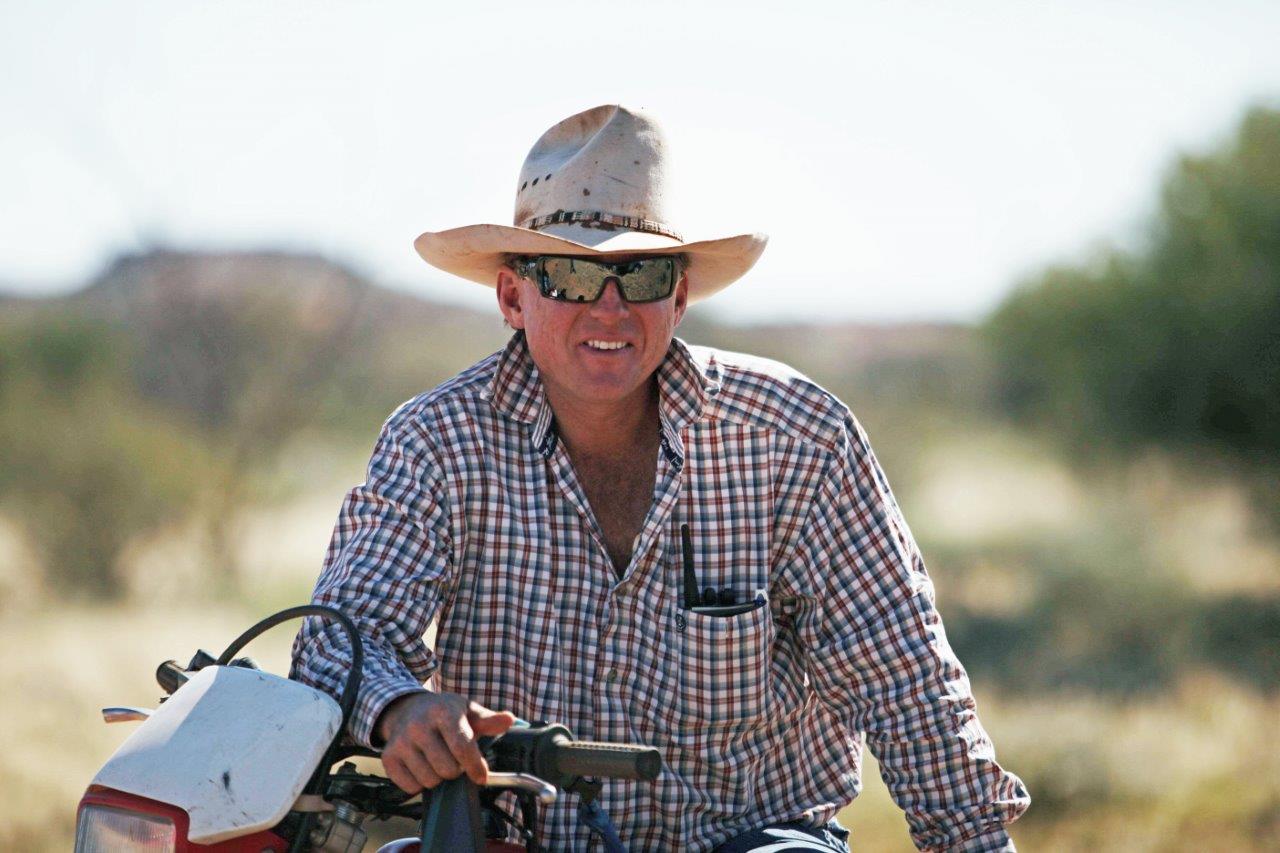
The first thing that stood out about Paul was his comforting demeanour. Worldly and unassuming, he carried a quiet authority. Dressed casually in a fishing shirt and thongs, and with a welcoming handshake, he put you at ease immediately – non-imposing; and clearly with an unmistakable depth and thoughtfulness to him.
The chance to visit Tieyon Station, managed by Paul and his wife Jo on the South Australia–Northern Territory border, was an opportunity to better understand what it means to be a pastoralist in this unique part of the world.
It’s not a role that lends itself to a simple definition, and it takes on many different forms – shaped by landscape, climate, and the people within it. Paul described the layers of Australia – from urban and peri-urban areas, through to cropping country, and then out into the remote regions. ‘And if you keep heading further out from there, you get to us.’
It is a different world, with its own unspoken culture. People dress a certain way, place a premium on footwear functionality, and, almost without exception, drive a Toyota. Small details but telling ones. Markers of a life shaped by practicality, distance, and environment.
At the centre of it all sits responsibility. ‘You value yourself on the health of your country and your herd,’ Paul said. ‘It affects you. And if you don’t like something, you make a change.’ It’s a simple line, but it carries weight. There’s no hiding out here. The country becomes a reflection of your changes, evolving with time and without apology.
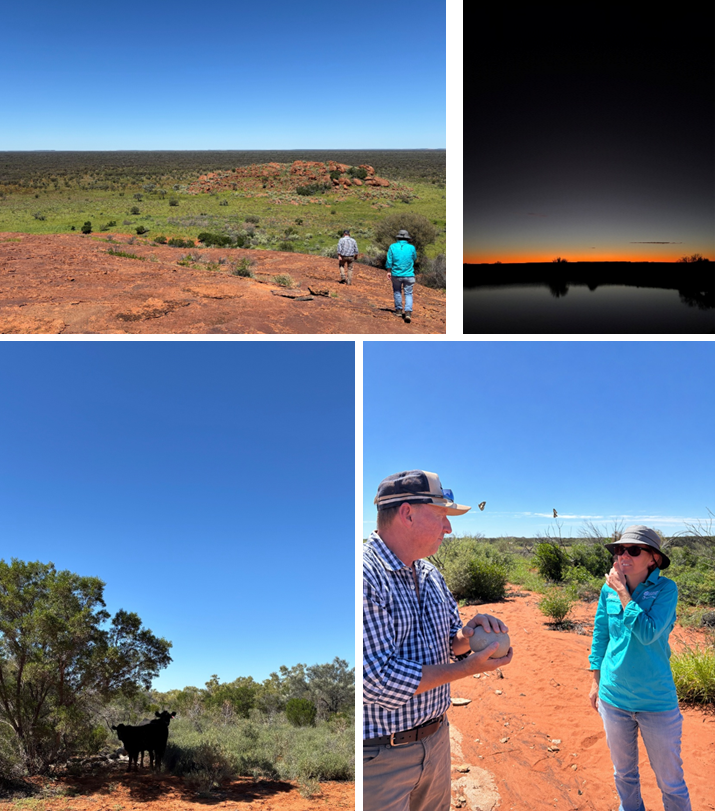
After a harsh, dry January, the much-appreciated rainfall of February and March had delivered abundant pasture growth and a very content landscape, dotted intermittently with calm, shiny black Angus cattle. There was a sense of ease to it all, a result of many compounding decisions. And the decisions matter. ‘No one wants to decide anymore,’ Paul said. ‘No one wants to say yes or no, because no one has the balls.’ Blunt, but true. Out here, you have to decide, and you live with the decision.
When asked what he loves about his work, Paul didn’t hesitate. ‘Being able to make and create.’ He went on, ‘That calf goes on to feed us. The (surplus) is exported and produces for the nation.’ It’s work that is tangible, meaningful, and real.
In agriculture, change is constant. Ever expanding urban centres means land use shifts and country that once fed people now grows houses, and agriculture is pushed further afield. All while expectation on production rises.
That’s where the rangelands come in.
‘They’re becoming more important,’ Paul said. ‘We’re producing protein and energy in places you’ll never be able to crop.’ It’s the ruminant animal making it possible, converting tough plant material into food. ‘What we’re doing,’ Paul said, referring to common-held misconceptions of the industry, ‘is not something people need to worry about.’ In this landscape, well managed grazing works with ecological processes rather than against them.
And it’s not just any old protein; Paul shared the inspiration for his Nuffield Scholarship exploring how to market distinctive tasting beef from the Centre of Australia, under its own brand. He described an unmistakeable quality, ‘It has a unique taste this grass-fed beef,’ he paused, ‘it’s different.’ A mission to capture provenance, for broader community benefit, while adding resilience in a variable system. Evidence of a curious and pioneering mind; often characteristic of a pastoralist.
It’s certainly not just about production though, for Paul. It’s also a care for the country that makes it all possible. You can hear it in the way he talks about his Mitchell grass, waterholes alive with shield shrimp, visiting murmuration’s of budgies, and acknowledgement of sacred cultural sites. Each an indicator of a certain harmony.
That way of thinking doesn’t come from nowhere. ‘The desert teaches you to be patient, and to observe,’ Paul said. The kind of lessons that shape a person.
There’s a longer view that sits behind it all. Over time, you learn that every decision draws from, or adds to, the system – what Paul described as the ‘environment bank.’
Being a pastoralist, then, is not just about running cattle. It’s about stewardship. About having the courage to make decisions in uncertainty, and the discipline to stand by them. About shaping something over time, through patience and attention, where cattle, country, and people all play their part.
The unmistakable depth and thoughtfulness to Paul made more sense with time – a product of patience, observation, and a life spent making decisions that matter.
And perhaps that’s what it means to be a pastoralist.
Article by Caleb Schwartz, Livestock Extension Officer, NT Department of Agriculture and Fisheries.
