
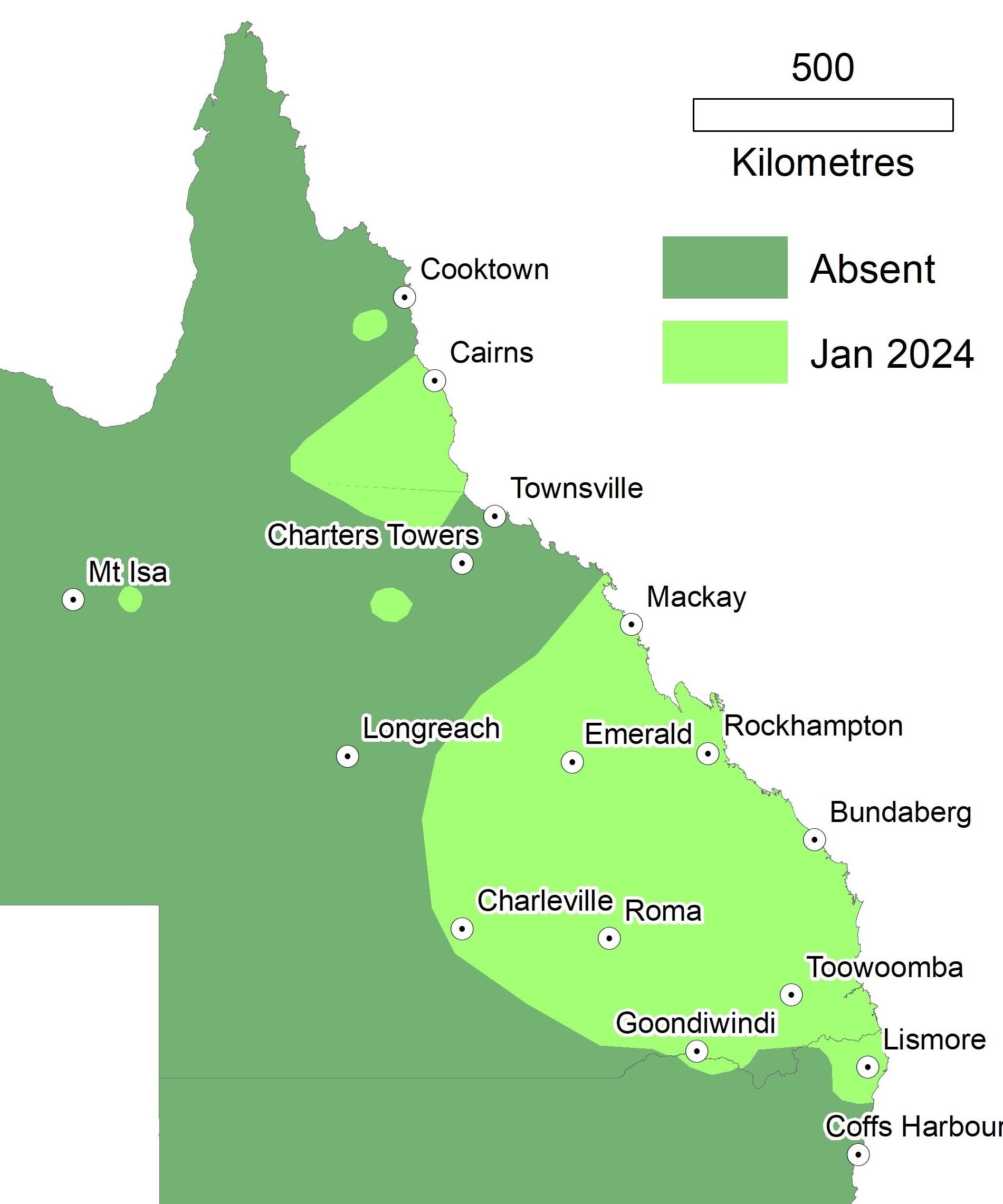
Pasture dieback has spread in recent years, with some regions reporting the first occurrence after 2024 summer rainfall.
Pasture dieback has been reported in the following new areas as recently as the 2023/24 summer. It is also likely to be present in the surrounding districts.
| Southern QLD | Central QLD | Northern QLD |
|---|---|---|
| Billa Billa | Alpha | Charters Towers |
| Bringalily | Blackall | Cloncurry |
| Charleville | Springsure | Lakeland |
| Chinchilla | Tambo | |
| Clifton | ||
| Condamine | ||
| Dulacca | ||
| Goondiwindi | ||
| Guluguba | ||
| Inglewood | ||
| Injune | ||
| Kaimkillenbun | ||
| Millmerran | ||
| Mitchell | ||
| Morven | ||
| Nobby | ||
| Roma | ||
| St George | ||
| Wandoan |
Pasture dieback causes death of high yielding tropical and sub-tropical grasses. It mainly affects improved (or sown) grass species, however, some native species are also impacted. Broadleaf plants (weeds or legumes) are not affected.
The death of grasses initially appears in patches but can spread to large areas and whole paddocks within one growing season. Early symptoms include leaf discolouration (reddening and or yellowing) and unthrifty growth. Once dead, the affected area is commonly colonised by broadleaf weeds or legumes.
Report pasture dieback
You can help document the spread of pasture dieback by using this free app to log affected locations.
Pasture dieback information, tools and resources
For more information – including how to identify and manage pasture dieback – visit the FutureBeef pasture dieback page.
Pasture dieback research is continuing through the Queensland Pasture Resilience Program, a partnership between DAF and Meat & Livestock Australia through the MLA Donor Company.
