
What is a Silvopastoral System?
Silvopastoral systems (SPS) involve the combined management of trees, forage, and livestock on the same unit of land in an integrated and mutually beneficial way. It incorporates various production practises such as alley cropping, windbreaks and shelterbelts, scattered trees in pastures, intensive management of livestock, and rotational grazing.
Implementation of these production systems have numerous benefits such as improved water quality, soil conservation, carbon sequestration, and wildlife habitat conservation. They can improve the resilience of farms to climate change through income diversification, ameliorate the annual cash flow problems inherent in timber growing and increase farm incomes in the medium and long-term.
Silvopastoral systems can be established in native forest or with hardwood and softwood timber species:
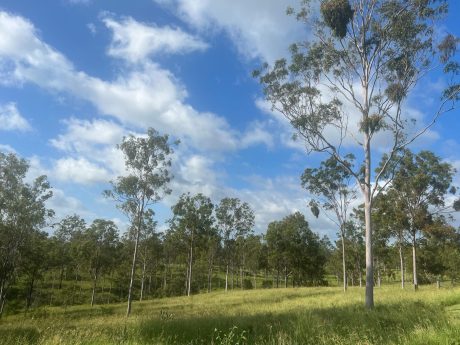
Spotted Gum private native forest in Wonbah, QLD
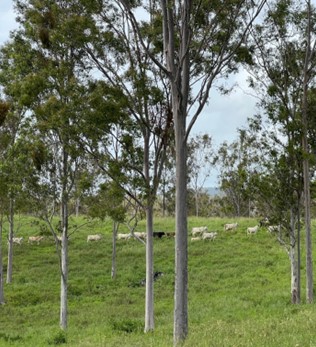
Photo: Nahuel Pachas
Mixed Hardwood species system in Sextonville, NSW
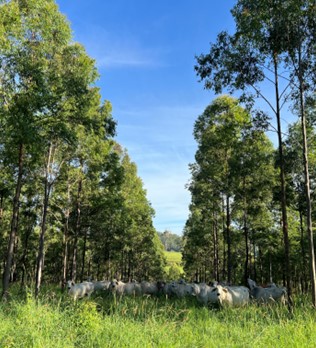
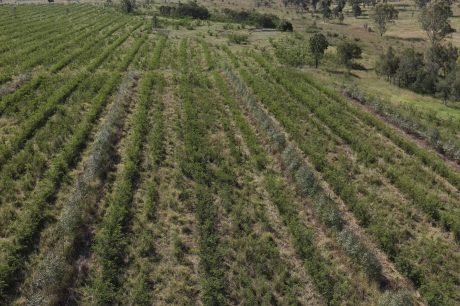
SPS with 12 alley planting configuration at Super Forest Plantation. Photo: Nahuel Pachas
Caribbean Pine system at Cardwell, QLD
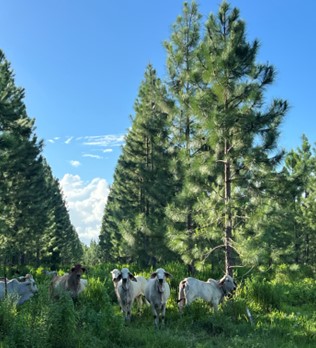
A silvopastoral system with commercial Caribbean pine in 10m alley configuration. Photo: Nahuel Pachas
Project geography
This project will provide data and advice to the beef and forestry industries across the 48 million hectares (ha) of sub-tropical and tropical Queensland and northern New South Wales suitable for the development of silvopastoral systems, and how to integrate commercial trees on farm without affecting livestock productivity.
Currently a series of silvopastoral systems experiments have been established across 14 sites, covering a total of 900 ha. This consists of 818 ha of private native forest across seven sites and seven sites of hardwood plantations across 67 ha. The plantations cover a wide age range, including 29 ha (~12,000 seedlings) of newly established SPS, where trees are planted in double rows in between 15-20 metre pasture alleys.
Click here to view the location of SPS experiments throughout QLD and NSW.
Brian Pastures, Gayndah
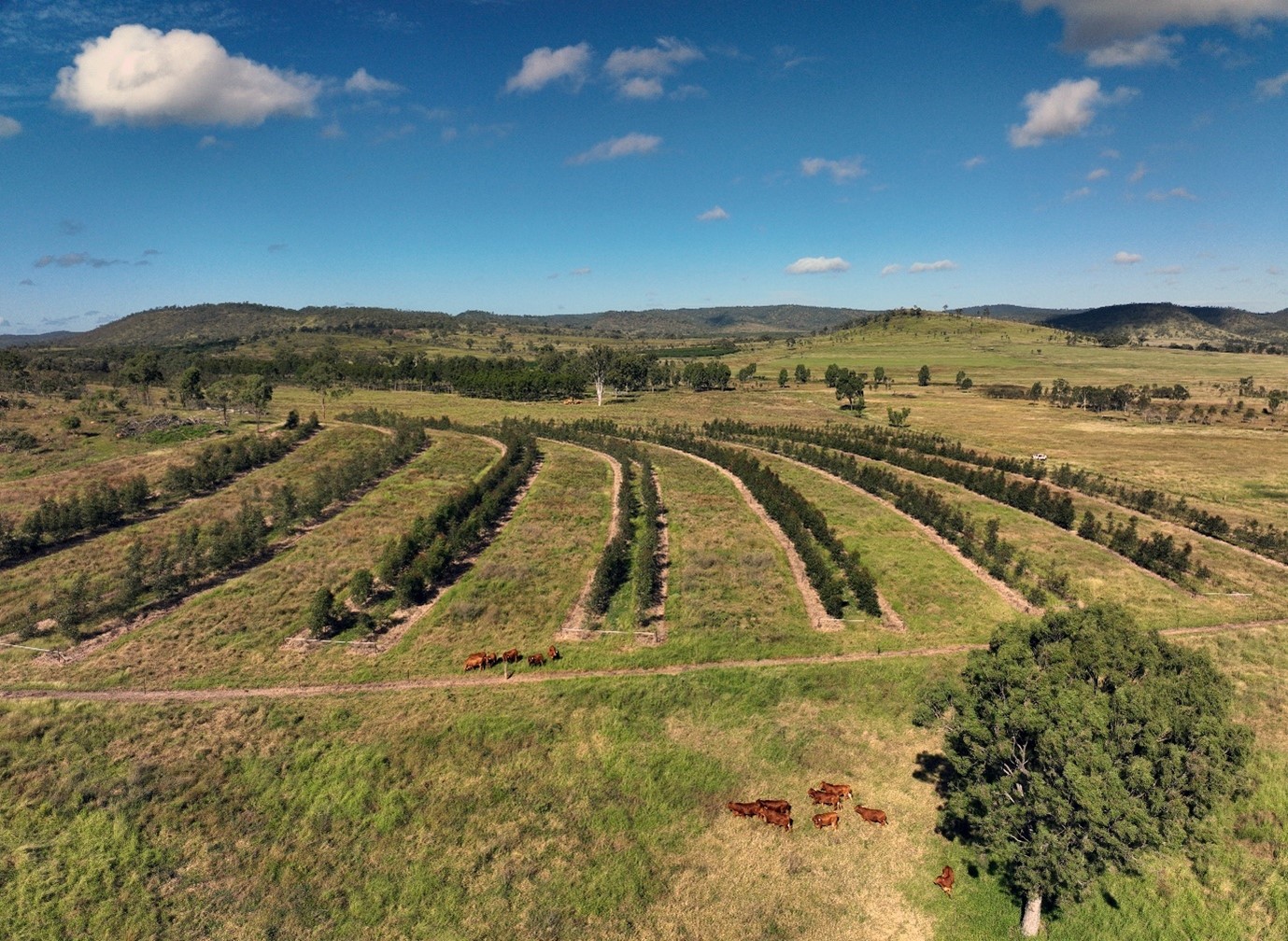
Spotted gum in alley configuration with comparison open pasture paddock. Photo: Nahuel Pachas
Boreelum, Miriam Vale QLD
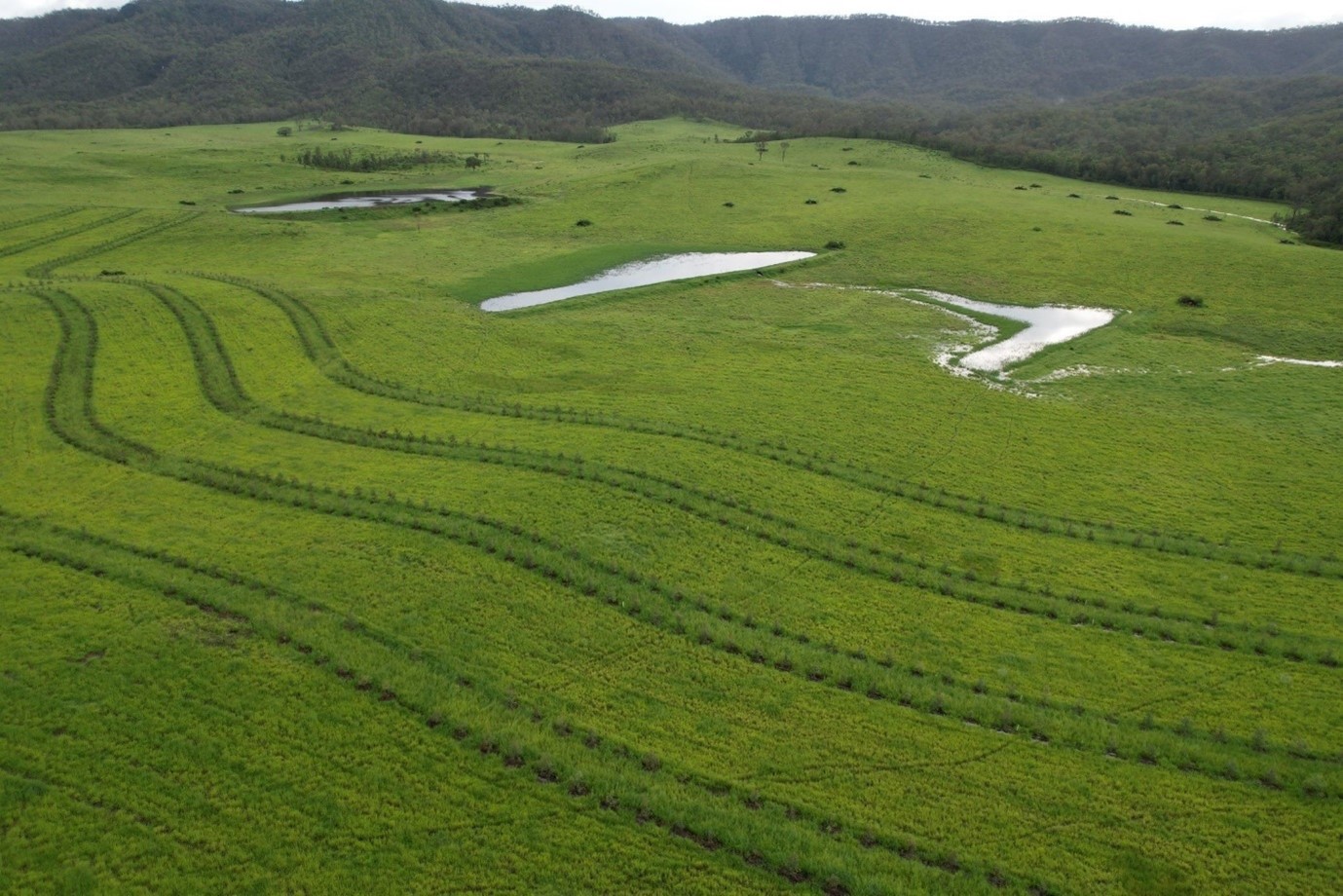
Spotted gum in alley configuration with improved pastures. Photo: Adam & Jacinta Coffey
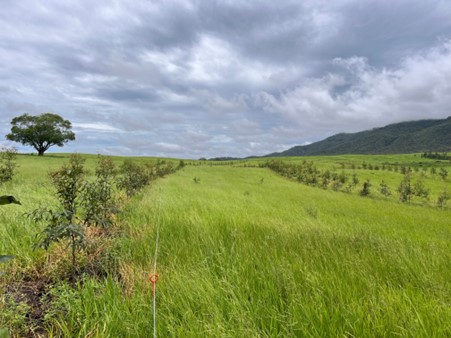
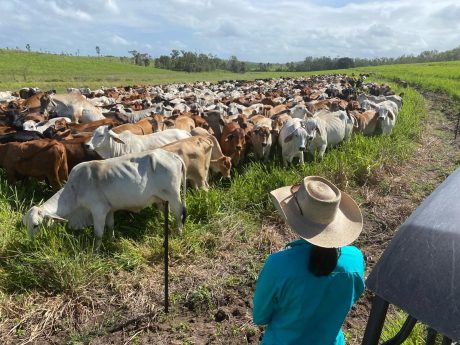
Spotted gum planted in alley configuration, 2 years of age. Grazing managed with use of electric fences. Photo: Nahuel Pachas
Dunrobin- Super Forest Plantations, Sextonville NSW
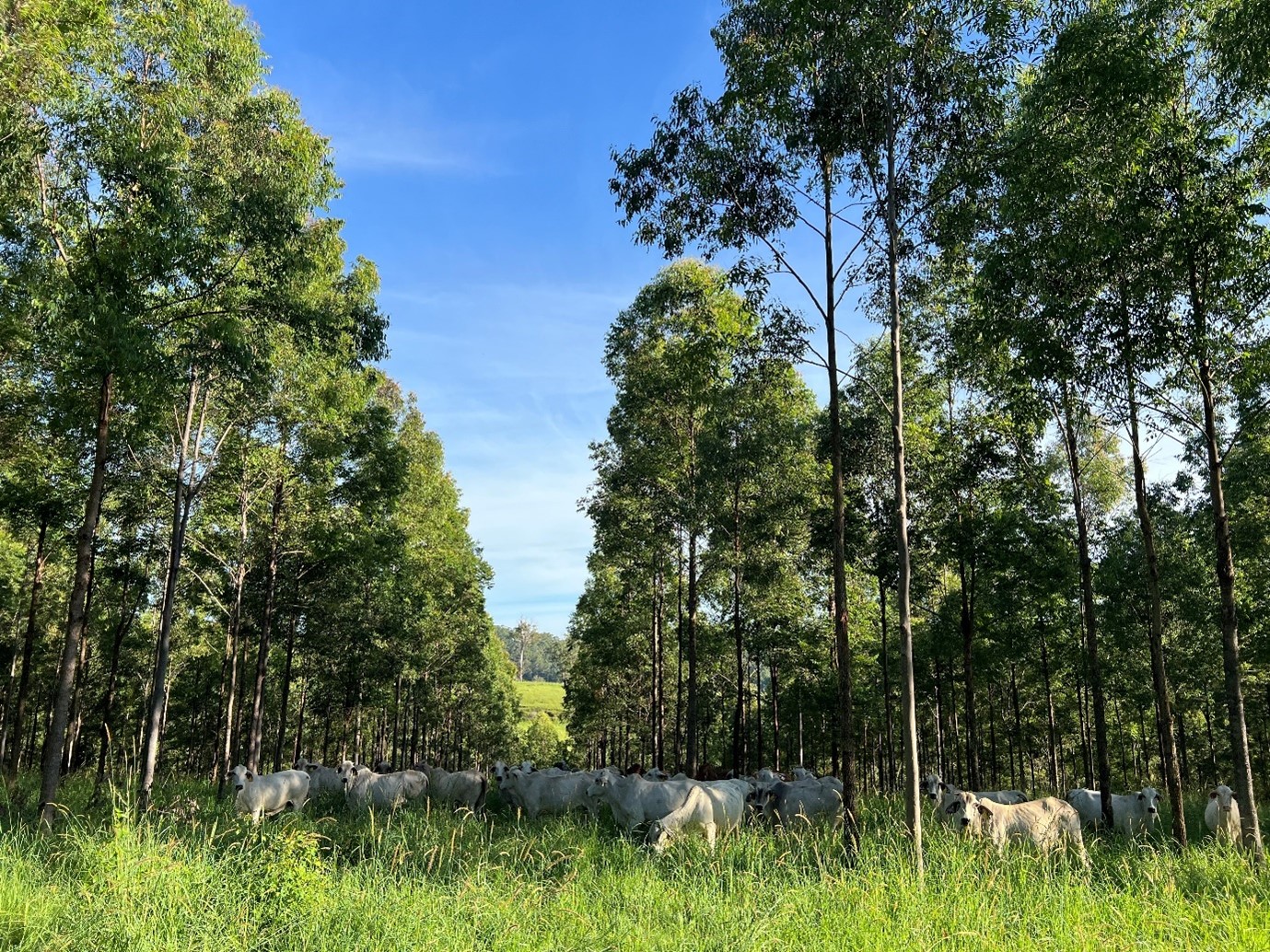
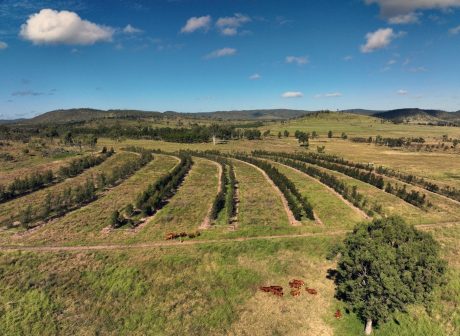
Commercial timber plantation with mixed hardwood species (7 years of age) with 12m alleys. Photo: Nahuel Pachas
Stanwell Energy Corporation, Stanwell QLD
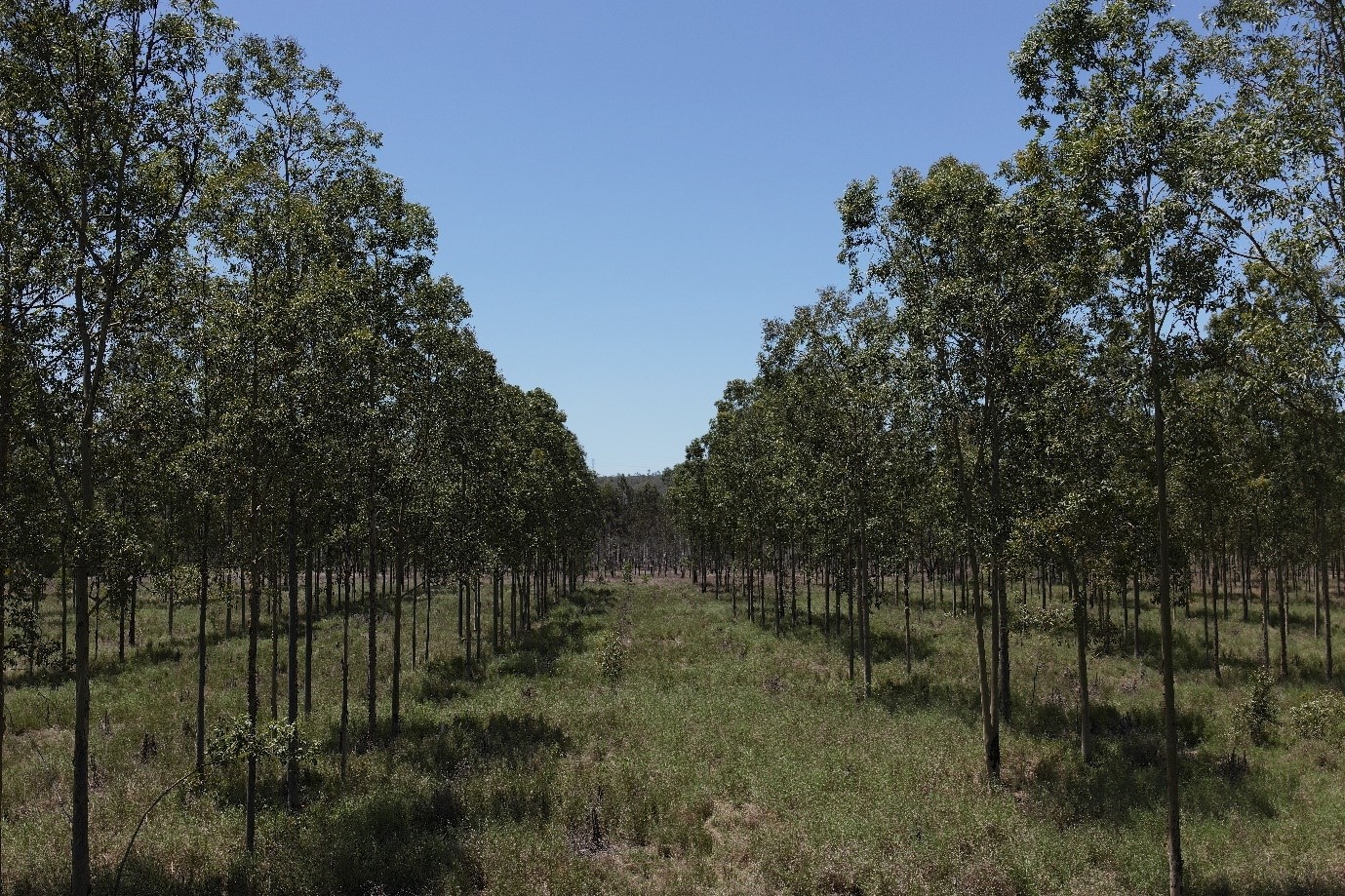
Commercial timber plantation (14 years of age) double tree rows with a 20 m alley. Photo: Nahuel Pachas
Project Objectives
Planting configurations
Alley planting is being evaluated as an alternative way to establish commercial trees on farm. The main advantages of this planting configuration are:
- allows good balance between trees-grass interactions
- has a low cost of establishment
- allows for a greater number of trees to be planted, without affecting the grass productivity (compared to evenly dispersed trees in block planting)
- reduces the impact on pasture productivity due to delayed thinning/pruning operations
- allows grazing as soon as possible after planting using low-cost electric fences
Below is a table with some initial planting configuration in block planting and alley configuration for silvopastoral systems:
| Configuration | Spacing | Initial stand density (trees/ha) | Comments |
| Block planting | 5 x 2 m (1) | 1,000 | Early and heavy thinning need. Tree residuals can affect pasture productivity |
| Double rows | 4 x 2x 20 m (2) | 417 | Light thinning needed at 2-3 years |
| Double rows | 5 x 3 x 20 m (2) | 267 | Good options for graziers new on silvopastoral systems more beef production oriented |
| Triple rows | 4 x 2 x 20 m (3) | 536 | Good options for timber growers new on silvopastoral systems more timber production oriented. Thinning needed at 2-3 years of age. |
*numbers in brackets refers to the single, double or triple tree rows.
The below image illustrates the incorporation of both thinning and alley configuration on pasture growth in a plantation context.
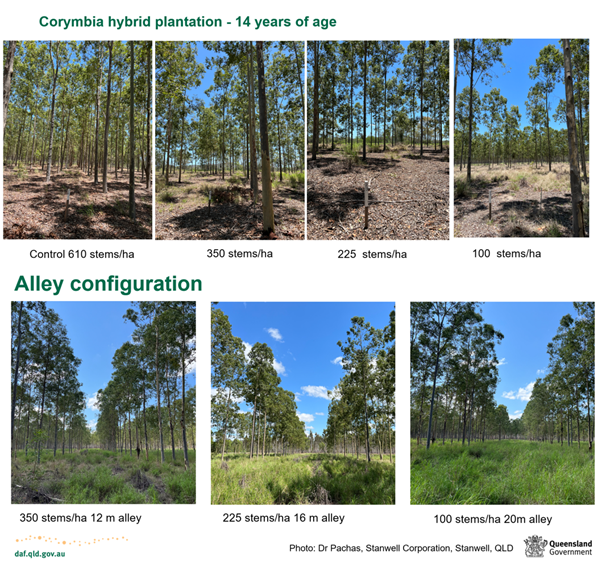
Managing private native forests
In much of the commercially harvestable native forest on private land in south-eastern Queensland (approx. 1.6 million hectares), cattle grazing is the predominant land use. Although the quality and volume of the pasture below these forests is crucial to livestock productivity, most of these areas are at present unmanaged and limited in productivity.
The implementation of sustainable forest management practices can lead to an increase in timber and pasture productivity. The adoption of sustainable forest management practices such as thinning, with the introduction of improved pasture, or even with native pasture, will significantly enhance both timber and beef productivity in spotted gum forests.
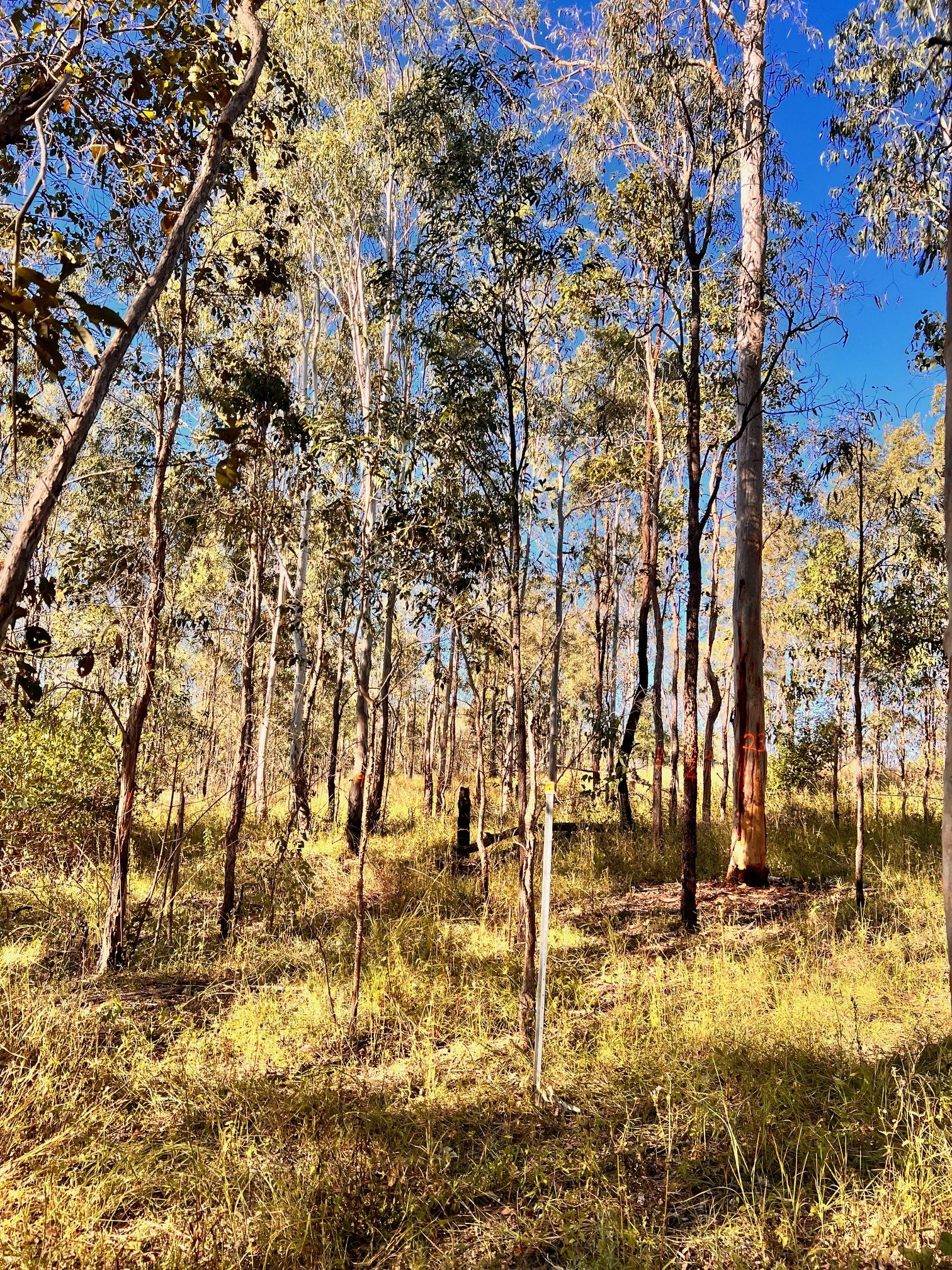
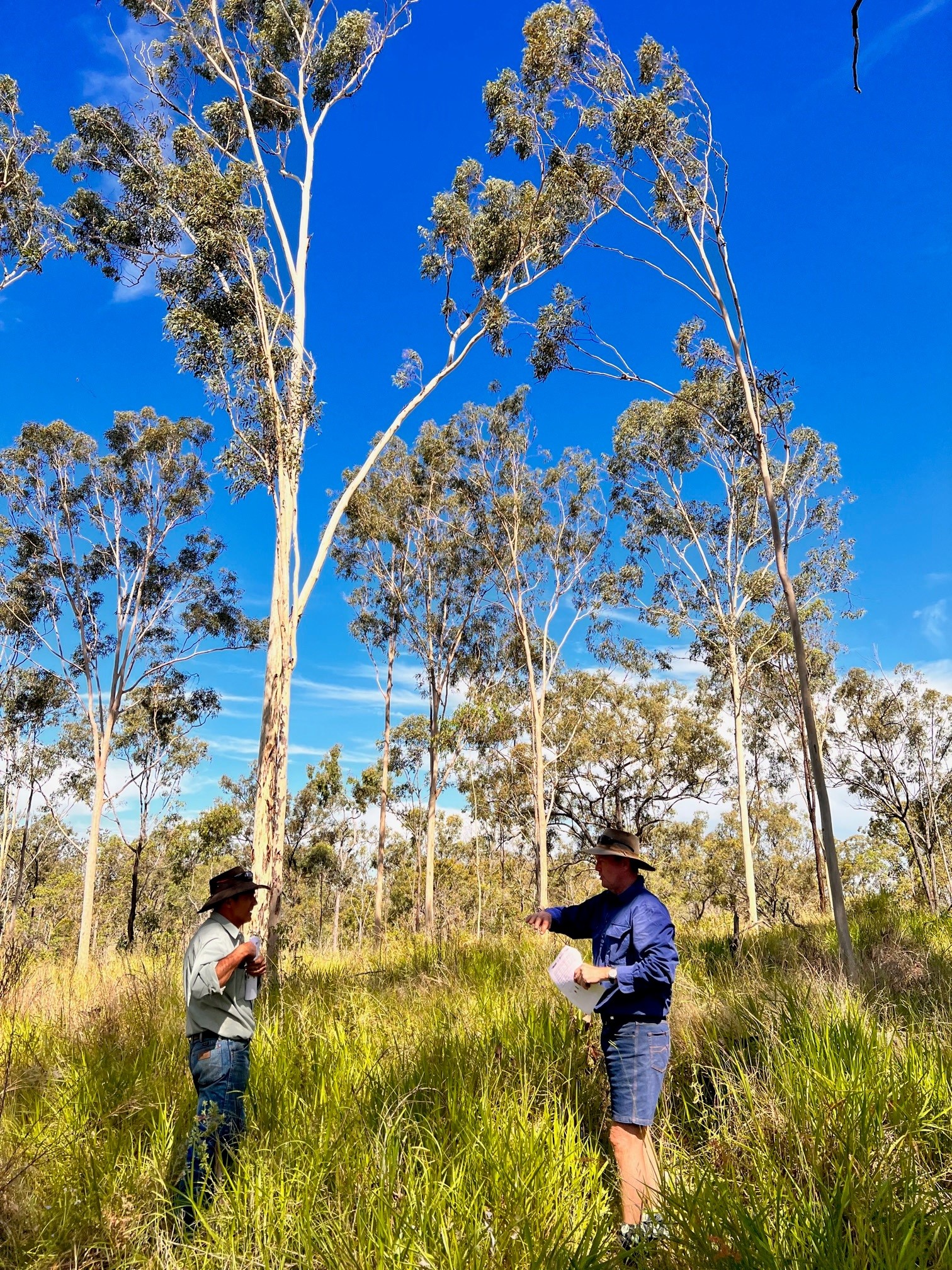
The above images show the impact of thinning within a Spotted gum private forest at Gaeta, QLD (Left photo: un-managed forest. Right photo: sustainable management of the forest with improved pastures). Photo: Nahuel Pachas
The image below illustrates the impact of thinning upon productivity in a red gum forest in Miriamvale, QLD.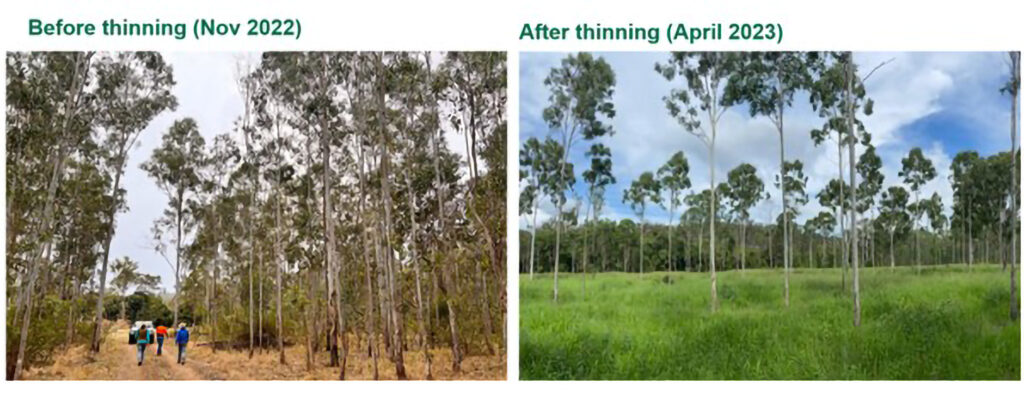
Financial and economic performance
Biodiversity Studies
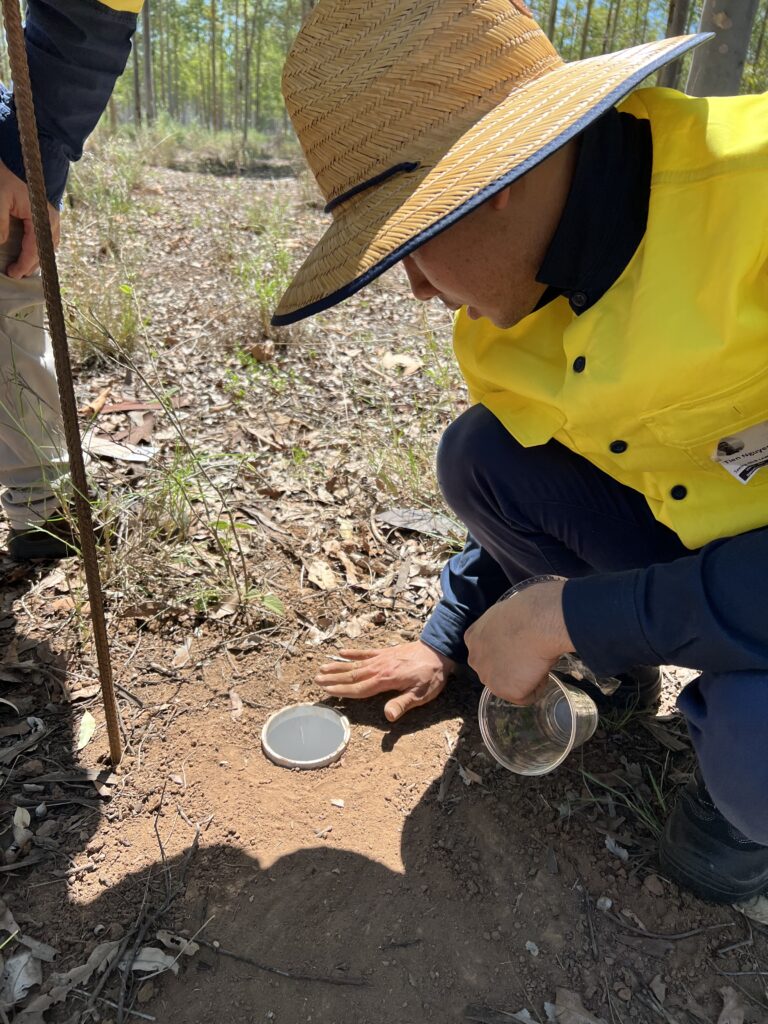 Tien setting up pitfall traps at the Stanwell site.
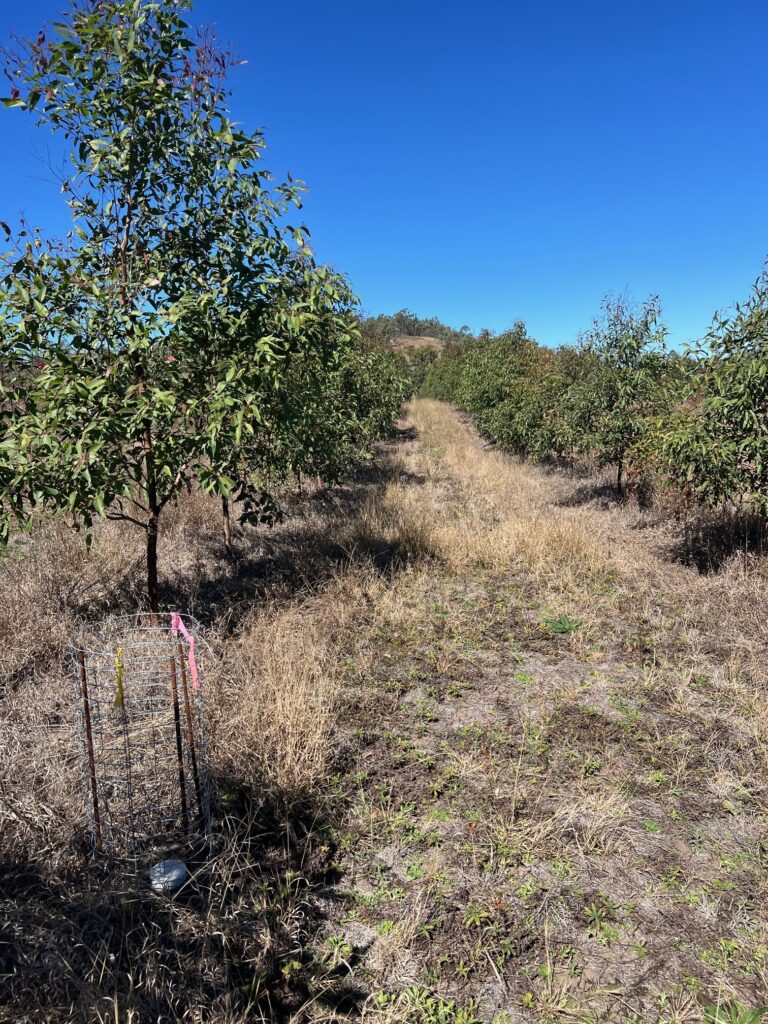 Pitfall trap in-between tree rows at Brian Pastures, Gayndah.