
Bellyache bush (Jatropha gossypiifolia)
Bellyache bush (Jatropha gossypiifolia)
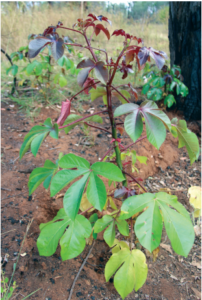
Poisonous parts
All parts are toxic.
Location
Across northern Australia. Infestations often occur on river and creek flats.
Toxin
Toxalbumin.
Symptoms of poisoning
Toxalbumin will cause symptoms of gastroenteritis and will kill some animals.
Cattle will show signs of having a sore stomach and are likely to have severe diarrhoea causing dehydration.
Deaths mainly occur in severe drought when it may be the only feed available.
Treatment / management
Oral rehydration should be the priority in treating affected animals with bentonite or activated charcoal if possible.
Notes
Livestock are more likely to eat bellyache bush when there is not enough other feed.
Bellyache bush is similar to castor oil plant in both appearance and distribution. More information about the control of bellyache bush is available in this fact sheet from Biosecurity Queensland: Bellyache bush.
Additional information, including distribution, photo gallery, and similar plants can be found here.
Castor oil plant (Ricinnus communis)
Castor oil plant (Ricinnus communis)
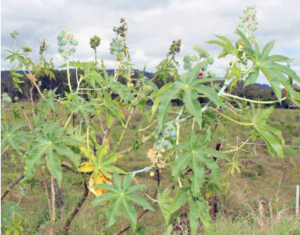
Poisonous parts
Seeds, and to a lesser extent, leaves.
Location
Castor oil plant is found throughout Australia. It is most abundant along watercourses, floodplains, and disturbed areas.
Toxin
Ricin.
Symptoms of poisoning
Poisoning symptoms do not appear for a few hours or several days. Poisoning from the seeds cause gastrointestinal disorders while the leaves tend to cause neuromuscular disorders, including:
- swaying gait
- low exercise tolerance
- difficulty lying down
- muscle tremors
- salivation
- chewing movements
- excessive belching.
If the animals don’t die within 5-20 hours, they will recover naturally.
Treatment / management
No consistently effective treatment is known. Livestock do not consider castor oil plant to be palatable however will graze it when suitable pastures are unavailable.
Notes
Castor oil plant is similar to bellyache bush in both distribution and appearance. Castor oil plant is unpalatable and rarely grazed when there is sufficient other feed available.
More information about the castor oil plant is available in this fact sheet from Biosecurity Queensland: Castor oil plant; and Atlas of Living Australia, including a distribution map and a comprehensive photo gallery.
Coffee senna (Senna occidentalis)
Coffee senna (Senna occidentalis)
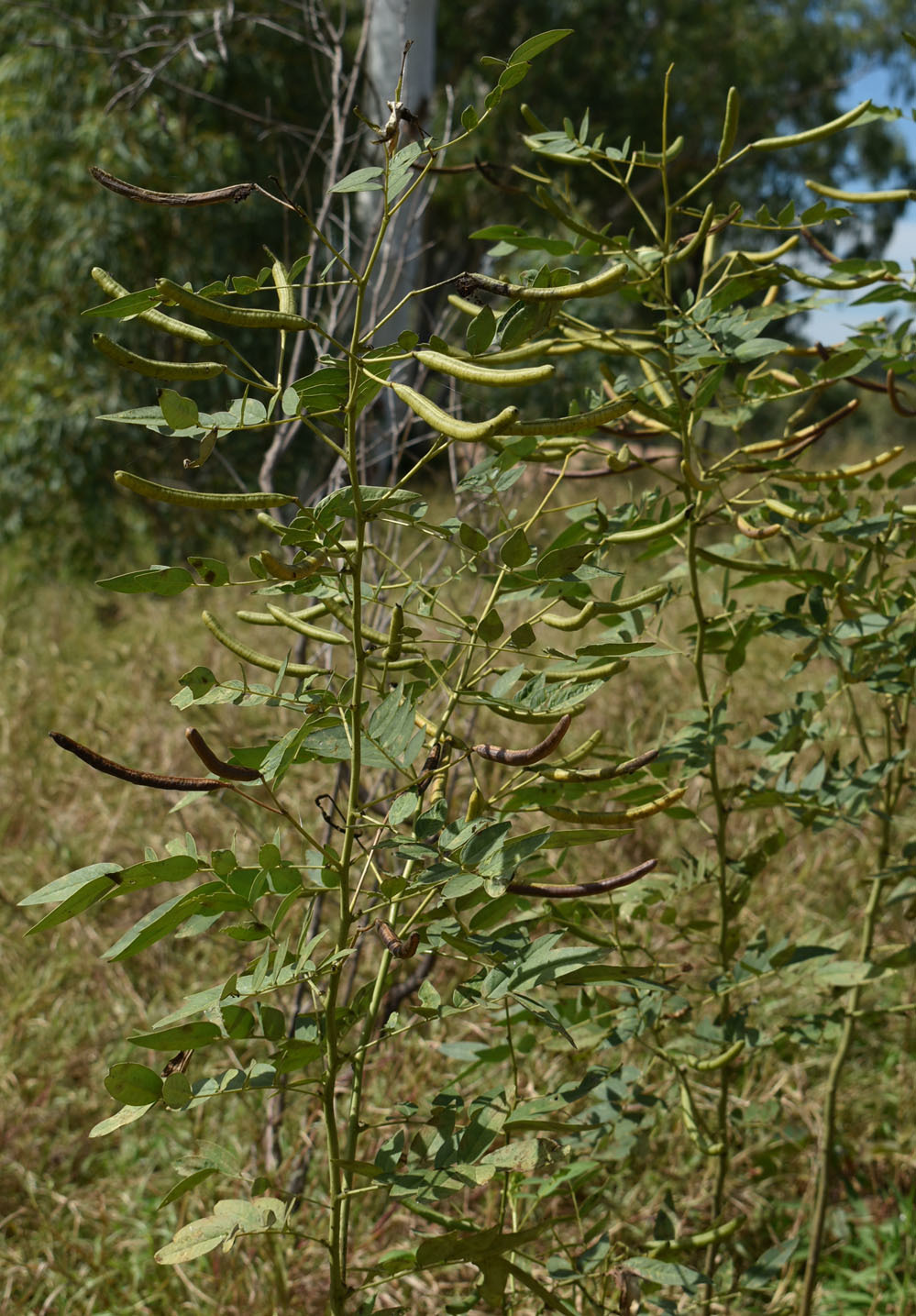
Poisonous parts
Seedpods.Location
Coffee senna has naturalised across Queensland, New South Wales, Western Australia and the Northern Territory.Toxin
N-methylmorpholine from seeds, chrysarobin, toxalbumin and several anthraquinone derivatives.Symptoms of poisoning
Diarrhoea may be the first sign of poisoning, but the more common clinical signs are associated with the toxin causing muscle tissue damage. Symptoms include:- dark brown or red urine
- incoordination
- muscle weakness
- excessive salivation
- increased heart rate
- difficulty breathing
- death.
Treatment / management
There is no known treatment for poisoned livestock. Cattle become affected when they have access to dense stands of seedpod bearing plants. Poison or remove the plant where possible, alternatively, restrict grazing access in peak periods of risk.Notes
Coffee senna is also known as arsenic bush or ant bush. Dogs have reportedly suffered muscle stiffness and an inability to work after eating meat from coffee senna poisoned stock. These clinical signs are also descriptive of tick fever, however coffee senna poisoning will not cause a fever. More facts about coffee senna, including distribution map and extensive photo gallery can be found on Atlas of Living Australia: Coffee senna.
Cooktown ironwood (Erythrophleum chlorostachys)
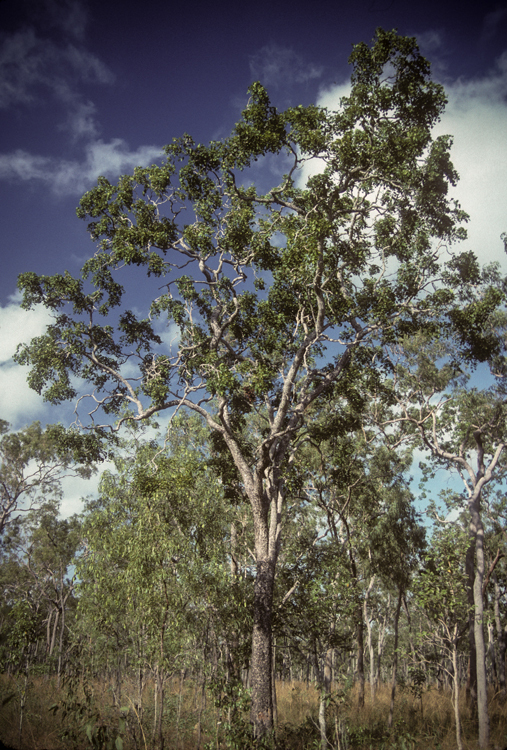
Poisonous parts
All parts, however, particularly the leaves of suckers and regrowth.
Location
Cooktown ironwood grows in North Queensland, northern Northern Territory, and northern Western Australia.
Toxin
Norcassamidide, norcassamidine and norerythrostachaldine.
Symptoms of poisoning
Symptoms of Cooktown ironwood poisoning include:
- severe abdominal pain
- sunken, staring eyes
- loss of appetite
- difficulty breathing
- recumbency
- death within 24-48 hours.
Sometimes blood-stained scouring can be seen.
Treatment / management
No consistently successful treatment is known. Poisonings usually occur during the dry season when pasture is low in protein and the Cooktown ironwood is producing fresh shoots.
Notes
The resource ‘Ironwood poisoning in the Northern Territory‘ states that less than 100g will be enough to kill a horse or cow.
More information about Cooktown ironwood, including a distribution map and an extensive photo gallery, can be found on Atlas of Living Australia.
Cycads / Zamia palm (Macrozamia spp.)
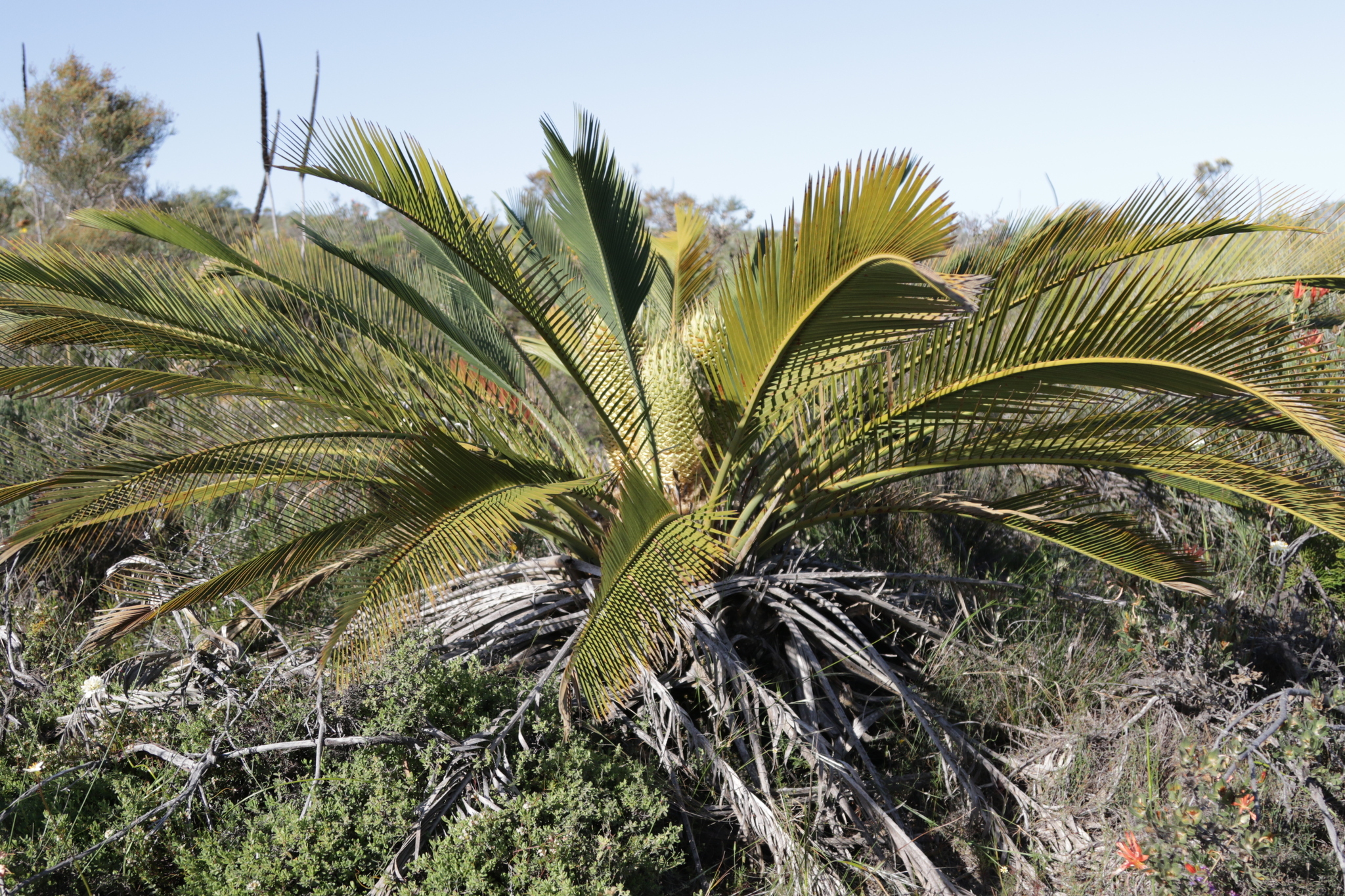
Poisonous parts
Flower spikes and leaves.
Location
Cycads are cone bearing or palm-type plants that include the species Bowenia, Cycas, Lepidozamaia and Macrozamia. They grow in large numbers in hot climates in poor soils.
Toxin
Cycasin, neocyasins, macrozamin and pakoein.
Symptoms of poisoning
Two types of illness come from zamia palm poisoning: liver and intestinal damage, and incoordination of the hind legs, commonly known as ‘zamia staggers’. Cattle with ‘staggers’:
- show nervous signs
- walk with an irregular, stiff, goose-stepping gait
- may fall over due to knuckling of fetlocks and the inability to place hindlimbs.
Brain nervous tissue is also affected causing some animals to appear aggressive.
Treatment / management
Poisoned stock will exhibit signs for life even after removal from the area and access to the plant.
Notes
The leaves are toxic and may be eaten by cattle when young, particularly after a fire has been through the area.
More information is available from the Queensland Government here: Zamia staggers in cattle and the Northern Territory Government here: Zamia poisoning in cattle in the Top End.
Ellangowan poison bush (Eremophila deserti)
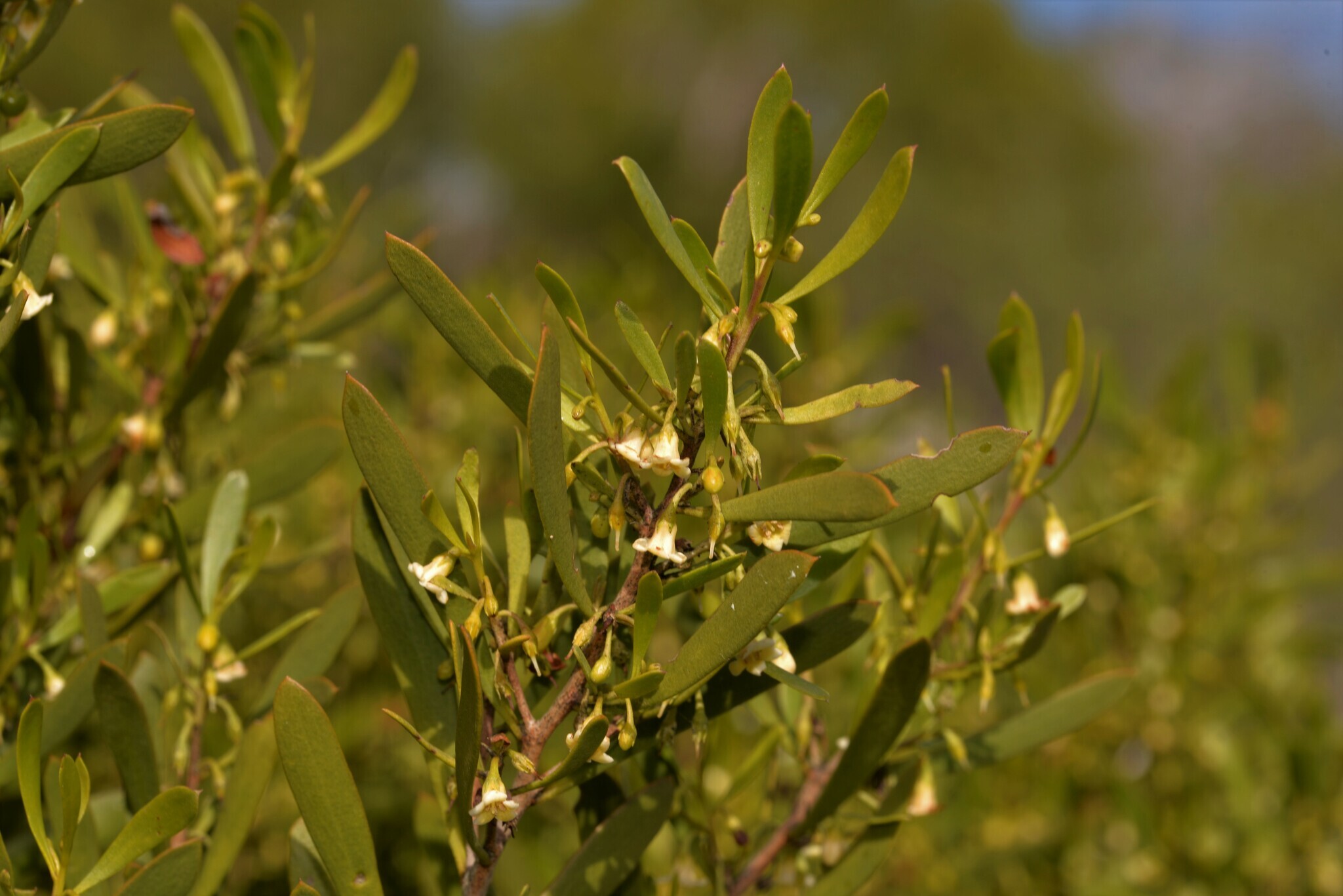
Poisonous parts
Leaves.
Location
Ellangowan poison bush is present on all mainland states, mainly on loam soils.
Toxin
Ellangowan poison bush contains 11 furanosesquiterpenes (type of toxin). The amount of toxic oils present may be so small that the plant is harmless but there is no way to tell the difference between a harmless plant and a toxic one.
Symptoms of poisoning
The toxic oils are released slowly in the rumen, meaning that signs of illness and death usually take 1-3 days. In acute cases, cattle demonstrate:
- a lack of muscle control
- staggering
- tremors
- eye twitching
- aggression
- convulsing
- sensitivity to light (photosensitisation).
Prolonged cases will demonstrate scouring, jaundice due to liver damage, and a loss of muscle control with a high stepping gate.
Treatment / management
There is no treatment. Prevention is best achieved by restricting the access of hungry animals to areas where the plant dominates the pasture.
Notes
Ellangowan poison bush is regarded as a useful fodder plant by many, as grazing animals may adapt to eating large amounts if they are introduced to the plant gradually.
Photographs, a distribution map, and more information about Ellangowan poison bush can be found here: Ellangowan poison bush.
Georgina gidyea (Acacia georginae)
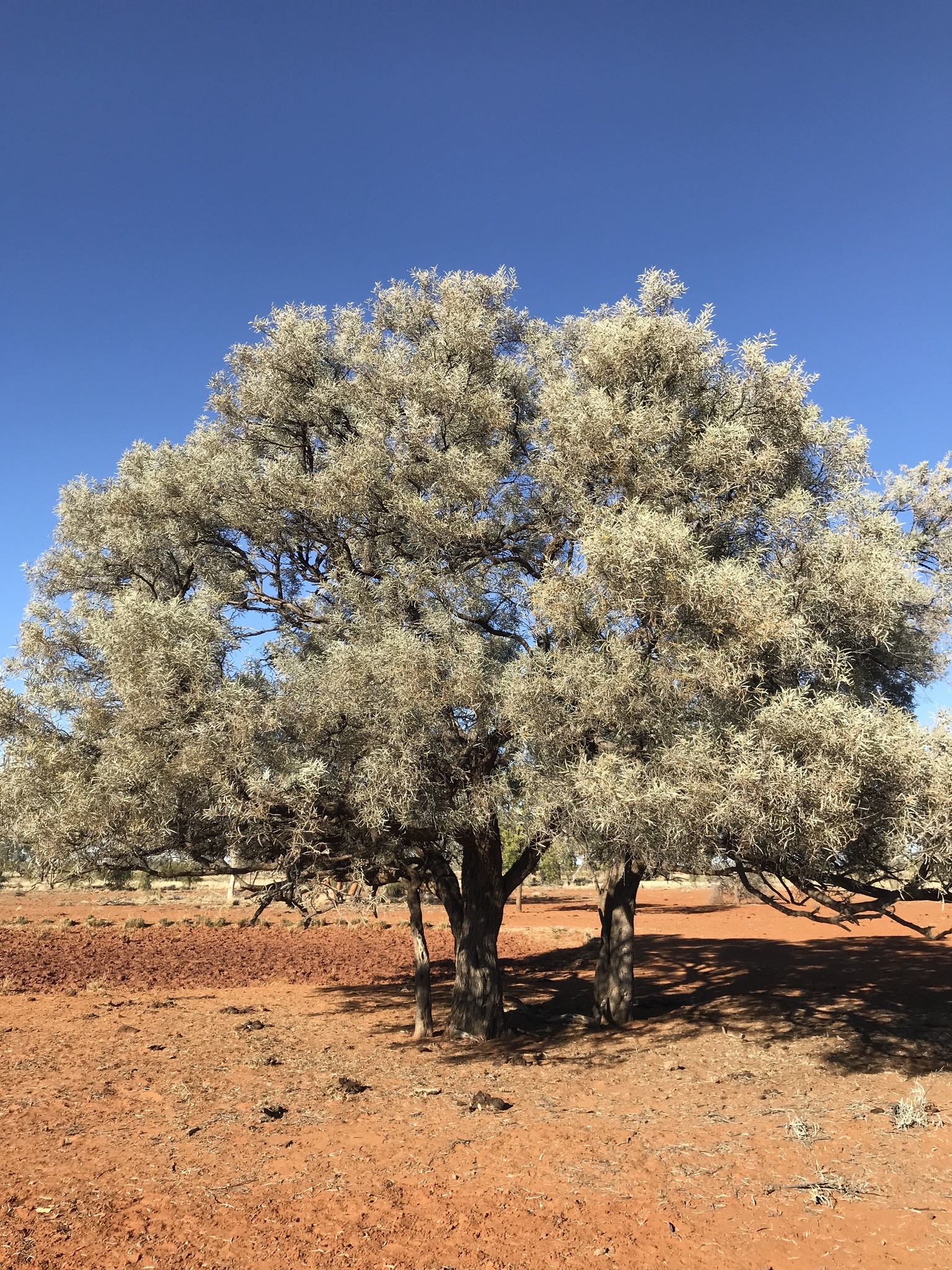
Poisonous parts
Seeds contain the most toxin followed by pods and leaves. Fresh shoots and young leaves contain more toxin than mature leaves.
Location
Georgina gidyea grows on clay and loam soils of the Georgina River Basin in western Queensland and into the Northern Territory.
Toxin
Fluoroacetate (1080).
Symptoms of poisoning
Clinical signs of Georgina gidyea are the same as heart-leaf poison bush (fluoracetate poisoning), which if observed, reflect cardiac disturbance:
- rapid and laboured breathing
- rapid and weak pulse
- reluctance to move.
Severely affected animals may become manic with muscle spasms and convulsions, whereas less severely affected stock may have evidence of myocardial scarring noticed at the meatworks.
Exercise or excitement will bring on clinical signs.
Animals are often found dead. Rigor mortis sets in quickly and post-mortem examination may reveal haemorrhages and dark coloured blood.
Treatment / management
Affected animals may recover if left alone but often will not. There is no known treatment. A review of Acacia georginae research and landscape management options can be found here.
Notes
Individual trees differ in the amount of toxin accumulated, with some being non-toxic. Deaths typically occur in the dry season or during droughts. It is not understood why, but it usually affects the strongest animals.
If the rumen is opened during a post-mortem, the presence of gidyea leaves is enough to confidently diagnose the cause of death as gidyea poisoning, as is finding the toxin in the tissues and blood if samples are sent to a lab.
Fluoroacetate toxicity is common during drought when food sources are limited.
If there is no access to heart-leaf poison bush or Georgina gidyea, consideration of stock eating wild dog or feral pig 1080 baits should not be ruled out in a protein deficient season.
Find more information and identifying features here: Georgina gidyea. A distribution map and extensive photo gallery can be found here: Atlas of Living Australia – Georgina gidyea.
Grass trees (Xanthorrhoea spp.)
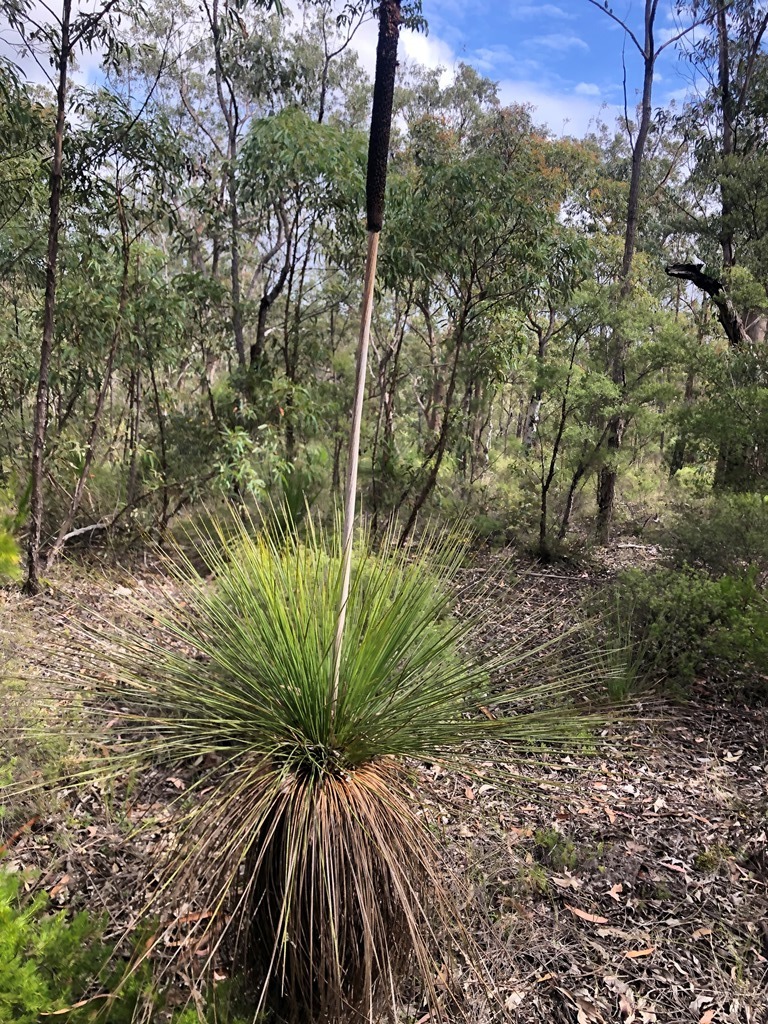
Poisonous parts
Flower spikes and young leaves.
Location
Grass trees grow Australia wide.
Toxin
Unidentified.
Symptoms of poisoning
Clinical signs of poisoning appear after several weeks of the animal eating the plant. Grass tree poisoning signs include:
- a loss of condition
- dribbling urine
- tail head held high
- cattle may become partly or completely blind.
The disease caused by poisoning is known as ‘wamps’, as this is the noise affected animals make when the hindquarters lurch to one side and the animal falls over. Animals affected in this way often have trouble regaining their feet. Death occurs when the animal is unable to feed and hydrate properly.
Treatment / management
If removed off the source cattle may recover, and clinical signs may disappear.
Notes
There are 6 species of grass tree, while all are poisonous, the two most likely culprits are the swamp (Xanthorrhoea fulva) and forest (Xanthorrhoea johnsonii) varieties. They are mostly found in coastal and subcoastal areas. The swamp variety sticks to swamp areas on sandy soils and the forest variety occurs in eucalypt forests on sandy and gravelly soils.
More information from the Queensland Government can be found here: Grass tree poisoning.
Green cestrum (Cestrum parqui)
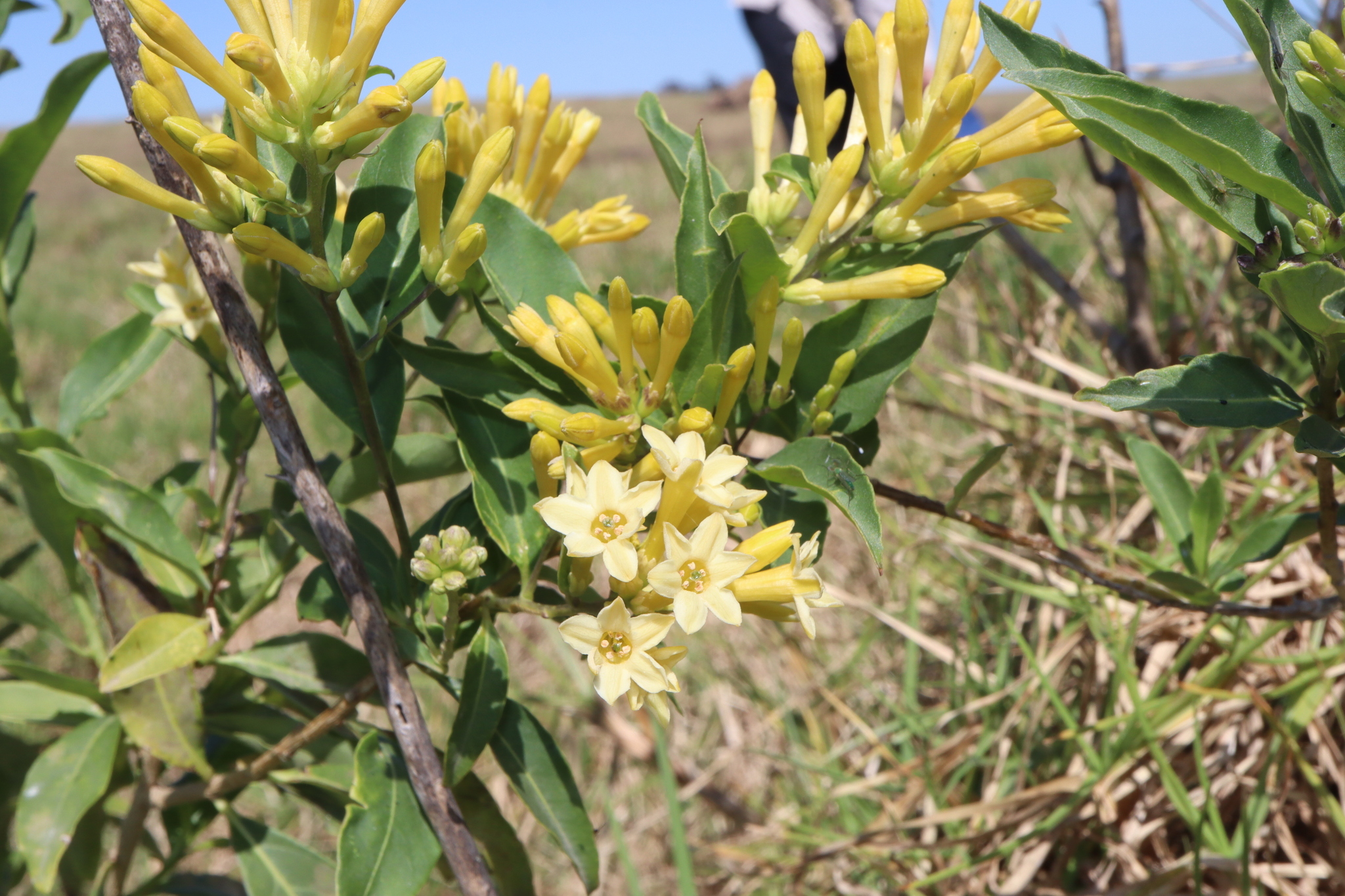
Poisonous parts
All parts of green cestrum plants are poisonous.
Location
Green cestrum has naturalised to parts of south-eastern Queensland, New South Wales and Victoria. Green cestrum is common around old settlements and buildings.
Toxin
Parquin and carboxyparquin.
Symptoms of poisoning
The toxins involved are similar to those in Noogoora burr seedlings and cause acute liver necrosis.
Clinical symptoms include:
- depressed animals with no appetite
- kicking the abdomen or flanks in pain
- adopting a funny stance.
Some animals will have convulsions and stumble. In acute poisoning cases death will occur within 3 days. In mild poisonings the animal may recover after a depression for a day or two.
Treatment / management
No specific treatment of poisoned animals is known. Removing green cestrum is the best management strategy. The plant can be eradicated if all rootstock is removed. Herbicides will also work if regrowth is also treated.
Notes
Green cestrum is also known as green poisonberry.
More information and control options from Biosecurity Queensland are available here: Green cestrum. Alternatively, Atlas of Living Australia provides information including a distribution map and an extensive photo gallery.
Heart-leaf poison bush (Gastrolobium grandiflorum)
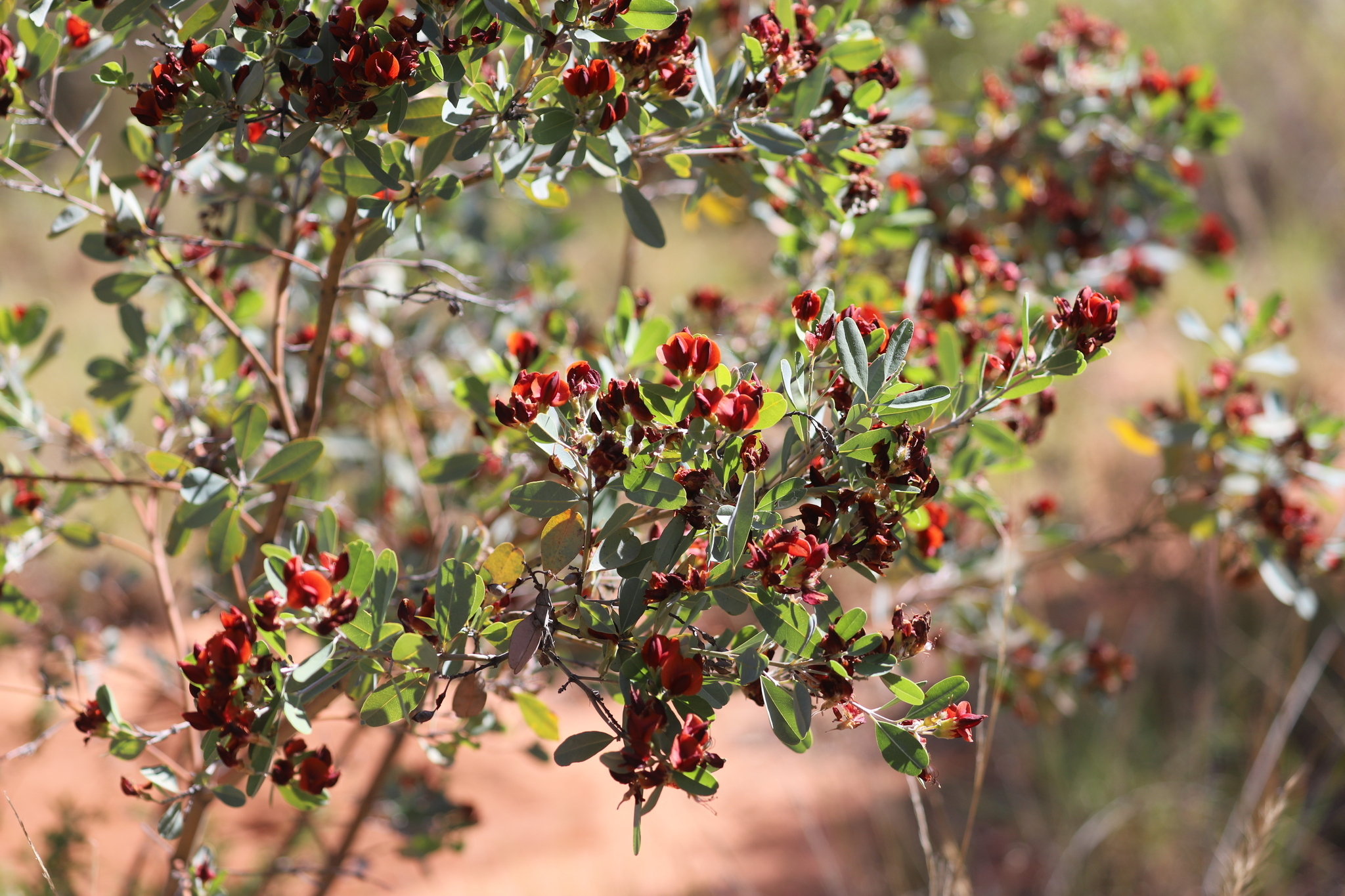
Poisonous parts
Leaves, flowers and seeds. The plant is most toxic when it has young leaves, flowers or pods.
Location
Heart-leaf poison bush has been found in Queensland, Northern Territory and Western Australia.
Toxin
Fluoroacetate (1080 poison).
Symptoms of poisoning
Clinical signs of fluoroacetate poisoning may develop within 30 minutes of ingestion. Initially it causes irritation to the gut and animals may exhibit signs that resemble colic. Affected animals will often:
- stagger
- grind their teeth
- grunt and stomp
- show cardiac arrhythmias.
Severely affected animals become manic with muscle spasms and convulsions, rapid laboured breathing progressing to weakness and death due to heart failure.
Treatment / management
There is currently no known treatment for heart-leaf poison bush toxicity. It is palatable to livestock, so infestations are often fenced off as a prevention strategy.
Exercise or excitement will exacerbate clinical signs. Less severely affected stock can be reluctant to move, with some reported to recover however become poor doers. Less severely affected animals are best left alone.
In most cases animals are found dead.
Diagnosis may be difficult if the toxin has not penetrated the tissues. Dogs or feral pigs that scavenge on a carcase will also be susceptible to the toxic effects of 1080.
Notes
Heart-leaf poison bush is also known as desert poison bush or wallflower poison bush.
Flowers vary in colour from dark to light red and purple. The leaves on young plants are heart-shaped.
More information about heart-leaf poison bush and control options is available from Biosecurity Queensland here: Heart-leaf poison bush fact sheet.
An extensive photo gallery can be found here: Atlas of Living Australia – Heart-leaf poison bush
Lantana (Lantana camara)
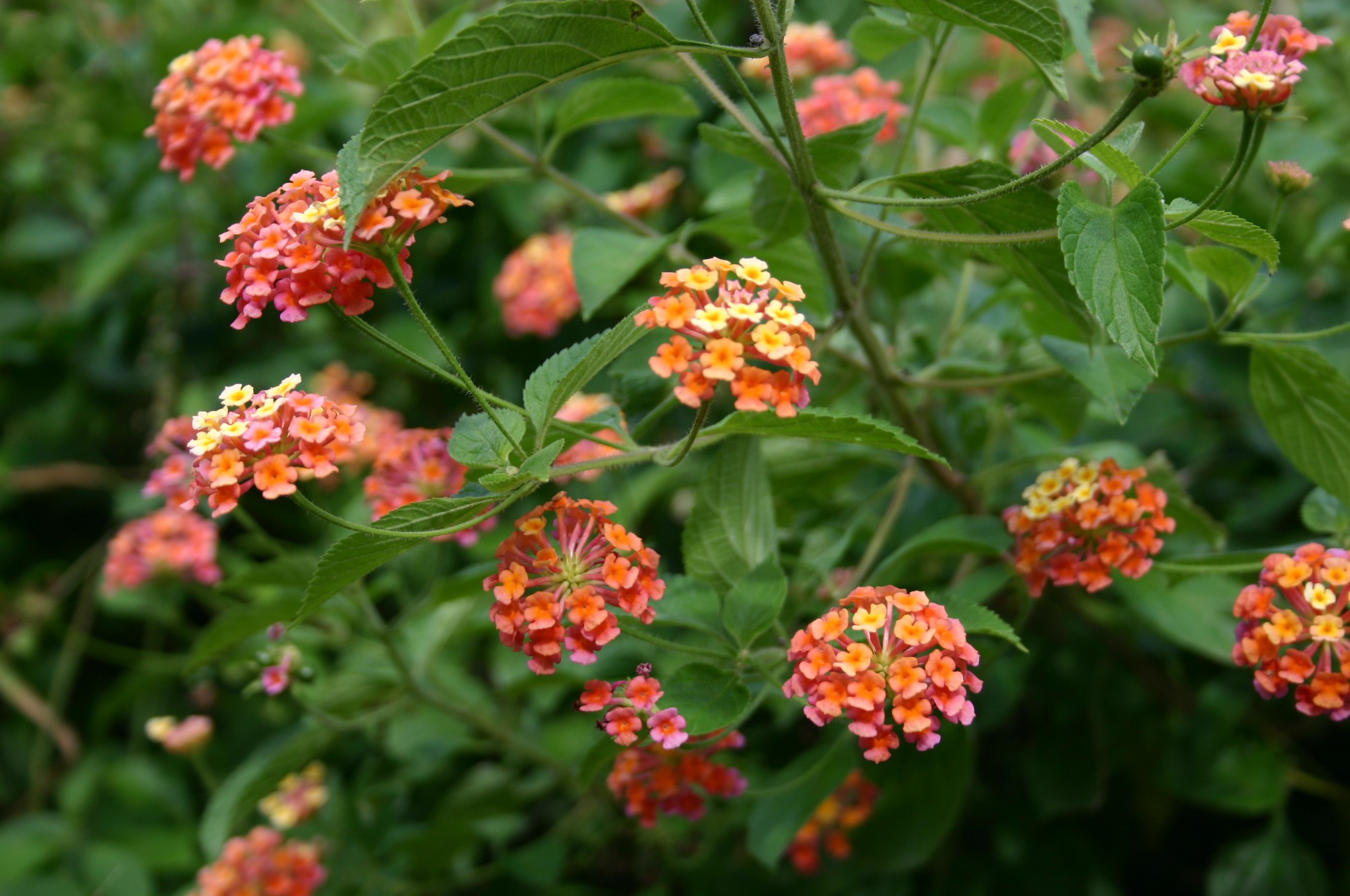
Poisonous parts
Leaves.
Location
Lantana is rife throughout the east coast of Australia, and coastal areas of the Northern Territory and Western Australia.
Toxin
Lantadene A and lantadene B.
Symptoms of poisoning
Clinical signs and death are the result of liver failure and subsequent kidney damage and dehydration. Time from ingestion to death can vary from 2 days to 3 weeks depending on the variety of the plant, amount consumed, and condition of the animal at the time of ingestion.
Clinical signs may include:
- excessive skin sensitivity to sunlight (photosensitisation), plus the skin may blister
- yellow discolouration (jaundice) of the whites of the eyes and gums, and skin of the nose and mouth
- reddening and inflammation of unpigmented (white) skin; muzzle may become inflamed, moist, ulcerated and very painful (pink nose) and fall off
- swelling of ears and eyelids if unpigmented
- reddening and discharge from the eyes (conjunctivitis)
- ulcers on the tip and under the surface of the tongue (if unpigmented)
- avoiding sunlight
- depressed appetite, appear sluggish, weak and depressed
- frequent urination, constipation (most commonly), or diarrhoea.
Treatment / management
If stock show signs of lantana poisoning, they should be moved to a lantana free area and kept in the shade. A vet can help if contacted in the initial stages of ingestion and toxicity. Treatment can include intravenous fluids and encouraging the animal to eat. Skin damage can be treated with antibiotics and sunscreens. Activated charcoal or bentonite can be effective but expensive treatments. These substances minimise the uptake of the toxin and subsequent damage to the liver.
Animals may fully recover from toxicity if access is removed before significant damage to the liver occurs. If there is not enough viable liver though, some animals may become poor doers over time and waste away.
Notes
There are 29 species of lantana and toxicity can vary depending on the colour of the flower. Red flowered lantana is always toxic, the orange flowered variety is less toxic, the pink flower can be toxic, and the purple flowered variety is not toxic. Lantana poisoning often occurs when stock are unfamiliar with the plant. Young stock are most at risk.
More information from Biosecurity Queensland on animals that are poisoned is available here: Lantana poisoning.
Atlas of Living Australia have a comprehensive webpage regarding lantana including a distribution map and photo gallery.
Pencil caustic bush (Sarcostemma australe)
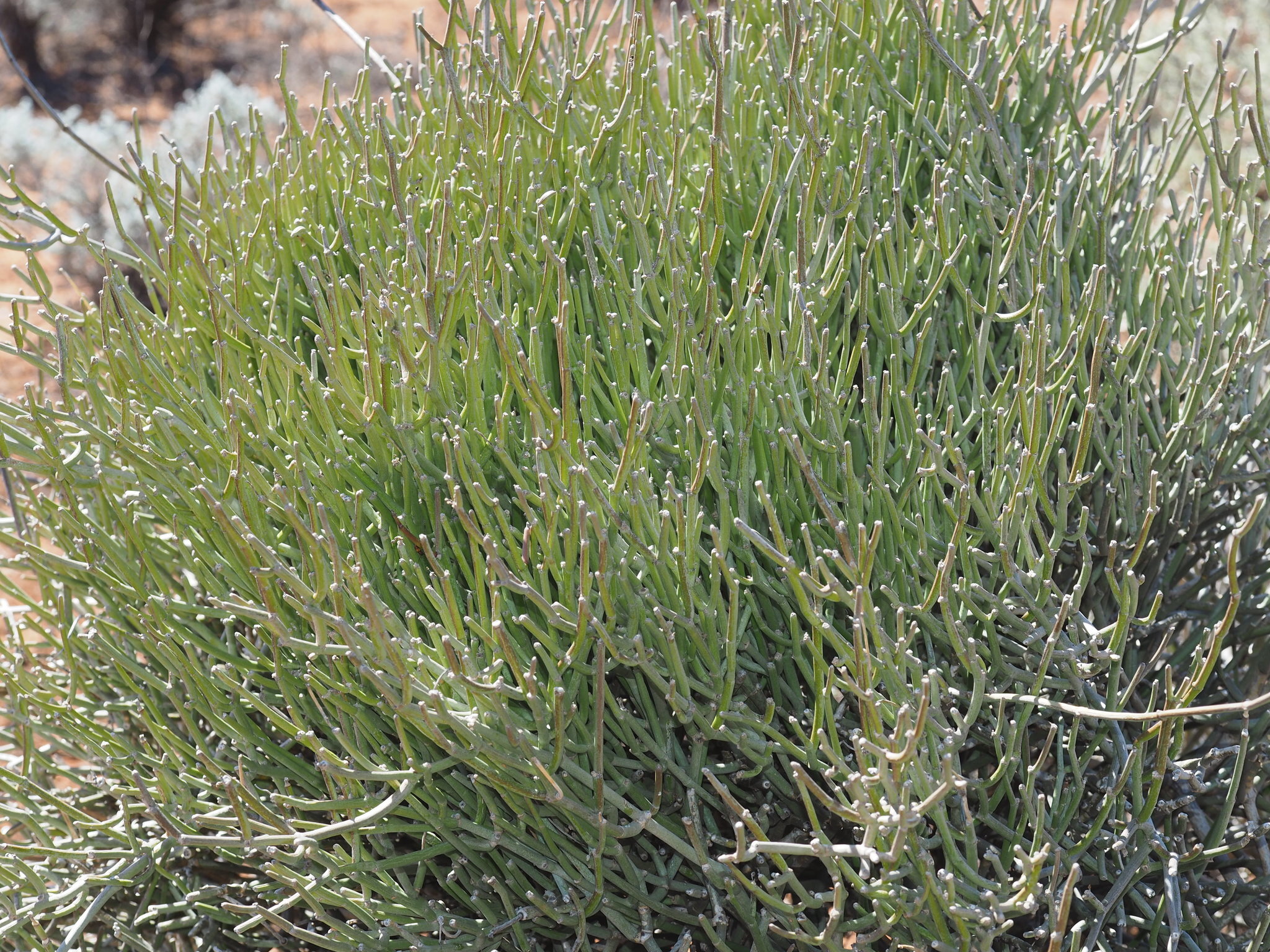
Poisonous parts
Stems are poisonous.
Location
Pencil caustic bush has been found on all mainland states and territories of Australia.
Toxin
Pregnane glycoside.
Symptoms of poisoning
Stock that have consumed pencil caustic bush show:
- rapid breathing and grunting
- restlessness
- staggering
- collapse, followed by death.
Once on their side on the ground, stock may stretch out stiffly, demonstrate running movements, and close their mouth like a vice while grinding their teeth.
Treatment / management
Preventing stock access to paddocks with large numbers of pencil caustic bush is the best course of management to prevent poisoning.
Notes
The Northern Territory government has a publication for livestock owners, called Sarcostemma (pencil caustic) poisoning.
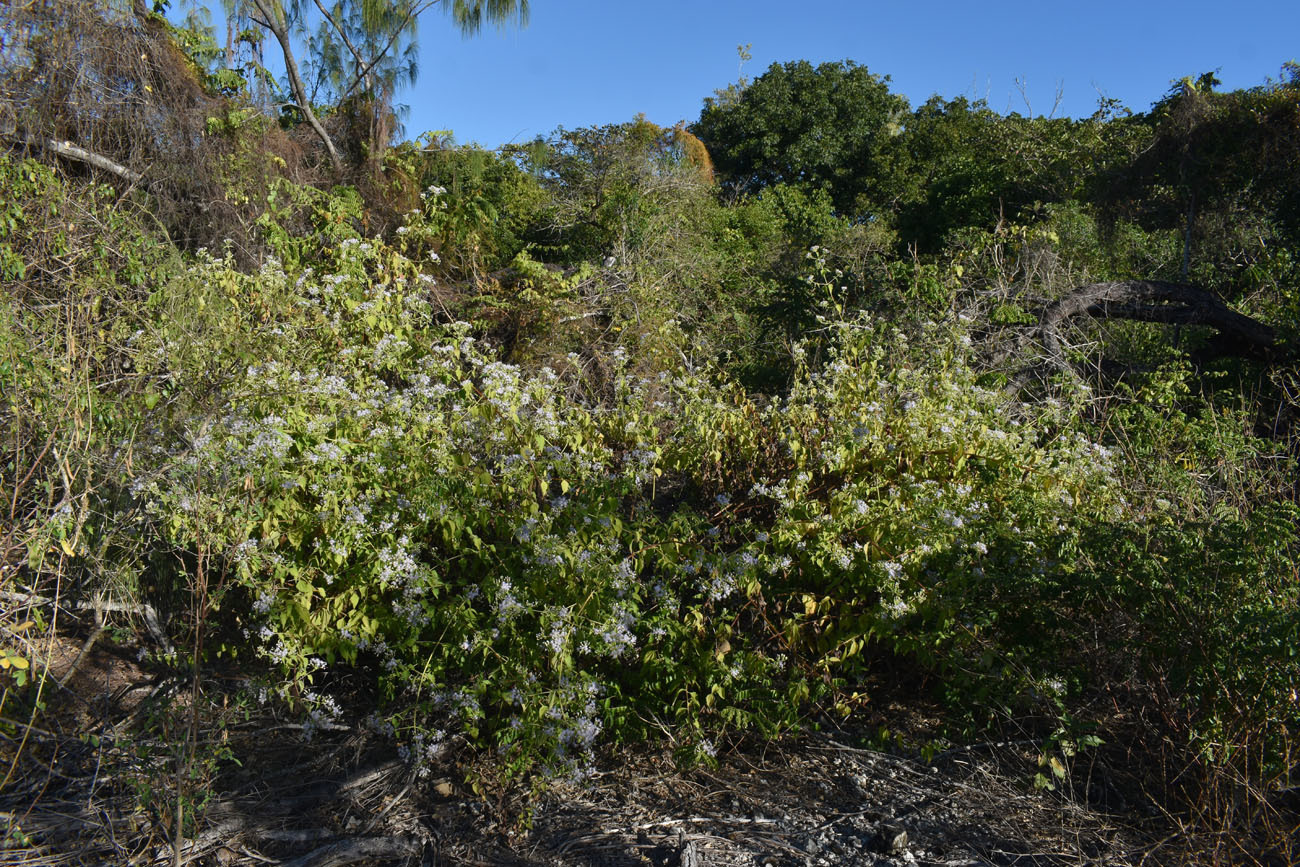
Siam weed (Chromolaena odorata)
Poisonous parts
Leaves.
Location
Siam weed has been found in North Queensland and Darwin.
Toxin
Pyrrolizidine alkaloids.
Symptoms of poisoning
High rates of death and abortion have been recorded when stock have grazed Siam weed in the Philippines, where Siam weed is commonly found.
Treatment / management
There is no known treatment for stock poisoned by Siam weed.
Siam weed is highly invasive. The Northern Territory Government has a comprehensive Siam weed management guide.
The Queensland Government has a publication regarding the management and elimination of Siam weed.
Notes
An extensive photo gallery of Siam weed can be found here: Atlas of Living Australia – Siam weed.
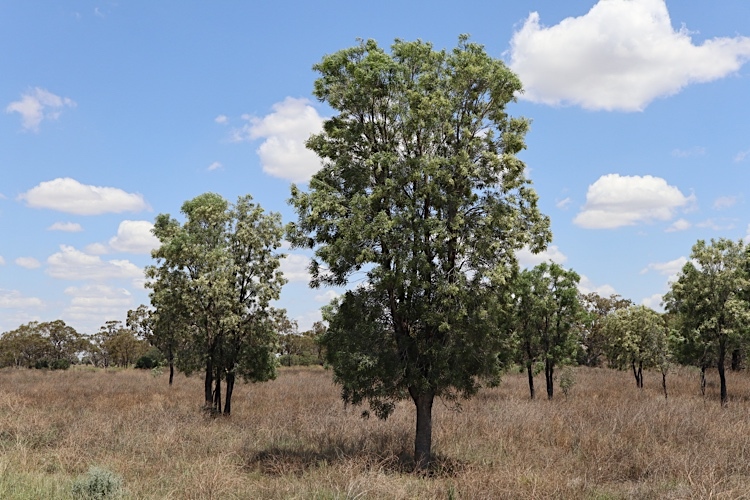
Whitewood (Atalaya hemiglauca)
Poisonous parts
Young shoots and fruit.
Location
Whitewood grows Australia wide.
Toxin
Unidentified.
Symptoms of poisoning
Stock with acute whitewood poisoning display distress, swaying or staggering gait, lethargy, followed by rapid death.
In chronic cases stock demonstrate:
- lethargy
- glassy eyes
- shivering of shoulder muscles
- yawning
- dark urine.
Some demonstrate an inability to swallow and push their head against objects.
Treatment
No consistently successful treatments are known.
Notes
More information about Whitewood, including a distribution map and an extensive photo gallery can be found here: Atlas of Living Australia – Whitewood.
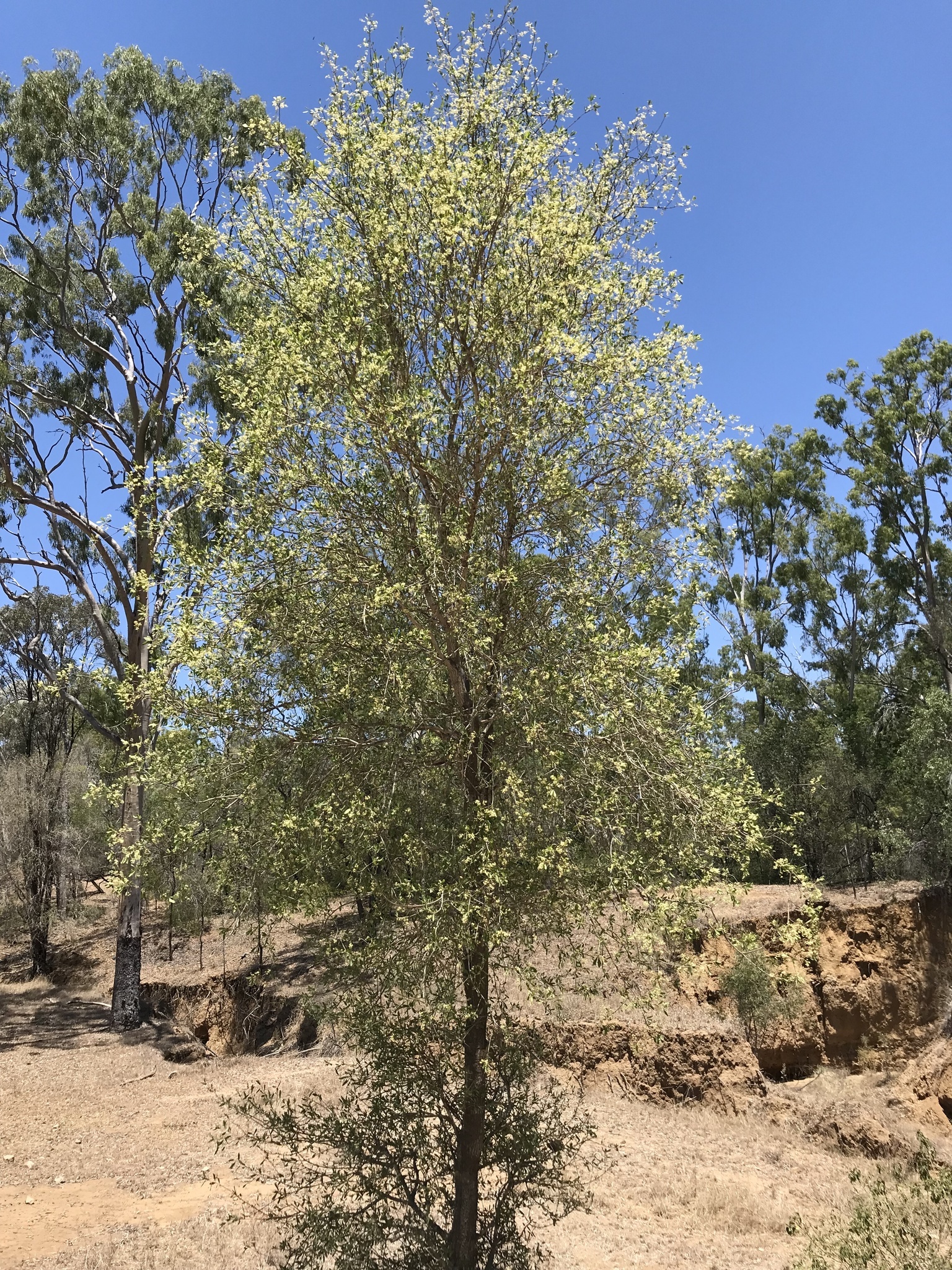
Yellow-wood (Terminalia oblongata)
Poisonous parts
Leaves. Poisoning occurs when suckers or fallen trees are browsed, or drought and/or heavy frost causes heavy leaf drops.
Location
Yellow-wood is primarily found in Central Queensland along the tributaries of the Fitzroy and Burdekin Rivers, but also in north-western Queensland and the Sturt Plateau of the Northern Territory.
Toxin
Punicalagin and terminalin.
Symptoms of poisoning
Clinical signs of toxicity reflect damage to the liver and kidneys. Signs include:
- jaundice
- photosensitisation including excessive blinking, watering of the eyes, dry and cracking muzzle, reluctance to leave shade
- abdominal pain
- dehydration
- teeth grinding
- excessive salivation.
Clinical signs are also influenced by the amount of toxin ingested and the size/condition of the animal. Young and hungry stock are more severely affected.
Treatment / management
Stock that recover or only suffer a small insult before being taken off the pasture, may develop chronic signs and fail to thrive. These animals are often identified by rough coat and poor body condition compared to other animals. Veterinary treatment can reduce the signs of those affected but animals should immediately be removed from access to the plant. If possible, it is best to prevent stock access to trees when conditions that induce heavy leaf fall are expected.
Notes
More information from the Queensland Government can be found here: Yellow-wood poisoning.
Alternatively, a comprehensive photo gallery and distribution map can be found here: Atlas of Living Australia – Yellow-wood
