Cud Bud is a free app that that lets you assess pasture availability and calculate a pasture budget while you’re in the paddock.
See how much feed is available, how much your cattle are expected to eat and how much should be left when they come out.
Keep assessments for each paddock so you can look back at what happened last time.
Share property and assessment information with others or export your data to Excel.
From a mental note to a pasture record
You pull up at a paddock, have a look at the grass and make a mental note of how much feed is there. You’ll write it down later.
Then later comes, and you’re trying to remember exactly what you saw and work out when the cattle need to be moved.
Or perhaps the pasture budgeting is all done in one person’s head, leaving everyone else relying on them to know how much feed is available and when the cattle need to move.
Sound familiar?
Cud Bud gives you somewhere to capture that information while you’re standing in the paddock. You can do the pasture budgeting calculations on the spot and keep a record you can come back to.
Built to make pasture budgeting simpler
Cud Bud started with a pasture budgeting spreadsheet used by Jim Fletcher, Senior Beef Extension Officer with the Queensland Department of Primary Industries based in Mackay.
Jim saw an opportunity to make pasture budgeting quicker and easier by moving the process from a spreadsheet to a phone, allowing assessments to be recorded in the paddock as they were done.
It also makes it easier to share that information with other people in the business, rather than relying on notes, spreadsheets or someone’s memory.
Jim developed Cud Bud using an AI coding tool through the Replit platform, which he jokingly calls his “AI Henchman”. Starting with his existing Excel pasture budgeting spreadsheets, Jim used plain English instructions to guide the AI in building the app.
“It’s probably taken me a couple of weeks here and there in the evenings to help my henchman create what is a pretty useful and practical app. I certainly don’t have any coding skills, but the henchman still created what I needed very accurately.”
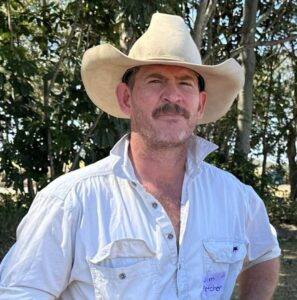
Cud Bud developer Jim Fletcher, a Mackay-based Senior Beef Extension Officer with the Queensland Department of Primary Industries.
So, what does it do?
At its simplest, Cud Bud helps answer three questions:
How much grass is in the paddock? How much will your cattle eat? And how much will be left when they come out?
With Cud Bud, you enter:
paddock size and estimated pasture yield
number and class of cattle
average liveweight
planned grazing period
other factors that affect how much your cattle will eat, such as the cows’ stage of lactation and the pasture’s growth phase
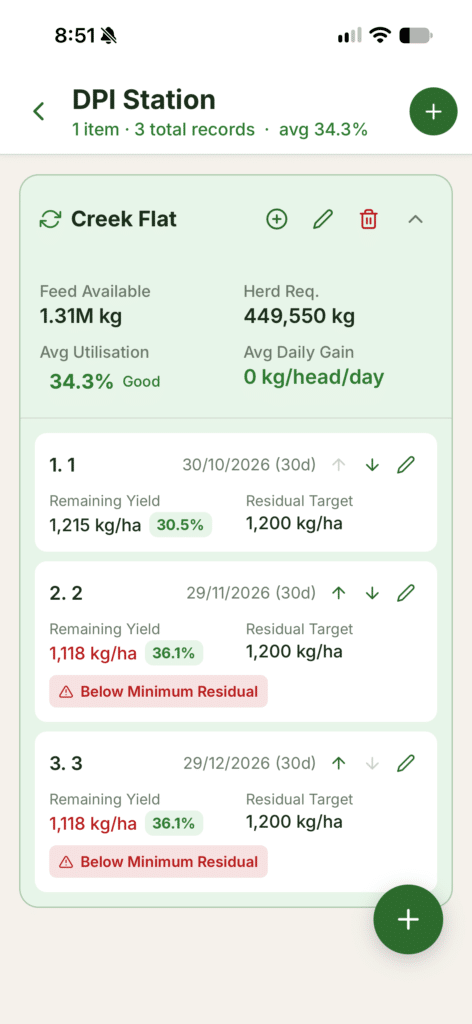
Cud Bud does the calculations for you, showing the total feed available, how much the cattle are expected to eat, the expected utilisation rate and how much pasture should be left when they come out.
You can also set a minimum amount of pasture you want left at the end of the graze, and Cud Bud will alert you if the estimated amount remaining falls below that target.
As well as assessing individual paddocks, Cud Bud now lets you set up cattle groups and use them across a rotation of paddocks. This saves you having to re-enter the same cattle details each time the group moves to a new paddock.
What does the utilisation number tell you?
Utilisation is the percentage of available pasture you expect the cattle to eat during the grazing period.
As a general guide, Jim aims for around 30–40% utilisation, although the target will vary depending on land type, pasture type and condition, season and grazing management. Higher utilisation can affect animal performance and mean longer recovery periods before the paddock is grazed again.
The useful part is being able to see that number before the cattle go in.
If the expected utilisation is higher than you want, you can reduce the number of cattle or plan to move them onto the next paddock sooner.
And like any pasture budget, it’s still an estimate. You’ll need to keep an eye on the paddock while the cattle are there and reassess the pasture to check things are tracking as expected.
Keeping track from one graze to the next
Cud Bud isn’t only a calculator.
Each paddock has its own card, which keeps a series of pasture assessments for that paddock together in one place. When you come back, you’ve got a record of what was there last time rather than relying on memory.
You can set up multiple properties and as many paddocks as you need.
Property details and assessments can also be shared with other Cud Bud users, making it easier for other people in the business to see the same information and understand what’s behind grazing decisions.
If you use a grazing chart or prefer to keep your records elsewhere, assessments can also be exported to Excel rather than having to manually transfer the information when you get back to the office.
A working example of Cud Bud
It’s 1 October. You’ve got 450 pregnant cows, due to start calving at the end of the month, in a rotation of three 250 ha paddocks (Creek Flat rotation). Each paddock has 1,750 kg DM/ha of pasture available when they go in.
You want to work out how long they can graze each paddock while aiming for 30% pasture utilisation and leaving at least 1,200 kg DM/ha behind.
You’d prefer to graze each paddock for 30 days, so you enter that into Cud Bud to see how it stacks up against your pasture utilisation and residual targets.
That gives you 90 days of grazing across the three paddocks, taking the cattle through to 29 December.
So, what do the numbers say?
Cud Bud shows the expected pasture utilisation and remaining yield across the three paddocks, highlighting where residual pasture falls below the nominated target.
In the first paddock, when most cows are yet to calve, pasture utilisation hits your sweet spot of 30%, leaving approximately 1,215 kg DM/ha.
As more cows calve and their feed requirements increase with lactation, expected utilisation rises to 36% in the following paddocks, leaving around 1,118 kg DM/ha, slightly below the target residual of 1,200 kg DM/ha.
This may be close enough to your target for now, but there are a few ways you could approach it:
Stick with the 30-day grazing periods, allowing a longer recovery before those paddocks are grazed again, or adding another paddock to the rotation to reduce grazing pressure
Test a shorter grazing period in Cud Bud to see how moving the cattle sooner affects utilisation and the amount of pasture left behind
Monitor and manage. The first paddock is on target, so you could monitor pasture conditions and reassess your plans towards the end of the first graze. Some good early rain could change the picture entirely.
And that’s where your judgement comes in. Cud Bud gives you the numbers to weigh up your options, but you can adjust your plans as conditions change.
Give it a go
Cud Bud is available for iPhone from the App Store. Download it here.
If you’re not sure where to start, FutureBeef’s forage budgeting resources can help you understand the principles behind a pasture budget and see how they’re applied in practice:
Thank you for signing up to start receiving the FutureBeef eBulletin at the email address you provided, please follow the instructions in the confirmation email to subscribe.
We value your privacy and will never sell your details.