
One of the challenges of managing grazing land is that change can be gradual and is often difficult to detect, or “slower than the eye can see.“ Seasonal conditions have a major influence on pasture growth and land condition, making it difficult to distinguish seasonal effects from the impacts of management. As a result, it can be hard to determine whether management decisions are improving land condition and carrying capacity, or whether the productive capacity of the land is being slowly run down over time.
Pasture monitoring sites are permanent points monitored over time to assess key indicators such as species composition, pasture yield, ground cover, weed presence and/or tree density. These are often simply assessed visually, for example using pasture yield photo standards. When combined with photographs taken from the same location and bearing over time, these records provide a powerful visual and quantitative measure of change.
They offer a simple and objective way to track how management decisions, such as spelling and stocking rate adjustments, are influencing land condition and pasture productivity over time. This information can then be used to evaluate management outcomes and support more informed grazing management decisions.
While satellite monitoring systems are now widely available and continue to improve, on-ground monitoring sites remain an important part of the picture. They help validate satellite data and can pick up changes in species composition that current satellite technology cannot yet detect.
Spyglass case study demonstrates the benefits of monitoring
A good example comes from one of the many monitoring sites at DPI’s Spyglass Beef Research Station, north of Charters Towers. The site is in Green Ant paddock which comprises multiple land types including yellowjacket, narrow-leaved ironbark and cleared softwood scrub improved with buffel grass.
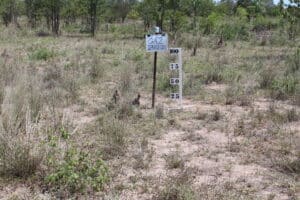
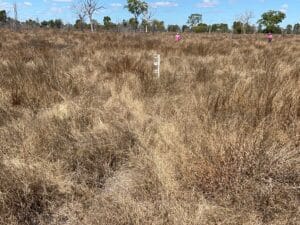
Since 2021, the site has been assessed each year using visual estimates of pasture yield, species composition and ground cover and a photograph was also taken.
These monitoring records, collected between 2021 and 2026, demonstrate how grazing management can maintain and even improve land condition when stocking rates are aligned with seasonal forage availability. During this period of above-average pasture growth, stocking rates averaged around 6 ha/AE, which was higher than the paddock’s modelled long-term carrying capacity (LTCC) of 9 ha/AE. (The LTCC of individual paddocks can be estimated using the MyForage tool.) Despite this higher stocking pressure, pasture utilisation remained moderate, allowing pasture biomass to be maintained, ground cover to increase, and desirable 3P grasses such as buffel grass and black speargrass to persist. The monitoring data provided valuable feedback that land condition was being maintained, and in some respects improving, even while a greater proportion of available pasture was being utilised during favourable seasons.
Perhaps the strongest evidence comes from the monitoring photographs. Images captured in December 2021 compared with August 2026 clearly show increased pasture abundance and ground cover, supporting the measured improvements recorded at the site. Together, the photographic record and field data demonstrate land condition trending from C to B condition over the monitoring period.
The resulting increase in forage reserves and ground cover provides more than just grazing benefits. Improved cover helps protect soils from erosion, reduces sediment loss, suppresses weed establishment and provides sufficient fuel loads to carry planned fire when required.
The Spyglass example demonstrates the value of monitoring sites as a decision-support tool. By combining regular field measurements, photographic records and stocking rate information, graziers can confidently assess whether management practices are moving paddocks in the desired direction.
In this case, matching stocking rates to available feed, managing woody regrowth and tracking pasture trends through a permanent monitoring program has helped maintain productive pastures, improved ground cover and lifted land condition. Importantly, the improvements were identified and verified through objective monitoring, reinforcing the value of collecting consistent data over time. Incorporating pasture monitoring provides evidence of condition changes beyond just a run of changed seasons. It shows the integrated effects of the management stocking decisions and those climate impacts. Installing monitoring sites is easy to do, see the instructions on this page.
Written by Brad Hough from Townsville DPI, as part of the Queensland Pasture Resilience Program which is a partnership between the Department of Primary Industries, Meat & Livestock Australia and the Australian Government through the MLA Donor Company.
