
In many areas of Queensland, we have been lucky to get well above the forecast rain for this point in the season. That is great news on many levels, but when conditions change so quickly, it can create some additional challenges and opportunities when it comes to establishing or managing a new pasture.
Like some of you, the Southern Queensland Sown Pastures team have been in the process of establishing new pastures across our demonstration and trial sites over the last 2 years. Despite doing everything possible to store our moisture and control our competition, the lack of rain across some areas in the 2025/26 summer has meant a complete or partial failure to establish. Spring 2026 arrived with a forecast of well below average rainfall and instead we have had well above average rainfall (so far). This has produced another set of challenges that we need to navigate our way through to achieve our pasture establishment goals.
We all know that we live on the driest inhabited continent on earth and our weather is also the most variable on the planet, but some years really challenge our ability to plan and manage for this variability. In the end, there is only so much that we can plan for, and the rest is up to mother nature.
Judging by calls from producers to the team since the rain, and the issues that we have had to manage on our own research sites, there are some tough decisions to be made. Here are some that we’ve encountered so far.
Case 1 – Good preparation but no rain
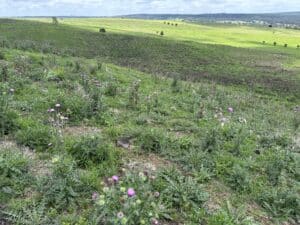
A well-prepared seedbed with stored moisture was sown with legumes and grasses last summer but there was no germinating rain. Now that there has been good spring rain, the weeds have exploded but there are very few or no seedlings of the seed that was sown.
- Do I try and kill the weeds and keep what pasture I can, or
- Write off last season’s seed and start the process again, or
- Ride it out and hope that the new pasture comes through later in the season?
This is a very tricky scenario with a potentially expensive choice to make. Writing off the cost of establishment including the seed is a big decision that shouldn’t be made lightly. The flip side is hanging on in the hope that last year’s seed will germinate only to realise when it’s too late that it does not, is also a tough pill to swallow.
There are some management options available here that may be worth considering, so taking a methodical approach to assessing this scenario with input from an experienced impartial advisor can assist in quantifying the risks and returns of each option.
Some options for managing scenario 1 could include:
- Targeted use of selective herbicide to reduce the weed population
- Carefully managed intensive grazing to reduce competition
- If planting directly into the sprayed-out dead material next season, the use of specific machinery to plant into dense thatch and achieve good seed to soil contact.
Case 2 – Unexpected early rain
The forecast for southern Queensland was for a dry spring and summer, so the ground wasn’t prepared well enough for pasture establishment. After the spring rains, there is a good profile of soil moisture. It is now a great opportunity to establish a new pasture. Can I start ground preparation now and catch up and be ready to plant this summer?
Depending on your climate zone and soil type, it may not be too late to establish a pasture this season, but you are playing catch up and it increases the risk of poor establishment, especially in inland southern and central Queensland. Key factors to consider would include:
- sourcing enough quality seed in time
- access to the required machinery for seedbed preparation and sowing
- having sufficient soil moisture prior to sowing
- controlling any competition from existing grasses and weeds, and
- allowing enough time for the new pasture to germinate, establish and set seed before the end of the growing season.
In assessing each of these scenarios, there is a long list of potential risk factors to be considered. An experienced independent advisor such as a pasture agronomist from the DPI can work through this process with you and help you to make a considered strategic decision based on decades of research and local experience. This service is free and impartial.
By the end of December most regions across Queensland will be heading into the most reliable period for germinating and growing rain and the forecast has changed for the better, so there is now an opportunity to act. A considered approach should be taken when making this decision and not react to the pressure from FOMO (Fear Of Missing Out).
If you are considering planting a new pasture this season and would like advice on what to plant or how or have questions on a pasture that isn’t performing well, get in touch with a DPI pasture specialist in your area.
Written by Ted Callanan from Toowoomba DPI, as part of the Queensland Pasture Resilience Program which is a partnership between the Department of Primary Industries, Meat & Livestock Australia and the Australian Government through the MLA Donor Company.
