
Key takeaways
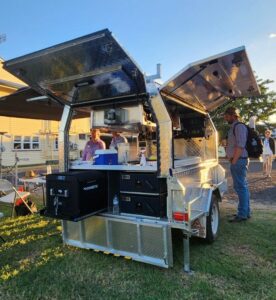
- Queensland has developed a mobile laboratory that can take disease testing equipment crush-side
- On-site testing could reduce transport delays and help speed up disease investigations
- Built from a standard 7 x 5 trailer, the mobile laboratory has its own power and internet connection to support laboratory work in regional and remote areas
- Field trials have tested laboratory equipment and sample handling under a range of field conditions
Every hour counts
When livestock show unusual signs, getting the right answer quickly matters. Most investigations rule out serious diseases, but occasionally more testing is needed to know exactly what you’re dealing with.
For Queensland, that’s no small task. Large distances, seasonal road closures and limited access to specialist laboratory services can all delay disease investigations.
A mobile laboratory developed by the Queensland Department of Primary Industries aims to bring testing capability into the field to help overcome these challenges.
Rather than being a diagnostic system itself, the trailer provides a mobile base for specialist equipment, sample handling and access to online systems for registering and tracking samples.
Senior Scientist Dr Beth Fowler, who led its development, said producers were central to the thinking behind it.
“We want to get an answer for them as quickly as possible when their animals are sick,” Dr Fowler said.
That includes both emergency animal diseases and diseases already present in Australia.
A laboratory inside an ordinary trailer
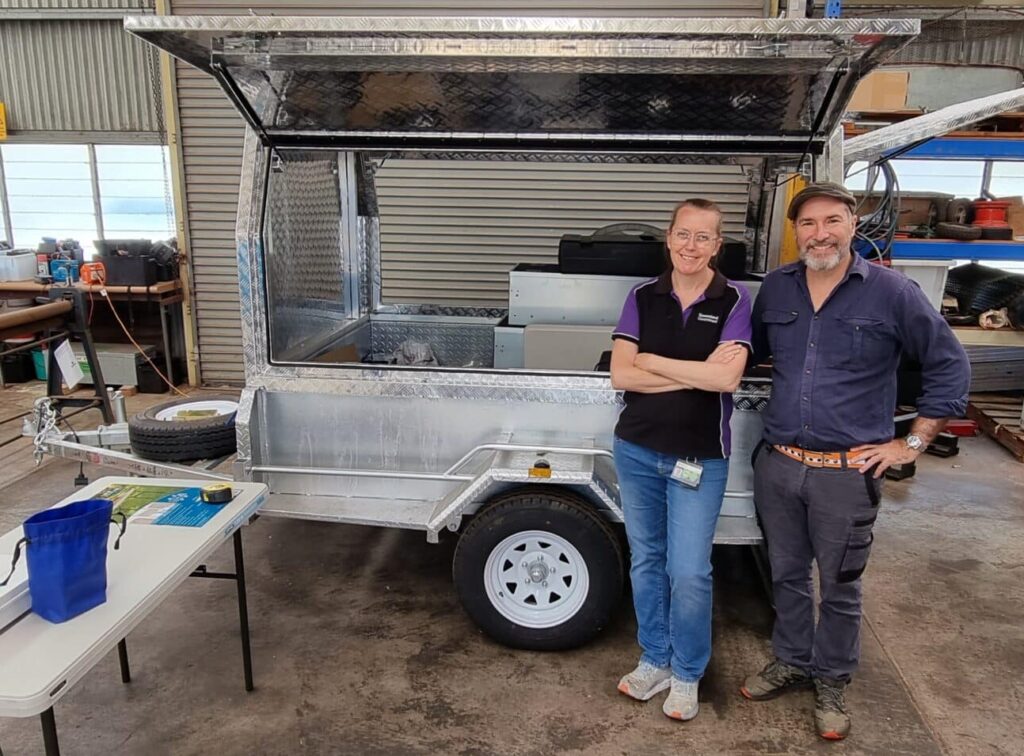
From the outside, there’s nothing remarkable about this piece of equipment.
The mobile laboratory started life as a standard 7 x 5 tradie’s trailer. Rather than building a specialised vehicle from scratch, the team adapted an off-the-shelf model for laboratory work in the field.
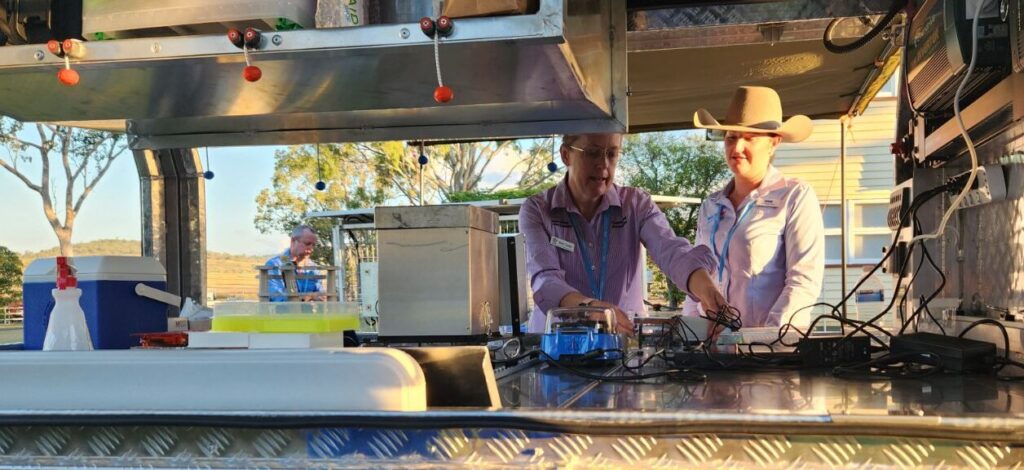
And that’s really the point. Low cost and versatility were two of the main design requirements. Its off-road capability means it can be towed close to the yards, carry around 200 kg of equipment and power up to six 240-volt devices through its inverter.
The flexible layout allows equipment to be swapped depending on the job, while the simple fit-out makes it easier to clean and decontaminate between deployments.
Bringing laboratory capability closer to the crush
There are no permanent disease tests installed in the trailer. Instead, samples can be refrigerated for later testing or processed on-site using equipment suited to the job. One example is portable polymerase chain reaction (PCR) technology, a technique commonly used in laboratories for disease testing. It works by making millions of copies of specific DNA from a sample, allowing very small amounts to be detected. This can identify whether DNA from a particular disease-causing organism is present.
Where suitable tests are available, this could allow testing to begin on-property, particularly for time-sensitive samples.
And where mobile coverage is patchy or non-existent, Starlink allows field teams to stay connected. From the property, they can register and track samples through online systems, communicate with specialists and send information as the investigation progresses.
The trailer was put to the test near Allora in 2025, where the mobile lab was used to receive and register blood samples in the field before sending them to the laboratory.
Developing tests for on-site use
The equipment is only half the story. Researchers are also developing tests that can be used on-property.
Earlier research included a rapid molecular test for lumpy skin disease, designed to detect viral DNA from a suspect animal. Further work has investigated rapid testing for bovine ephemeral fever, or three-day sickness, a disease much more familiar to northern beef producers.
The aim isn’t to replace conventional laboratories. Emergency animal disease results would still require appropriate confirmation and response procedures. Instead, starting the process on-site could give veterinarians and response teams earlier information to support decisions and help speed up the response.
Putting it to work
Moving laboratory processes into the paddock brings its own challenges.
At Brian Pastures Research Station, the team operated portable diagnostic equipment beside the cattle yards. The exercise highlighted practical issues that come with working outside a controlled laboratory environment, including dust, wind and how tests and equipment are stored and handled.
The trailer was also used for an on-farm cattle genomics project at Mount Mee, where researchers operated portable DNA sequencing equipment next to the yards in wet weather. While separate from disease detection, it showed how specialised laboratory equipment could be taken to the sample rather than the sample brought back to the laboratory.
Designed to be deployed
The trailer’s flexibility also means it could be used beyond cattle, including for other emergency animal diseases such as bird flu.
Keeping the trailer relatively simple and affordable was also part of the thinking behind how it could be used across Queensland.
“The idea was to have something designed for Queensland conditions that wasn’t so expensive that we couldn’t have a few of them deployed around the state,” Dr Fowler said.
That could mean units based at DPI stations in major regional centres, ready to reach properties within a couple of hours.
Most producers will hopefully never need to see one arrive at their yards.
But if something unusual does turn up, having the right people, equipment and testing capability at the ready could help get the investigation underway sooner.
More information
Protecting your business with a biosecurity plan →
Reporting emergency animal diseases →
Bovine ephemeral fever (three-day sickness) →
Preparing for emergency animal diseases in northern Australia →
