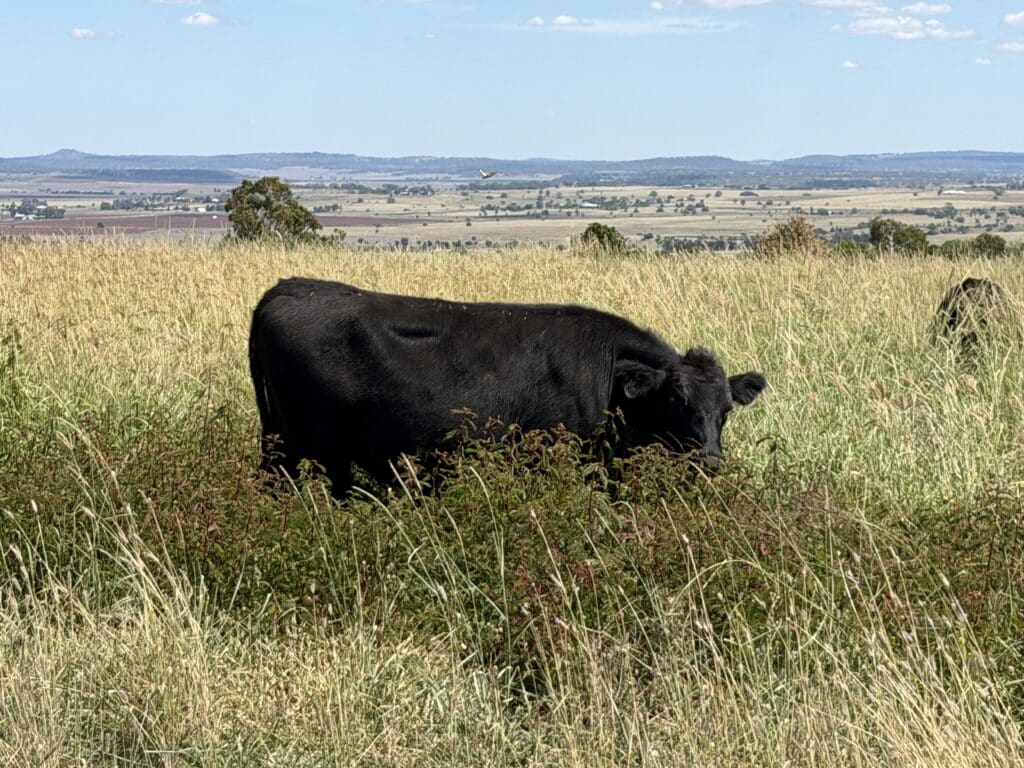
Paul and Tonia Grundy run cattle on their property just south of Toowoomba.
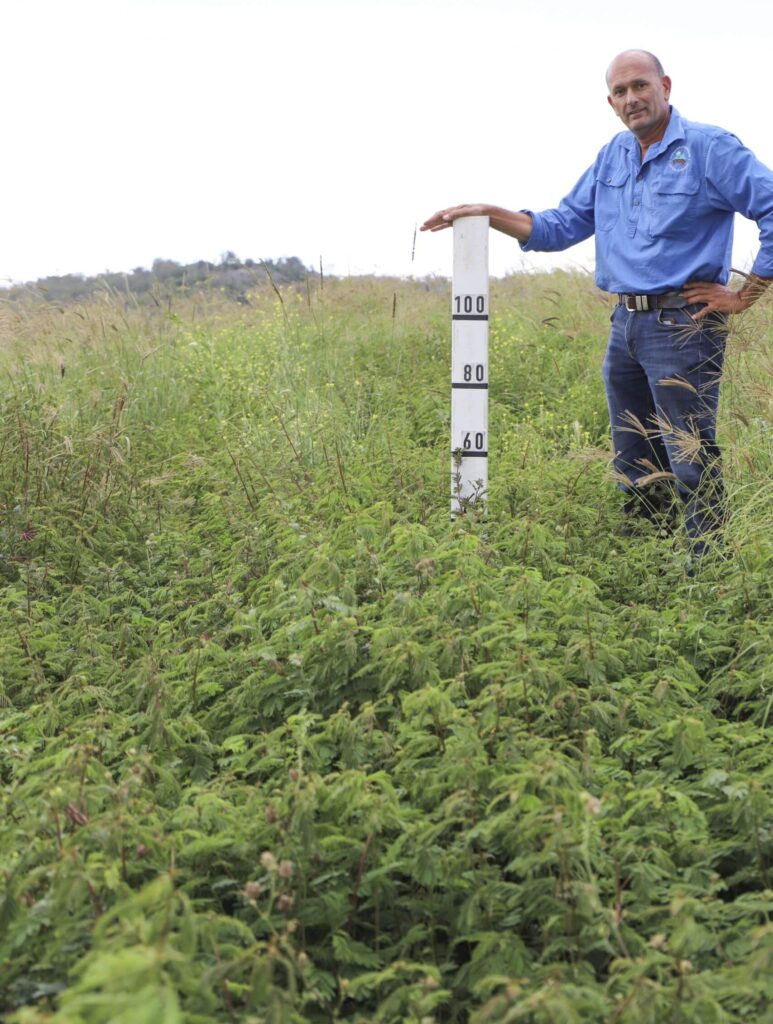
Their grazing paddocks are a mixture of improved and native grasses on undulating hills and basalt soils, but the pastures contained few legumes. In 2025 they successfully sowed a 20 ha paddock with strips of desmanthus by making the most of stored soil moisture.
A process of renewal
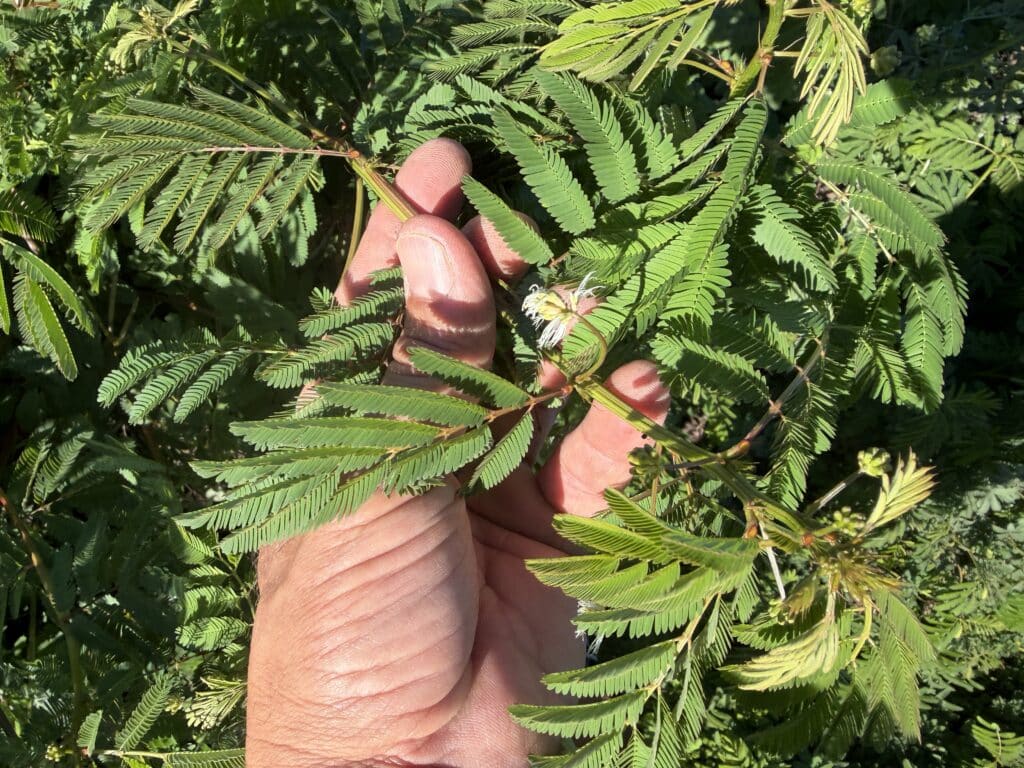
Paul explained “We wanted to increase the amount of legume to reverse paddock run-down while minimising the ongoing costs of synthetic nitrogen fertilisers. We chose desmanthus over other legume options due to its long-term persistence, including the ability to self-recruit and survive after frost, its non-bloating characteristics, and how it complemented our summer mix of grasses”
Initially they tried feeding unscarified seed in a lick mix, targeting the period with the highest chance for germinating rainfall (between late December 2024 and February 2025), but that year sufficient rain did not arrive until March when more than 100 mm fell following ex-Tropical Cyclone Alfred.
Germination around the cowpats that had been partly incorporated by dung beetles was very high. However, the seedlings did not survive due to the established grasses already growing in the paddock creating too much competition, combined with frosts from mid-May.
So, more reliable establishment options were considered, which included speaking with the DPI’s sown pasture agronomists. Paul and Tonia decided to sow the desmanthus ‘like a crop’ in strips within the existing pasture: preparing the paddock, storing moisture, and using a planter.
Treating pasture establishment like a crop
To successfully establish desmanthus into strips of stored moisture, Paul and Tonia:
- Planned to sow early in the growing season to maximise plant growth before winter.
- Fallowed 3 m strips: an initial glyphosate spray in March 2025, with follow-up sprays in July and October. The strips were separated by 8 to 10 meters of grass (depending on the undulating landscape and contours). The paddock was still able to be grazed while the strips lay fallow.
- Planted following 60 mm of rain and forecast for follow-up falls:
- Used desmanthus rhizobia to inoculate seed to ensure nitrogen fixing benefits;
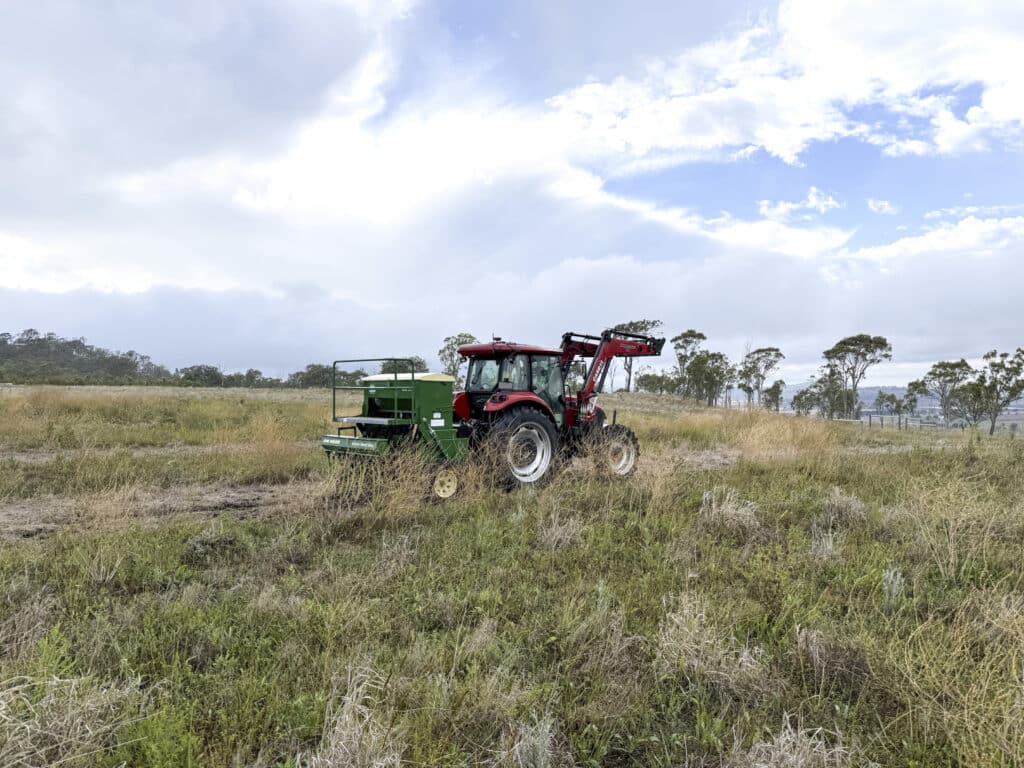
- Direct drilled into the zero-tilled prepared strips with single disc openers and no press wheels;
- Sowed uncoated Progardes desmanthus as scarified seed to aid germination, at 3–4 kg/ha.
Establishment and early growth
Initial establishment after sowing in October was patchy and highly variable due to sowing depth being too deep (>1–1.5 cm) in some places, and seed being ‘sealed’ under the soil surface due to the heavy storm rain. A decision was therefore made to resow in November.
Unfortunately, the rain forecast after the second sowing did not eventuate for 4 weeks. Germinating rain (26 mm) finally occurred at the end of December with the emerging seedlings growing on stored soil moisture until just over 100 mm fell in February.
“The value of stored moisture and zero-till strips was confirmed as spare seed was over-sown into some grass between the strips”, Paul explained.
“The seeds germinated at the same time but the seedlings in the grass largely failed to establish due to competition from the pasture grasses.”
Looking forward, looking back
Paul and Tonia are happy with how well the strips have established, although some areas look better than others, admitting that while the fallowing worked well, in hindsight planting was done too early on the first good rains in October, instead of waiting for the initial rain to stimulate the spring weeds which could have been sprayed out to reduce competition with the legume seedlings.
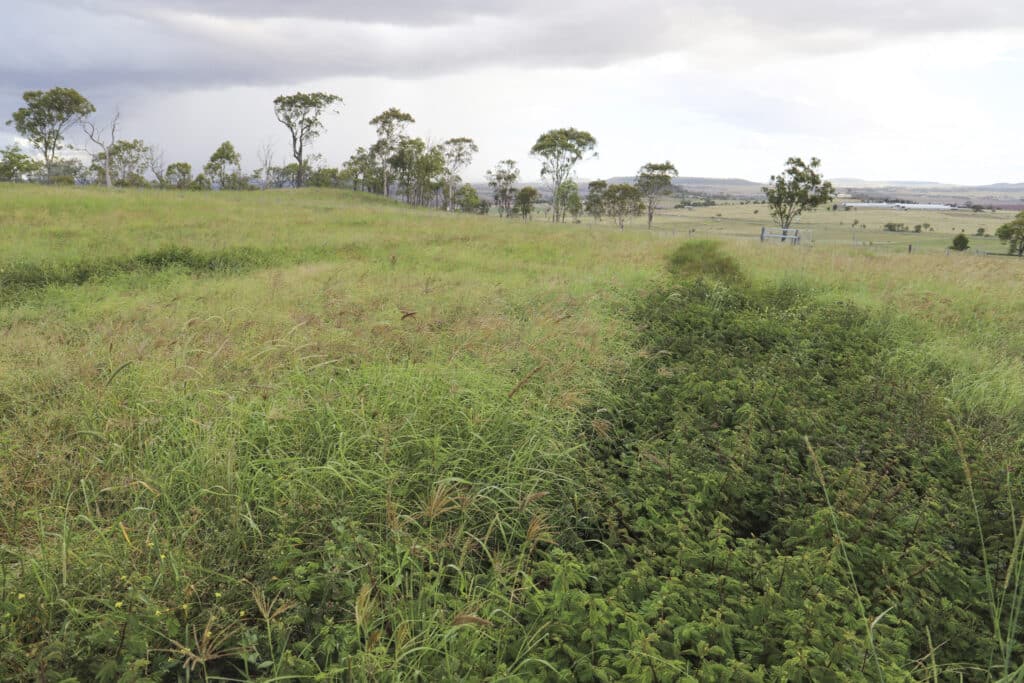
“We were surprised just how robust desmanthus was when sown into soil with a good moisture profile. In what was a drier-than-average early summer season, we ended up with excellent establishment. It will be interesting to see how the desmanthus performs after the next spring.
“Going forward, our plan is to spray out entire areas within a single paddock leading into next season and aim to sow in mid-November on stored moisture and ahead of a rainfall event. We will again plant desmanthus in strips and instead of the poorer grasses that are already in the paddock, we’ll plant improved grass species such as ‘Reclaimer’ Rhodes grass and ‘Gatton’ panic sown in between.
“This should give us better establishment, and more palatable and productive pasture species”, Paul says.
To sum up
Germinating rain without stored soil moisture, combined with competition from existing grass usually results in a legume establishment failure.
Paul says, “Our limited experience would suggest that on our clay soil and climate, 25–30 mm of rainfall is sufficient to allow successful establishment with stored moisture. Desmanthus is then able to ‘hang on’ for extended periods until decent follow-up rain occurs.”
One other challenge that Paul and Tonia encountered was failure of the rhizobium inoculant due to treated seed sitting in dry soil for weeks following planting.
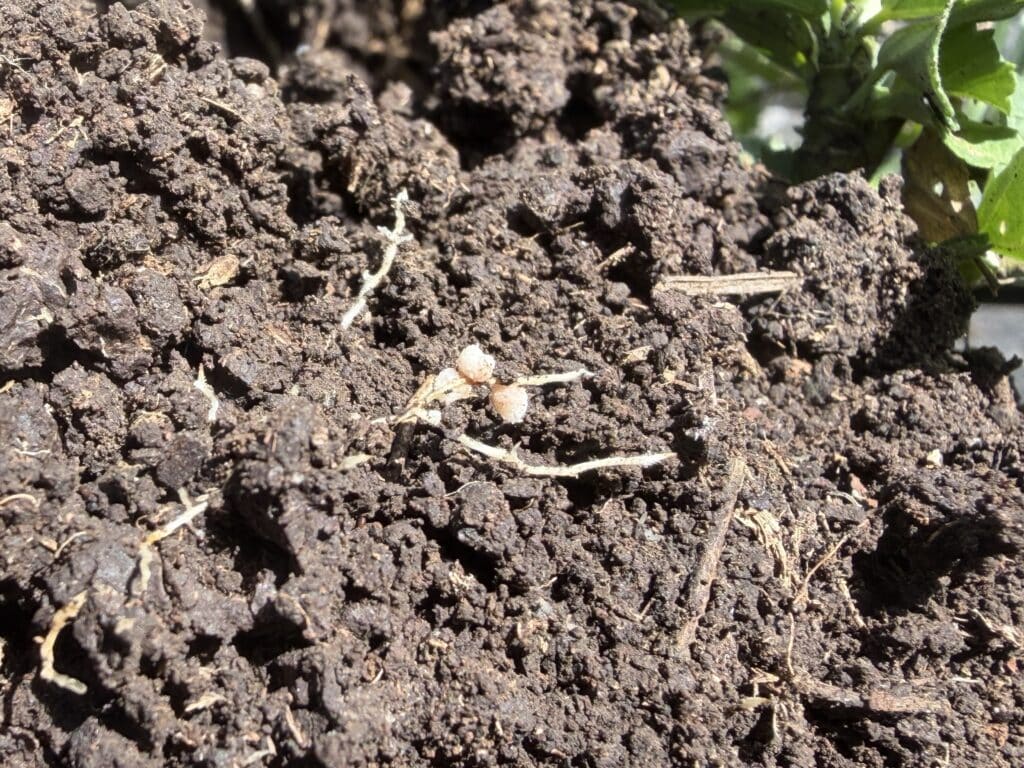
Paul reports, “We resolved this issue 2 months after germination by making a ‘tea bag’ solution from rhizobium that comes in peat and spraying this onto the strips within hours of an approaching storm which washed the application in with 36 mm of rain. Several untreated strips were left as a control. Root inspection 6 weeks later found varying levels of nodulation on the treated areas compared with virtually no nodulation on the control strips. This was important because without effective nodulation, the desmanthus would have been just another plant in the paddock and not fixing additional nitrogen.”