
It is the stage of digestive tract development that governs how early weaned calves are managed.
Calves are born with an undeveloped rumen, meaning that they are unable to digest the grass and other fibrous material that is readily eaten by an adult ruminant. As such, young calves are dependent on milk for nutrients.
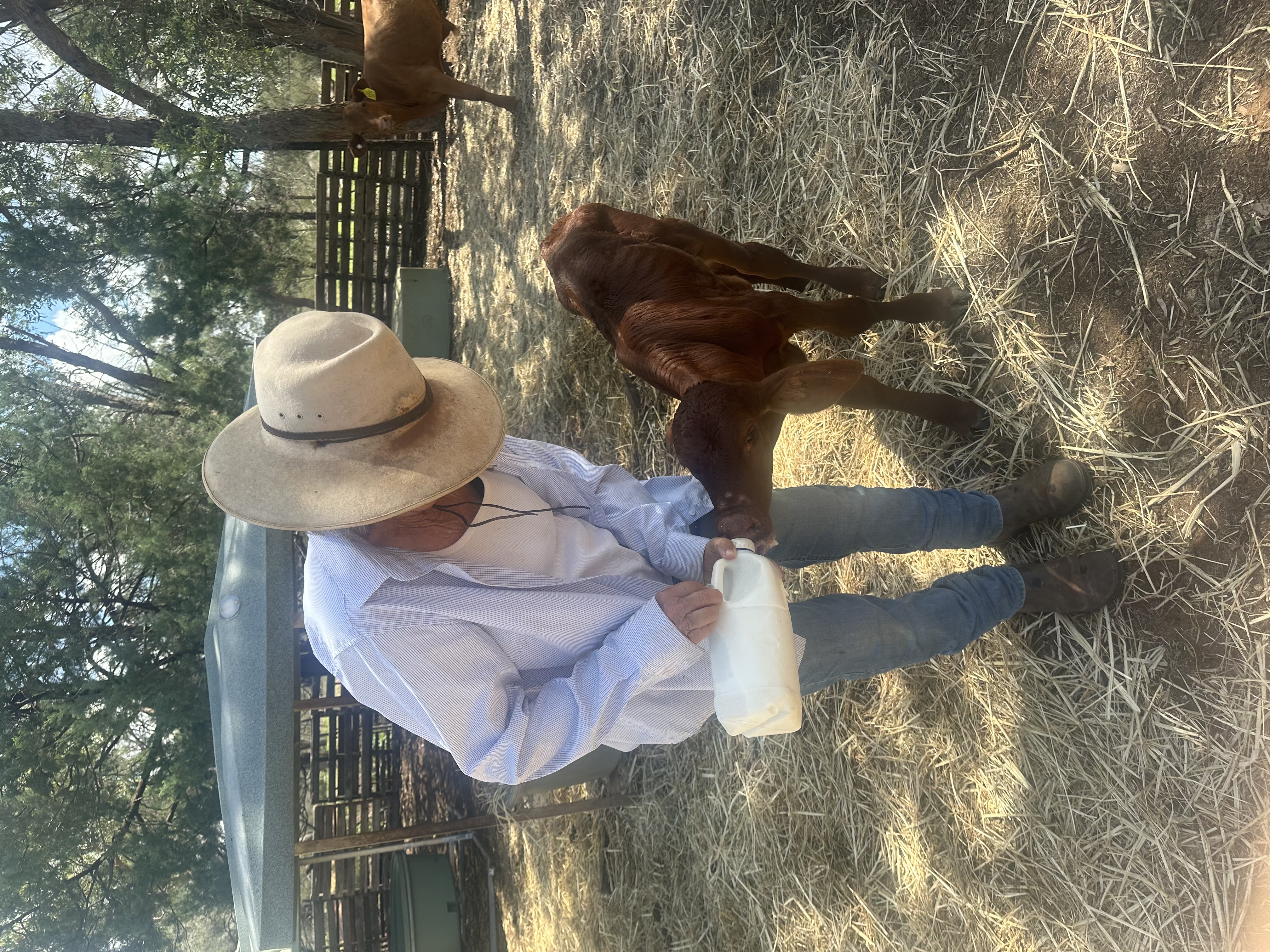 When a calf sucks, a reflex action closes over the oesophageal tube, stopping milk from entering the undeveloped rumen and fermenting.
Over time, and as the calf starts to forage, its rumen gradually grows and develops.
The rate of development will vary according to:
- nutrition
- condition
- milk supply of the cow
- feed available in the paddock.
Typically, calves may be functioning as normal ruminant animals between 3 and 6 months of age.
If there is one advantage under drought conditions, its that calves tend to have comparatively more developed rumens than their good-season-calf counterparts as they are forced to start foraging younger in life due to lower milk supply and poor feed quality.
Taking anatomy into account
When planning to wean young calves, it’s important to consider how developed their digestive system will be, and therefore, their dietary requirements.
Typically, early weaned calves will not have a fully functioning rumen, and as such their digestive tract operates like a monogastric animal (e.g. a pig), depending mainly on the abomasum, or fourth stomach. Therefore, once the calf is old enough to be weaned from milk, a grain-based diet that can be readily digested should be provided as the main source of nutrition, as well as hay/roughage to ensure the rumen continues to develop normally.
Since the rumen is less developed in young weaners, it has minimal ability to process urea or to break down the gossypol in whole cottonseed. Therefore, these are not recommended for very young weaners.
Additional resources
This article is part of a series regarding weaning calves early. Other articles in this series include:
← Why you would consider weaning early
— Understanding the young calf << you are here
How young calves can be weaned safely →
Feed mixes for early weaners →
