
The next step in commercialising new legume varieties for producers
A major part of the Queensland Pasture Resilience Program is building on decades of research where promising new stylo varieties will be further evaluated across Queensland prior to commercialisation.
Read more about the background of this work in this Beef Central article from June 2024.
The next phase of research is to test the new varieties and experimental lines across multiple climate zones and soil types to determine productivity of these new legumes compared to existing commercial varieties. A network of 25 new trial sites is planned from Texas in southern Queensland to Croydon in northern Queensland. Trial sites are hosted by commercial producers who have helped with ground preparation, spraying and fencing.
Planting took place at 17 sites during January and February this year with more planting planned for March 2025 and early 2026. Details of these trials and how they were planted are outlined below.
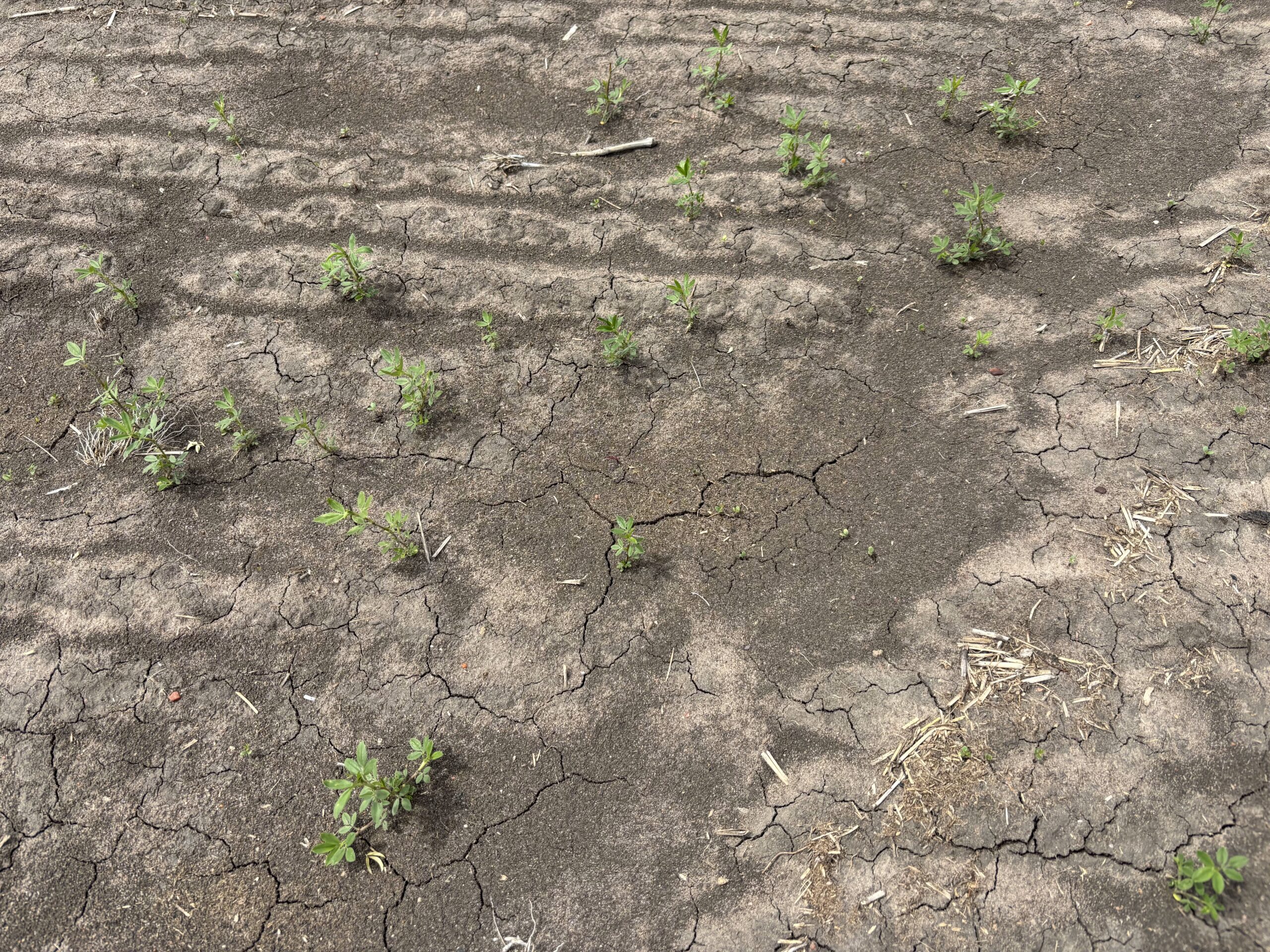
Legume performance demonstrations
Aim: Compare persistence and productivity of new stylo varieties to existing commercially available stylo and desmanthus varieties across climate zones and soil types.
Number of lines: 5 new stylo varieties (not yet commercially available), 5 existing stylo varieties (Primar, Unica, Seca, Siran, Amiga), 2 experimental stylo lines, 2 existing desmanthus varieties (Marc, JCU2)
Number of sites: 6 in southern Queensland (SQ), 6 in central Queensland (CQ) and 6 in north Queensland (NQ)
| Region | Location | Average annual rainfall | Soil type | Status |
|---|---|---|---|---|
| SQ | Texas | 650mm | Traprock, shallow soil over rock Tenosol | Planted Feb 2025 |
| Millmerran | 690mm | Sand over loamy sand | Planted Feb 2025 | |
| Kingaroy | 770mm | Sand to loamy sand over granite | Planted Feb 2025 | |
| Kingaroy | 770mm | Softwood scrub Ferrosol | Planted Feb 2025 | |
| Kingaroy | 770mm | Brown non-cracking clay | Planned for 2026 | |
| Roma | 560mm | Sand over sandy duplex | Planned for 2026 | |
| Roma | 560mm | Black cracking clay | Planned for 2026 | |
| Roma | 560mm | Red alluvium on clay | Planned for 2026 | |
| CQ | Calliope | 900mm | Brown loam | Planted Feb 2025 |
| Springsure | 680mm | Black cracking clay | Planted Feb 2025 | |
| Moura | 680mm | Brown texture contrast (loam over clay) | Planted Feb 2025 | |
| Alpha | 600mm | Sandy loam over sandy clay | Planted Feb 2025 | |
| Middlemount | 650mm | Brown texture contrast (loam over clay) | Planted Feb 2025 | |
| Dingo | 650mm | Brown texture contrast (loam over clay) | Planted Feb 2025 | |
| NQ | Mount Surprise | 800mm | Red basalt | Planted Feb 2025 |
| Charters Towers | 660mm | Red Earth | Planted Feb 2025 | |
| Georgetown | 750mm | Alluvial | Planned for Mar 2025 |
Evaluating promising shrubby stylo accessions
Aim: Compare persistence and productivity of 4 new shrubby stylo lines to existing varieties in districts where stylos have been commonly sown.
Number of lines: 2 new shrubby stylo varieties (not yet commercially available), 2 experimental lines, 2 existing shrubby stylos (Seca and Siran)
Number of sites: 4 in CQ and 3 in NQ
| Region | Location | Average annual rainfall | Soil type | Status |
|---|---|---|---|---|
| CQ | Calliope | 900mm | Brown loam | Planted Feb 2025 |
| Calliope | 900mm | Grey/brown sandy-loam | Planted Feb 2025 | |
| Orion | 680mm | Brown light clay | Planted Feb 2025 | |
| Rolleston | 640mm | Brown texture contrast (loam over clay) | Planned for 2026 | |
| NQ | Charters Towers | 660mm | Red Earth | Planted Feb 2025 |
| Mount Surprise | 800mm | Red Basalt | Planted Feb 2025 | |
| Croydon | 750mm | Deep sand | Planned for 2025 |
Stylo varieties
The new stylo varieties included in the ‘legume performance demonstrations’ are from two species of Stylo including shrubby stylo (Stylosanthes scabra) and Caatinga stylo (Stylosanthes seabrana). These are being compared to existing lines of the same species and one of Caribbean stylo (Stylosanthes hamata). To learn more about the existing stylo varieties and how to tell them apart, read our Stylos in Queensland guide.
Trial design
All field trial layouts are randomised and replicated, allowing comprehensive statistical analysis of all results. Limited seed is available for some of the new experimental lines, so trial plot sizes range from 10x20m in the ‘Legume performance demonstrations’ down to 3x10m in the ‘Evaluating promising shrubby stylo accessions’. The total planted areas including buffer areas around plots are 1.5ha and 0.2ha respectively.
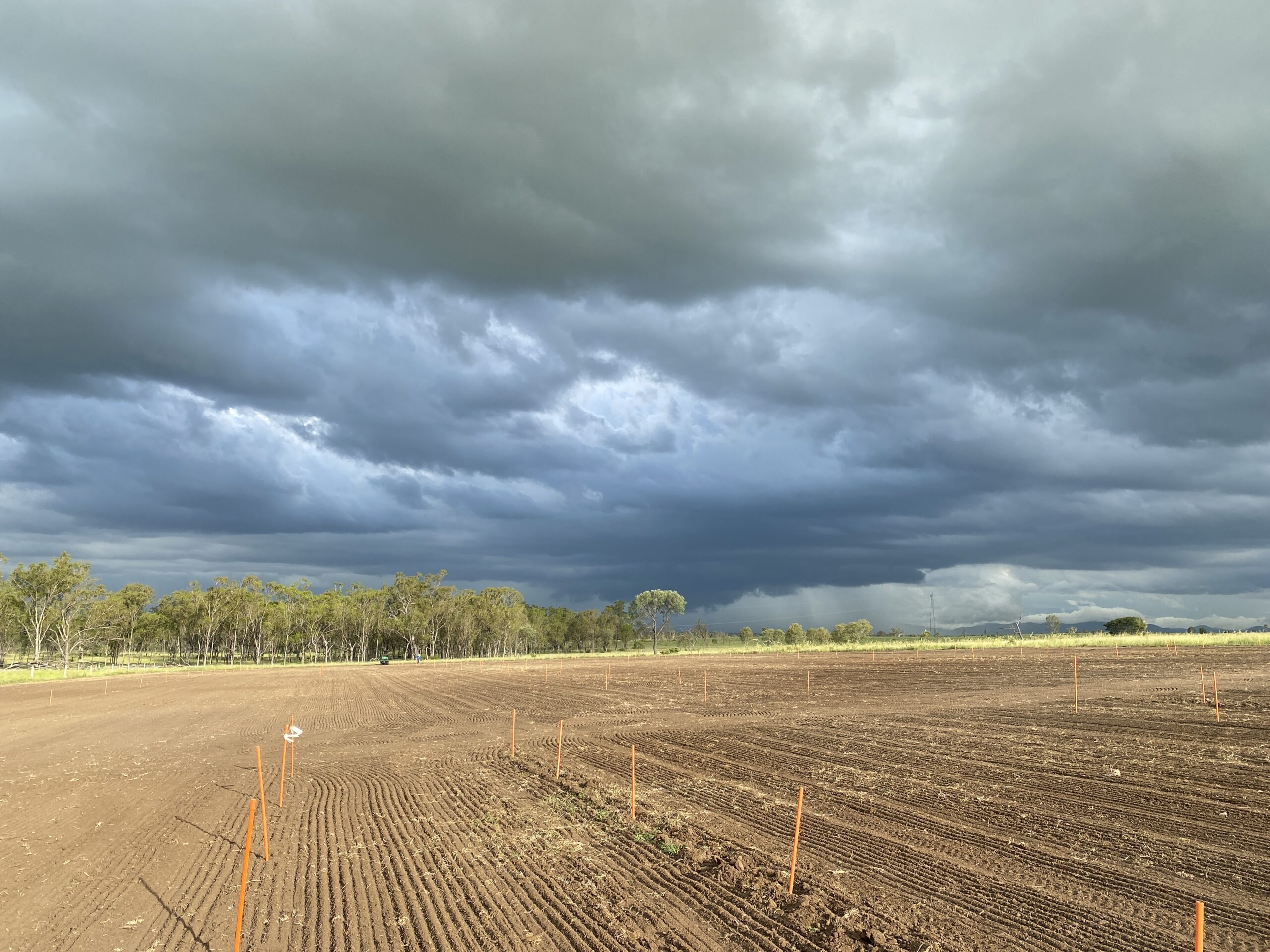
Planting
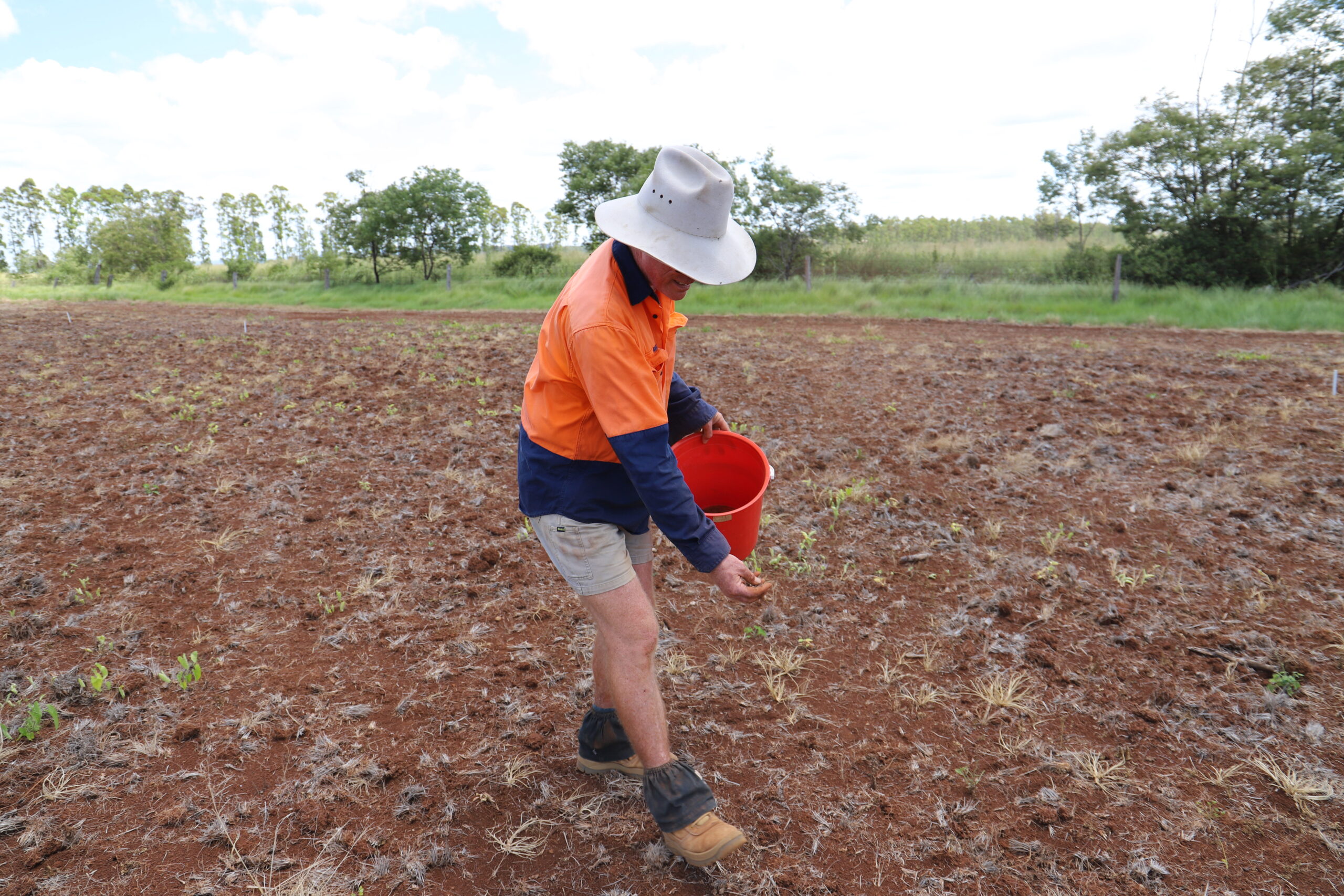
Trial plots were prepared and planted the same way a commercial paddock would be, just on a smaller scale. In southern and central Queensland, where summer rainfall is less reliable, all paddocks were fallowed for 6-12 months to store moisture and control weeds. Ground preparation was mostly done by host producers which included cultivation and spraying. In CQ, final seed bed preparation was done with a flange roller before broadcasting seed on top of the soil and then rolling again after planting. Seed was broadcast by hand.
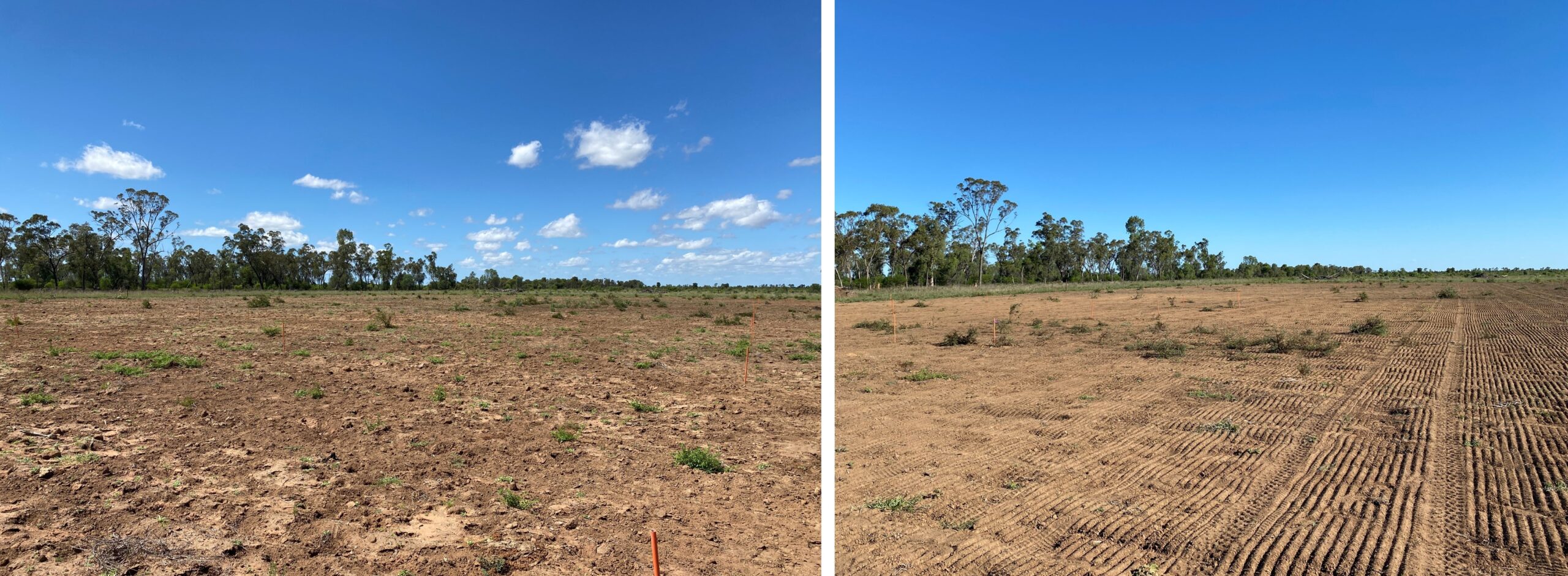
In SQ, sites were either cultivated or sprayed out with herbicide during the fallow period and again prior to planting. A planter with single disc openers and press wheels was used for planting, fertiliser application and liquid rhizobia injection.
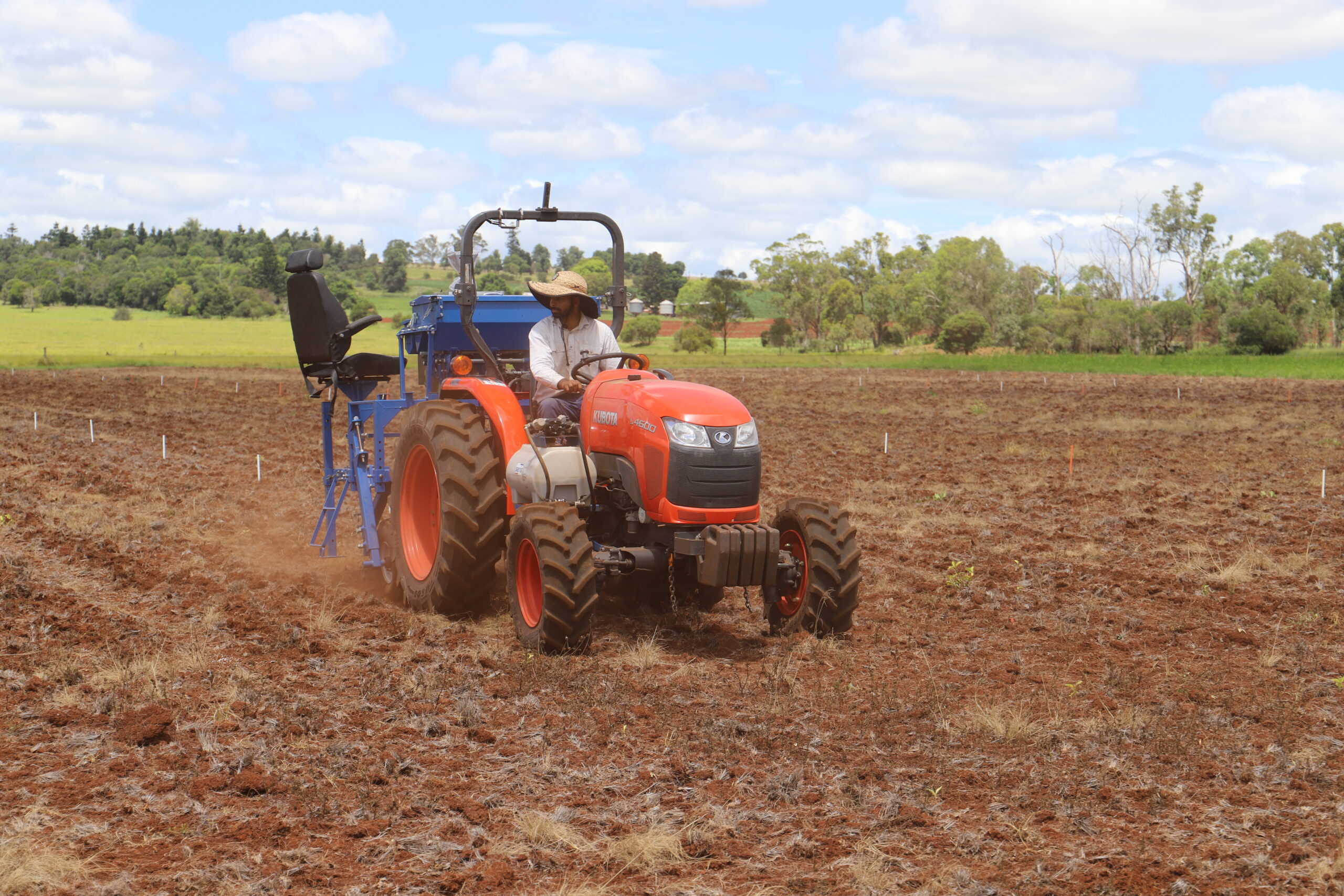
In NQ where the summer monsoon rains are short but very reliable, the sites were prepared by an initial, early full cultivation, herbicide application to eliminate grass and weed competition, and incorporation of fertiliser. A secondary cultivation was also completed at some sites where existing grass and weed competition needed further control. Seed was hand broadcast into plots and then rolled.
This work is part of the Queensland Pasture Resilience Program which is a partnership between the Department of Primary Industries, Meat & Livestock Australia and the Australian Government through the MLA Donor Company.
