
Blue-green algae (Cyanobacteria spp.)
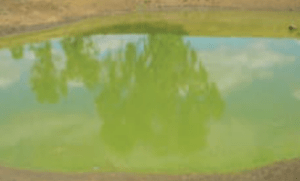
Poisonous parts
It is very difficult to distinguish toxic algae from non-toxic species without professional assistance.
Toxic blooms will often produce an odour.
Location
Throughout Australia in fresh and brackish waterholes. Water samples containing bloom material should be sent to laboratories that specifically test for algae toxicity. It is recommended to use a NATA (National Association of Testing Authorities) accredited laboratory.
Symptoms of poisoning
Sudden death near a water source is the most commonly found symptom of blue-green algae poisoning. If observed quickly, cattle may tremble, stagger and become comatose.
Treatment / management
Treatment of poisoned livestock is often unrewarding but if provided early, activated charcoal can assist mildly affected livestock.
Stock must be denied access to the water source until the toxic cyanobacteria can be removed. The New South Wales Government conducted a webinar regarding blue-green algae in May 2024; the notes from this webinar answers questions such as how to manage a toxic algal bloom.
Notes
The risk of toxic algae blooms is much higher when there is increased concentration of nutrients in still or stagnant bodies of water. These nutrients can come from both animal waste and fertilisers. Blue-green algae is also harmful to humans, so care should be taken around any blooms that are suspicious.
More information from the Government of Western Australia can be found here: Blue-green algae poisoning in livestock, or from Queensland Government, here.
Cyanide or prussic acid poisoning — Sorghum
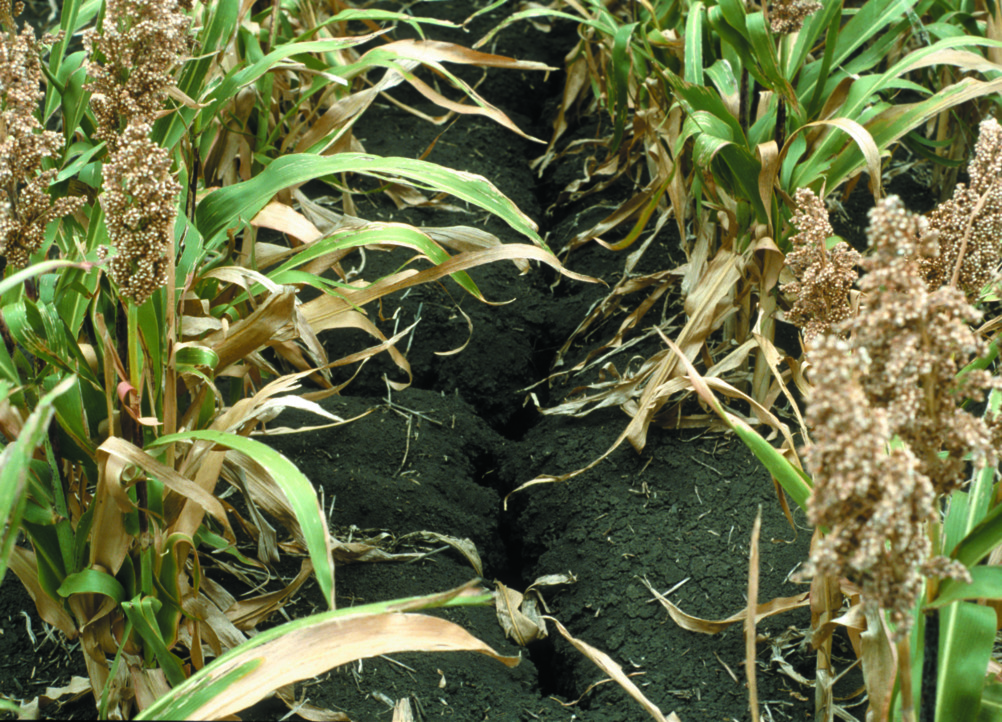
Poisonous part
Young sorghum plants growing rapidly, particularly after a period of stunted growth. Crops that are wilted, crushed, frosted, trampled, or have hail or insect damage, are also a risk. Leaves contain the highest concentration of toxin, followed by stems, then seeds.
Toxin
Cyanide glycoside.
Symptoms of poisoning
Cyanide or prussic acid poisoning generally happens very quickly (within an hour), and animals are usually found dead.
When cyanogenic glycosides in plants (commonly sorghum) is metabolised in the rumen, hydrocyanic acid is released preventing the essential oxygen exchange from the blood into tissues and organs. Death can be rapid as the major organs start to fail from lack of oxygen.
If you were to see clinical signs, they could include:
- accelerated and deepened breathing
- irregular weak pulse
- excessive salivation or frothing
- twitching muscles
- spasms
- staggering
- unconsciousness.
Bluish discolouration of the gums is sometimes witnessed before death. Blood is bright red in colour and doesn’t clot readily.
Treatment / management
Livestock should not be allowed access to young plants that are stressed or less than 75 cm high. Cattle should have a full belly before being provided access to sorghum.
Cyanide content can be measured in the plant by sending samples off to an approved facility, details can be found here.
Notes
In a sorghum crop, the risk of cyanide toxicity is greatest during a period of drought. Early regrowth and young plants contain the most toxin. The problem will persist in hay made from affected crops.
As with all cases of toxicity – the severity of poisoning will vary by the size of the animal and concentration of toxin consumed. Failed sorghum crops can be made into silage and fed in conjunction with other roughage as an alternative to livestock being allowed to graze toxic plants.
Theoretically, a sodium thiosulphate solution can be administered by intravenous or oral methods for treatment of toxicity by a veterinarian. However, in most cases, toxicity and death occurs too rapidly to treat animals successfully. Surviving stock should be removed from the toxin source and drenched with sodium thiosulphate even if they are not showing clinical signs of poisoning.
More information is available from the Queensland Government here: Cyanide poisoning from sorghum.
A fact sheet on prussic acid from Feed Central can be found here.
Darling pea (Swainsona spp.)
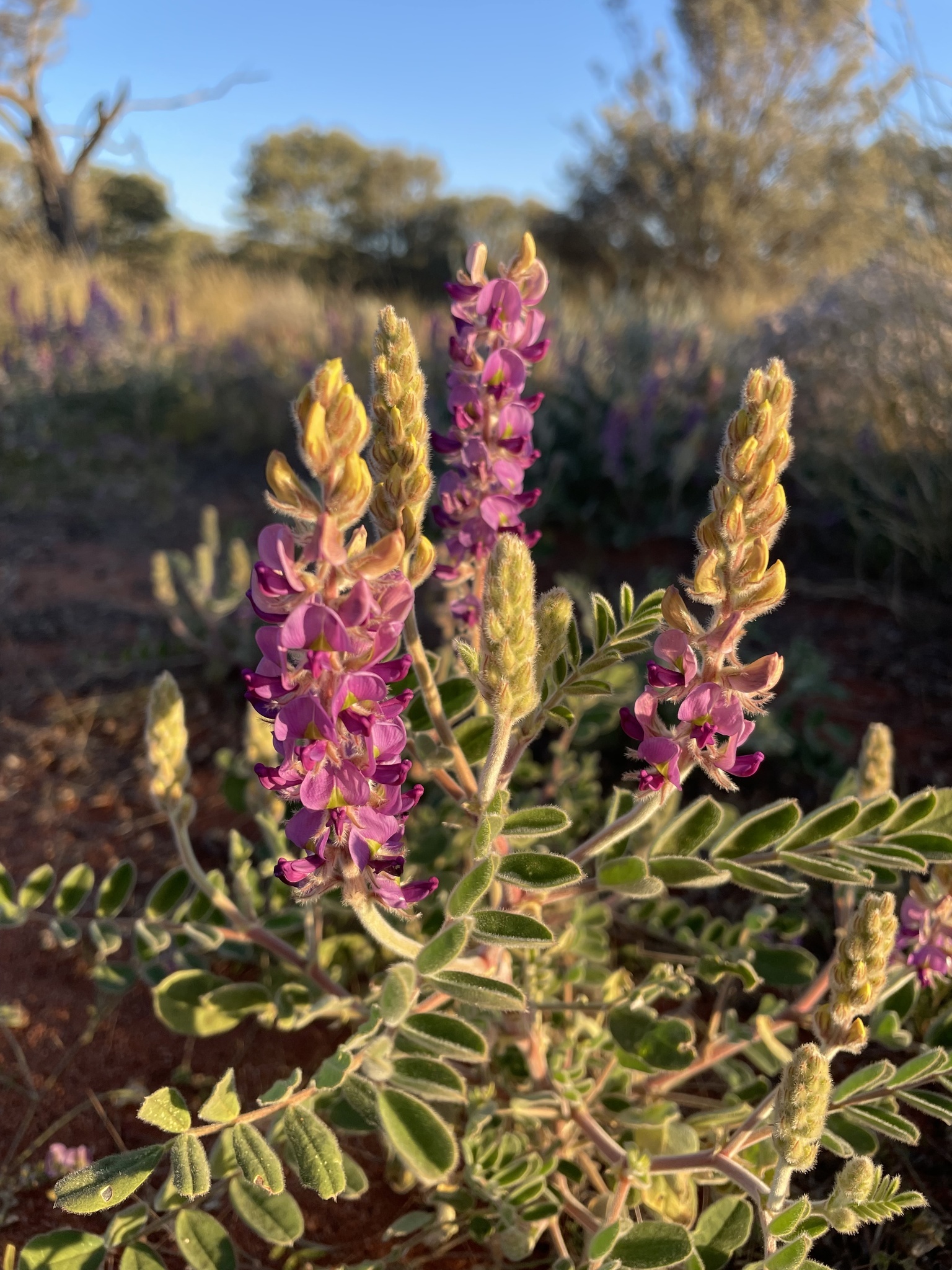
Poisonous parts
All parts are poisonous. Once grazed consistently for a period of weeks, stock appear to become ‘addicted’.Location
Australia wide.Toxin
Swainsonine.Symptoms of poisoning
Swainsonine inhibits the normal processing of the sugar, mannose, leading to a build-up of this sugar, interfering with cells particularly in the brain, followed by liver and then other organs. Clinical symptoms of consumption for 10 weeks or less include:- a loss of condition
- nervous malfunction where animals are easily excited
- awkward in gait
- head shaking and head pressing against objects
- star gazing (head tilted upward and staring).
Treatment / management
It may take 3-4 months for animals to die if grazed constantly. They may recover if they are removed from infested pastures in the early stages of poisoning. Non-pregnant cattle and sheep can graze pastures for up to four weeks without serious effects. Horses are more susceptible and should be removed after two weeks of grazing infested pastures and not returned for another four weeks.Notes
Swainsona species are known to grow rapidly after rain and may develop in large stands in areas that frequently flood. Australia’s poisonous plants, fungi and cyanobacteria book states the following Swainsona species are poisonous to stock:- Swainsona canescens
- Swainsona luteola
- Swainsona brachycarpa
- Swainsona galegifolia
- Swainsona greyana
- Swainsona luteola
- Swainsona procumbens
- Swainsona swainsonioides.
Fireweed / Ragwort (Senecio spp.)
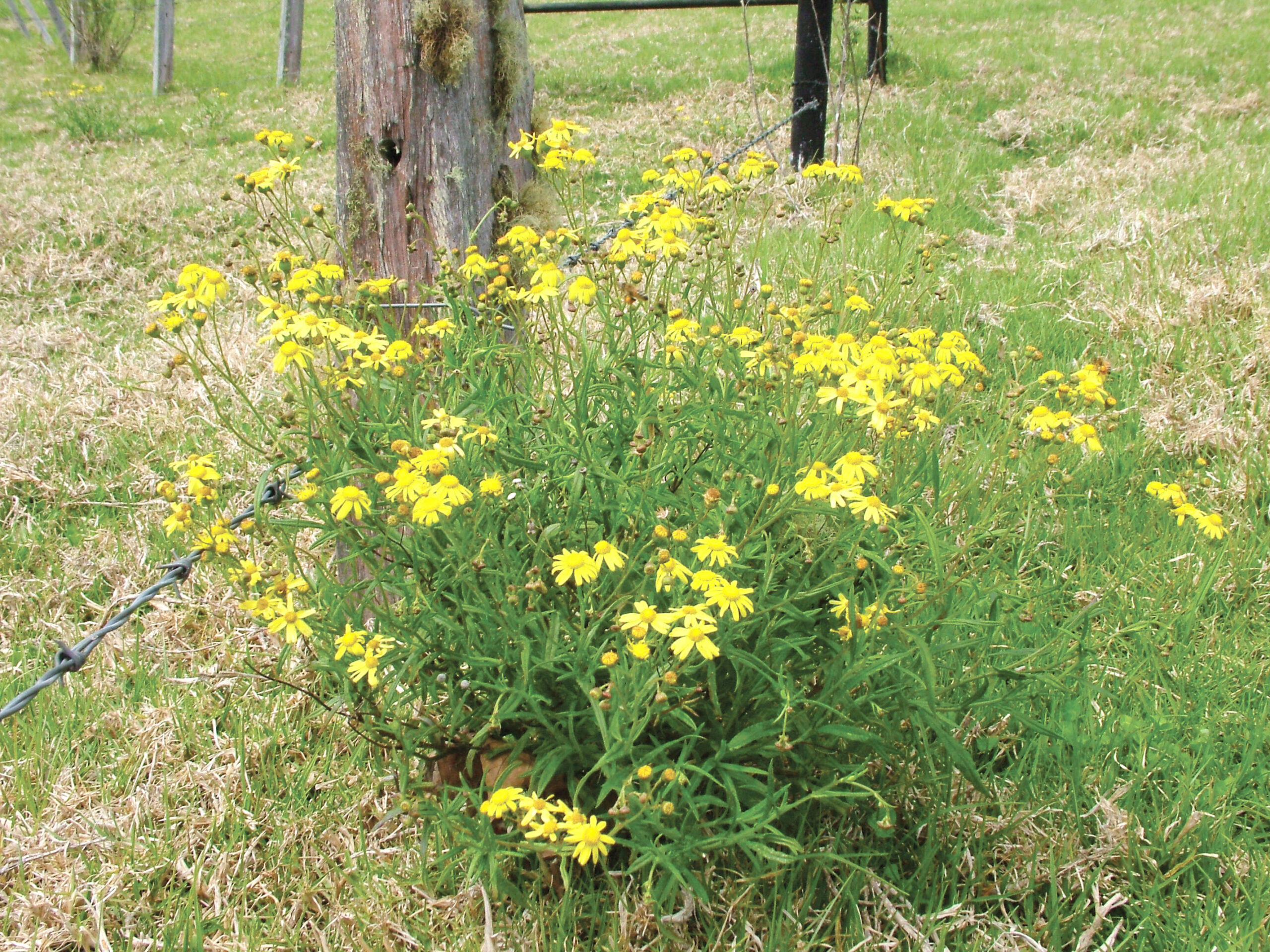
Poisonous parts
Fireweed is generally not palatable, however poisonings occur when other feed is limited, plants are baled in hay, or other cereal crops are harvested with weed seeds.Location
Senecio species are found throughout Australia, colonising bare and disturbed areas.Toxin
Pyrrolizidine alkaloid, which is also found in other toxic plants such as potato weed, Patterson’s curse, and rattlepods.Symptoms of poisoning
The effects of pyrrolizidine alkaloid can occur over extended periods—usually months. Clinical signs are generally reflective of the amount of toxin ingested and the severity of damage to the liver, lungs and kidneys (in descending order of importance).- Liver damage in cattle causes weight loss, emaciation, persistent diarrhoea, jaundice, anorexia and lethargy.
- Rectal prolapse, photosensitisation and nervous signs (less common).
- Lung damage causes frothing at the mouth, hypersalivation, rapid breathing and eventually respiratory arrest.
- Kidney damage symptoms include discoloured urine, excessive drinking, not eating, weight loss and emaciation.
- wasting
- poor growth
- weakness
- signs of nervous malfunction (blindness, wandering, unsteady gate).
Treatment / management
No consistently effective treatment is known. The scarring to the liver will remain and affected animals will relapse when stressed. Livestock do not generally find fireweed palatable, however will eat it when suitable fodder is unavailable, such as in overgrazed paddocks, or when in contaminated hay or silage.Notes
There are numerous species of fireweed, and all are potentially poisonous. The most abundant, Senecio lautus and Seneci madagascariensis, are the biggest threats. More information and control options from Biosecurity Queensland is available here: Fireweed. When purchasing hay, you are within your rights to ask the vendor to complete a Fodder Vendor Declaration Form.
Mother of millions (Bryophyllum spp.)
Poisonous parts
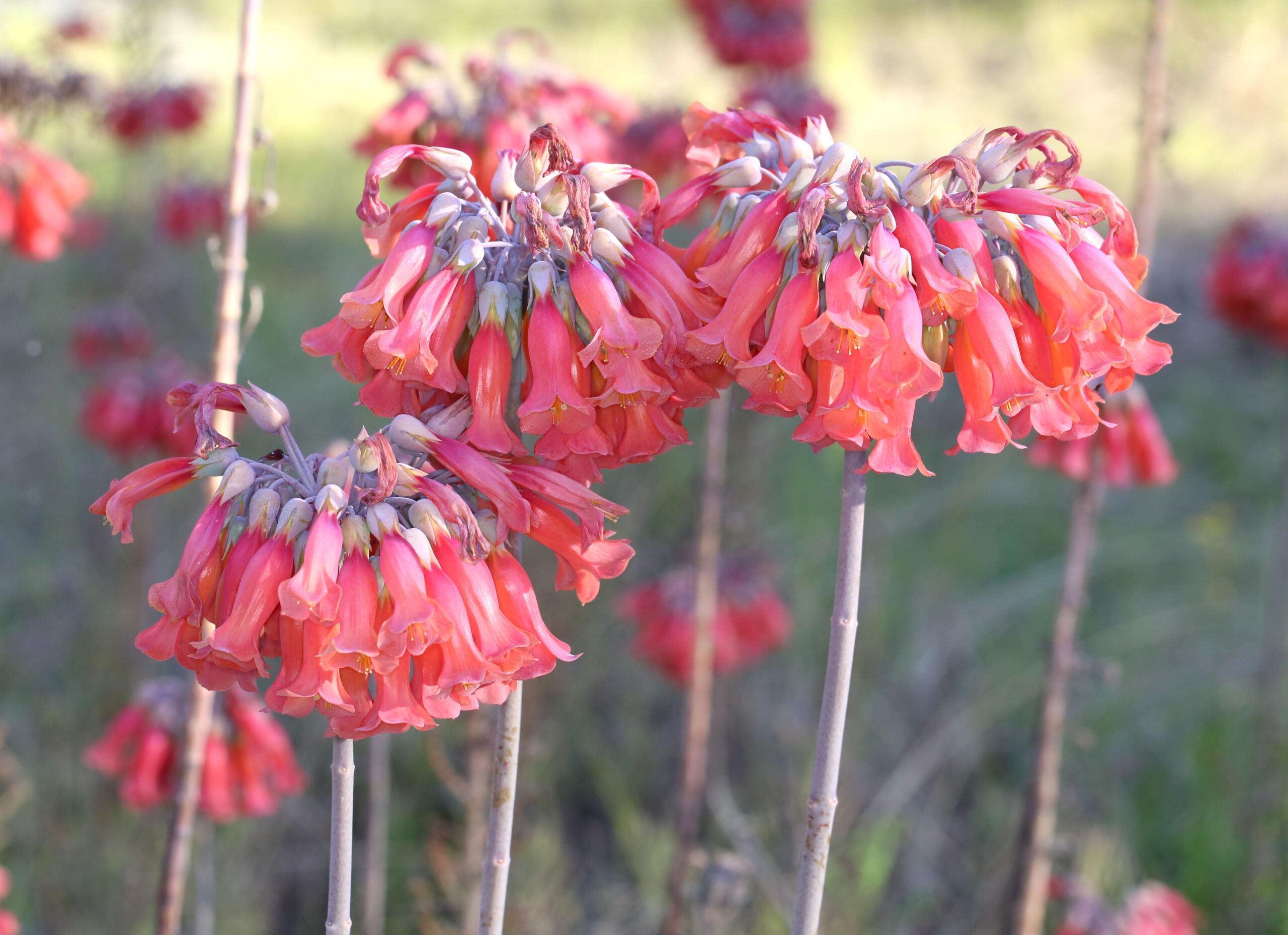
Flower. Poisonings most commonly occur between May and September, when plants are flowering.Location
Mother of millions has been found in Queensland, New South Wales and remote settlements in the Northern Territory.Toxin
Bryotoxins.Symptoms of poisoning
Clinical signs of cardiac glycoside poisoning include:- collapsing from breathing difficulties
- bluish lips and gums
- a quick death.
Treatment / management
Animals provided with veterinary care within the first 24 hours have a good chance of recovery. Treatment involves the use of veterinary drugs, electrolytes and activated charcoal. Plants can be destroyed by burning or using herbicides.Notes
An introduced garden plant, it is one to keep watch for around old dumps and infrastructure. The plants have a distinctive orange-red trumpet like flower. More information about mother of millions is available from Biosecurity Queensland here: Mother of millions.
Nitrate / nitrite poisoning in sorghum or other grasses (including button grass)
Poisonous parts
Nitrate can accumulate in many weeds, crops and pasture plants. Forage sorghum, grain sorghum, sudan grass, button grass and pearl millet are known for their potential to cause poisoning.
Toxin
Nitrate.
Symptoms of poisoning
Rapid gasping breath, convulsions, death. Symptoms occur within hours and often animals are found dead.
Treatment / management
The quantity of nitrate that will cause toxicity is variable and will depend on the rate of consumption, type of feed, the amount of carbohydrate in the feed and the stage of adaptation to nitrate in the diet.
Hungry stock should be fed hay before given access to potentially poisonous plants.
Methylene blue, given intravenously, is a treatment for nitrate/nitrite poisoning. However, accessing an adequate amount of solution and administering it to affected stock in time is often unrewarding. Repeated doses may be required. Necrotizing abscesses may develop where the solution is injected outside the veins.
Prevention is aimed at reducing the absorption by including other sources of roughage and carbohydrates (such as grain). Chopping affected hay into smaller pieces and mixing with grain and silage will minimise severe toxicity.
Notes
Poisoning of this type typically occurs where soil nitrate is high but can’t be converted into protein due to reduced photosynthesis. High soil nitrate may be a result of nitrogen fertiliser application, high manure deposition, fallowing and drought. Toxic amounts of nitrate will persist in hay when cut and baled in cloudy/low light conditions.
Most nitrate accumulates in the stems and stalks of plants. Water may also be a source of toxicity if leaching occurs from effluent or soils heavily fertilised with nitrogen.
Conditions leading to a build-up of nitrate include cloudy weather, cold weather, wilted plants, or a combination of these factors.
More information from the Queensland Government on nitrate poisoning in sorghum can be found here: nitrate poisoning in sorghum
A fact sheet from Feed Central can be found here: nitrate poisoning.
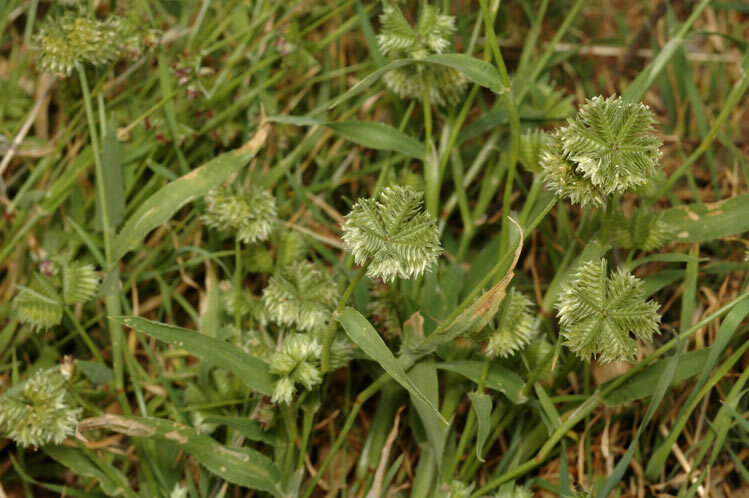
Button grass (Dactyloctenium radulans) is an annual grass that is often found in and around stockyards where manure is routinely deposited. Under normal circumstances button grass is good fodder but will cause nitrate poisoning problems if hungry cattle are yarded and restricted to button grass in the nitrogen rich stockyard environment. Hungry cattle should be filled up on hay in this scenario.
The Western Australian government have more information here: Button grass.
Noogoora burr (Xanthium occidentale)
Poisonous parts
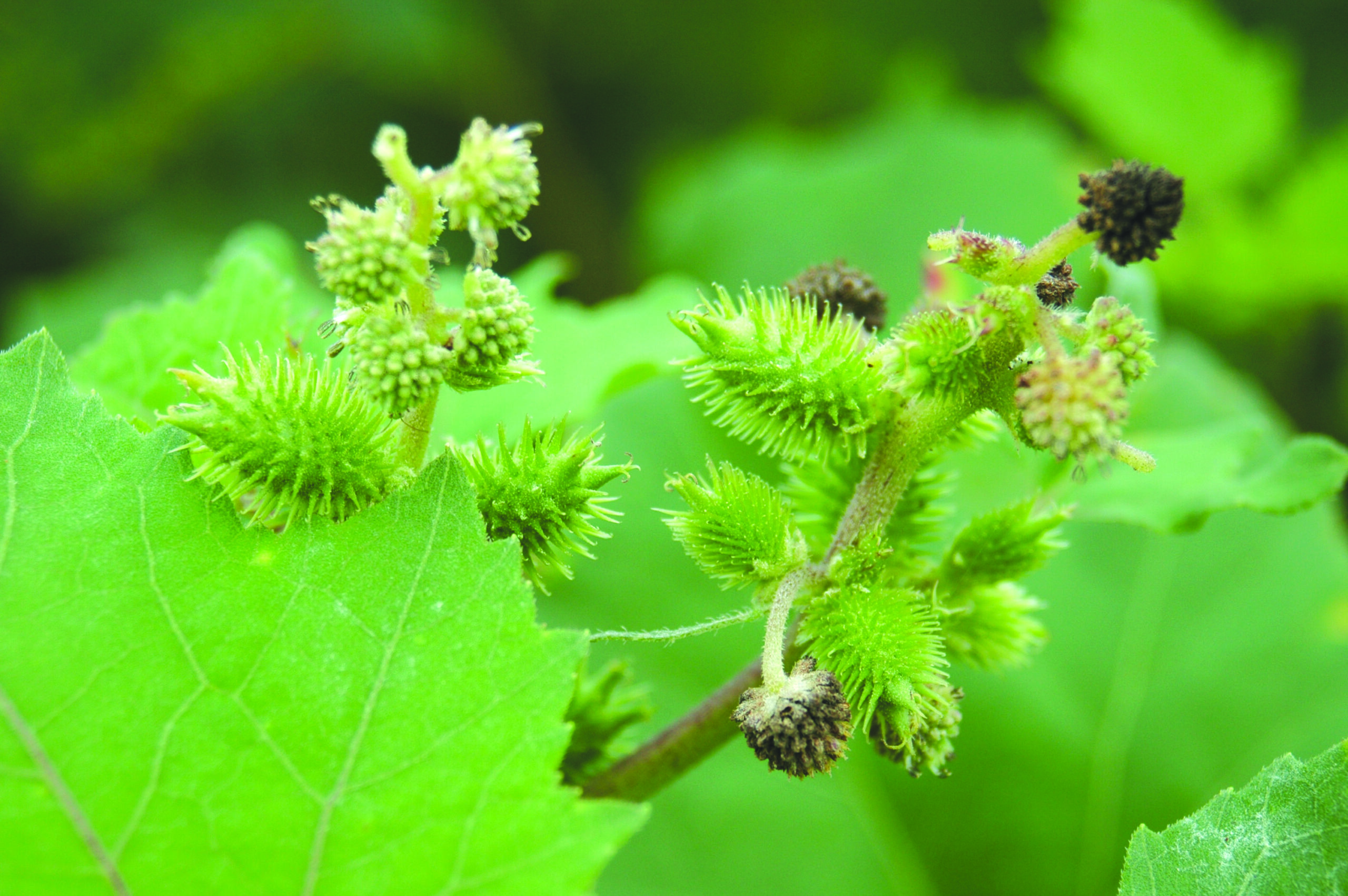
The first two leaves emerging from the seed at germination (cotyledons) are the most poisonous, followed by the seeds within the burrs.Location
Noogoora burr has naturalised in parts of Queensland, northern New South Wales, South Australia and the Northern Territory. It is found on river and creek flats and on old cultivations.Toxin
Carb-oxyatractyloside.Symptoms of poisoning
Poisoning causes acute liver necrosis. Clinical symptoms include:- depressed animals with no appetite
- showing pain in the abdomen by kicking at the flanks
- adopting a funny stance.
- abnormal aggression
- excitement and nervousness that progresses to stumbling and convulsions.
Treatment / management
In mild poisonings the animal may recover after a depression for a day or two. Stock that have grazed young plants more heavily will die. Seeking veterinary assistance to conduct a post-mortem can be rewarding as there are particular post-mortem changes that can be identified specific to Noogoora burr toxicity.Notes
For more information visit the Queensland Government site here: Noogoora burr; or the Atlas of Living Australia that has a distribution map and extensive photo gallery.
Pigweed (Portulaca oleracea)
Poisonous parts
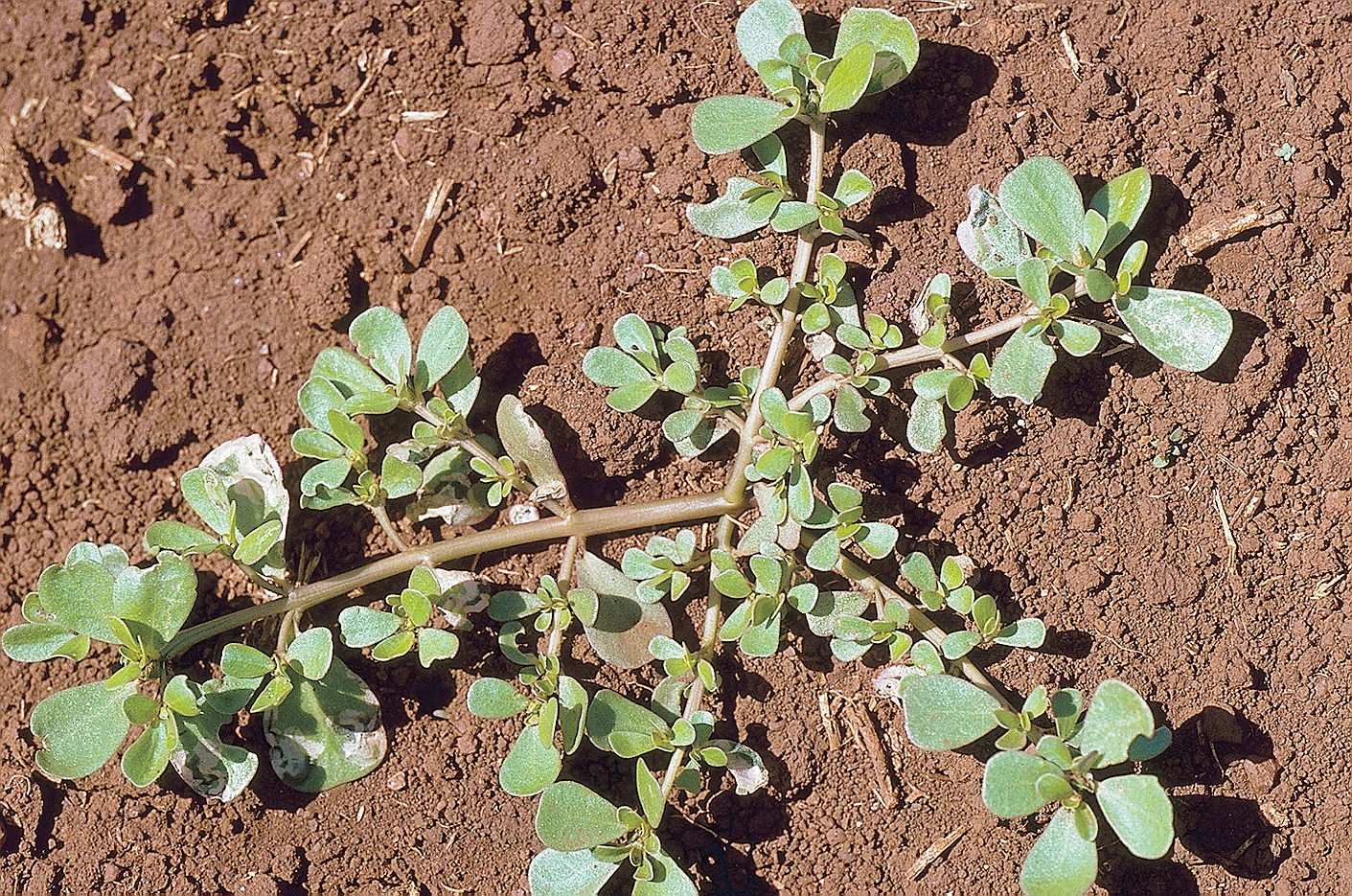
Leaves and stems.
Location
Pigweed grows in all mainland states of Australia on a range of soils.
Toxin
Oxalates and nitrates.
Symptoms of poisoning
Death usually occurs when starved animals are exposed to large amounts of pigweed, such as in yards.
Treatment / management
Hungry stock should be fed roughage before being allowed access to pigweed.
Methylene blue and calcium boro-gluconate can be used in the acute stages of treatment under veterinary guidance. However, it is difficult to access these products in the quantities required in Australia.
Treatment can be unrewarding and despite the effort losses may still occur due to kidney failure in the following weeks. Dicalcium phosphate (DCP) may be fed before and during high-risk exposure to reduce losses.
Herbicide treatment or using stock to trample pigweed until it is inedible can eliminate the risk in stockyards.
Notes
There are two types of pigweed, an inland variety and a coastal variety. Pigweed contains toxic amounts of both oxalates and nitrates, and thus clinical signs of pigweed poisoning are often a mixture of oxalate and nitrate poisoning.
The University of New England has more information about pigweed poisoning.
Pimelea (Pimelea spp.)
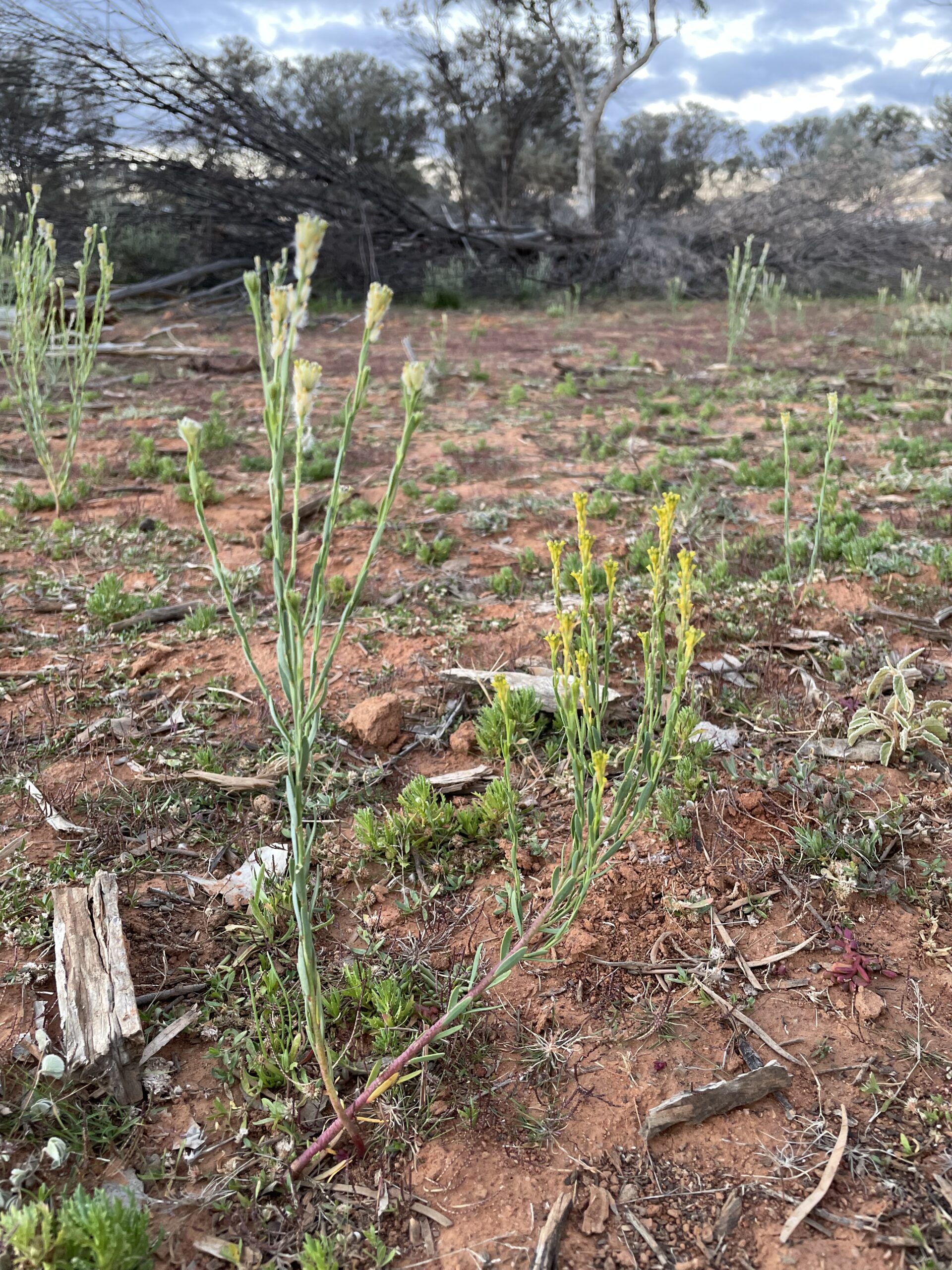
Poisonous parts
Flowering plants contain the most toxin.
Location
Drier regions of western New South Wales, Queensland and northern South Australia. Pimelea is most likely to occur on light red, sandy, and less fertile soils, particularly in overgrazed pastures or old cultivation.
Toxin
Simplexin.
Symptoms of poisoning
Clinical signs may include:
- fluid swellings (subcutaneous oedema) most often under the jaw, down the neck and brisket
- chronic diarrhoea, which may contain blood
- rapid loss of condition
- poor appetite
- rough coat
- depression
- pale mucous membranes (anaemia)
- prominent jugular veins in the neck
- increased respiration rate and breathing difficulties
- heart rate can be heard from a distance
- reluctance to move
- sudden death, commonly during exertion.
Treatment / management
Pimelea plants are not very attractive to stock, often only ingesting small parts of plants by accident when grazing more palatable species, or when other species are absent from the pasture.
Treatment is non-specific, in most cases, through oral dosing with activated charcoal or bentonite.
Notes
Pimelea poisoning is caused by the ingestion of toxic varieties of the plant including native rice-flower, flaxweed and poverty weed varieties.
It can be fatal for cattle and can also affect sheep and horses. Introduced cattle are often reported as being more susceptible to pimelea poisoning than homebred stock. Poisoning may be a problem when cattle travel on stock routes in areas where this plant is known to grow as cattle are less selective when driven.
More information is available in this publication: Understanding pimelea poisoning of cattle.
Poison morning glory (Ipomoea mulleri)
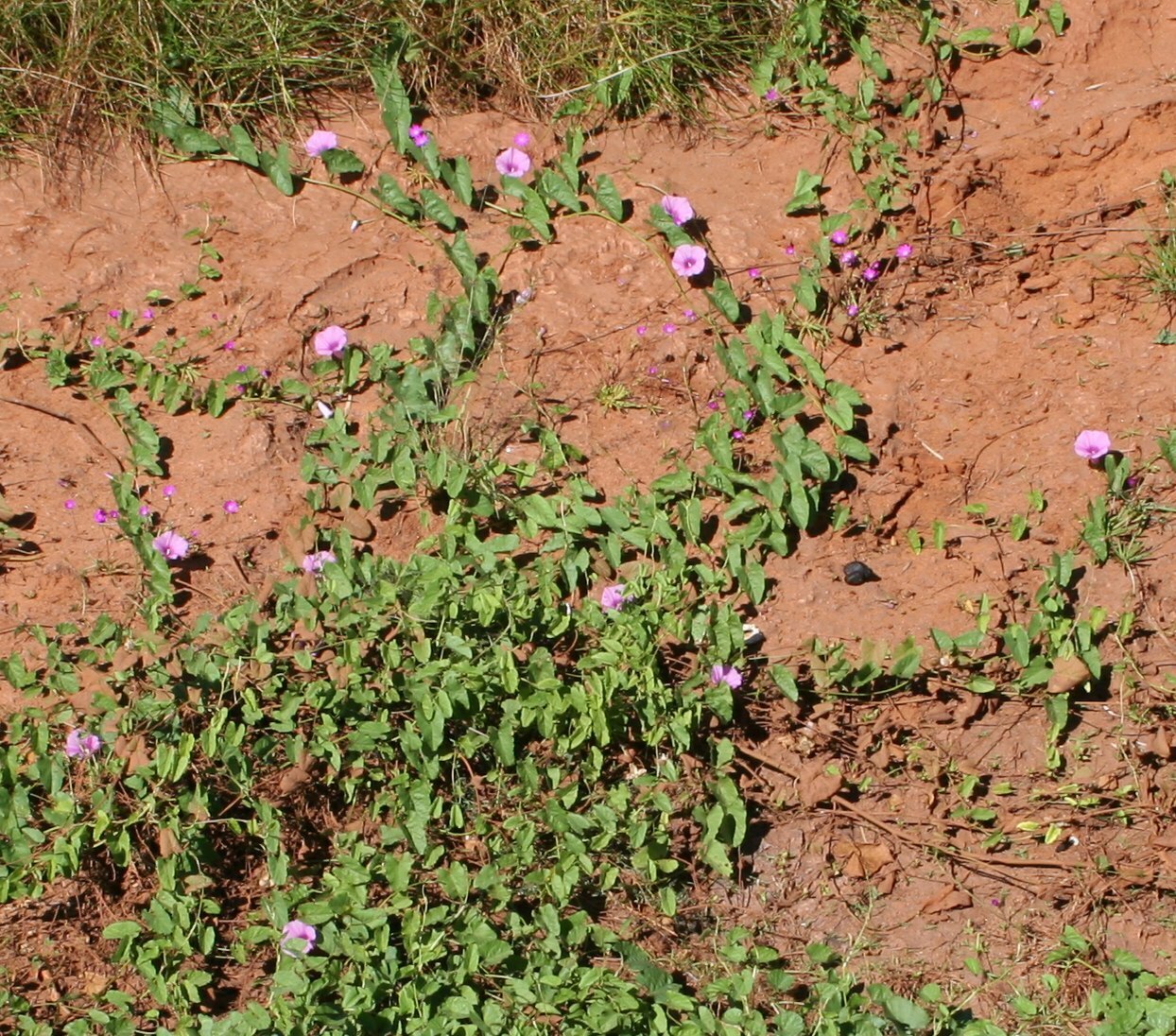
Poisonous parts
All parts above ground, however stock need to be grazing it for several weeks before poisoning symptoms are displayed.Location
Poison morning glory can be found across northern Australia.Toxin
Swainsonine and calystegines.Symptoms of poisoning
After consuming poison morning glory, stock display:- weight loss
- lethargic
- head pointed upwards, appearing to stargaze
- uncoordinated
- head shaking and pressing their heads against objects
- reduced fertility including abortion.
Treatment / management
No consistently effective treatment is known. Remove stock from areas of growth where possible.Notes
More information, including an extensive photo gallery and distribution map can be found on Atlas of Living Australia.
Rattlepods (Crotalaria spp.)
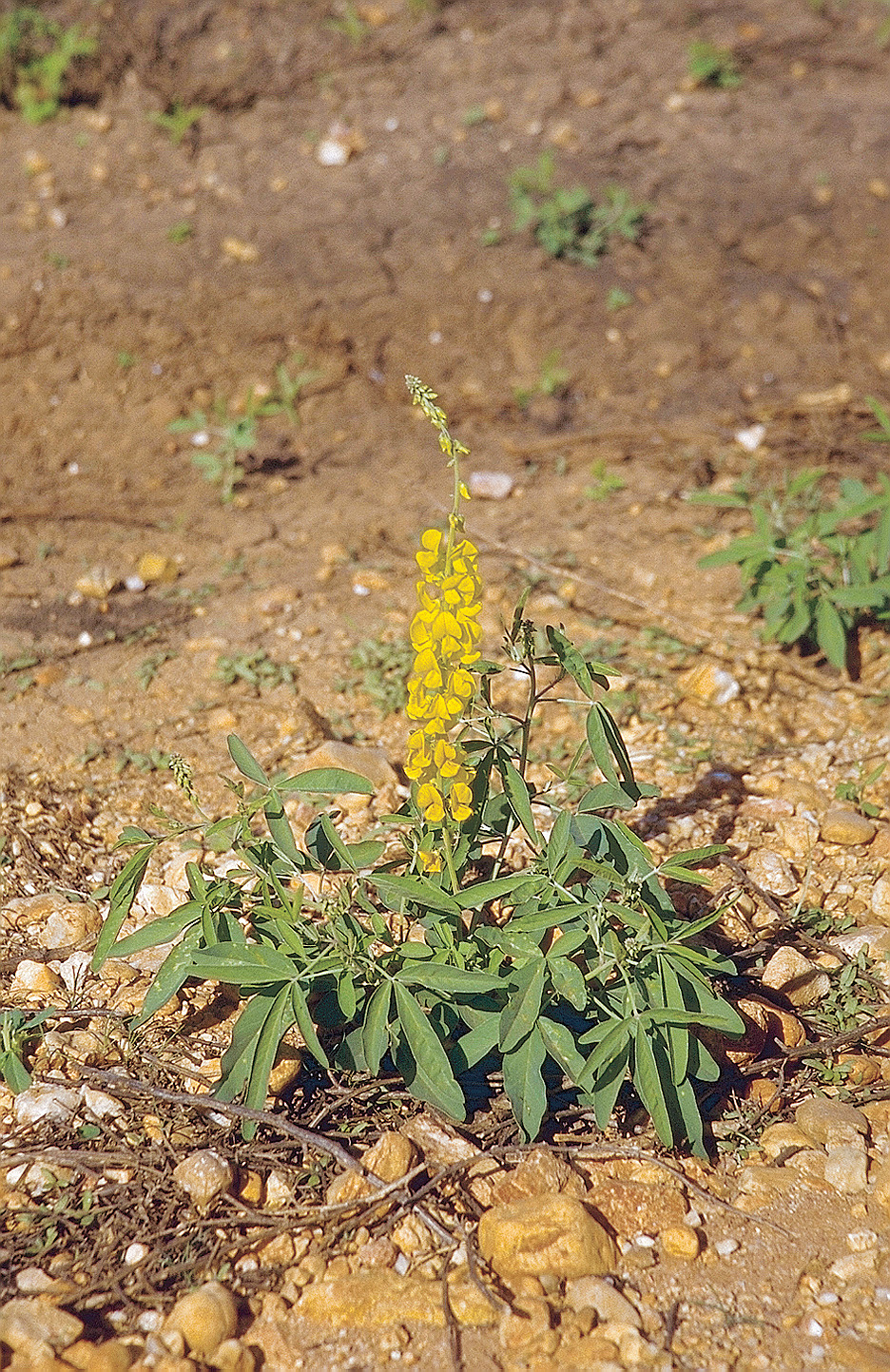
Poisonous parts
All parts above ground.Location
Rattlepods grow Australia wide.Toxin
Pyrrolizidine alkaloids.Symptoms of poisoning
Cattle with poisoning from eating toxic crotalaria species show signs of:- wasting or weight loss
- jaundice
- aimless walking
- persistent diahorrea
- apparent blindness
- difficulty breathing.
Treatment / management
No consistently effective treatment is known. Prevention of poisoning is difficult as potentially poisonous rattlepods are widespread. The best prevention strategy is to ensure there is adequate forage available.Notes
Ross McKenzie, author of Australia’s poisonous plants, fungi and cyanobacteria, states there are 36 native and naturalised crotalaria species, however not all poisonous. These are the listed poisonous species:- Crotalaria crispata (Kimberley horse poison)
- Crotalaria ramosissima (Kimberley horse poison)
- Crotalaria retusa (wedge-leaf rattlepod)
- Crotalaria spectabilis (showy rattlepod)
- Crotalaria juncea (sunn hemp)
- Crotalaria dissitiflora (grey rattlepod)
- Crotalaria pallida (streaked rattlepod).
Weir vine (Ipomoea polpha subsp. weirana)
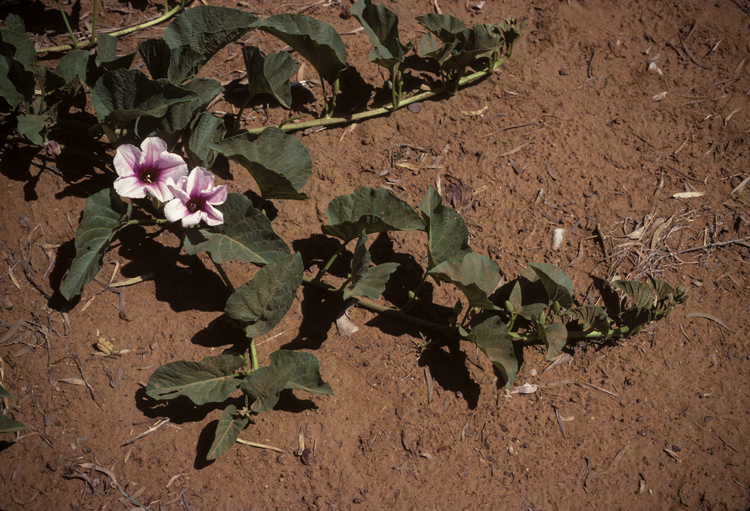
Poisonous parts
All parts above ground.
Location
Maranoa region, Queensland and the mulga and poplar box woodlands to the west of the region.
Toxin
Swainsonine and calystegines.
Symptoms of poisoning
Some stock will seek out weir vine plants in a behaviour likened to addiction.
Weir vine-poisoned stock will:
- lose weight
- appear sleepy until disturbed
- ‘star-gaze’ with the nose pointed skywards
- shake their head, or press their heads against objects.
Stock experience brain damage, resulting in an uncoordinated gait, often with an arched back and a paddling or staggering gait with legs widely spread. They can easily get overstimulated, sometimes run with their hind quarters dropping progressively until they fall over.
Weir vine-poisoned animals may pass urine frequently.
Treatment / management
There is no continually effective treatment known, however if stock are removed early enough, they can recover. Ruminants can graze weir vine for up to 4 weeks before symptoms begin to show.
‘Addicted’ stock need to be prevented access to the plant, or else they will die from kidney damage.
Notes
Occasional crash grazing—many animals grazing a small area—has been one strategy used by local graziers to damage the weir vine plant, while minimising the amount of toxin any one animal ingests.
Weir vine belongs to the same plant family as poison morning glory.
