
Over the last couple of years pasture dieback has continued to spread further west into central-western Queensland (Qld), and south in New South Wales (NSW) through the Hunter Valley near Newcastle. Overall, there has been much less incidence of pasture dieback throughout Qld with hot spots centred on areas that were lucky enough to receive good summer rainfall. Pasture dieback has now been reported across the majority of sown grass pasture communities in Qld and is unlikely to disappear any time soon.
The map of pasture dieback locations has recently been updated utilising data from the pasture dieback mobile app. Data for this app can be entered on your phone without network reception and helps track new areas of infection. Instructions on how to download and use the app are here. A video on how to report dieback in the app is available here.
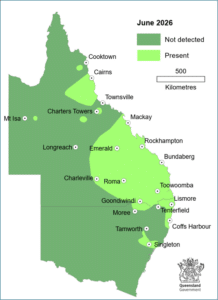
Seasonal update from around the regions
Southern Queensland
Rainfall and subsequent grass growth has been below average over much of southern Queensland (SQ) over the 2025-26 summer growing period. This has slowed the spread and damage from pasture dieback this season. The good news has been that the late rain experienced in May and June 2026, came after the peak mealybug population had declined going into winter. Temperatures were too cool for the mealybugs to be active on the leaves of the grass but warm enough for many grasses to experience late recovery and growth. This has resulted in some good recovery of susceptible grasses that would normally go into winter under high stress from dieback.
If you are in one of the lucky areas and received good summer rain in 2025-26, then the coming season will be telling. Higher mealybug numbers in autumn generally carry through to the following spring and potentially summer, so keep an eye out for early signs of dieback damage in spring; especially if you get early rain and good grass growing conditions.
If you are in one of the drier areas, there is a chance that the reduced mealybug numbers going into a dry winter could result in lower numbers coming out in spring 2026. What happens from there will depend on rainfall and subsequent grass growth in the coming summer, but hopefully low mealybug numbers in spring might mean the population will start from a lower base going into summer. Should we see below average rain in the coming summer as forecast, mealybug numbers may reduce further and provide a break from extensive areas of dieback for a season. Unfortunately, low rainfall also means low pasture growth overall, so managing stocking rates and pasture recovery will still be a priority.
For information and support in SQ: Ted Callanan at ted.callanan@dpi.qld.gov.au or on 0439 627 497.
Central Queensland
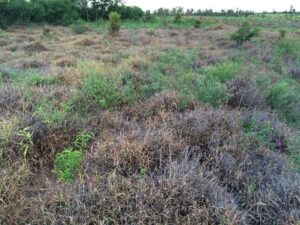
Pasture dieback continues to affect pastures in all areas of central Queensland (CQ) where dieback has already occurred. However new incidences have been reported in buffel grass pastures across the western areas of CQ where there was good rainfall, mainly Tambo, Alpha, Blackall and Barcaldine districts. While the level of pasture dieback infection has reduced since the initial incidences were reported in the 2015–2020 period, graziers still need to be vigilant with monitoring pastures and implementing management practices that reduce impact and encourage pasture recovery. Many graziers have also successfully sown new pastures in paddocks affected by pasture dieback. The keys for success are to fully prepare the seedbed and plant once subsoil moisture is present and include tolerant grasses and resistant legumes into the mix that suit the situation (soil type, rainfall, management). Unfortunately, the options for dieback tolerant grasses significantly reduce in the drier western areas, and sourcing supply of suitable seed needs to be undertaken months before the anticipated sowing time.
For information and support in CQ: Stuart Buck at stuart.buck@dpi.qld.gov.au or on 0427 929 187
Northern Queensland
Pasture dieback was particularly prevalent early in the 2025–26 growing season on the Atherton Tablelands, especially around the Upper Barron and Lake Eacham areas. Most of the affected pastures observed were signal grass (Brachiaria), with some paddocks severely impacted. In several cases, almost the entire grass component of a paddock was lost, with dieback symptoms stopping abruptly at fence lines.
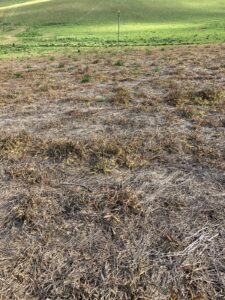
Many of these paddocks had a high legume content, which proved particularly valuable following the loss of the grass. As the signal grass died out, existing legumes were able to spread and occupy much of the affected area, helping maintain ground cover and pasture production despite the severity of the dieback.
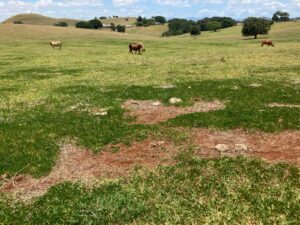
Pasture dieback also remains active at the Pinnarendi trial site, where buffel grass continues to be affected. Ongoing dieback has resulted in thinning of the buffel grass and reduced pasture density in affected areas.
As conditions warm up, producers should continue to monitor previously affected paddocks, particularly areas where grasses fail to recover or begin to show patches of stress, discolouration or thinning.
For information and support in NQ: Kendrick Cox at kendrick.cox@dpi.qld.gov.au or on 0438 138 262
Current conditions and what to look out for this spring
It is too early in most regions of Queensland for mealy bug activity and pasture damage. As the weather warms up, spring/summer storms occur and grasses start to grow, keep an eye out for areas that are not growing as well as they should or are looking stressed despite good growing conditions. If you are unsure on what to look for, there is great information on identifying and managing pasture dieback here.
New research and industry developments:
In Australia, Meat & Livestock Australia (MLA) is continuing to support research and extension into pasture dieback through current projects like the Queensland Pasture Resilience Program (QPRP) and is currently negotiating new investments to develop improved management options to control pasture mealybug. An updated Pasture Dieback Manual will also be released by MLA in coming months.
New species of pasture mealybug
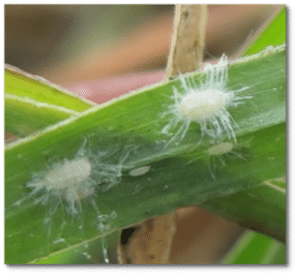
Internationally, the latest news from the United States of America (USA) is that the pasture mealy bug causing damage in Florida, Texas, Louisiana and Georgia has been officially described as a new species Heliococcus novovillei on 1 September 2026. It has been found to exist in mixed populations with Heliococcus summervillei which has been considered the primary causal agent of dieback in Australia. But, it appears that they exist in mixed populations here in Australia too. In Australia it has been thought that there was a new variant of H. summervillei from the one first reported in the 1920s, but now it seems it is a different species. This might explain the sudden change in behaviour and spread of the pasture mealy bug but then raises another question; is this a new incursion into Australia or an adaptation of the original species over time? This is an interesting question, but the answer will not change the effects currently being experienced in your pastures or the recommended management strategies.
Pasture dieback has been causing large pasture losses in the USA and whilst this is bad news for the grasslands and ranchers there, it does have a silver lining for us here in Australia as we work together to potentially find a control or preventative agent for dieback. Increased resources and expertise working on dieback improves the likelihood of finding a viable long-term control or management strategy. Agencies and universities that are working on the condition in the USA include Texas A&M University, the Smithsonian Institute and the Universities of Florida and Georgia. The DPI, along with other researchers in the field, are sharing information and resources with our American colleagues to collectively find a solution.
Insecticide effectiveness
One management strategy being evaluated in the USA for the control of the pasture mealybug is the application of insecticides. Whilst a range of insecticides are being evaluated, USA researchers strongly advise that beneficial predators and parasitoids are critical for the long-term control of the pasture mealybug and these natural enemies must not be eliminated through insecticide application.
Please note the insecticides being evaluated in the USA are not registered for pasture mealy bug control in Qld pastures and cannot be used. There are currently no registered insecticides for controlling mealy bugs in pastures across Qld (or NSW). Research conducted in Qld has demonstrated that the insecticides tested (under a research permit):
- are ineffective in controlling every mealybug in pastures
- have a significant negative effect on the beneficial insects that predate on the mealybugs
- are not financially viable
- are problematic to apply in commercial paddock situations
- have significant grazing withholding periods (depending on product).
Based on these issues and a lack of registered products, insecticides are not recommended nor permissible for application.
Management recommendations and updated resources
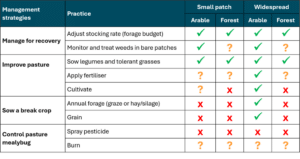
The currently published recommendations for managing pasture dieback remain the best advice available. Which strategy best suits a particular paddock or situation will depend on a range of factors. Working through that decision making process with an experienced advisor in your region is a good strategy to ensure the best long term result.
Pasture dieback information is continually being updated on the pasture dieback page of the FutureBeef website.
This page contains links to all of our information resources, events and research results.
Some of the most recent resource updates are:
- A podcast with Cyril and Cody Close from Roma on their experience with pasture dieback and legume establishment.
- A case study with John Frith from Roma using Legumes as insurance against dieback.
- A recent presentation on pasture dieback by Ted Callanan at the NSW Pastures and Grazing Conference in Tamworth will be uploaded shortly.
There will be more case studies from across the state coming in the next few weeks, so keep an eye out for any updates.
Written by Ted Callanan, Stuart Buck and Shannon Byrnes from Toowoomba, Rockhampton and Mareeba DPI, respectively, as part of the Queensland Pasture Resilience Program which is a partnership between the Department of Primary Industries, Meat & Livestock Australia and the Australian Government through the MLA Donor Company.
