
Key takeaways
- Faecal NIRS helps you understand what cattle are actually eating, not just what the pasture looks like
- Building a baseline over time can help you decide when to supplement and better match supplements to cattle requirements
- Comparing the nutrient value and cost of different supplements can help you get value for money
- You don’t have to work it out alone. Local DPI beef extension officers can help with sampling, interpreting results and comparing supplement options.
When should you start supplementing your cattle?
It’s a question many producers face each dry season. While pasture can look good from the ute, that doesn’t necessarily mean cattle are getting the nutrition they need.
Knowing what your cattle are actually eating can help take the guesswork out of when to start supplementing, what to feed and whether you’re getting value for money.
That’s where Faecal Near Infrared Reflectance Spectroscopy (NIRS) can help.
Thirty-five producers, service providers and NRM staff recently attended Department of Primary Industries (DPI) Faecal NIRS workshops in Theodore, Emerald and Rockhampton, presented by local beef extension officers Mick Sullivan, Ryan Honor and Grayson Jones.
The workshops focused on turning Faecal NIRS results into practical nutrition and supplementation decisions.
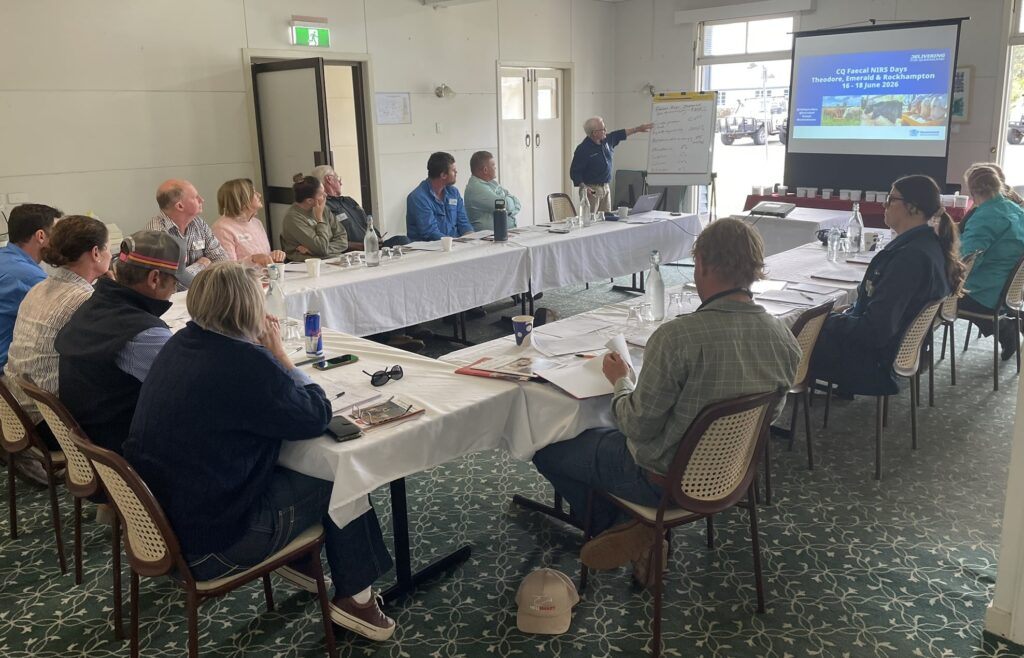
Before the workshops, Rockhampton DPI beef extension officers collected faecal samples from at least two paddocks on each participant’s property. The samples were analysed in advance, so participants had their own results ready to interpret and discuss at the workshop.
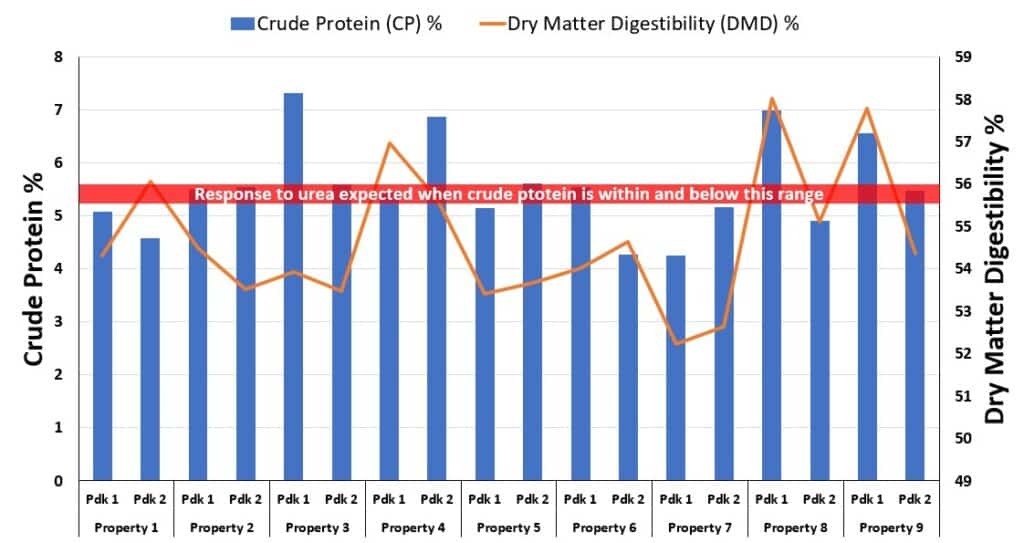
Faecal NIRS estimates the quality of what cattle have been eating over recent days, including crude protein, dry matter digestibility and metabolisable energy. This can help you see whether diet quality is adequate and whether cattle are likely to benefit from supplementation, such as urea.
Learning from your own results and everyone else’s
Working with real property data meant discussions weren’t based on hypothetical examples.
Participants compared results from different paddocks, land types and production systems, discussed what other producers were feeding and compared the costs and nutritional value of different supplementation programs.
For Banana producer Carly Johnstone, this was one of the strengths of the day.
“There is so much power in discussing real samples.”
Carly had previously used Faecal NIRS and wanted to compare results from cattle grazing one of their poorest versus one of their best paddocks before starting supplementation.
Their results didn’t lead to a change in their supplementation program, but confirmed that supplementation was needed and gave them confidence in their existing approach. The cost comparison also confirmed their water-medicated supplement was considerably cheaper than many of the dry lick options discussed at the workshop.
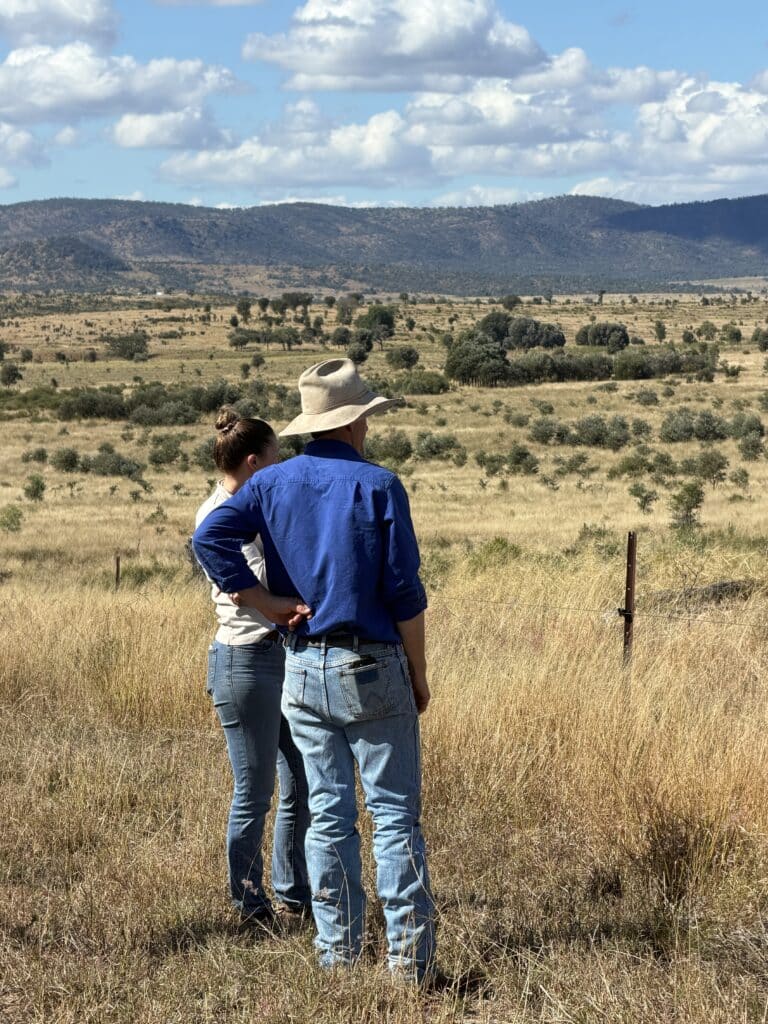
For Emerald producer Andrea Moller, learning from other producers was particularly useful. After several good seasons and green feed still available in June, Andrea hadn’t started supplementing her cattle at the time of the workshop. She was interested in what other producers in similar situations were doing and how they could prepare for poorer seasons in the future.
“We’re aware that these are once in a lifetime seasonal conditions. The workshop was arming us for the future because the best seasons are normally followed by the worst drought.”
Following the workshop, Andrea plans to start formally documenting pasture observations and forage budgets, rather than relying on informal discussions as they had previously. This will help share knowledge and management decisions across their team.
Putting the numbers to work
Knowing your diet quality is only useful if you know what to do with the information. The next step is working out if supplementation is needed, what to feed and how to get the best value for money.
Participants worked through cattle nutritional requirements, supplement labels, intake and costs and used FeedCalc, a simple calculator for comparing supplement nutrients and cost per head. Participants then developed individual action plans covering what they were currently doing, what they wanted to change, how they would achieve it and when. The DPI team will follow up with producers to support them in putting their plans into practice. Some participants have already contacted the team for further advice on what type of lick to feed and how to feed it.
Andrea said the workshop highlighted how different supplements can be and the importance of looking beyond a few ingredients when deciding what to feed. Seeing FeedCalc demonstrated gave her another tool she plans to use when making future feeding decisions.
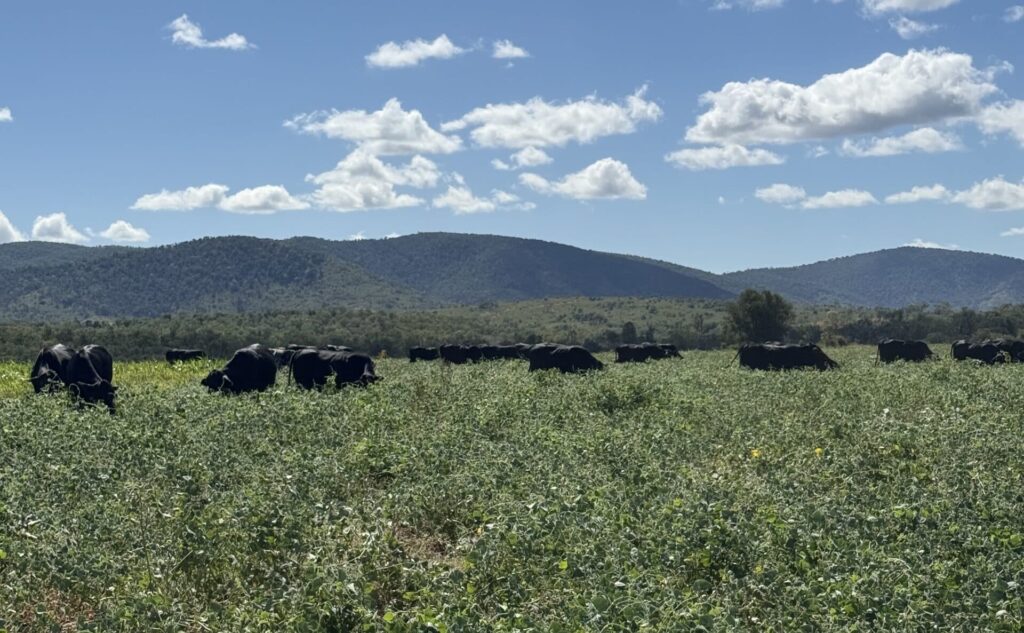
The influence of legumes was evident in some of the Faecal NIRS results, with cattle grazing leucaena recording higher dietary crude protein.
For Melanie Holland from the Rockhampton region, one of the key takeaways was the difference legumes can make to maintaining dietary protein through the dry season. Seeing results graphed against the expected urea-response range also helped put the numbers into context. Following the workshop, she plans to begin with a 30% urea lick block when supplementation is needed, rather than starting with a lower percentage as they had previously.
Building a baseline for better decisions
A single faecal NIRS test provides a snapshot, but testing across different seasons can help build a picture of how diet quality changes on your property.
DPI beef extension officer Grayson Jones encouraged producers to “continue to test and at least get some baseline tests over the next couple of years.” Building a record under different seasonal conditions can provide a useful reference in future years, helping identify when supplementation may need to start earlier in a poor season, or when it may be possible to hold off in a better one.
That message is already translating into action. Follow-up testing was offered to workshop participants, with several producers, including Andrea, now submitting additional samples.
You don’t have to do it alone
You also don’t need to become a nutritionist or work through the numbers yourself to use Faecal NIRS.
Local DPI beef extension officers can collect faecal samples, help interpret the results and discuss what they mean for your cattle and production system. At $75 per test*, Faecal NIRS can be a relatively small investment that helps you decide when supplementation is needed and potentially save money in the long run.
The team can also help compare supplements using FeedCalc. Simply provide the label and price of the supplements you’re considering and the team can compare nutrient content, expected intake and cost per head, helping identify an option that meets your cattle’s requirements and provides value for money.
This support isn’t limited to producers who attended the workshops.
Whether you’re deciding when to start feeding, choosing between lick products or wanting to build a better picture of how diet quality changes on your property, Faecal NIRS provides another piece of information to support the decision.
To find out more about Faecal NIRS testing, FeedCalc or nutrition and supplementation options for your business, contact Grayson on 0460 015 071 or grayson.jones@dpi.qld.gov.au or your local DPI beef extension officer, which you can find on the FutureBeef contacts page.
*Price correct as at 1/09/2026
The NIRS workshops were delivered by the Department of Primary Industries as part of the Grazing Extension Support Project, funded through the Queensland Government’s Queensland Reef and Catchment Water Quality Program.
More information
Use Faecal NIRS results to develop a targeted supplementation program →
Find out why timing supplementation based on measured diet quality can improve productivity →
