
Key ‘take-home’ messages:
- Long-term persistence is important for pasture legumes because most Queensland grazing paddocks have permanent or long-term pastures.
- Long-term persistence of many varieties of pasture legumes was assessed at 44 old pasture trials across the Brigalow Belt. On average, they were 17.5 years old (since being planted).
- The two most widely persistent legumes were Caatinga stylo (Stylosanthes seabrana) and one species of desmanthus (Desmanthus virgatus). They persisted across a range of soil types.
- Other legumes were less persistent: some legume species did not persist anywhere, while others persisted on a narrower range of soils and/or climates.
- Full detailed description of the study is available to download for free from The Rangeland Journal
Returning to old pasture trials for answers
Graziers have described long-term persistence (>20 years) as the most important trait they look for in pasture legumes, but that is not what they experience in their paddocks.
Pasture research projects generally have relatively short funding timeframes of 3 – 5 years, which means legume varieties are selected using indicators such as seed production, hard seededness, number of seedlings each year to measure long-term persistence rather than actual long-term studies. There are very few studies that directly measure long-term persistence and production of legumes over the range of seasonal variability (especially extended drought) and grazing management that occurs in the Brigalow Belt.
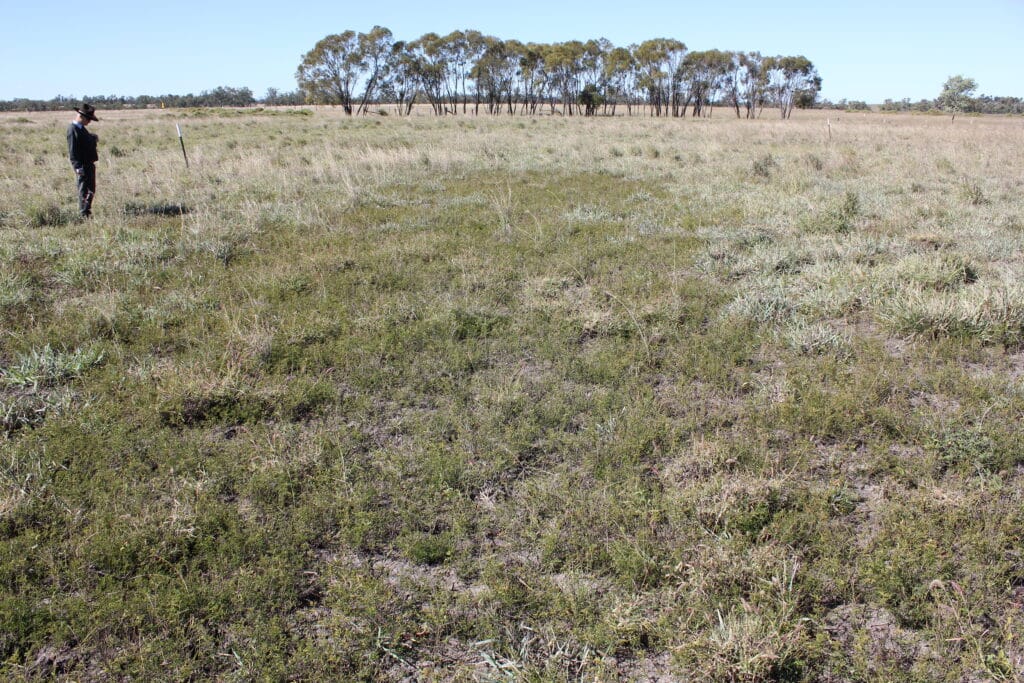
Fortunately, many old pasture trial sites remain in the ground as a legacy from decades of pasture research by DPI and CSIRO. DPI pasture researcher Gavin Peck led a study that re-visited 44 of these old trials. The oldest ones were 33 years old when they were re-visited for this research.
The aim of the study was to evaluate the long-term persistence of commercially released pasture legumes across the range of soils and climates that occur across the Brigalow Belt climatic zone.
What did they measure?
The study was undertaken between 2011 and 2016 when DPI’s pasture researchers re-visited the old trial sites to record:
- which legumes were still growing in the trial area, compared to what was sown
- plant density, plant health, and population structure (adults, seedlings)
- grazing pressure on both grass and legume in the paddock
- how far the legume had spread from the originally sown trial.
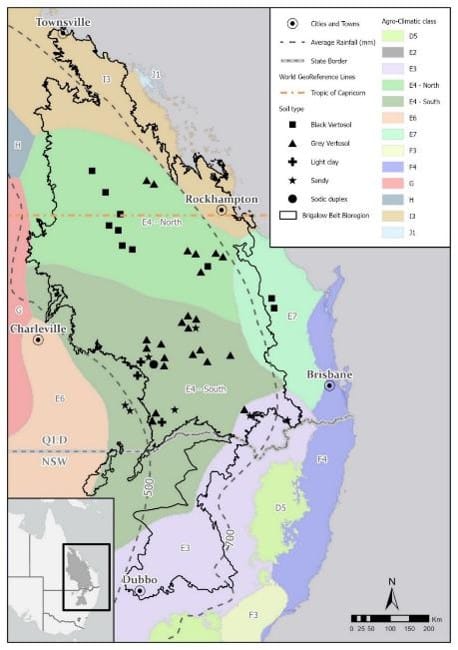
The study focussed on the sub-tropical Brigalow Belt bioregion of Queensland, which has a moderate rainfall (500 – 700 mm per year). The study looked at 44 old trials, many of which were sown into clay soils because they are the focus for pasture development in the Brigalow Belt, but there was a wider range of soils tested in southern Queensland.
While there were hundreds of legume species originally sown in these old trials over the years, there were 13 that were of most interest to the researchers, because they had progressed to being commercially released in Queensland, and were widely sown.
Long-term results uncovered
Two species were persistent in most areas
Of the 13 species assessed, only two, Caatinga stylo and Desmanthus virgatus, were widely persistent, with moderate or greater persistence at >60% of sites. Caatinga includes ‘Primar’ and ‘Unica’ varieties, as well as three new varieties being commercially released in 2027. Desmanthus virgatus includes varieties such as ‘Marc’ and some varieties included in the ‘Progardes’ blend.
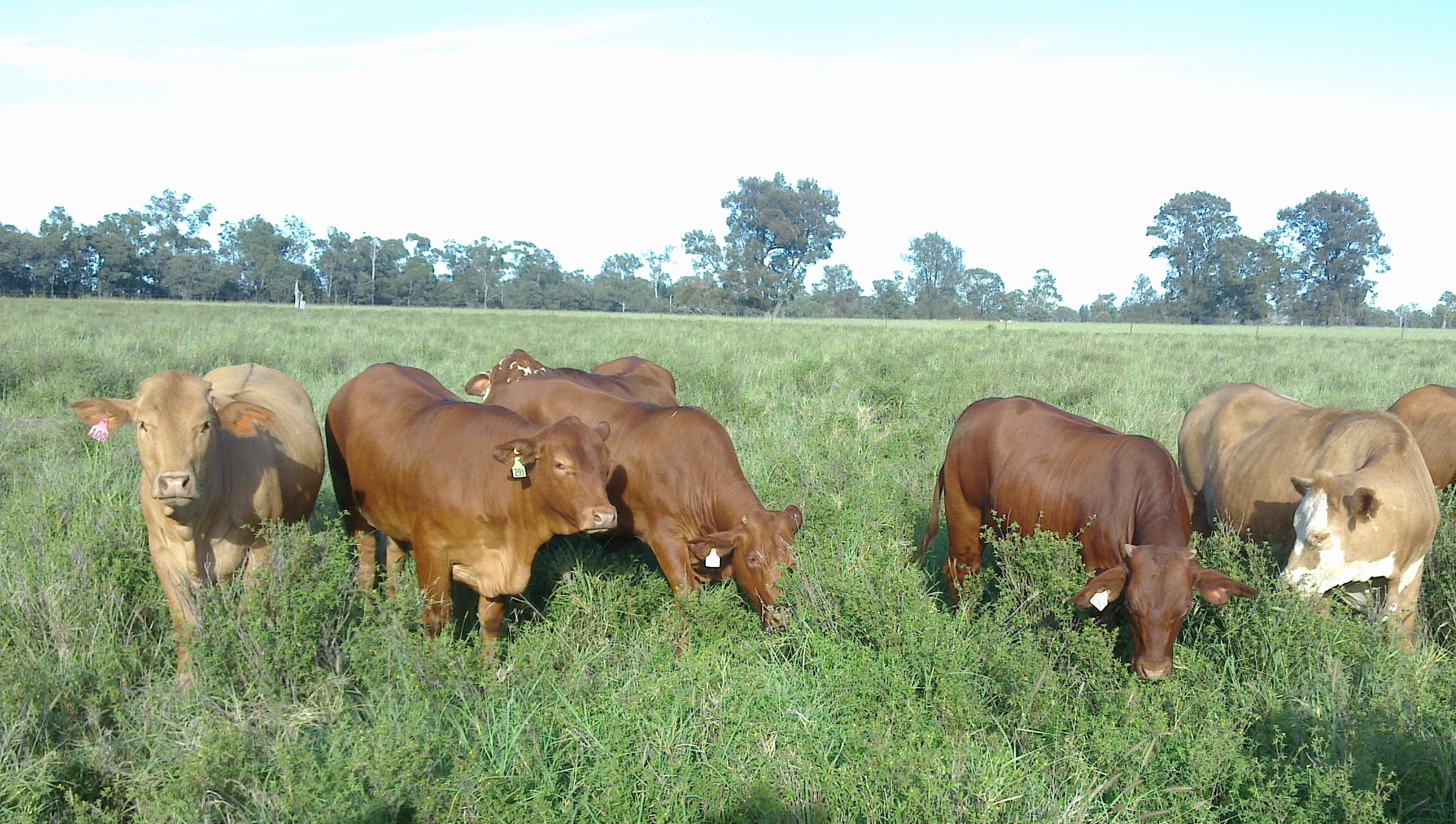
Cattle grazing on a Caatinga stylo and buffel grass pasture in central Queensland. This paddock was part of a trial that was re-visited as part of this study. Caatinga stylo is a long-term persistent pasture legume.
Desmanthus virgatus and Caatinga stylo have similar traits that may contribute to their widespread persistence. In Australia, these species are:
- tolerant of grazing;
- tolerant of frost;
- strongly perennial – individual plants can survive for greater than 5 years;
- flexible in flowering time, depending on seasonal conditions;
- produce high yields of seed with lots of hard seed for the long-term soil seedbank;
- can produce high plant densities;
- produce high biomass yields during suitable growing conditions;
- capable of re-establishing from hard seed after extended drought; and
- widely adapted to the soils in the region.
The table below highlights differences in the long-term persistence of 13 pasture legume species assessed in this study by rating persistence at each site.
Long-term persistence of legume species at historic pasture trial sites in the moderate rainfall, subtropical region of eastern Australia.
| Species | Number of sites sown | Persistence rating (% of sites) | ||
|---|---|---|---|---|
| Poor | Moderate | Good | ||
| Caatinga stylo (Stylosanthes seabrana) | 27 | 22% | 30% | 48% |
| Desmanthus (Desmanthus virgatus) | 35 | 32% | 14% | 54% |
| Desmanthus (Desmanthus leptophyllus) | 26 | 54% | 31% | 16% |
| Leucaena (Leucaena leucocephala) | 18 | 67% | 6% | 28% |
| Butterfly pea (Clitoria ternatea) | 25 | 72% | 4% | 24% |
| Shrubby stylo (Stylosanthes scabra) | 24 | 79% | 4% | 17% |
| Lotononis (Listia bainesii) | 6 | 67% | 17% | 17% |
| Fine-stem stylo (Stylosanthes guianensis var. intermedia) | 7 | 71% | 14% | 14% |
| Atro, Siratro (Macroptilium atropurpureum) | 20 | 90% | 5% | 5% |
| Burgundy Bean (Macroptilium bracteatum) | 19 | 90% | 5% | 5% |
| Lucerne (Medicago sativa) | 17 | 100% | 0% | 0% |
| Caribbean stylo (Stylosanthes hamata) | 13 | 100% | 0% | 0% |
| Round-leaf cassia (Chamaecrista rotundifolia) | 10 | 100% | 0% | 0% |
Some legumes have only moderate persistence
Desmanthus leptophyllus (such as ‘Bayamo’ and included in some ‘Progardes’ blends) showed moderate persistence (persisted at 46% of sites). Leucaena, butterfly pea and shrubby stylo persisted at a narrower range of sites (20-40% of sites), based on soil type and/or climate.
The challenges for these species include:
- not being suited to the moisture limitations or shorter day lengths during autumn;
- later flowering times, not suited to the cooler, sub-tropical climate; or
- not able to survive under more frequent frost and rainfall occurrence over winter, as happens in southern Queensland especially.
The moderately persistent legumes had certain traits that mean they didn’t persist as well:
- Desmanthus leptophyllus has later flowering times (peaks in autumn) than virgatus and was often running out of moisture during flowering. It did not maintain a high population at most sites.
- Leucaena persisted at one third of sites where it was planted and was more persistent on deeper clay soils in central Queensland but was less persistent in frosty southern Queensland and did not persist on sandy soils. Frost, low soil fertility and grazing management can all affect long-term persistence of leucaena.
- Butterfly pea only persisted on black cracking clay soils in central Queensland. It did not persist on other soils in central Queensland and did not persist on any soil type in southern Queensland.
- Shrubby stylo persists on light textured soils (sandy and loamy soils) in central Queensland, but commercial varieties (i.e. Seca, Siran) did not persist in the frosty inland of southern Queensland. Some experimental lines of shrubby stylo persisted in frosty locations in southern Queensland with two new frost tolerant varieties being released in 2027.
Several legumes had poor or no persistence
Lotononis and fine-stem stylo persisted at few sites. Atro, burgundy bean, lucerne, Caribbean stylo and round-leaf cassia showed little or no persistence at any sites.
These species did not persist because of one or more of the following factors:
- sensitivity to grazing pressure (atro, burgundy bean);
- sown on unsuitable soils such as clay, when they prefer sands (fine-stem stylo, Caribbean stylo, round-leaf cassia, lotononis);
- not able to survive frequent frosts (Caribbean stylo, round-leaf cassia).
- required more rain than is typical in the Brigalow Belt (lotononis, fine-stem stylo)
- produced less seed and recruitment (lucerne)
These species did not persistent across the sites, and it is strongly recommended not to use them for permanent pastures on most areas in the sub-tropical Brigalow Belt region.
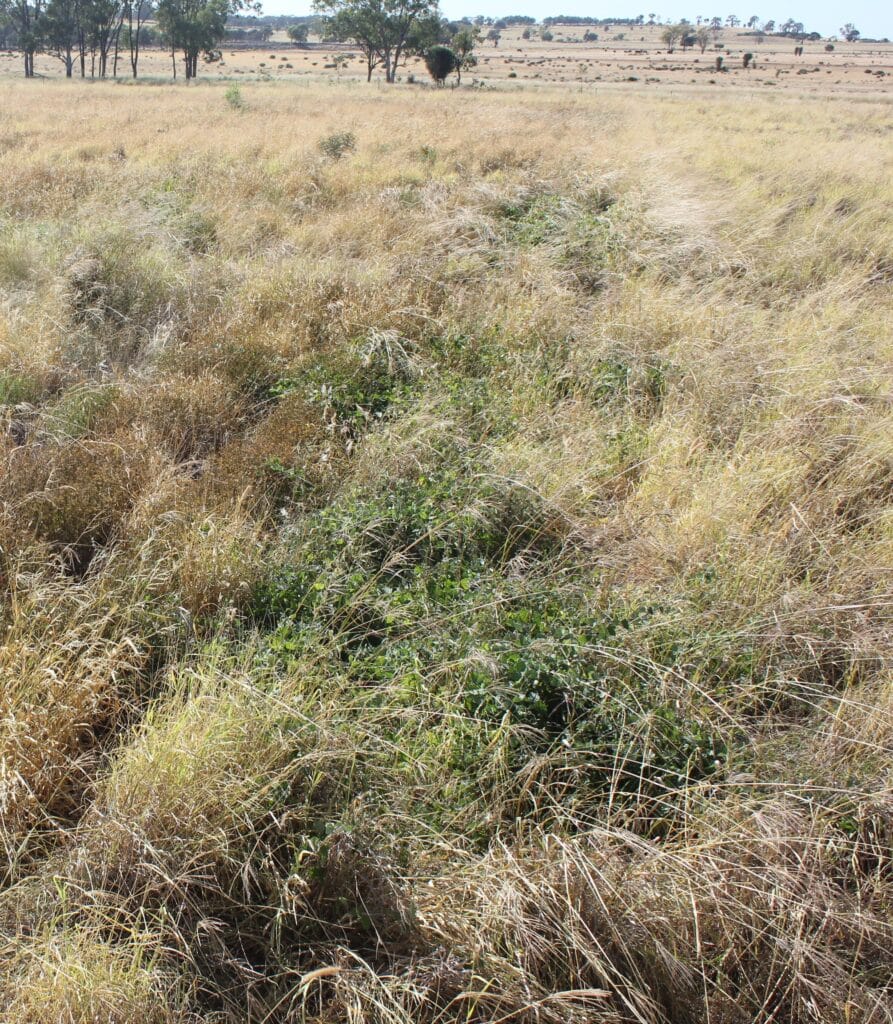
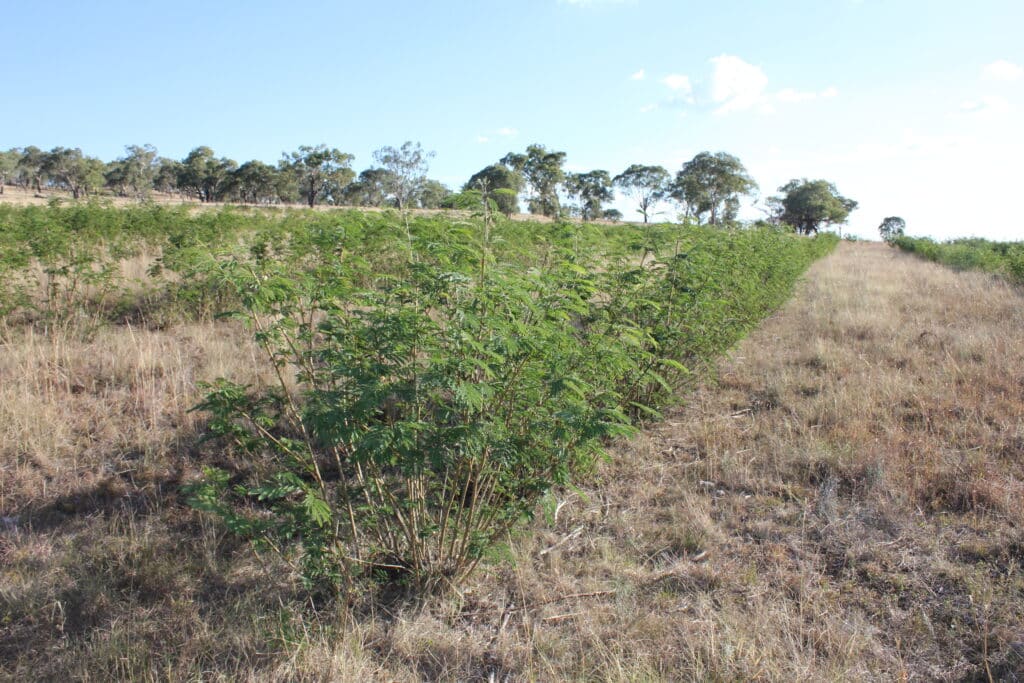
Siratro growing in a pasture paddock, ungrazed. It is not considered to be persistent in the long-term in the Brigalow Belt.
What does it mean for you?
Picking legumes that are suited to your soil and climate is critical to long-term success when sowing legumes. There are some persistent legumes species for many of the climate and soil combinations across the Brigalow Belt, but not all.
Best recommendation is to seek information from reliable sources such as DPI’s pastures research and extension teams when deciding what legume to sow.
For a more detailed understanding of this work, download and read the journal paper from The Rangeland Journal.
Visit this page for more information on legumes for fodder crops and short-term pastures on clay soils in Queensland
Written by Louise Walker, Queensland Government, as part of the Queensland Pasture Resilience Program which is a partnership between the Department of Primary Industries, Meat & Livestock Australia and the Australian Government through the MLA Donor Company. 2026.
