
Key takeaways
- Washdowns are an important part of managing vehicle biosecurity risk, but there are also other factors to consider
- How recently a vehicle was cleaned may be less important than where it has travelled since
- A Weed Hygiene Declaration certifies a vehicle is clean; completed by the person doing the cleaning
- A Vehicle Hygiene Inspection Report certifies a vehicle is clean; completed by an independent authorised/qualified person
- Understanding the difference between the two can help decide which is appropriate for your situation
- Physical inspections complement the hygiene documents
Biosecurity matter includes things that may pose a risk to the biosecurity of Queensland (a biosecurity risk). Biosecurity matter includes, but is not limited to, plant pests and pathogens, invasive animals, animal diseases, and contaminants.
Many landholders have a biosecurity plan at least written in their minds; but how well does it work for you? Consider this scenario, the driver of the vehicle that just arrived at your property hands you a Weed Hygiene Declaration and asks if they can drive around your property. Does this provide enough reassurance that it is clean?
Sometimes it is obvious if biosecurity matter is on the vehicle, for example bales of hay or livestock on a truck. Whereas mud containing seeds stuck within the nooks and crannies of a vehicles’ underbody are less obvious or impossible to see.
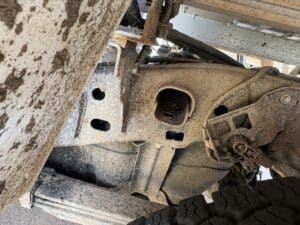
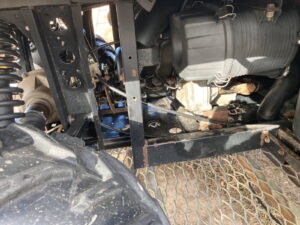
Before and after vehicle washdown: Mud and debris can accumulate in hard-to-reach areas of a vehicle’s underbody. Thorough cleaning and inspection help reduce the risk of introducing biosecurity matter onto your property.
The bones of a solid biosecurity plan is having knowledge of what pests may be hitching a ride on/in ‘things’ entering your property, including vehicles/equipment, animals, people, materials, plants and soil, so you can decide how to best manage the risk.
For vehicles and machinery, washdowns are an important biosecurity measure. Weed Hygiene Declarations and Vehicle Hygiene Inspection Reports can also provide assurance that cleaning has been undertaken to reduce the risk, but these documents each have a different role.
Understanding what each document tells you, their limitations and what else to consider can help you decide what is appropriate before a vehicle or machine enters your property.
How does the paperwork help you?
There are two common ‘washdown’ forms accepted by industry to document hygiene practices, both of which are legal declarations certifying a vehicle is clean:
- Weed Hygiene Declarations certify a vehicle has been cleaned. They can be signed by anyone prepared to declare the details are correct and that they have fulfilled their General Biosecurity Obligation (GBO) under the Biosecurity Act 2014 (Qld).
- Vehicle Hygiene Inspection Reports also certify a vehicle has been cleaned. They are completed and signed by an authorised/qualified person (often a third party) ensuring that the cleaning was successful. This provides additional surety for the landholder.
Vehicle Hygiene Inspection Reports improve assurance compared to a Weed Hygiene Declaration that the vehicle is considered ‘clean’ at the time, due to it being completed by an authorised person.
When you know the vehicle and operator (regular mustering contractor, for example) a Weed Hygiene Declaration would be most appropriate. A Vehicle Hygiene Inspection Report might be more appropriate when the visitor and history of the vehicle is not known (for example a surveyor pegging out third party infrastructure).
Vehicle and machinery hygiene requirements, including declarations and inspections, vary between states. If moving vehicles or machinery across borders, check the relevant requirements for the Northern Territory and Western Australia before travelling. Individual properties and projects may also have additional hygiene requirements.
What else do you need to consider?
The declaration or report only applies to areas of the vehicle/machine that are accessible during the washdown procedure. Most vehicles and machinery have areas that are difficult to clean without dismantling, therefore neither form guarantees a vehicle is completely free of potential contaminants.
A vehicle/machinery is still considered ‘clean’ following certification if it only travels on sealed or well-maintained unsealed roads after the clean.
These certificates are generally considered valid for a set period of time (e.g. 7 days); however, the time passed since the last clean is less relevant compared to where the vehicle has been.
If the vehicle does not leave the farm, it will not be contaminated with anything that is not already on the property; conversely the vehicle can be contaminated within hours of travelling off-farm, such as pest plants present on sides of roads or other properties.
A physical inspection of vehicles when they first enter your property is something to consider, especially if the vehicle will be travelling around your property. If the vehicle contains visible biosecurity matter then you can decide what measures to take to minimise the risk such as requiring additional cleaning, restricting movement on the property or using an alternate vehicle.
Optimising washdowns
Successful washdown requires time and resources appropriate for the particular vehicle/machine, as well as the level of contamination.
Some things do not take long to clean and may only require a garden hose, e.g. a small box trailer carting some pavers for a garden path that was towed on sealed road. Other machinery, such as an excavator used for mulching woody weeds, may take longer and require ‘specialised’ equipment to do a thorough clean, such as high pressure water and/or air, vacuums and brushes.
The location and structure of the washdown is worth considering. A dedicated on-property area is usually appropriate for most washdowns, whereas an enclosed, commercial or government facility can be the better option on other occasions.
On-property washdown sites are best located on hardstand or well grassed (lawn) areas that are ‘seen’ often so they are easy to maintain, clean, and check for any biosecurity matter (e.g. weeds) before it has a chance to spread. Near the main property shed is a good option and do not forget to check areas where wash water runs off.
If there is known biosecurity matter on a vehicle, containing the run-off water or contaminated air is important to stop the spread. In this instance, an off-site or a fully contained facility may be appropriate. For example, a commercial livestock transport truck with an unknown risk of carrying biosecurity matter or a landholder who regularly uses their machinery off property for contract harvesting, would both warrant the use of off-site or well designed and appropriately equipped dedicated on-site washdown facilities. Risk, the number and frequency of washdowns required will help determine your choice of washdown location.
Putting washdowns into practice
Imagine you are returning home from a 4WD trip through country where Giant Rats Tail (GRT) grass is present. Using commercial DIY car wash (not automated because of the lack of thorough underbody cleaning they provide) or public (saleyard washdown areas) facilities would be very worthwhile rather than risking potential spread by washing the vehicle on your property.
If you have no other option but to wash the vehicle on your property, follow the advice above by choosing a site where runoff areas can be checked regularly.
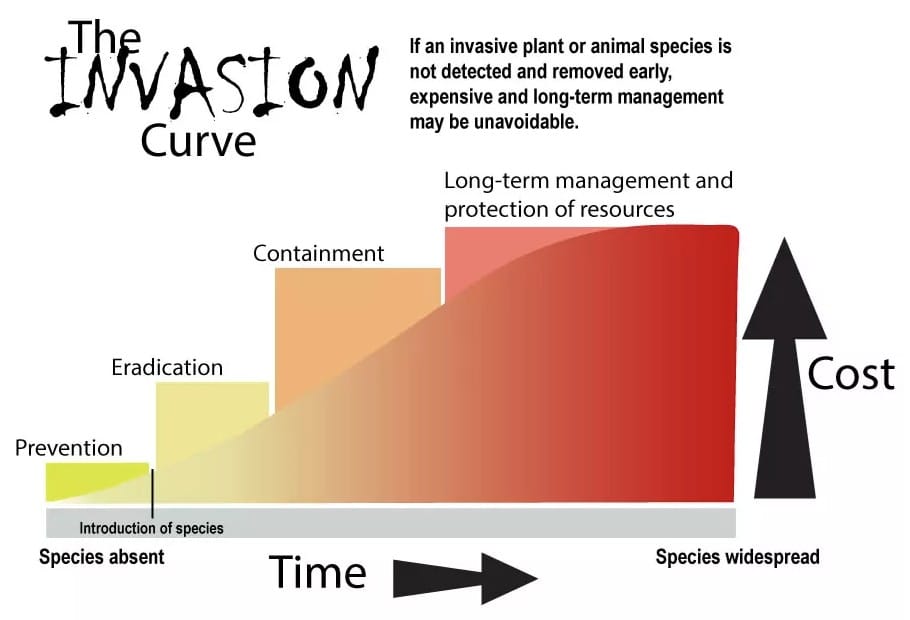
Early detection and eradication of any pest is by far the most economical (financial and time) way to manage the biosecurity risk. The Invasion Curve below depicts how costs and spread of a pest increase over time from prevention through to long-term management, if a pest becomes widespread and cannot be eradicated or contained.
Assess the risk – choose the tool
To lower biosecurity risks always do a risk assessment – anything entering your property is a potential source of biosecurity matter, regardless of measures undertaken.
Knowing what might be coming onto your property and considering what risks it poses, allows you to choose the best ‘tools’ to manage that particular situation.
The more diligent you are, the lower your risk.
Article by Marcia Smith, Livestock Extension Officer, Queensland Department of Primary Industries, Toowoomba.
More information
Learn how to develop a biosecurity plan for your property with links to planning tools and templates →
