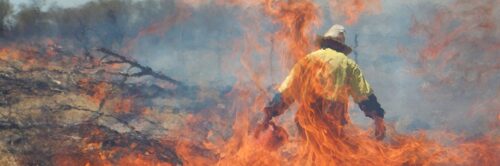
Have you been impacted by recent bushfires?
Here’s a compilation of resources and tasks to complete that will help you recover and get back on track: Things to do now, things to do when you get time, things to consider as you move forward as you recover from the bushfire.
Things to do as soon as you can
Complete the Disaster Impact Survey
If a bushfire has damaged your farm or causes losses, you can report it via DAF’s Disaster Impact Survey: Click here to complete the survey.
These reports help determine if additional assistance is needed to support primary producers during recovery. You need to include date-stamped photos, which most phone cameras do automatically.
Assistance and support are also available through freight subsidies and loans, emergency hardship assistance, free mental health support, free financial counselling and drought preparedness grants and loans. Find out more by:
- visiting DPI’s Engagement eHub at dpi.engagementhub.com.au
- call DPI’s call centre on us on 13 25 23.
Take date-stamped photos
We understand taking photos of such devastation is distressing, however it is considered important as photos will support your claims and act as evidence should you make insurance claims or apply for future disaster response grant applications. Be sure to capture damage to:
- infrastructure (fences, roads, bores, tanks, toughs, etc)
- plant/machinery
- livestock, including carcases.
Notify financial institutions/shareholders
Initiating discussions with financial backers and interested parties of your current situation, including any possibilities of not meeting obligations, early in the recovery phase will encourage transparent conversations and understanding before deadlines are reached. Potential discussion points include:
- anticipated stock losses
- recovery estimates in terms of time, cost and inputs required
- anticipated impact on cash flow.
Key questions to ask of the pasture you’ve got left
The key questions to ask after a bushfire are:
- How much pasture feed is still available?
- How many stock can paddocks carry until pastures are growing again?
Pasture budgets can be used to estimate available feed and how many stock can be carried for defined periods.
- View four short pasture budgeting videos from FutureBeef
- Pasture yield photo guides to help get you started.
Options when you’ve got a feed shortage
Once you’ve worked out how long you can keep your remaining stock for, you may recognise that you are facing a feed shortage between now, and when it is likely you will have a significant flush of pasture growth (ie. mid January).
| Options | Economic tools to assist decision making |
|---|---|
| Sell some, or all, stock | Beef business tools: • Cattle feeding margin calculator • Cattle marketing ready reckoner • Sell or feed stock calculator |
| Feed to retain stock (containment feeding) | • Cattle feeding margin calculator |
| Production feed to sell stock | • Cattle feeding margin calculator |
| Feedlot | • Cattle feeding margin calculator |
| Agistment | Agistment calculator |
| Early weaning | Dry season management of a beef business: a guide to planning, managing and supplementary feeding dry season management of a beef business: a guide to planning, managing and supplementary feeding (PDF, 6MB), page 58 |
Other options also include grazing stock routes, leasing or buying other land, gifting stock and last resort, euthanasia.
For more information on options for surviving stock and making informed decisions, see page 36 of MLA’s “Bushfire preparation and recovery: A manual for livestock producers”.
For information on reducing stock numbers after disaster, Business Queensland has an objective guide to prioritising culling of different classes of livestock: Reducing stock after a disaster (i.e. keep the best, sell saleable, empties, less productive, late or out of season calvers, higher risk, old, poor temperament / conformation, cull heifers, inferior bulls, parasite susceptible.)
Full feeding cattle
The table below gives a guide to quantities required for full feeding cattle (source: Full hand feeding of beef cattle – quantities, thanks to New South Wales Department of Primary Industries).
| Feed options: minimum weight (kg) per day 'as fed' | ||||||
|---|---|---|---|---|---|---|
| Class of stock and bodyweight | Grain (12 ME), Or | Hay (8.5 ME), Or | 50:50 grain:hay mix, Or | 80:20 grain:hay mix, Or | Silage (30% dry matter and 9 ME) | Expected weight gain/day |
| Weaners (200 kg) | 2.5 | 3.5 | 3 | 2.5 | 12 | 0.2 kg (b) |
| Yearlings (250 kg) | 3 | 4 | 3.5 | 3 | 15 | 0.1 (b) |
| Adult dry stock (400 kg) | 4 | 6 | 5 | 4.5 | 20 | nil |
| Breeders, late pregnancy (425 kg) | 5 | 8.5 | 7 | 6.5 | 27 | nil |
| Breeders, lactating (425 kg) | - | 10.5 | 9 | 8 (c) | 30 | nil |
Remember:
Lactating cows have much higher nutritional requirements than dry cows. Early weaning and feeding calves will reduce the nutritional stress on the cows and help them hold condition.
For more information on supplementing cattle (P.26) and weaning calves (p.58) of the “Dry Season Management of a beef business” booklet (PDF, 6MB).
Things to do when you get time
Prepare repair estimates
When you are able to get an idea of the damage done, start preparing repair estimates so you can be on the front foot to apply for grants or submit insurance claims. Examples include:
- $/km of fencing needing to be fixed
- $/km of new fencing required
- quotes for replacement troughs/water infrastructure
- earth moving equipment rate and expected achievable repairs km/day.
Bury carcases
Where possible, burying carcases is recommended to prevent surviving stock from coming in contact with toxins growing in the decaying carcases. Bury animals in deep graves away from creeks. Here are some carcass disposal guidelines.
Monitor fodder drop sites
While hay drops are a blessing of which we are all grateful for, it is worth monitoring drop sites after rain for sneaky, invasive, opportunistic weeds.
Participate in surveys
You will no doubt be asked to participate in numerous surveys requesting estimates of the scale of damage. Completing these surveys will help inform all levels of government and assistance organisations where future funding should be directed and what resources are needed to help recovery.
Look for supporting evidence such as photos and invoices
While proof of the damaged infrastructure will be required, accompanying those photos with supporting evidence of what it looked like when it was in working order, can also be beneficial in demonstrating the amount of damage. Examples of supporting evidence include invoices and photos of the infrastructure in working order at an earlier date.
Moving forward
Pasture recovery
In extensive bushfires such as these, widespread erosion can be expected as the soil has been left without cover.
The general recommendations we can provide include:
- Allow seedlings to grow until they are well established, through delayed re-stocking or low stocking rates.
- Avoid high impact grazing with large mobs of cattle that will trample seedlings and weak tussocks.
- Monitor seedling and tussock establishment at easy to access sites you are likely to revisit every three to four weeks. Look for evidence of stock impact on their health and survivability.
- Review stock numbers and pasture recovery in July/August.
- Budget stock numbers to leave a minimum of 15–20 cm residual grass stubble height by the end of the dry-season.
Livestock recovery
Unfortunately, although rains after fires are a welcome sight, it can be a disastrous time for cow mortality. Cattle may go down due to:
- Poor gut function if they have been unable to eat enough since the bushfire.
- The resulting green flush of grass growth in the weeks that followed was too rich for weak animals.
- The impact of diseases such as three-day sickness, akabane, tetanus, and other infections on a weakened animal.
- Poisonous plants are often the first pasture species to germinate following rain, including pigweed, button grass and Noogoora burr. If cattle have access to a mix of pasture species, the risk is reduced.
Keeping cattle contained and on feed while having access to small amounts of new flush growth will help their rumens steadily adapt while reducing the risk of the cattle gorging on fresh and potentially toxic new growth.
Your recovery
The damage caused by bushfires can be confronting and challenging not only financially and logistically, but emotionally as well.
Actions that have helped communities to heal in other natural disasters
- Neighbour morning teas on a semi-regular basis assisted people to feel heard by those who understood. It also provided an opportunity to share ideas for recovery and infrastructure improvement while coordinating bulk purchases in an informal co-op approach.
- If you think someone is struggling mentally with the weight of the situation, sit with that person and suggest they call Lifeline (13 11 14), even going so far as to dial the number for them and leaving them alone to talk in private. Be nearby for when they get off the phone.
Other helplines include:
TIACS by TradeMutt, ph: 0488 846 988
Beyond Blue, ph: 1300 224 636
Headspace (youth mental health and wellbeing), ph: 1300 650 890
Our thoughts are with all those who have been impacted by recent bushfires. Being in the middle of such devastation can be confronting and challenging.
With this in mind, we have compiled a collection of relevant information from multiple reputable sources, to assist those recovering from bushfires in Queensland during 2023.
If a bushfire has damaged your farm or causes losses, we’d love you to report it via DAF’s Disaster Impact Survey: Click here to complete the survey.
These reports help determine what additional assistance is needed to support primary producers during recovery.
Things to do as soon as you can
Freight subsidies, loans and support
After completing the Disaster Impact Survey, you may wish to investigate assistance and support options available. These include freight subsidies and loans, emergency hardship assistance, free mental health support, free financial counselling and drought preparedness grants and loans. Find out more by:
- visiting DAF’s Engagement eHub at dpi.engagementhub.com.au
- call DAF’s call centre on us on 13 25 23.
Take date-stamped photos
We understand taking photos of such devastation is distressing, however it is considered important as photos will support your claims and act as evidence should you make insurance claims or apply for future disaster response grant applications. Be sure to capture damage to:
- infrastructure (fences, roads, bores, tanks, toughs, etc)
- plant/machinery
- livestock, including carcases.
Notify financial institutions/shareholders
Initiating discussions with financial backers and interested parties of your current situation, including any possibilities of not meeting obligations, early in the recovery phase will encourage transparent conversations and understanding before deadlines are reached. Potential discussion points include:
- anticipated stock losses
- recovery estimates in terms of time, cost and inputs required
- anticipated impact on cash flow.
Key questions to ask of the pasture you’ve got left
The key questions to ask after a bushfire are:
- How much pasture feed is still available?
- How many stock can paddocks carry until pastures are growing again?
Pasture budgets can be used to estimate available feed and how many stock can be carried for defined periods.
- View four short pasture budgeting videos from FutureBeef
- Pasture yield photo guides to help get you started.
Options when you’ve got a feed shortage
Once you’ve worked out how long you can keep your remaining stock for, you may recognise that you are facing a feed shortage between now, and when it is likely you will have a significant flush of pasture growth (ie. mid January).
| Options | Economic tools to assist decision making |
|---|---|
| Sell some, or all, stock | Beef business tools: • Cattle feeding margin calculator • Cattle marketing ready reckoner • Sell or feed stock calculator |
| Feed to retain stock (containment feeding) | • Cattle feeding margin calculator |
| Production feed to sell stock | • Cattle feeding margin calculator |
| Feedlot | • Cattle feeding margin calculator |
| Agistment | Agistment calculator |
| Early weaning | Dry season management of a beef business: a guide to planning, managing and supplementary feeding dry season management of a beef business: a guide to planning, managing and supplementary feeding (PDF, 6MB), page 58 |
Other options also include grazing stock routes, leasing or buying other land, gifting stock and last resort, euthanasia.
For more information on options for surviving stock and making informed decisions, see page 36 of MLA’s “Bushfire preparation and recovery: A manual for livestock producers”.
For information on reducing stock numbers after disaster, Business Queensland has an objective guide to prioritising culling of different classes of livestock: Reducing stock after a disaster (i.e. keep the best, sell saleable, empties, less productive, late or out of season calvers, higher risk, old, poor temperament / conformation, cull heifers, inferior bulls, parasite susceptible.)
Full feeding
In many ways, feeding cattle after a fire, is the same as feeding cattle during a drought: there is a lack of feed.
The table below gives a guide to quantities required for full feeding cattle (source: Full hand feeding of beef cattle – quantities, thanks to New South Wales Department of Primary Industries).
| Feed options: minimum weight (kg) per day 'as fed' | ||||||
|---|---|---|---|---|---|---|
| Class of stock and bodyweight | Grain (12 ME), Or | Hay (8.5 ME), Or | 50:50 grain:hay mix, Or | 80:20 grain:hay mix, Or | Silage (30% dry matter and 9 ME) | Expected weight gain/day |
| Weaners (200 kg) | 2.5 | 3.5 | 3 | 2.5 | 12 | 0.2 kg (b) |
| Yearlings (250 kg) | 3 | 4 | 3.5 | 3 | 15 | 0.1 (b) |
| Adult dry stock (400 kg) | 4 | 6 | 5 | 4.5 | 20 | nil |
| Breeders, late pregnancy (425 kg) | 5 | 8.5 | 7 | 6.5 | 27 | nil |
| Breeders, lactating (425 kg) | - | 10.5 | 9 | 8 (c) | 30 | nil |
Remember:
Lactating cows have much higher nutritional requirements than dry cows. Early weaning and feeding calves will reduce the nutritional stress on the cows and help them hold condition.
For more information on drought feeding cattle (P.45) and weaning calves (p.58) of the “Dry Season Management of a beef business” booklet (PDF, 6MB).
If you’re considering sourcing other feed types, such as sunflower meal, copra meal, oats, etc, here’s a list of average nutrient composition for each feed type, and, for calculation and comparison purposes, here’s information about the nutritional requirements of the different classes of beef cattle.
Things to do when you get time
Prepare repair estimates
When you are able to get an idea of the damage done, start preparing repair estimates so you can be on the front foot to apply for grants or submit insurance claims. Examples include:
- $/km of fencing needing to be fixed
- $/km of new fencing required
- quotes for replacement troughs/water infrastructure
- earth moving equipment rate and expected achievable repairs km/day.
Dispose of carcasses
Disposing of carcasses
Disposing of carcasses may be required when they present a disease risk to humans or other animals eg close to water points, close to homes.
Before you consider moving any dead animals, it’s important to consider your own safety first.
There are several bacterial diseases in carcasses that can cause serious diseases in humans. Please wear appropriate personal protective equipment, such as gloves, leather or rubber boots, clothes that cover as much skin as possible, respiratory and eye protection. Handle the carcasses as little as possible and use machines if they are available. Always practice good hygiene after contact with a carcass by washing your hands well with soap and water.
If you feel unwell after doing so, don’t mess about, call the 13HEALTH hotline (13 43 25 84).
Burying carcasses
Where possible, burying carcasses is recommended to prevent surviving stock from coming in contact with the decaying material. There are some factors to keep in mind when doing so to minimise the risk of contaminating soil, groundwater and surface water sources.
If the carcasses are intact, the general recommendation is to not put more than 10-15 carcasses in each burial pit. This is to minimise the potential for fluid movement as one adult bovine carcass can release up to 160L. For this reason, it is also recommended to space burial pits more than 25m apart.
In instances where burial pits need to accommodate more than 10-15 head each, it would be best to contact the Department of the Environment, Tourism, Science and Innovation (DETSI), as they will be able to provide advice with individual site suitability. The DETSI Pollution Hotline is 1300 130 372.
A ‘good’ site for burial pits will be:
- more than 300m from a bore
- more than 200m from a house/dwelling
- more than 250m for underground or above ground infrastructure (e.g. powerlines, water pipes, sewerage, etc.)
- more than 100m from a surface water source in its usual location
- on a slope of less than 6%.
Burial pits should be made on stable soils with low permeability and have groundwater at a depth of greater than 10m (i.e. minimum 5m deep pit + 5m buffer =10m surface to groundwater level).
Importantly, if you do construct burial pits, be sure to cover the carcasses with at least 2m of soil over the top.
Alternative carcass disposal options
If burial pits aren’t an option and you have some lime on-hand, applying lime over the carcasses will discourage flies and insects – a relatively small but important consideration for limiting the spread of diseases to surviving stock. Don’t use lime on carcasses in burial pits as it will slow the decomposition down.
If you have any questions, contact your local biosecurity officer (call 13 25 23), or extension officer.
Monitor fodder drop sites
While hay drops are a blessing of which we are all grateful for, it is worth monitoring drop sites after rain for sneaky, invasive, opportunistic weeds.
Participate in surveys
You will no doubt be asked to participate in numerous surveys requesting estimates of the scale of damage. Completing these surveys will help inform all levels of government and assistance organisations where future funding should be directed and what resources are needed to help recovery.
Look for supporting evidence such as photos and invoices
While proof of the damaged infrastructure will be required, accompanying those photos with supporting evidence of what it looked like when it was in working order, can also be beneficial in demonstrating the amount of damage. Examples of supporting evidence include invoices and photos of the infrastructure in working order at an earlier date.
Moving forward
Pasture recovery
In extensive bushfires such as these, widespread erosion can be expected as the soil has been left without cover.
The general recommendations we can provide include:
- Allow seedlings to grow until they are well established, through delayed re-stocking or low stocking rates.
- Allow weak tussocks to become firmly established in the ground through delayed re-stocking or low stocking rates.
- Avoid high impact grazing with large mobs of cattle that will trample seedlings and weak tussocks.
- Monitor seedling and tussock establishment at easy to access sites you are likely to revisit every three to four weeks. Look for evidence of stock impact on their health and survivability.
- Review stock numbers and pasture recovery in July/August.
- Budget stock numbers to leave a minimum of 15–20 cm residual grass stubble height by the end of the dry-season.
Livestock recovery
Unfortunately, although rains after fires are a welcome sight, it can be a disastrous time for cow mortality. Cattle may go down due to:
- Poor gut function after being off feed for several days, meaning they couldn’t digest the feed supplied.
- The resulting green flush of grass growth in the weeks that followed was too rich for weak animals.
- The impact of diseases such as three-day sickness, akabane, tetanus, and other infections on a weakened animal.
- Poisonous plants are often the first pasture species to germinate following rain, including pigweed, button grass and Noogoora burr. If cattle have access to a mix of pasture species, the risk is reduced.
Keeping cattle contained and on feed while having access to small amounts of new flush growth will help their rumens steadily adapt while reducing the risk of the cattle gorging on fresh and potentially toxic new growth.
Some additional resources:
Your recovery
The damage caused by bushfires can be confronting and challenging not only financially and logistically, but emotionally as well.
Actions that have helped communities to heal in other natural disasters
- Neighbour morning teas on a semi-regular basis assisted people to feel heard by those who understood. It also provided an opportunity to share ideas for recovery and infrastructure improvement while coordinating bulk purchases in an informal co-op approach.
- If you think someone is struggling mentally with the weight of the situation, sit with that person and suggest they call Lifeline (13 11 14), even going so far as to dial the number for them and leaving them alone to talk in private. Be nearby for when they get off the phone.
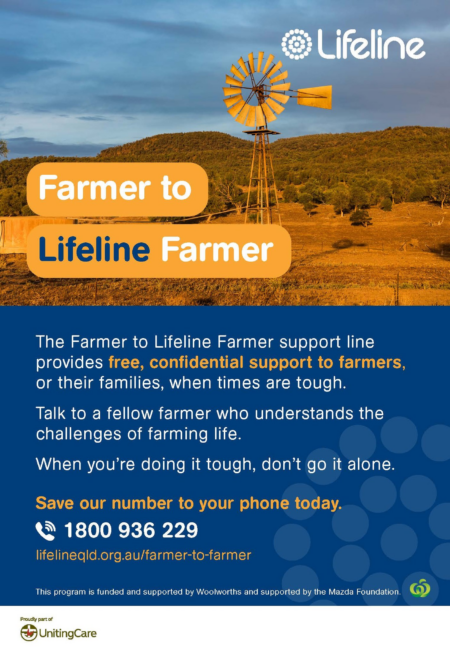
Other helplines include:
TIACS by TradeMutt, ph: 0488 846 988
Beyond Blue, ph: 1300 224 636
Headspace (youth mental health and wellbeing), ph: 1300 650 890
Be sure to keep in touch with your local beef extension officers as they will be able to connect you with any grants, advice or assistance that become available.
Contact us
Other helpful resources
“Bushfire preparation and recovery: A manual for livestock producers” (PDF, 20 MB) is a comprehensive guide to preparing for and recovering from bushfires, thanks to Meat & Livestock Australia’s, Bushfire hub.