Is your soil stealing your phosphorus?
Many graziers apply phosphorus (P) fertiliser only to find the pasture response is far lower than expected. In many cases the soil is not losing P, it is simply locking it away. Understanding the Phosphorus Buffer Index (PBI) helps explain why this happens and how to implement an effective fertiliser strategy.
How to be a soil phosphorus detective
Phosphorus is often one of the most limiting nutrients in grazing systems, particularly in soils that naturally “bind” applied fertiliser P to clay minerals, organic matter, and iron and aluminium oxides. This binding reduces the amount of phosphorus available to pasture plants and can therefore limit growth, feed quality and animal performance if not managed correctly. The Phosphorus Buffer Index, or PBI, is a key soil test that helps producers understand how strongly their soil ‘binds’ phosphorus and how much fertiliser is required to lift soil P to productive levels.
PBI measures the soil’s capacity to absorb (hold on to) phosphorus. A soil with a high PBI ties up a large proportion of applied P, which means more fertiliser is required to lift soil fertility. A soil with a low PBI binds very little P, so fertiliser is used more efficiently by plants. Colwell P alone does not explain how quickly phosphorus becomes available, hence PBI is used to interpret a soil test and make confident and cost-effective fertiliser application decisions.
Understanding Colwell P
Colwell P is the standard test used in Australia to estimate the amount of plant available phosphorus in soil. It measures the portion of soil P that can be extracted with a sodium bicarbonate solution, which closely reflects the amount of P available for plant uptake in the short term (i.e. when they are using it). However, Colwell P does not tell you how quickly the soil will remove P from the total available pool in the soil. This is why Colwell P must always be interpreted alongside PBI.
PBI and critical Colwell P
The relationship between PBI and the critical Colwell P value has been developed using national datasets of pasture response trials. The ‘critical’ PBI value represents the soil test P level required to achieve around 95 percent of maximum potential pasture production. As PBI increases, more P is bound up and the soil test target for optimum pasture growth rises.
PBI categories and corresponding critical Colwell P values (Adapted from MLA 2021 How do I grow more phosphorus-efficient pastures?)
| PBI Category | Approximate Critical Colwell P (mg/kg) |
|---|---|
| ≤ 5 (Extremely low) | ~10 (9–12) |
| >5 to 10 (Very low) | ~15 (12–17) |
| >10 to 15 (Low) | ~20 (17–21) |
| >15 to 35 (Moderately low) | ~26 (21–28) |
| >35 to 70 (Medium) | ~29 (28–31) |
| >70 to 140 (Moderately high) | ~33 (31–35) |
| >140 to 280 (High) | ~39 (35–42) |
| >280 to 840 (Very high) | ~55 (42–68) |
| ≥840 (Extremely high) | Not enough data available |
The table above shows how strongly phosphorus requirements shift as PBI increases. A paddock with a PBI of 50 requires a critical Colwell P target of around 29 mg/kg. A paddock with a PBI of 300 may need a target closer to 55 mg/kg to reach the same level of pasture production. This explains why fertiliser strategies that work well on lighter soils (which typically have low PBI levels) do not always suit basalt or heavy clay country (high values).
Example: How PBI changes phosphorus interpretation
The following example shows how two soils with similar Colwell P values can differ markedly in their phosphorus status once PBI is taken into account.
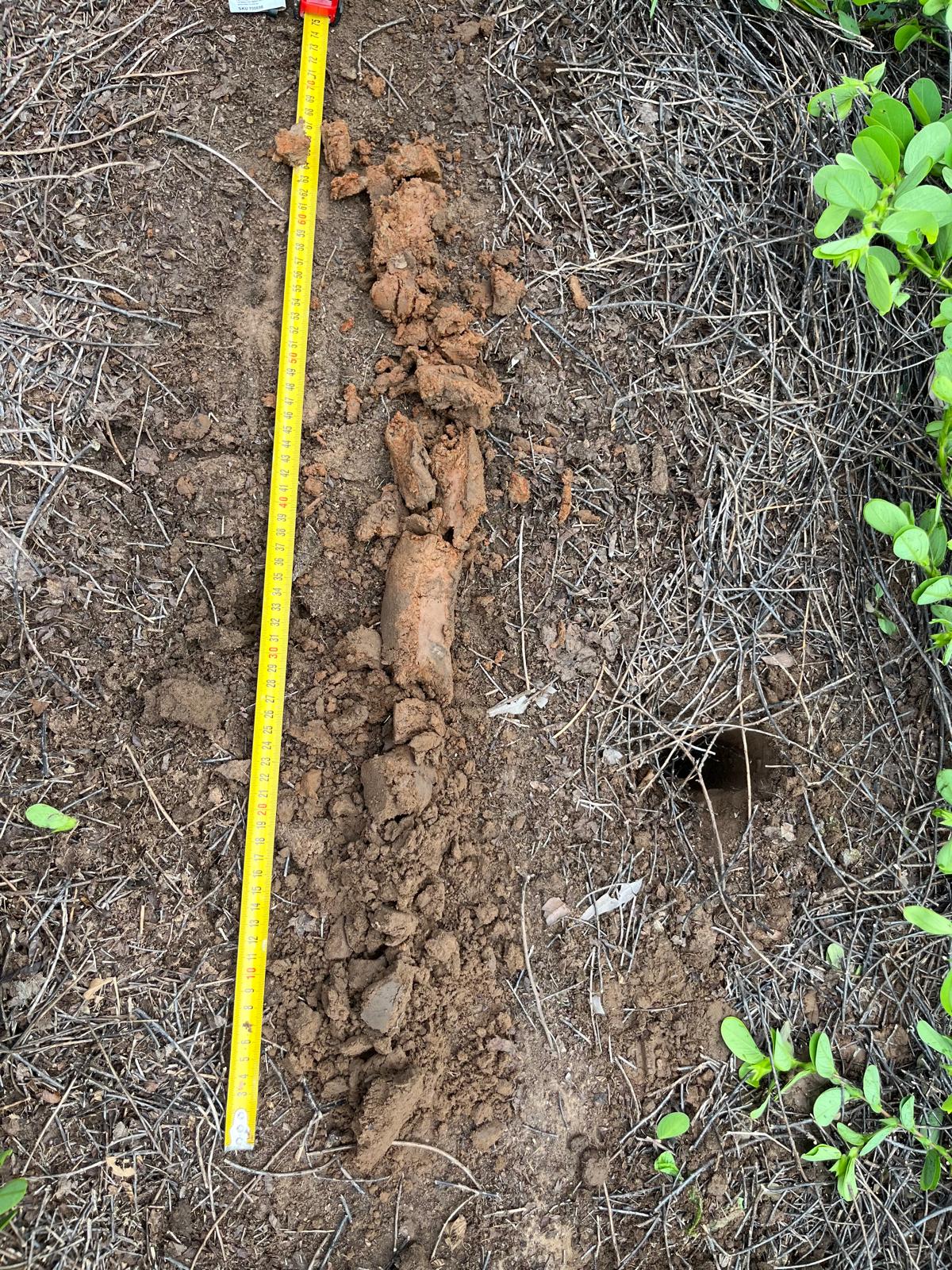
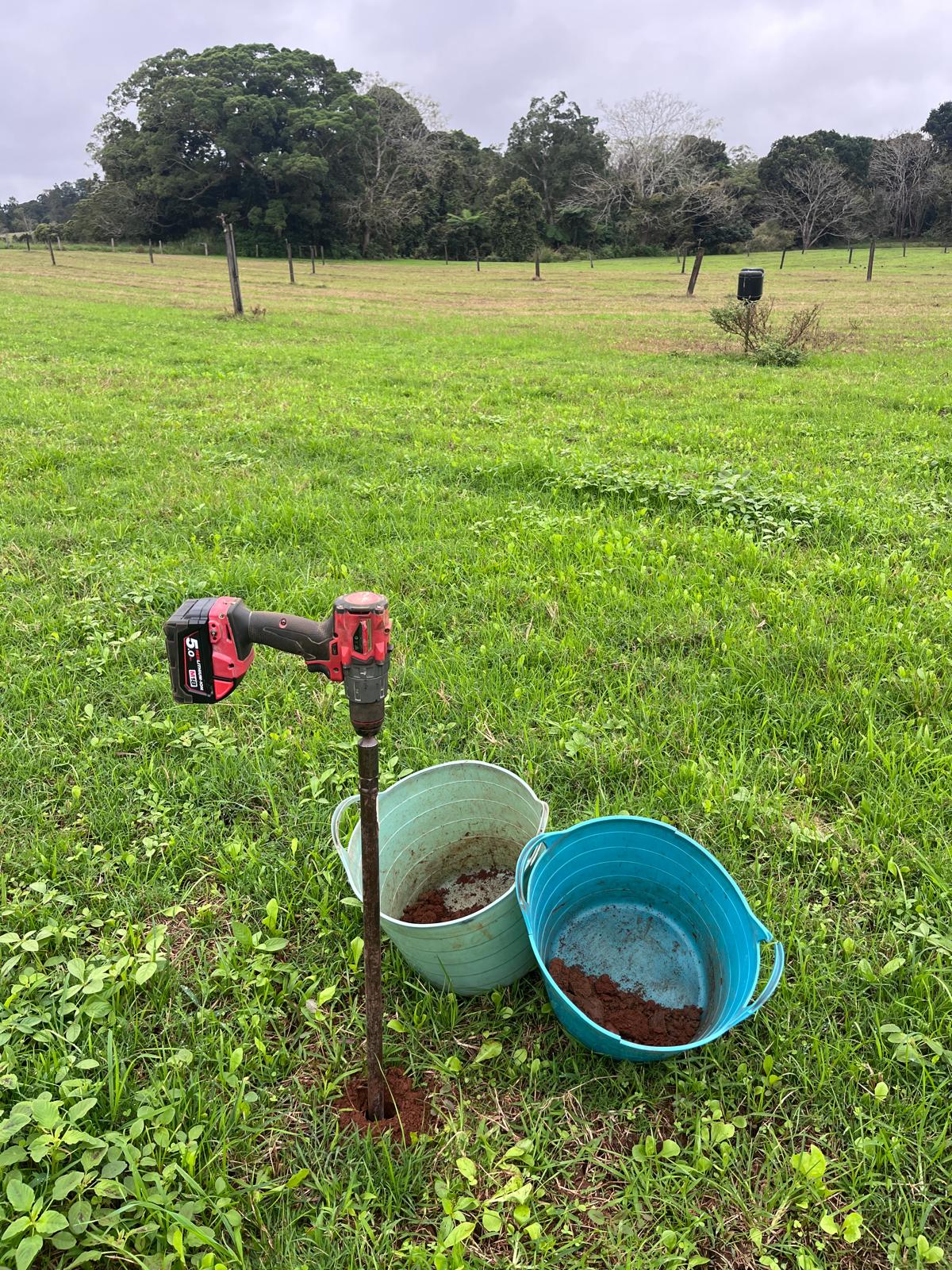
| Soil Type | Basalt | Alluvial |
|---|---|---|
| Texture | Clay Loam | Sandy Loam |
| Colwell P | 33 | 28 |
| PBI | 620 | 59 |
| Adequate Available P | ✘ | ✔ |
Although the basalt soil has a higher Colwell P value, its PBI of 620 indicates a very high capacity to fix phosphorus. According to MLA guidelines (see further reading below), soils in this PBI range typically require a critical Colwell P value of about 55 mg/kg. The measured 33 mg/kg is therefore well below the target, and the pasture is likely to respond to additional phosphorus.
The alluvial soil, however, has a much lower PBI of 59. For this category, the critical Colwell P value is approximately 29 mg/kg. With a test value of 28 mg/kg, it is close to adequate and unlikely to show a strong production response to further P inputs.
This example demonstrates that PBI determines how much Colwell P is actually needed for productive pasture growth. Two soils may present similar Colwell P results, yet their fertiliser requirements can be entirely different once the PBI is known.
Sampling for reliable results
Good sampling is essential for accurate interpretation, and it is also important to ensure that PBI is included when submitting soil tests. Not all laboratories run PBI automatically, so graziers should clearly request that both Colwell P and PBI are analysed on every paddock sample. Without PBI, the soil test cannot reliably predict whether a paddock will respond to phosphorus fertiliser.
Samples should be taken from the 0 to 10 cm depth, avoiding dung and urine patches, stock camps and obvious contamination. Mixed soils should be sampled separately, and paddocks should be retested every two or three years or after major management changes.
For more information on soil testing for pastures, check out this page.
The value for grazing businesses
Understanding PBI allows graziers to direct fertiliser where it provides the best return and avoid unnecessary spending on paddocks that already have sufficient soil P. High PBI soils can still support outstanding pasture growth, but only if phosphorus inputs are matched to their requirements. Using Colwell P alongside PBI gives a stronger basis for fertiliser decisions and supports long-term improvements in soil fertility, pasture quality and breeder performance.
Stay tuned for the next article, where we will share results from a study investigating how applied phosphorus performs on high PBI soils and what this means for pasture productivity and fertiliser planning.
Further reading:
MLA has produced two excellent fact sheets on these topics and you are encouraged to read them.
Meat & Livestock Australia. 2021. How do I grow more phosphorus-efficient pastures? MLA Project Code MLA672.
Meat & Livestock Australia. 2022. Five Easy Steps to ensure you are making money from phosphorus fertiliser.
This article is produced under the Queensland Pasture Resilience Program, which is a partnership between the Department of Primary Industries, Meat & Livestock Australia and the Australian Government through the MLA Donor Company.