Incentive funding a win for Burnett and Mary grazing communities
Graziers in the Burnett and Mary catchments have been improving land condition on their properties through support from the Grazing Resilience And Sustainable Solutions (GRASS) project. Project delivery partners in the region, the Queensland Department of Primary Industries and the Burnett Mary Regional Group, met in Bargara this week to discuss the successes and challenges of the GRASS project ahead of its completion on 30 June 2026.
Over the life of the project, landholders have been able to apply for incentive funding up to $15,000 to support on-ground projects improving gully, hillslope and riparian areas on their property. A key success story was the project team securing an additional pool $145,854 of funding which enabled further landholder projects to be delivered across the region.
In total 45 landholders in the region were contracted, receiving $645,853.72 through the incentive funding process, with producers themselves contributing $907,978.48 (in both cash and in-kind contributions) to complete their various projects. These on-ground works play a key role in reducing sediment runoff to waterways that flow to the Great Barrier Reef, supporting improved water quality outcomes. When combined with appropriate ongoing stocking and grazing management, these investments also deliver long-term benefits at a property scale, including improved land condition and enhanced productivity. This dual outcome ensures both environmental and economic benefits for grazing enterprises across the region.
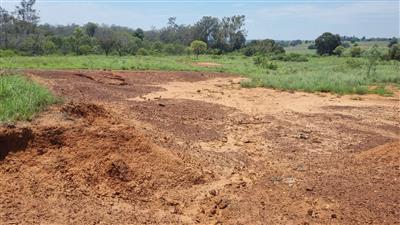 | 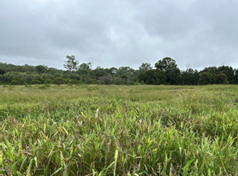 |
Above: Before and after implementation of project to increase ground cover.
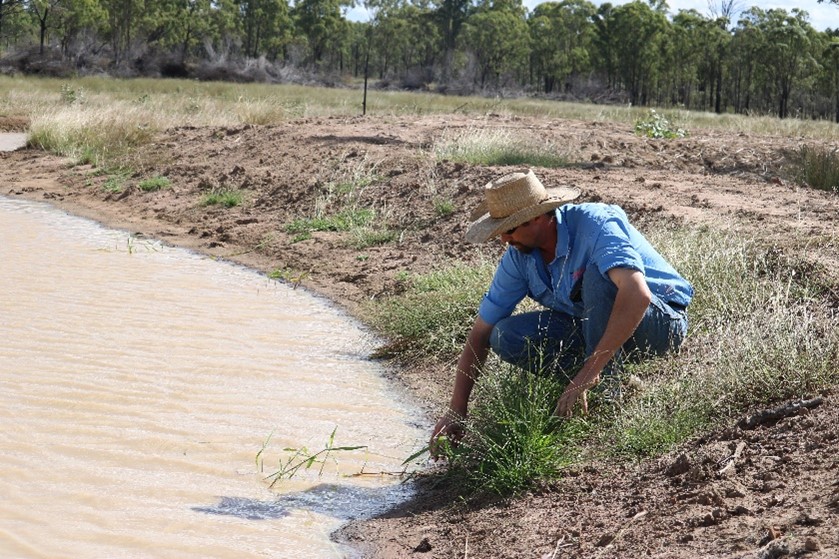
Burnett grazier Dave Smith has undertaken considerable on-ground works using incentive funding from the GRASS program. The project funding contributed to establishing diversion banks on their property to address active erosion and degraded areas. The project remediation plan was developed in with conjunction with DPI Soil conservation officer John Day. While the funding only covered part of the cost of total remediation, Dave says it enabled them to complete works sooner. The diversion banks are now holding water with stock excluded to assist pasture establishment and improve ground cover across the site.
For more information about the GRASS project → https://futurebeef.com.au/grass-adding-value-to-your-grazing-asset/