A big picture approach to pasture management
Beef producers from the Central Highlands and Desert Uplands came together at Monklands, northwest of Alpha, in November to talk all things pasture management and development. The Bauman family at Monklands host grazing land management and legume trial sites for the Queensland Pasture Resilience Program, providing the perfect opportunity for local producers to see local results.
Monklands is a breeding and fattening property with a mix of box, ironbark, rosewood and scrub land types. Breeders are a mixture of tropical and euro cross, run on a three-month joining period and culled on fertility and temperament. The breeders move through a 12-paddock rotation on average every 2-3 weeks depending on pasture availability and livestock condition. The paddocks are dominated by desirable native grasses like desert blue, black spear, and buffel grass.
Rest and rotation give reliable results
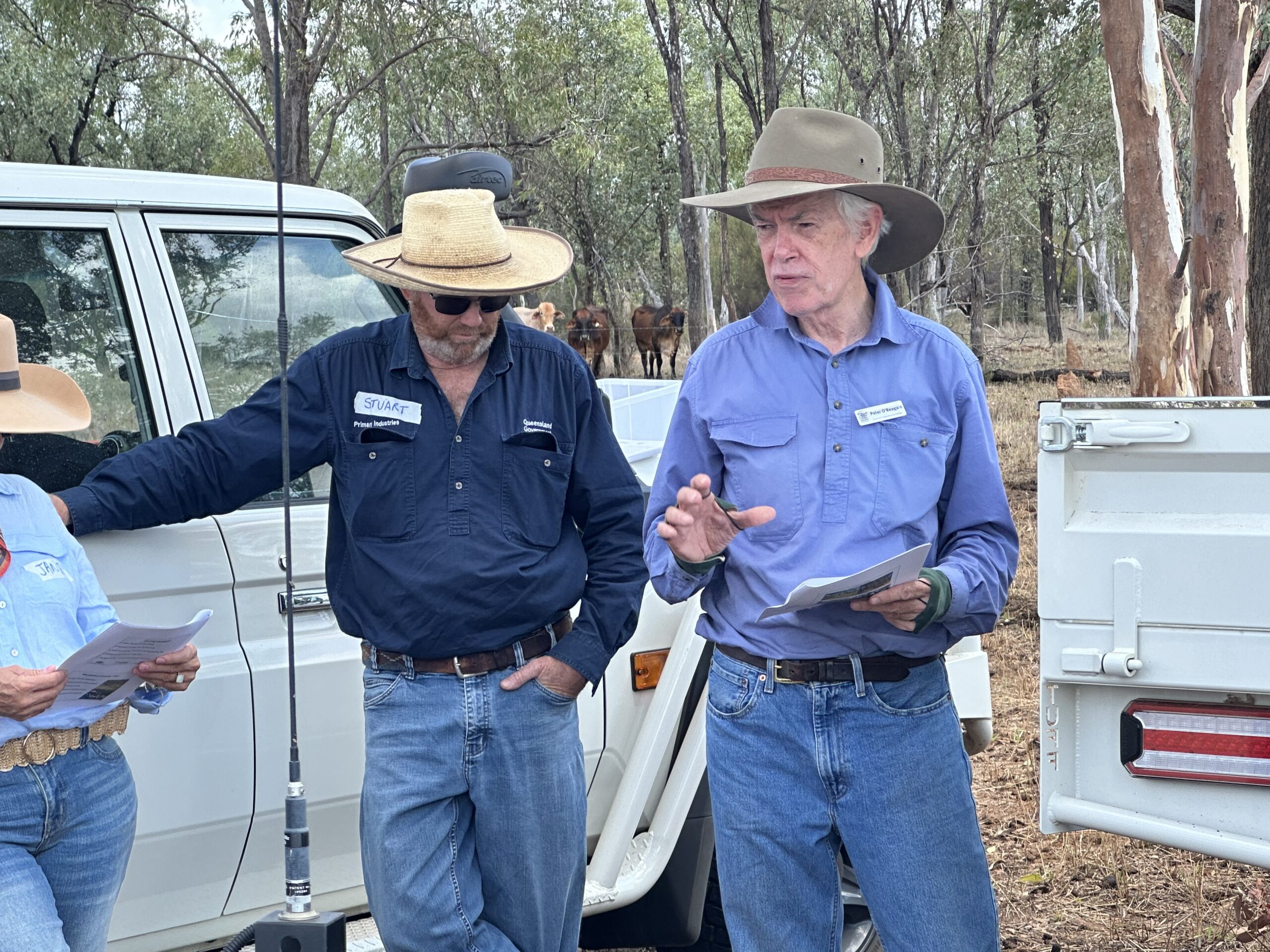
The day started with Reid Bauman welcoming attendees to Monklands before heading out to see the breeder paddocks. DPI Principal Scientist Peter O’Reagain spoke about the key learnings from the 28-year long Wambiana Grazing Trial south of Charters Towers and Reid talked about how he has applied these principles in his rotational grazing system. Over the last 10-12 years Reid has been developing paddocks by pulling timber, adding fences and waters, and mobbing cattle together to rotate them more frequently and easily, creating longer periods of rest for his pasture. Reid uses the Maia Grazing app to monitor cattle rotations, stocking rates and forage budgeting and recently, he has started using an Opti-weigh to remotely monitor cattle weights and fine tune paddock movements.
DPI Pasture Agronomist Dana Walkington talked about the drivers of land condition and the monitoring happening at Monklands. Since 2023, land condition and its associated indicators (pasture yield, species composition, and ground cover) have been recorded twice a year in each of the 12 breeder paddocks in rotation. The monitoring data presented showed good land condition and a dominance of 3P (perennial, palatable, productive) grasses, which attendees could clearly see driving through the paddocks.
Beefing up pastures with legumes
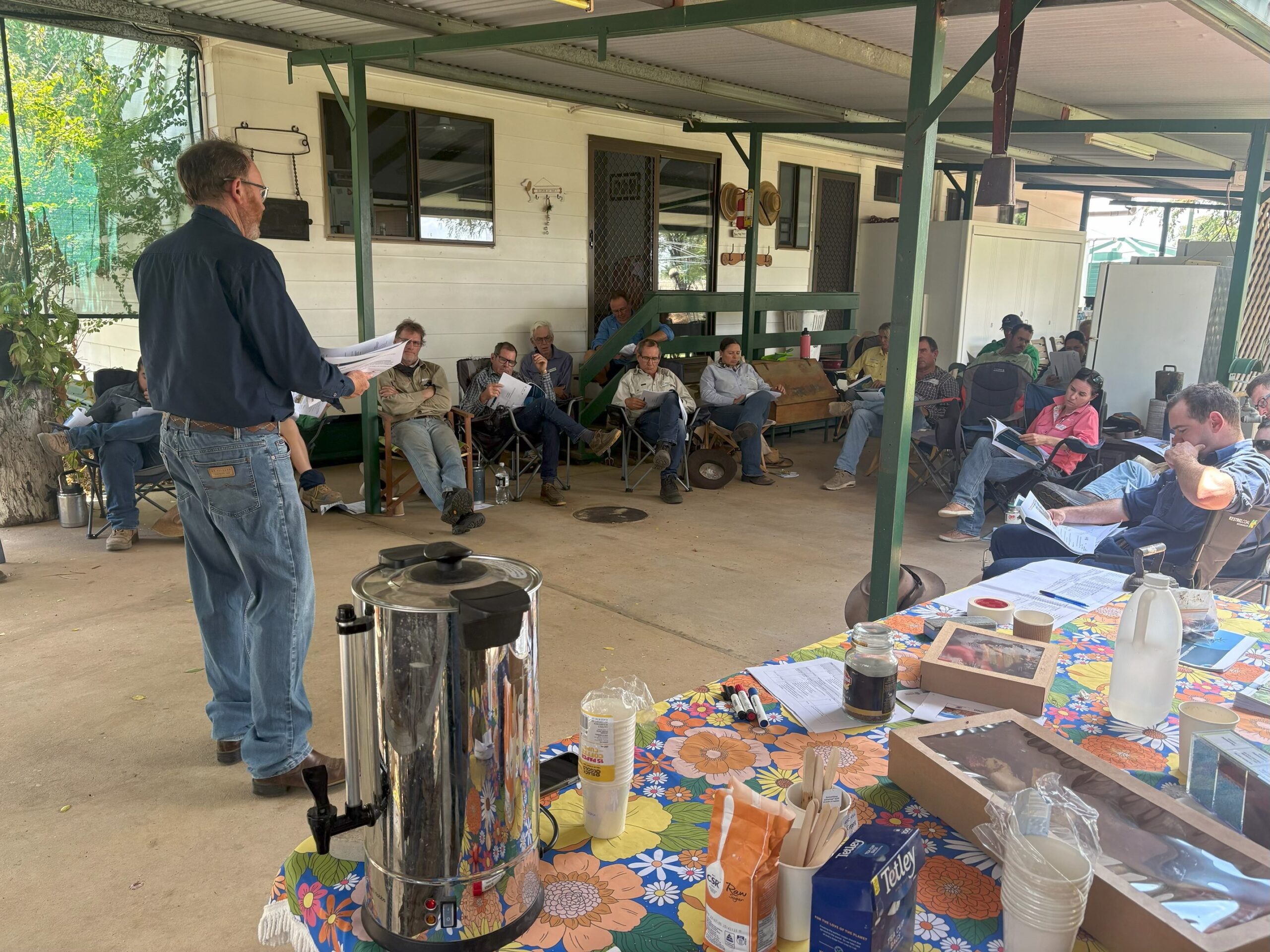
After a group reflection of the importance of grazing management, the discussion shifted to opportunities to increase productivity through improved pastures. DPI Extension Officer Jim Fletcher talked through the economics of planting pastures, including how different establishment methods had different costs and risks of failure. DPI Sown Pasture Agronomist Stuart Buck then took producers through the step-by-step process of pasture establishment – choosing a suitable paddock, methods for fallowing and preparing a seed bed, choosing species, calculating seeding rates, and planting techniques. There was a lot of discussion around options for timbered and open country, and the type of machinery needed for both circumstances. Members of the group shared their experiences with pasture establishment and the success of different strategies they had tried.
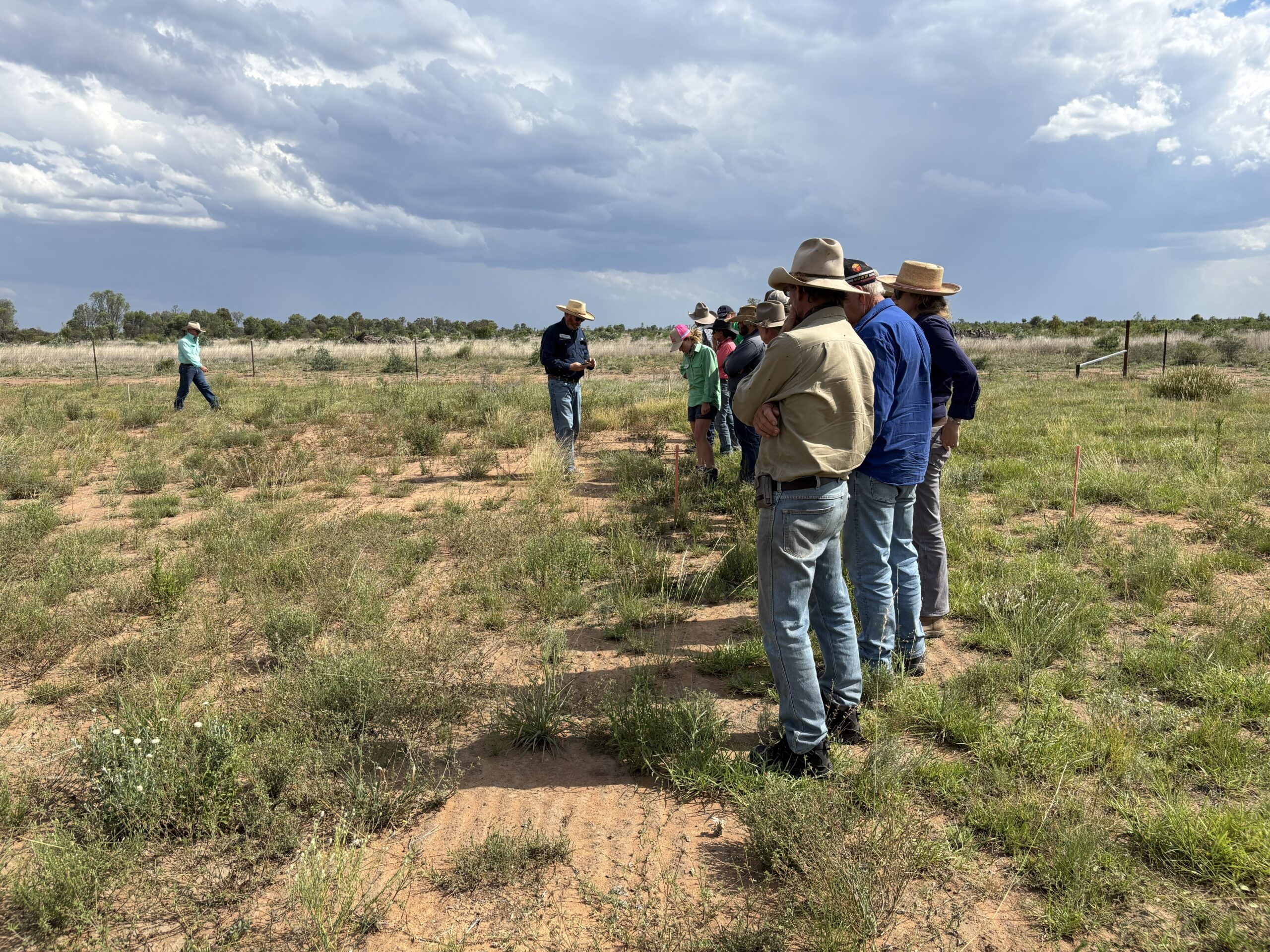
The day wrapped up with another trip to the paddock to see the new DPI legume trial site. Producers were the first in central Queensland to see the five new stylo varieties that have come out of decades of work in southern Queensland. The site was planted in February 2025 and is one of six sites across central Queensland. Some early spring rain meant the stylos were looking happy and healthy, just in time for their first viewing! The site also provided an opportunity to discuss the pasture establishment principles used to plant the trial and how these might be implemented on a broader paddock scale.
Overall, the day received very positive feedback from the producers in attendance with key take aways being getting the grazing management right, and if you’re going to plant a pasture do it properly!
The Queensland Pasture Resilience Program team will be running more events like this soon so keep an eye on your emails and the FutureBeef events calendar for one near you!
Stay tuned for more information about these new stylo varieties too! We will continue to give updates on these legume demo sites as the project progresses.
The Queensland Pasture Resilience Program is a partnership between the Department of Primary Industries, Meat & Livestock Australia and the Australian Government through the MLA Donor Company.