Brewing change at Barnsdale
The McKinlay Shire in Northwest Queensland, often referred to as the ‘Gateway to the Gulf,’ has become a gateway of opportunity for many. For Clif and Rebecca Brewer, it marked the beginning of their journey into agriculture. In 2019, the couple was called upon by a grey nomad friend to farm-sit ‘Barnsdale.’ What started as a temporary arrangement has turned into a long-term commitment, with the Brewers now managing the property for Tom and Tamara Scholes six years later.
After attending a Nutrition Neighbour Day, Clif and Rebecca reached out to their local beef extension officer Greta Dunne to express their interest and passion for grazing land management. It was just their luck that the Queensland Pasture Resilience Program was looking for a demonstration site in the Gulf for their Improving Grazing Land Management Project.
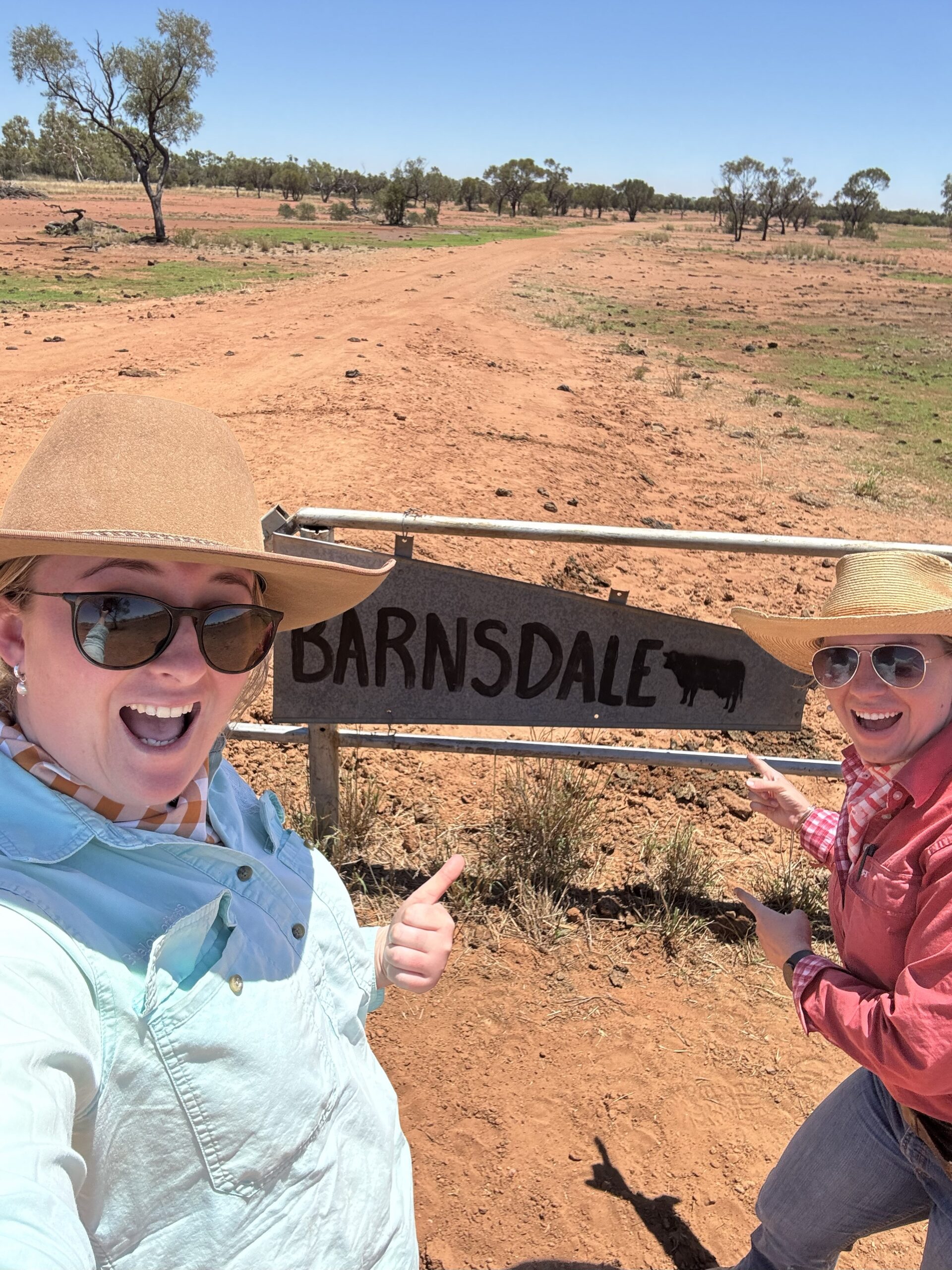
Barnsdale is located 50 kilometres northwest of McKinlay. The property spans 18,300 hectares, across 5 land types (Mitchell Grass, Jump Up Mitchell Grass Downs, Gidgee, Bluegrass Browntop Plains and Frontage) and grazes approximately 4,000 head of breeders, weaners and agistment cattle. Clif and Rebecca have trialled various grazing principles and practices to determine the best fit for their operation. Currently, they are implementing the Grazing Naturally System by Dick Richardson, which focuses on the principle of rest and recovery, with guidance from Richardson himself.
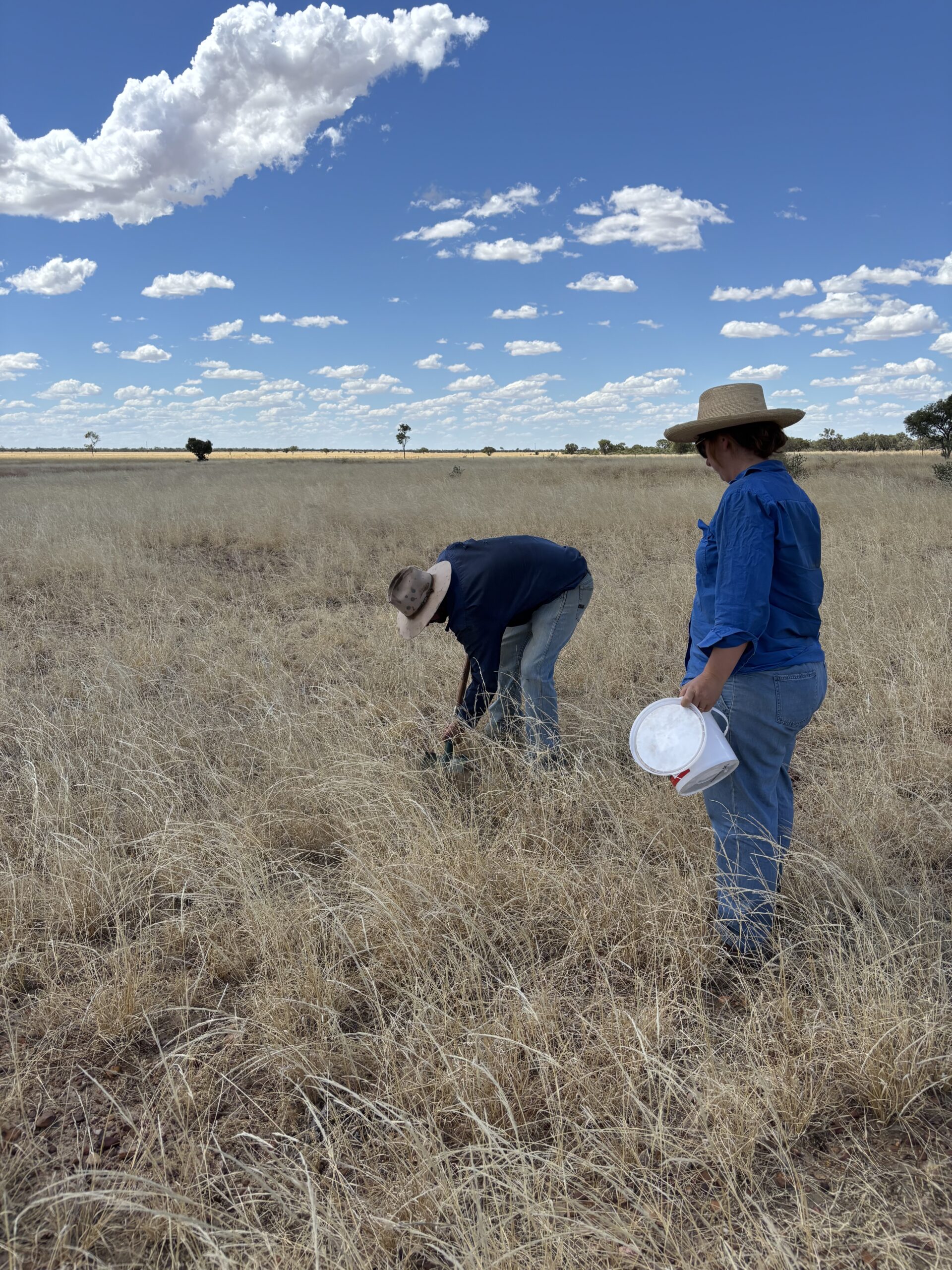
DPI officers Greta Dunne (Cloncurry) and Dana Walkington (Emerald) recently established 20 monitoring sites and collected baseline data using the Land Condition Assessment Tool on Barnsdale. Sites were established using GPS points across various land types in alignment with the Grazing Naturally zoning system, which includes ‘priority’, ‘sabbath’, and general rotation paddocks. Under the Grazing Naturally method, the paddocks are rotated strategically. The ‘priority’ paddock is grazed down to stubby can height, before it is spelled over the wet season when it will become the ‘sabbath’ paddock. The ‘sabbath’ paddock is spelled for 12 months to allow for full recovery.
Over the next 3 years, the monitoring sites will be utilised to monitor the pasture recovery after a priority graze and the productivity of cattle throughout the system. This monitoring process will include the collection of pasture yield, composition and ground cover data twice a year. While the primary goal of the demonstration site is to monitor and showcase the effects of rotational grazing, the Brewers have also gained valuable knowledge about soil health and animal nutrition during their five months of collaboration with the DPI.
Rebecca said “Working with Greta from DPI has been fantastic. Her energy and enthusiasm is contagious. Carrying out dung and soil samples through the DPI has giving us valuable information that will help us with lick supplementation into the future. We are excited to learn alongside Greta in implementing and documenting the Grazing Naturally system. We are looking forward to seeing the results and sharing with our neighbours on the upcoming neighbour day.”
While pasture baseline data forms the foundation of this project, incorporating additional data on nutrition and soil health allows the DPI to take a more holistic approach to support Clif and Rebecca’s operation. By analysing dung and soil samples, the team can better understand the complex relationships between the land, pasture quality, and cattle health. This comprehensive understanding enables the development of tailored strategies for improving supplementation and optimising grazing practices. By linking soil health, pasture composition, and cattle nutrition, the project aims to enhance both the productivity and sustainability of the business. This integrated approach not only benefits Barnsdale but also provides valuable insights that can be shared with other producers in the region, fostering collaboration and innovation in grazing land management.
This work is conducted under the Queensland Pasture Resilience Program, which is a partnership between the Department of Primary Industries, Meat & Livestock Australia and the Australian Government through the MLA Donor Company.