Callide Dawson Carcase Competition Field Day Launches 38th Grain-Fed Challenge
The 38th Callide Dawson Carcase Competition kicked off with a well-attended field day. Six secondary schools, local graziers and industry representatives came together to mark the beginning of the 100-day grain-fed challenge.
The day blended herd health advice, ag-tech innovation and a hands-on live cattle assessment, giving attendees practical insights to take back to their own operations and classrooms.
Tick fever in focus
Herd health was front and centre, with Department of Primary Industries (DPI) Beef Extension Officer Ryan Honor leading a practical opening session on tick fever prevention.
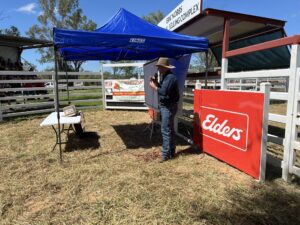
Ryan walked attendees through the lifecycle of the cattle tick and the three organisms responsible for tick fever. He explained how infection affects cattle, what producers should watch for, and how vaccination programs can be implemented on farm.
From ordering and storing the live vaccine, through to correct timing and doses for different stock classes, and managing cattle post-vaccination, the session focused on practical steps producers can take to protect their herds.
His key message was clear:
“Don’t assume your cattle are immune just because they’ve been in tick-prone areas. Vaccination removes the risk and protects your herd.”
At $6.15 per dose, vaccination remains a relatively low-cost way to provide lifetime protection.
Virtual fencing in practice
Attention then turned to the paddock of the future, where virtual fencing is changing how producers manage their cattle and country.
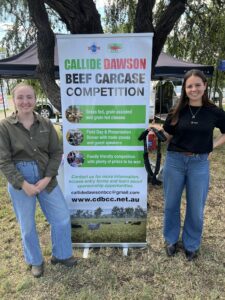
Amelia Macfarlane and Izzy Hurst from Halter introduced attendees to their virtual fencing technology. The system requires three components: on-animal collars, connectivity towers and a mobile app to manage livestock movement without physical fences.
Originally developed in New Zealand, Halter’s system is now being used across dairy and beef properties in Australia and internationally.
Amelia and Izzy explained how producers are using the technology to remotely move their herds, allow creep grazing by calves and support high-density rotational grazing.
The Q&A session covered everything from animal welfare and training protocols through to collar design and maintaining network coverage in hilly and timbered country. Potential future applications such as behaviour monitoring, calving alerts and heat detection were also discussed.
Like any new technology, producers are encouraged to consider how virtual fencing might fit within their own business and landscape.
Live cattle assessment highlights carcase drivers
The live cattle assessment gave attendees a hands-on opportunity to estimate key beef production metrics, including live weight, dressed carcass weight, P8 fat depth and eye muscle area.
Participants used an instruction sheet outlining assessment points and reference values to evaluate five steers donated by Rosie and Bill Werth, boosting their practical livestock judging skills.
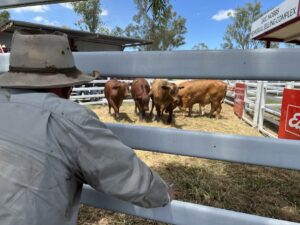
Live cattle assessment: attendees estimated the carcase characteristics of five steers.
The hands-on session provided valuable insight into how live animal assessment translates to carcase performance and market outcomes.
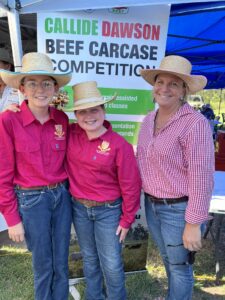
Ivy Gretton, Khloe Chiverton and Selena McBride from Rockhampton Girls Grammar enjoyed the live cattle assessment activity.
The day concluded with a walk-through of the grain-fed cattle entries, featuring 470 head from 40 properties. Attendees submitted their predictions for the winning carcass, adding to the event’s interactive appeal. The grain-fed steers will now move to Warnoah Rural feedlot for finishing, ahead of final carcass assessments in June.
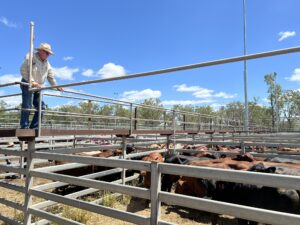
Spotting a winner: Jim Durkin assessing the entries in this year’s grain-fed division.
Feedlot owner Mark Hutchinson has been involved in the competition for nearly 20 years and welcomed the strong turnout, particularly from school groups.
“It’s great there’s such an interest in ag — not just cattle, but everything to do with ag.”
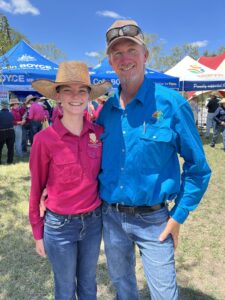
Mark Hutchinson and his daughter Libby from Warnoah Feedlot are proud to be part of the competition.
A strong show of community support
The field day also showcased strong local support for the competition.
Trade stalls from local veterinary services, rural suppliers and animal health companies added to the atmosphere. The drone spraying demonstration drew plenty of interest, with many in the crowd quick to pull out their phones to capture the action.
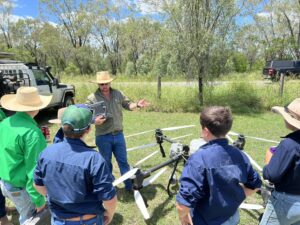
Drone owner and operator, Carl Anderson, showcasing his drone to interested attendees.
Grazier and competition entrant Jim Durkin summed the day up simply:
“It’s been a good day. There’s always something you can learn.”
Looking ahead
The 100-day grain-fed challenge is now underway, with final results set to reveal which entry delivers the best balance of growth, muscling and fat cover.
When asked for his winning tip, feedlot owner Mark Hutchinson was reluctant to single out any one breed, but suggested hybrid vigour could give some entries an edge.
“Anything that’s a first cross is always good for a win.”
With strong school involvement and producer participation, the competition highlights both the technical strength and community support behind the region’s beef industry.
Stay tuned to FutureBeef for competition updates.
More information
Tick Fever: How to protect your herd – FutureBeef →
Live assessing to meet market specifications – FutureBeef →