Drones opening new doors for pasture recovery on difficult country
Pasture collapse as a result of pasture dieback has left many producers with non-arable land asking: How do I get new, tolerant pasture species established when the country is too steep, too wet, too rough, or too fragile for machinery? Across Southern Queensland, we are seeing growing interest in drone technology as a practical and safe option to rehabilitate productive slopes and inaccessible areas that are often susceptible to erosion once ground cover declines.
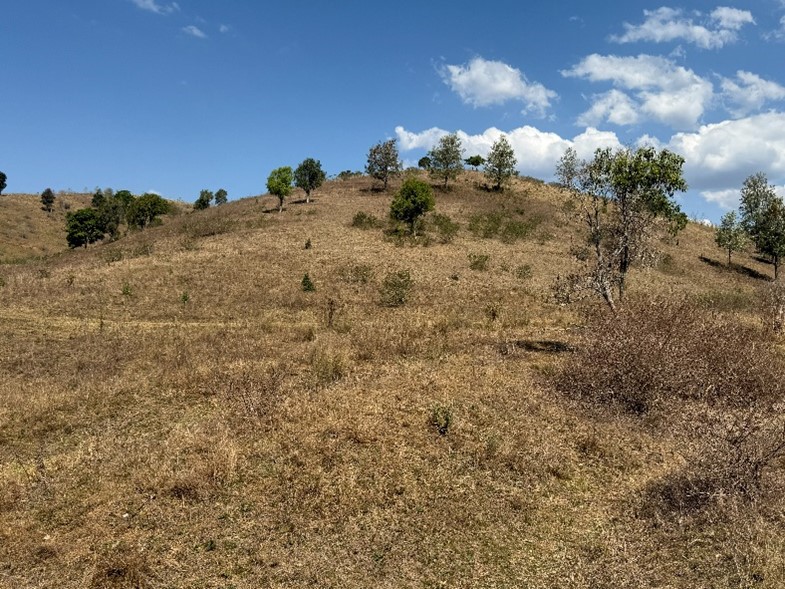
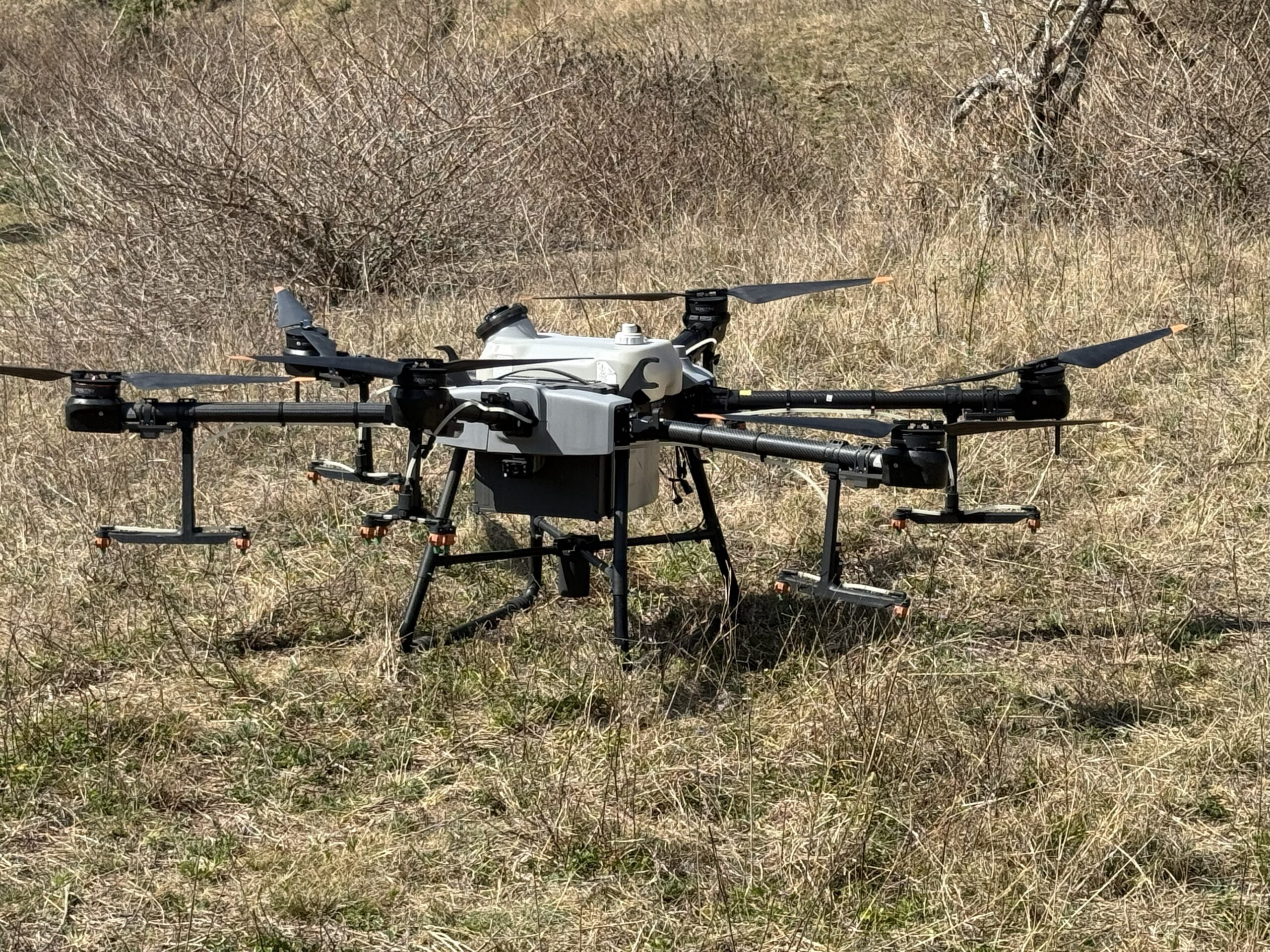
Drones are now being used successfully for both weed control and precise aerial seeding, offering a genuine alternative where traditional implements simply cannot go. But be aware, drone seeding is not a shortcut. Like any pasture improvement project, success still comes down to good planning, realistic expectations and following best-practice establishment protocols and working with a qualified, experienced, and properly licensed operator.
The emerging opportunity – aerial seeding of tolerant pasture species
Modern agricultural drones are equipped with spreaders capable of delivering coated or bare seed with high accuracy in difficult country. Compared with traditional planters:
- They provide access where the only alternative would be hand spraying or sowing, rarely practical at a commercial scale.
- They don’t disturb the soil, good in fragile soils but seed-to-soil contact relies on existing surface moisture and follow-up rain.
- They cannot place seed at depth, so species suited to surface sowing (e.g., legumes or small-seeded grasses) are most successful.
Drone seeding also allows mixtures of grass and legumes to be broadcast in a single pass. Operators can calibrate for your required seed mix and rate, but you must calculate your seeding rate based on seed tests, purity, and germination. Do not feel pressured to reduce your seeding rate to extend flight time or battery life. Stick to the rate needed for your conditions.
Success still comes down to good pasture establishment principles
Whether using a drone or a traditional planter, the fundamentals do not change. Before booking your drone make sure you have ticked off:
✔ Control competition – Kill grass and broadleaf weeds before sowing. Heavy weed pressure will outcompete young seedlings, especially when broadcasted on surface.
✔ Stored moisture – Drone availability should never drive your planting times. Successful establishment relies on good soil moisture with follow-up rain within 7–14 days. If soil moisture is not there, do not plant.
✔ Species selection – Choose species suited to your soil type, rainfall, and dieback risk. Consider dieback-tolerant options and suitable legumes.
✔ Ground cover – In non-arable rocky country, there is no prepared seedbed, so expectations need to be realistic. Some existing cover is good for protecting soil, but heavy thatch can prevent seed from reaching the soil surface. Light grazing or following a cool burn can assist in more favourable conditions.
✔ Manage expectation – Drones deliver accuracy, but not guaranteed results. Difficult terrain means outcomes may not look as neat or uniform as a traditional seedbed. What drones do offer is access and opportunity where machinery cannot operate safely or efficiently.
Considerations before booking a drone contractor
Before booking a drone contractor consider, discuss, and ask them to provide the following:
- A Remote Pilot Licence (RePL), this ensures the pilot is formally trained, CASA-certified and competent to operate drones safely and legally.
- A Remote Operator Certificate (ReOC), required for any business conducting drone operations, confirming they have approved procedures, manuals and compliance systems in place.
- Chemical Applicator Licence, verifies they are legally permitted to conduct aerial chemical application and understand correct handling, mixing, label compliance, and environmental safety requirements.
- Public Liability Insurance, protects landholders and contractors against damage or injury claims during drone operations.
- Aviation-Specific Insurance, covers risks unique to aircraft that standard business insurance will not cover.
- Chemical Drift / Application Insurance, provides protection for unintended drift or misapplication, ensuring all spray work is backed by specialised coverage.
- How do they manage drift, wind, and accuracy?
- Do they have experience with spraying weeds and sowing pasture species?
- Can they access your terrain safely with take-off and landing zones?
- Negotiate the cost as drones often work on $/ha or an hourly rate depending on the job, be sure to work with your contractor so you are aware of the costs.
- Consider the economics of the planting costs relative to future livestock production and land condition stability. Is this land better suited to other land uses?
Limitations to be aware of
While drones offer new opportunities, it’s important to understand their constraints:
- Seed is broadcast, not placed, so good establishment depends heavily on rainfall.
- Spreader capacity is small, meaning multiple refills for larger areas.
- Best suited to smaller or targeted areas, use a drone where and when it is best suited.
- Wind and weather can limit operating windows.
- Some seed types (large or fluffy seed) may be difficult to spread depending on equipment.
- In relation to spraying operations (weed control), If aerial application is not approved on the label, it cannot be legally applied by drone. Always stick to the label and aerial specific application instructions not the ground (boom) label instructions.
The bottom line
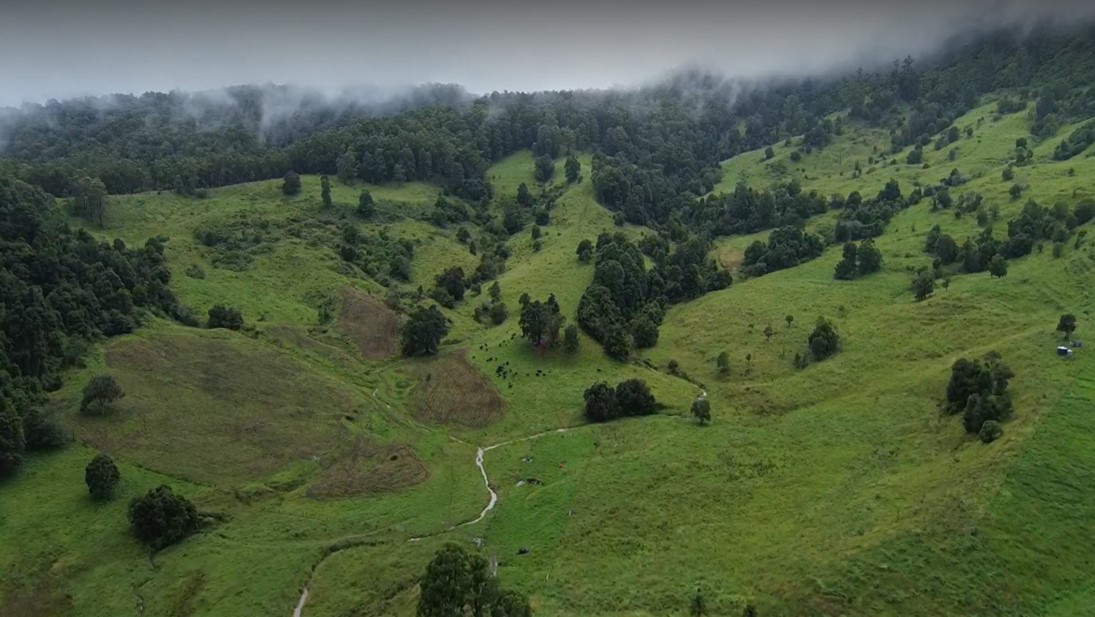
Drones are providing a powerful new option for restoring or improving pasture in dieback-affected country that conventional machinery cannot reach. With good planning, the right species, realistic expectations and adequate moisture (along with luck of appropriate follow-up rainfall), drones can help producers stabilise slopes, rebuild ground cover, and reintroduce productive pasture species where they are needed.
For many across Southeast Queensland, drones offer an exciting opportunity to take action sooner and protect vulnerable soils while working toward long-term pasture recovery.
This resource is produced by the Queensland Pasture Resilience Program, which is a partnership between the Department of Primary Industries, Meat & Livestock Australia and the Australian Government through the MLA Donor Company.