
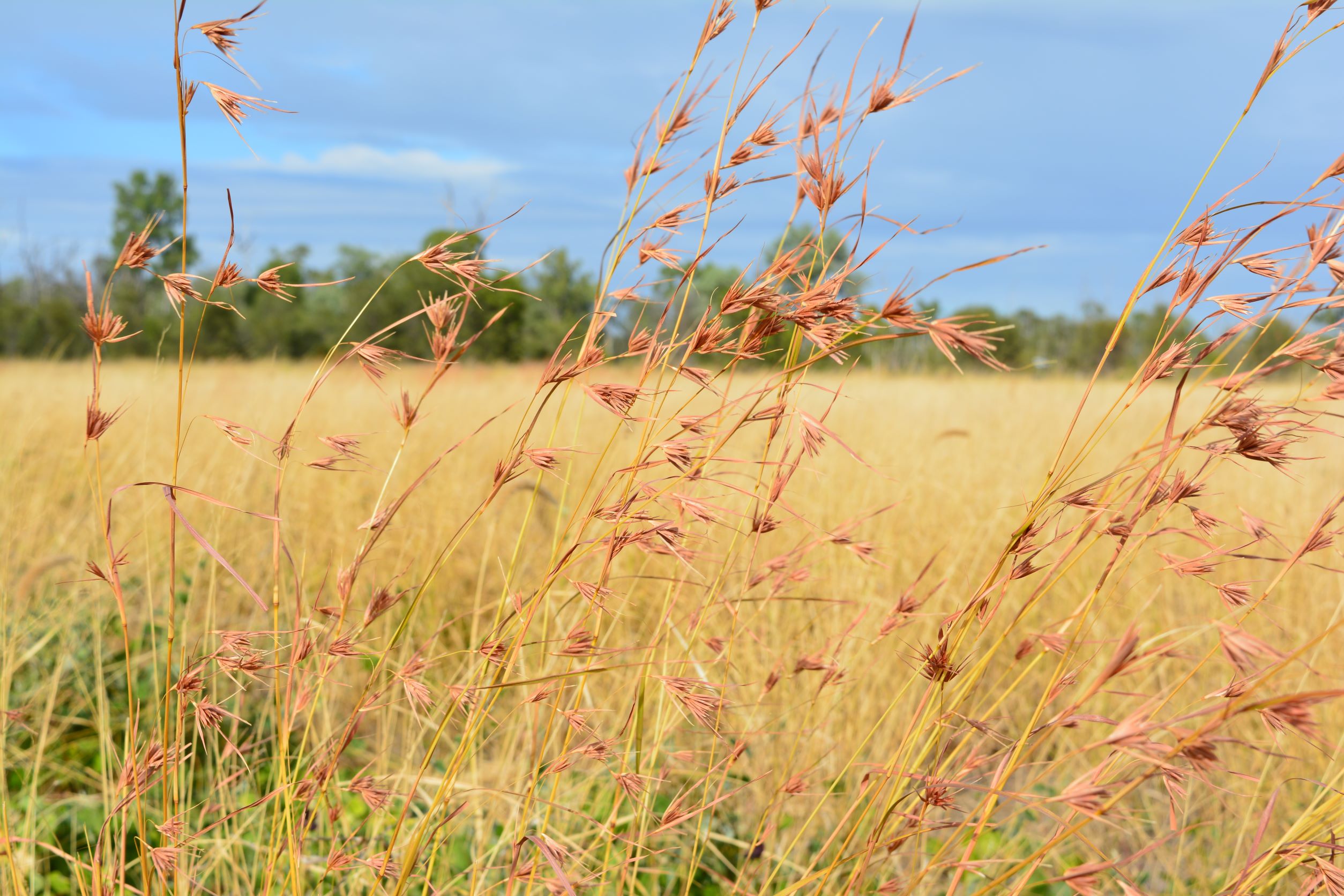
Native grasses are the backbone of grazing for beef and sheep in northern Australia, offering the most cost-effective cattle feed available. Among these, Kangaroo grass (Themeda triandra) stands out as a vital species worth knowing.
The name Themeda triandra originates from the Arabic word thaemed (a small reserve of water) and the Greek words tri (three) and andra (anthers). Previously called Themeda australis in Australia, it has since been recognised as the same species found across Africa.
Kangaroo grass is globally widespread, thriving in regions such as Africa, Madagascar, and Indonesia.
The Themeda genus includes 16 species worldwide, with three native to Australia:
- T. triandra (Kangaroo grass): Widely distributed across the country.
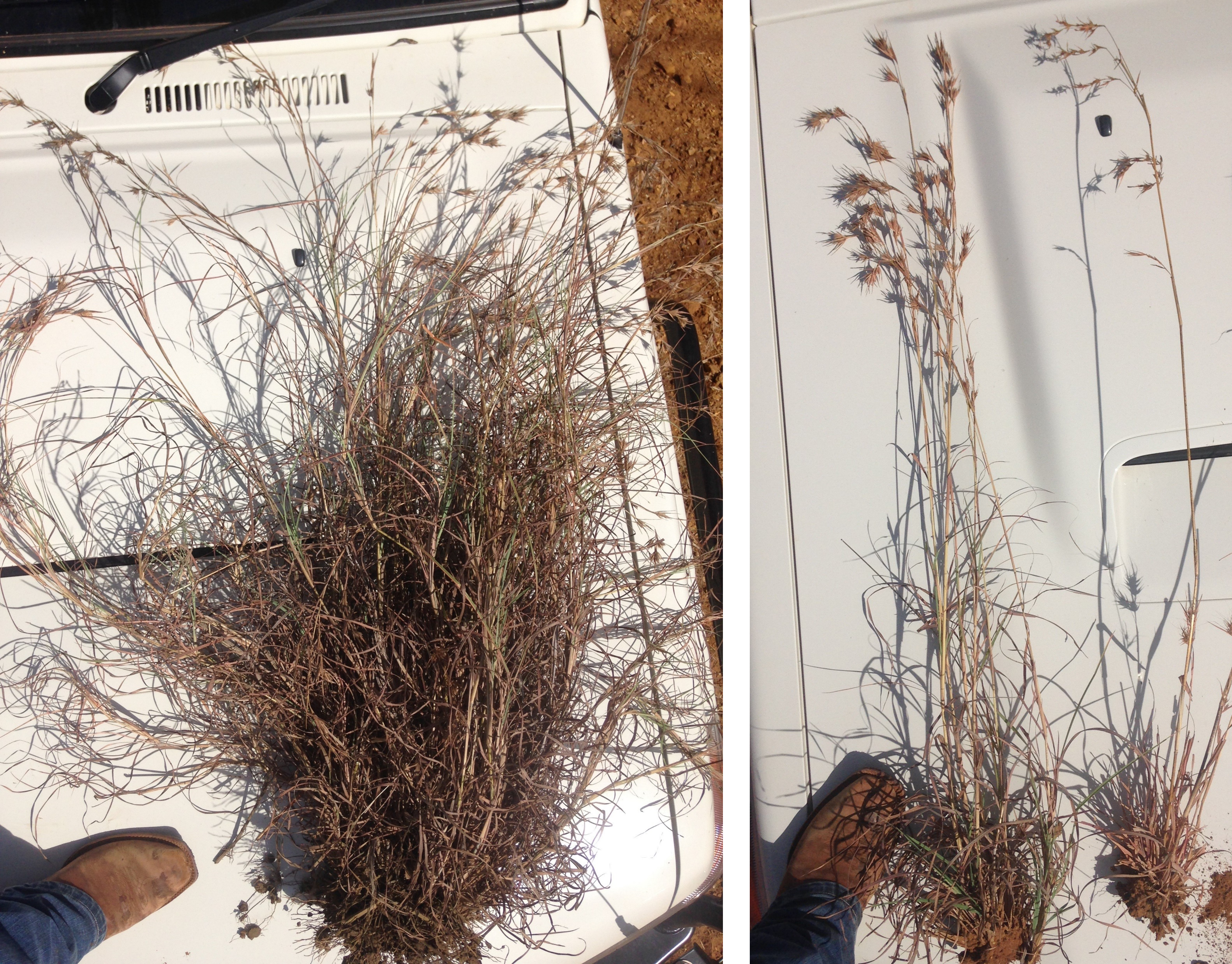
- T. avenacea: A tall tussock grass (up to 2.5m) commonly found in the Burnett region.
- T. arguens: Found in northern tropical areas.
Understanding these grasses is key to sustainable grazing and land management.
Distribution
It is most probable that the lush green pastures under large stands of timber commented on by early explorers was kangaroo grass. Lack of fire and overgrazing has caused it to disappear from pastures, especially in the southern states.
Kangaroo grass thrives on all soil types and ranks among the most widely distributed grassland and woodland species in Australia. As a warm-season grass, it grows actively during summer and becomes mostly dormant in winter. In the Northern Territory, it predominantly flourishes on fertile red soils in the northern regions. It is fire tolerant and responds well to regular burning and spelling. It responds quickly to the first rain of the season growing an upright green leaf from the crown of the plant.
Kangaroo grass and grazing
Being very palatable, it is preferentially grazed by cattle and horses when it is green and most sensitive to grazing. In most situations this does not allow it to go to seed and maintain a significant number of plants in the pasture, hence its decline under grazing. It is quite resilient under dry season grazing so wet season spelling may assist the recovery of this species.
Black speargrass is more resistant to defoliation than kangaroo grass. This has contributed to its replacement with black speargrass in grazed areas of Queensland and the Northern Territory.
Kangaroo grass is a 3P species – Perennial, Palatable and Productive. Careful native pasture burning and wet season spelling can encourage this grass to make a re-appearance and contribute to the quality of the grazing diet.

Seeds
The seed heads are produced in large numbers, with one fertile ‘spikelet’. This has a long, twisting black thread or awn projecting from the cluster. Its awned seeds bury underground making them resistant to fire. Seed is difficult to harvest and is best sown fresh or left for 12 months till dormancy breaks.
Aboriginal people gathered the ripening seed in summer across the tableland and high country areas of New South Wales. Grinding stones were then used to produce flour, which was mixed with water and cooked to make damper.
Kangaroo grass versus grader grass
Themeda quadrivalvis (Grader grass), an introduced weed species, has spread across many parts of coastal and sub-coastal Queensland, including the Burnett, Wide Bay, and Moreton regions, as well as northern areas of the Northern Territory like Katherine and Roper. It invades these regions aggressively and is classified as a weed in most areas. For more differentiation information, visit Grader grass – not a great grass (Northern Territory Department of Industry, Tourism and Trade).
Written by Damien O’Sullivan, formerly Queensland Government.
