Mulga, Mitchell and more at Boothulla
Boothulla, north-west of Cooladdi is one of the 10 on-property demonstration sites for the Improving Grazing Lang Management (IGLM) project under the Queensland Pasture Resilience Program. Set in the unique landscape of the Mulga lands, Boothulla hosts two demonstrations of good grazing land management. The first is recovery of poor condition claypans using contour banks to slow and spread water across the landscape. The second is more intensive, short duration grazing with long rest periods to better utilise Mitchell grass and mulga country by splitting a 1,150 ha paddock into five cells.
Will and Sasha Treloar identified water infiltration and landscape hydration as one of their biggest challenges on their 72,000 ha property. Through their involvement with the Lachlan Hughes Foundation Program, they implemented a natural sequence farming project to regenerate a degraded claypan. Through consultation with Stuart Andrews, contour banks were surveyed and constructed in 2023. The site became the focal point of a Natural Sequence Farming workshop run by Stuart in 2024. Participants were able to see how the contour banks had worked in the landscape after a year. Seeing the success and recovery, Will and Sasha have implemented contour banks on other claypan areas.
Since 2014, the Treloars have been focused on improving pasture utilisation and allowing adequate rest of paddocks. This was achieved by slowly reducing paddock sizes, distance to water, and mobbing cattle together to introduce a rotational grazing and rest system. In 2024, they felt ready to intensify this system further to increase herd density, reduce grazing time, and increase rest periods. ‘No2’ paddock was one identified to further develop. The 1,150 ha paddock is a mix of hard and soft mulga landtypes with pockets of Mitchell grass throughout. These pockets are favoured by livestock and thus splitting this paddock would enable more even utilisation across the whole area and prevent over selection of the Mitchell grasses. The paddock was split into five cells in early 2025. The first graze consisted of approximately 600 spayed heifers through each cell over a 5-6 week period which was a significant increase in stock days per hectare.
Baseline monitoring sites were set up by the Department of Primary Industries (DPI) team in August 2024. This was prior to ‘No2’ paddock being fenced so the impacts on land condition under the new grazing management can be captured. End of growing season monitoring was completed by the team in late April 2025, about a month after the Western Queensland flood event where Boothulla was affected. Thankfully, the contour banks on the claypans withstood flood waters and recovery has continued across these sites! Whilst the natural recovery process is slow, the Treloars and DPI team were excited to see some perennial grass tussocks emerging in the landscape amongst annual grass and forb species.
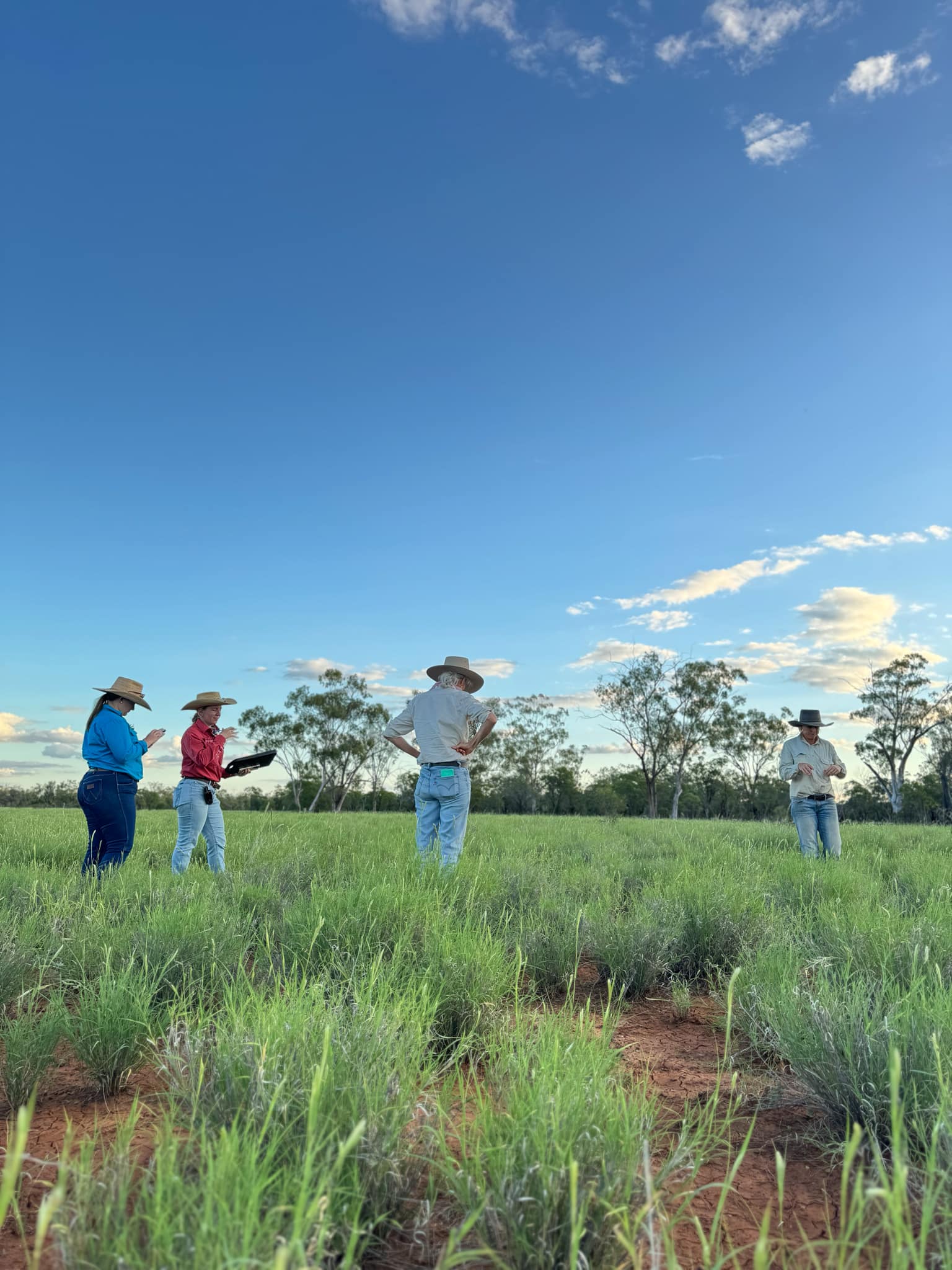
“Having formal and objective documentation of the effects of our grazing management on the landscape will help us to continue to monitor and adapt our practices. The methods used in the trial to capture information are more advanced than what we would currently use,” says Will Treloar.
“So far we have been fortunate enough to have had a visit from Jenny Milson who generously shared her immense knowledge of plants, as well as our neighbour day, which brought together a diverse group of people to connect and discuss grazing and land management practices with, including David McLean from RCS and rehydration consultant Glenn Landsberg.”
In May 2025, Boothulla hosted an RCS ‘Keep In Touch’ Day in collaboration with DPI. The day involved great discussions around land condition and grazing management along with a visit to some of the IGLM monitoring sites.
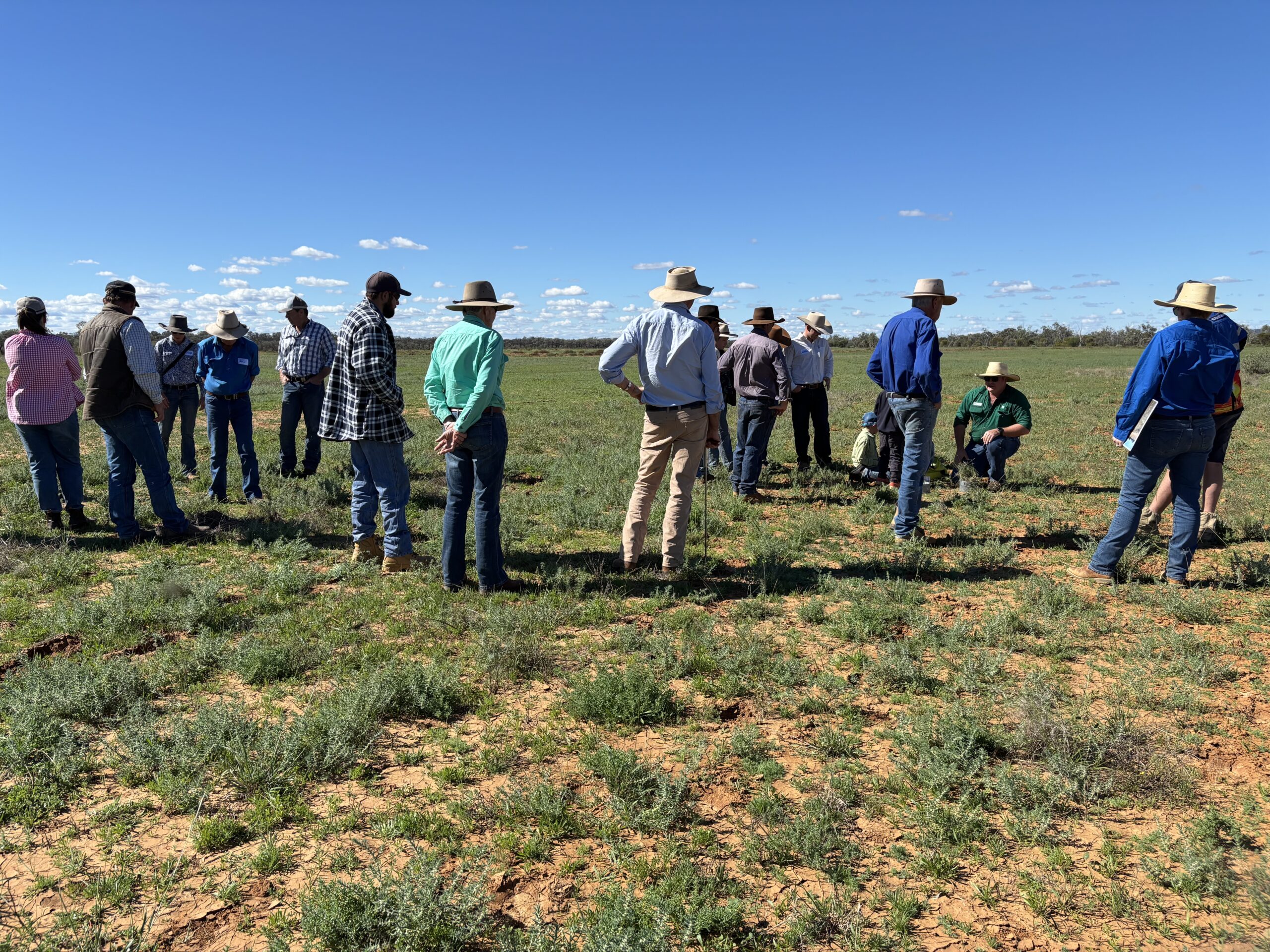
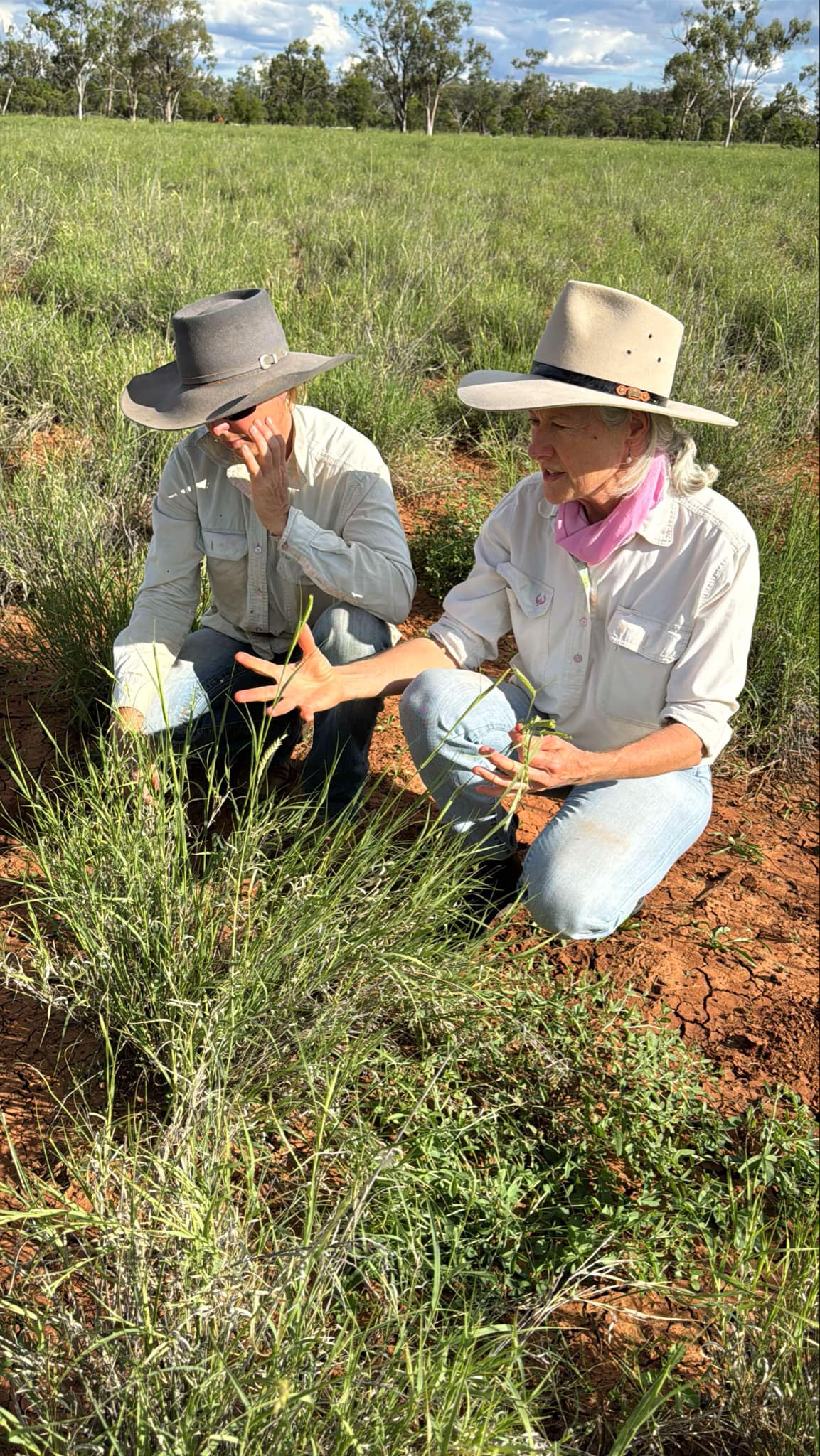
Under the IGLM project, each demonstration site will host a field day before the project’s end in 2029, so keep an eye out!
The DPI team are thrilled to work with Boothulla and our other demo site partners. We will continue to introduce our other demo sites and share updates in future issues.
Written by Dana Walkington (Emerald) and Bec Brayley (Charleville) from the DPI as part of the Queensland Pasture Resilience Program which is a partnership between the Department of Primary Industries, Meat & Livestock Australia and the Australian Government through the MLA Donor Company.