Planting legumes… in the Desert Uplands?!
When considering where sown perennial legumes will grow in Queensland, the Desert Uplands (DU) bioregion is not the first area to come to mind. After all, ‘desert’ is in the name! It is a region of semi-arid country that stretches 75,000km2 from Charters Towers and Hughenden in the north, down past Aramac, Barcaldine and Alpha in the south. Landtypes are dominated by sandstone, granite and basalt tablelands and ranges with sand and clay plans between. Average annual rainfall is about 400-600mm and native vegetation dominates the area although Buffel grass grows well on some soils throughout. Legumes? Well, they are mostly native species with low biomass.
However, if you take a wander through many paddocks in this region, it is not uncommon to find populations of Seca stylo, and sometimes Caatinga stylo and other sown species. There is a history of graziers in the DU introducing sown legumes through a few low-cost strategies like faecal seeding, or just throwing a bag of seed out behind machinery. As a result, populations of sown legumes are around, but they are mostly small and scattered, often only found under trees and around cattle camps. These isolated populations mean that graziers are not getting the potential cattle production and nitrogen cycling benefits that come with widespread legume populations.
So, how do we improve the establishment of sown legumes in this region? Rainfall is marginal for most sown legume species and soils commonly have limiting factors like low phosphorus and low water holding capacity. In the areas where buffel grass is really competitive, challenges in establishing legumes are the same as further East – how to give baby legume seedlings a chance against such an aggressive grass. And then there is the question of machinery – most properties in the DU have access to dozers or graders, but farming equipment like ploughs and planters and spray rigs are harder to come by. Many graziers want more legumes in their pastures, particularly the sown varieties like stylos, but getting them established in high enough numbers to be beneficial across large areas in a practical, cost-effective way is a challenge.
Enter the pasture establishment demonstration at Stratford, south of Jericho.
The aim of the demonstration is to test the establishment success of broadcasting stylos and grass seed into different seedbed preparation techniques. The site is located on Stratford, approximately 40kms south of Jericho on red sandy loam soil typically found in the DU. Average annual rainfall in this area ranges from 450-500mm.
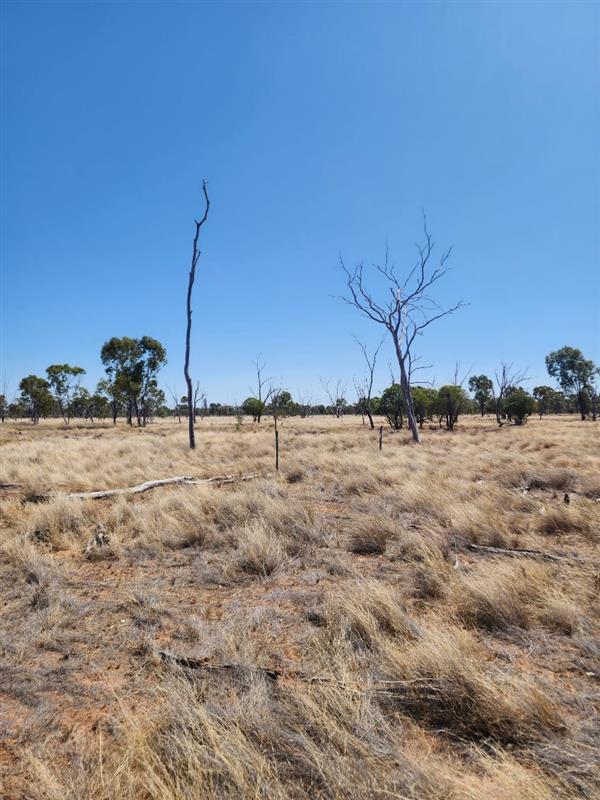
After discussions with the property owners about what they thought would be practical for graziers in the region, treatments were developed. The treatments centred around ways to disturb the existing pasture, to reduce competition for moisture and nutrients, and to create a rough soil surface on what is usually a hard-setting soil. Machinery needed would be a Yeoman’s ripper which are becoming more common in the region and a boom sprayer. The site was also soil tested and fertiliser was applied to half of the site to see what difference this would make. All treatments were repeated twice so statistical analysis could be done on the results. This resulted in a total of 20 plots in a 1.4 ha area.
Treatments at the Stratford pasture establishment demonstration
| No. | Disturbance method | Seed | Fertiliser |
|---|---|---|---|
| 1 | None | None | None |
| 2 | None | Stylos | None |
| 3 | Spray RoundUp once | Stylos | None |
| 4 | Yeoman’s ripper once | Stylos | None |
| 5 | Yeoman’s ripper once | Stylos + buffel | None |
| 6 | None | None | Fertiliser |
| 7 | None | Stylos | Fertiliser |
| 8 | Spray RoundUp once | Stylos | Fertiliser |
| 9 | Yeoman’s ripper once | Stylos | Fertiliser |
| 10 | Yeoman’s ripper once | Stylos + buffel | Fertiliser |
The site was planted on 26 February 2025. The Yeoman’s ripping was undertaken a few days before and was just a single pass. The spraying of RoundUp (4 L/ha) was done the same day as planting, as the existing vegetation on the site was green and growing. Stylo treatments were planted with a mix of 85% shrubby and 15% caatinga stylo at a total rate of 3.9 kg/ha. The stylos + buffel plots were also planted with coated Gayndah buffel at 31.2 kg/ha. Single super-phosphate fertiliser was applied at 239 kg/ha to address the low phosphorus, sulfur and calcium levels in the soil.
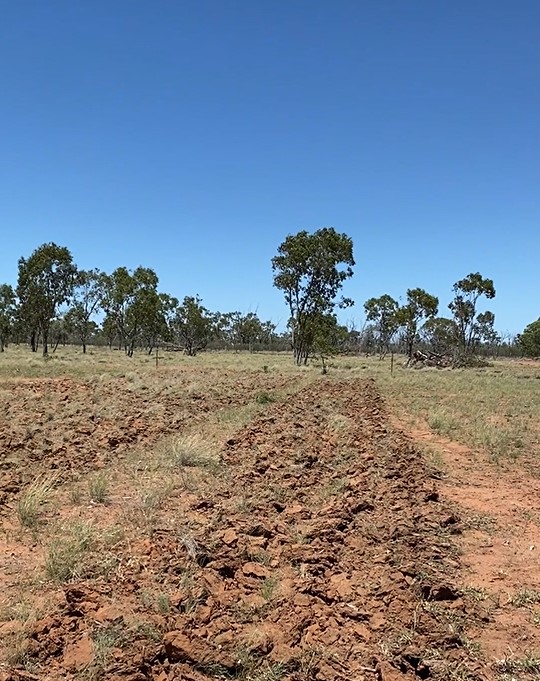
After planting, there were a few weeks of hot dry weather until the site received 160mm of steady, soaking rain in late March. By April, stylo seedlings had emerged!
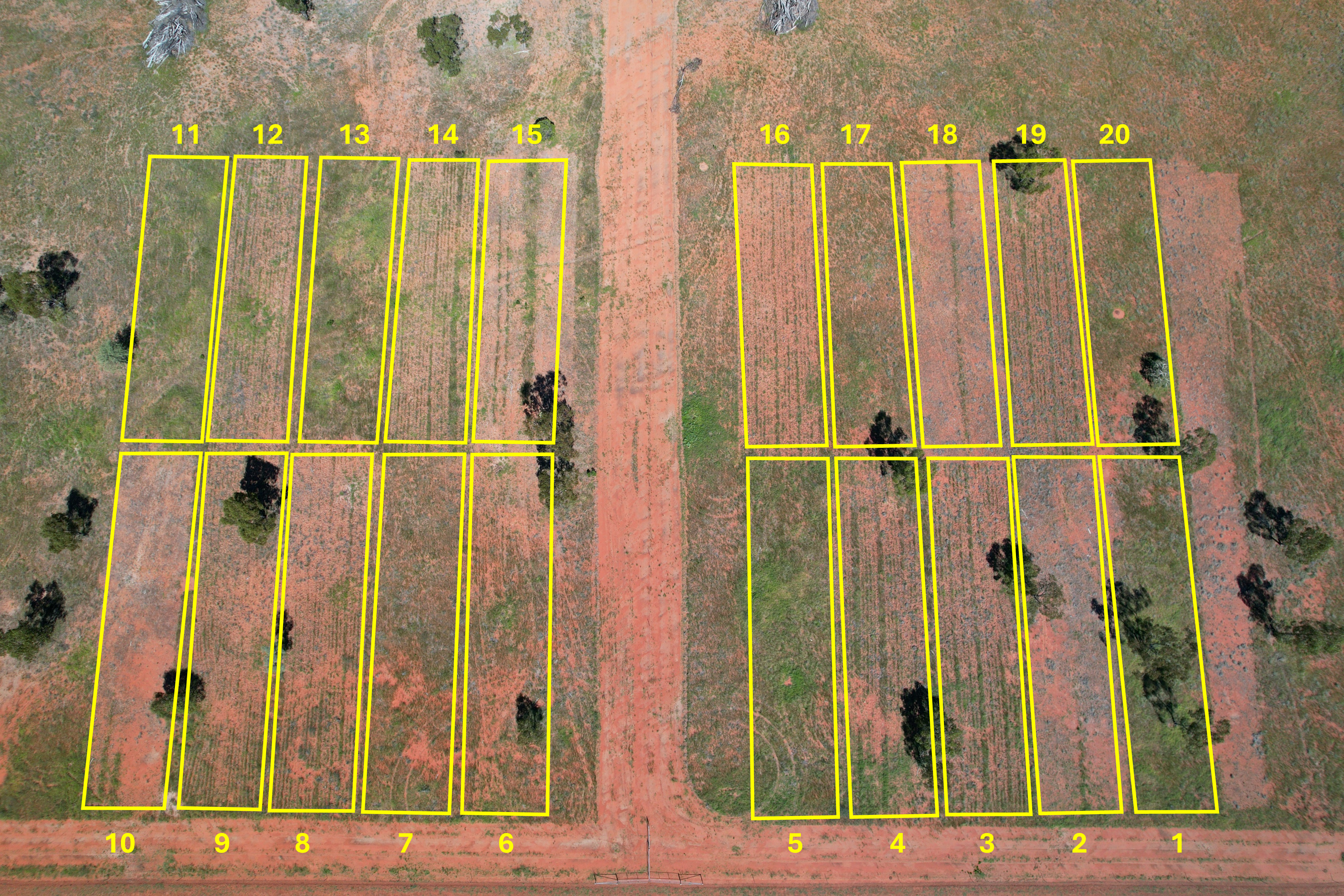

On 19 June 2025, establishment assessments were conducted. The total number of plants per square metre were counted. No differences were recorded between the fertiliser and no-fertiliser treatments, so plant counts were averaged across these treatments.
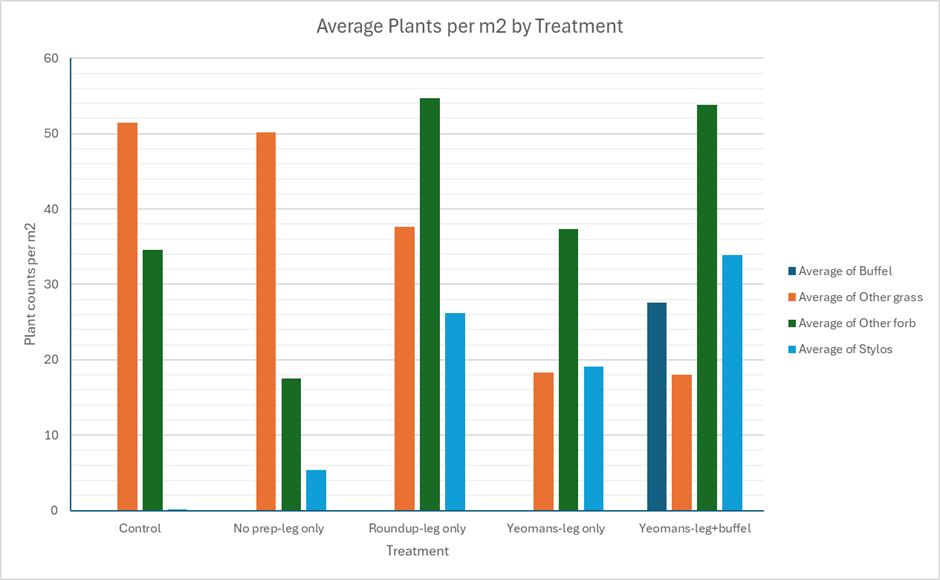
The results showed significantly higher numbers of stylos per m2 where the soil was disturbed through ripping or spraying, with a range of 19 – 33 plants per m2. However, the no-disturbance with legume seeds treatment had just over 5 plants per m2. If most of the no-disturbance seedlings survive, this could be enough to thicken the population further if they grow into mature plants and set seed. However, competition from the undisturbed grass could heavily impact their survival. Plant counts will be conducted again at the end of the dry season to understand how well seedlings in all treatments survived through a dry winter.
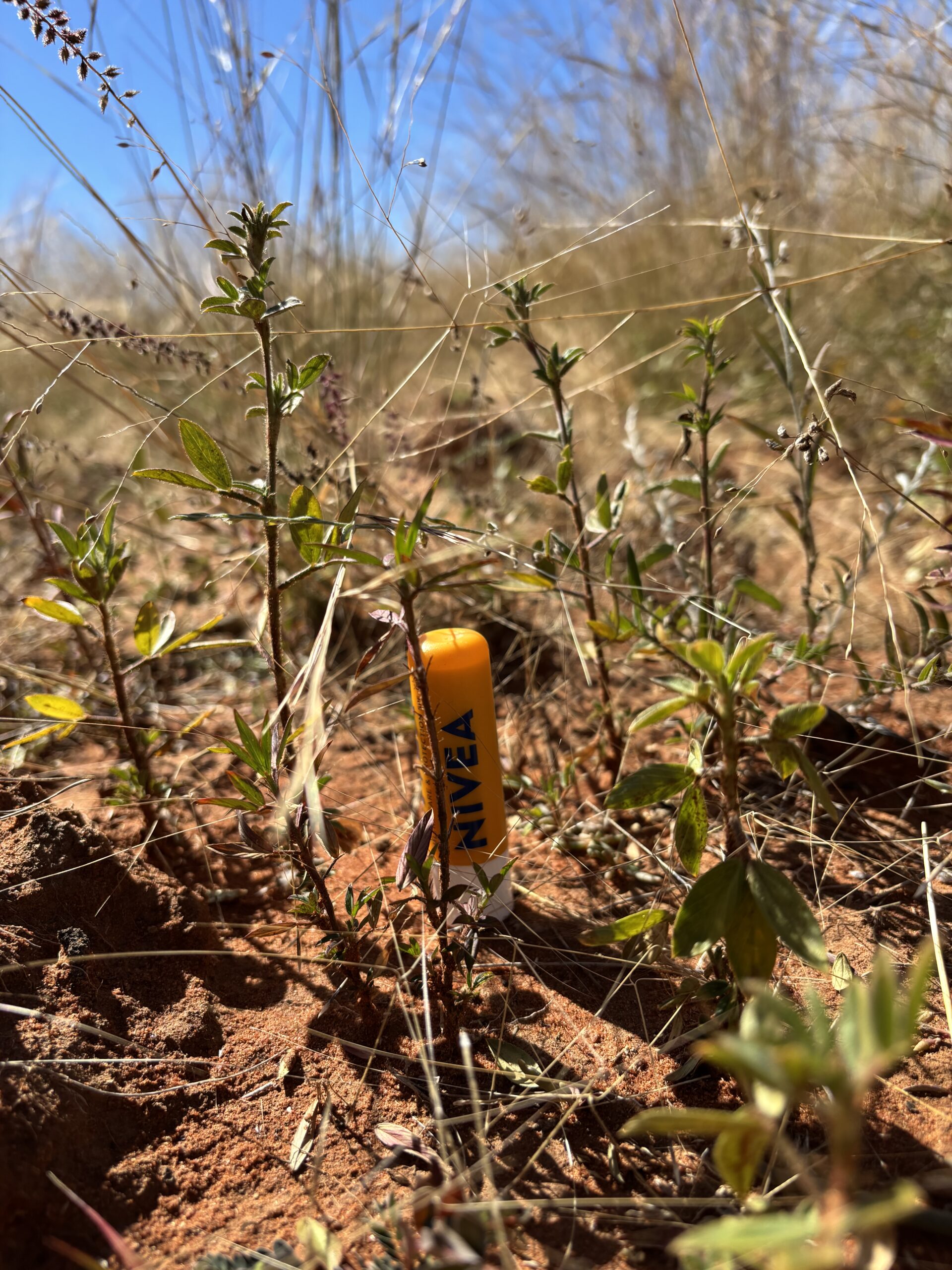
Whilst this is only the first season, results from this demonstration are very promising. The Central Queensland Pasture Resilience Project team will continue to monitor plant populations over the coming years, and the hope is to develop recommendations for graziers in the Desert Uplands on how to effectively introduce legumes into their landscapes and increase production potential.
This work is conducted under the Queensland Pasture Resilience Program, which is a partnership between the Department of Primary Industries, Meat & Livestock Australia and the Australian Government through the MLA Donor Company.