Sustainable grazing management at Amelia Downs: a blueprint for resilience
Amelia Downs, located on basalt country north of Charters Towers is setting a benchmark for sustainable and profitable grazing practices. Managed by Jane and Jordan Moore, the property spans 20,611 hectares of red and black basalt land types, with an average annual rainfall of 560 mm. The Moores employ a time controlled rotational grazing system with animal numbers and spelling managed adaptively as seasonal conditions change. Their innovative approach to grazing management demonstrates how balancing land health and productivity can lead to long-term success.
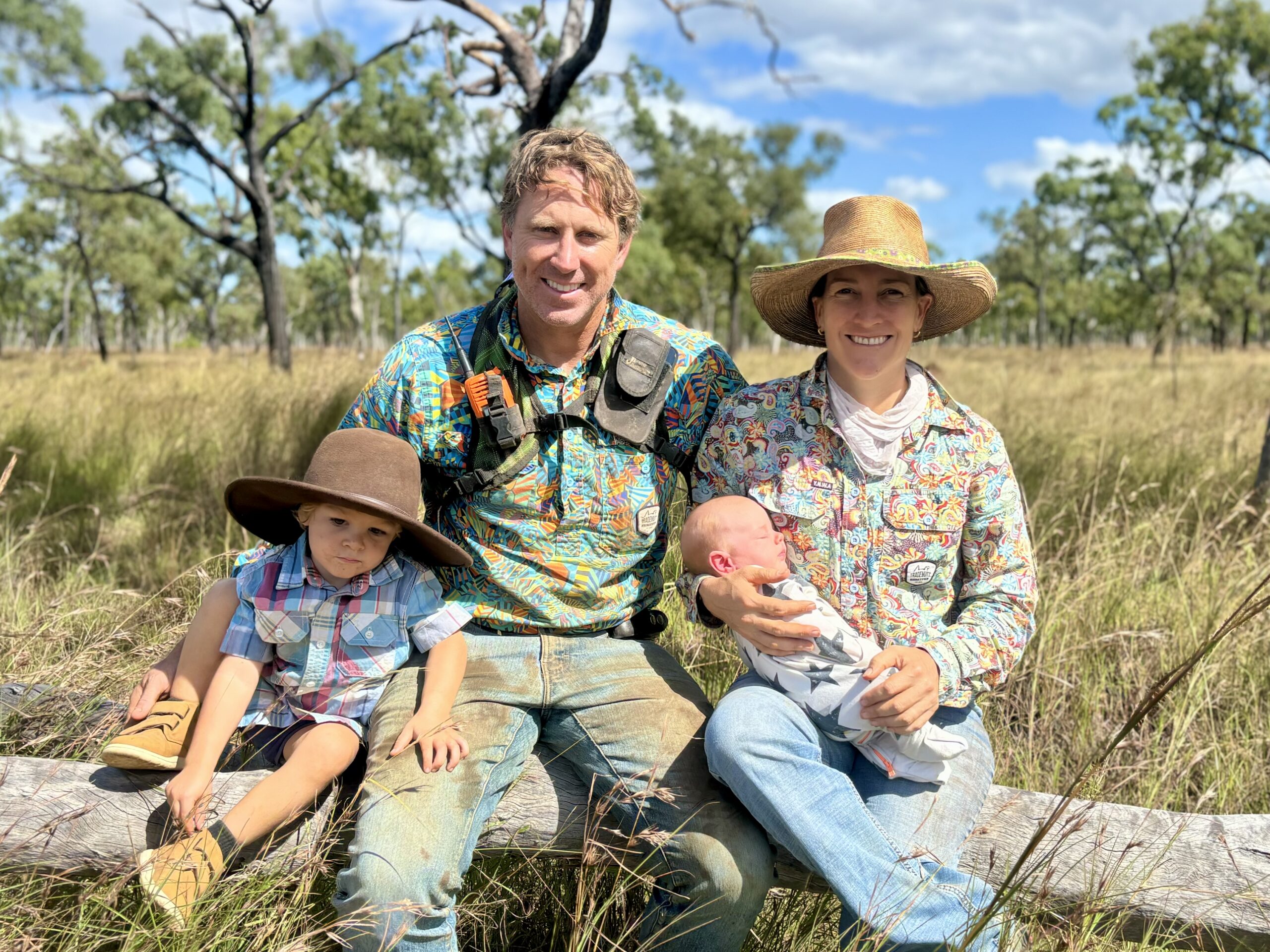
The Department of Primary Industries (DPI) established a Producer Demonstration Site in collaboration with Jane and Jordon at Amelia Downs in December 2021. The project was designed to collect hard data on the effects of the innovative system on animal production and pasture condition and showcase its potential to other graziers interested in adopting similar practices.
Six paddocks in the system were selected for intensive monitoring. Detailed pasture data was collected at the end of both wet and dry seasons and cattle liveweight gains and stock days also measured. Innovative technologies, such as satellite-assisted forage budgeting and the in-paddock Optiweigh system, were also tested to assess their ability to enhance decision-making and optimise grazing management.
The Moores manage seven cattle mobs across more than 40 paddocks in their time-controlled rotational grazing system. Each paddock is grazed for approximately 100 days each year, allowing them to rest for over 70% of the time. This approach ensures rapid pasture recovery, improved ground cover, better pasture recovery, and enhanced landscape resilience. When determining which mob of cattle to move and their next location, Jane and Jordan take several factors into account, such as the amount of available pasture, the growth stage of the grass, and the importance of maintaining paddocks in good condition for future grazing. They also match pasture quality to the nutritional needs of different cattle classes, ensuring optimal productivity.
Stock numbers on the property are regularly adjusted through trading, informed by grazing charts which track stocking rates and rainfall received during the preceding 12 months, ensuring pastures are never overstocked. Effective forage budgeting, closely monitoring feed demand and availability, and proactive planning of stock numbers are essential for balancing grazing pressure with pasture resources. This has allowed the Moores to maintain ground cover and preserve 3P (perennial, productive, and palatable) grasses such as desert bluegrass and kangaroo grass, even during challenging drought conditions.
Over four years of monitoring, the data indicates that Amelia Downs’ livestock productivity is on a par with the top 25% of producers for the region, while land condition is exceptional. The Moore’s success highlights the importance of adaptive grazing management, early destocking, and measured restocking to mitigate the impacts of seasonal variability. A principle also recommended from the Wambiana Grazing Trial. By prioritising land health and implementing data-driven management practices, the Moores have created a resilient and sustainable grazing enterprise that serves as a model for others in the industry. This collaboration has not only highlighted the production potential of sustainable grazing systems but also provided valuable insights for the broader grazing community.
Written by Brad Hough from Townsville DPI as part of the Queensland Pasture Resilience Program which is a partnership between the Department of Primary Industries, Meat & Livestock Australia and the Australian Government through the MLA Donor Company.