
The Torrens Creek Producer Group are a dynamic and proactive collective group of neighbours, who are passionate about learning and sharing their knowledge and experiences. Since 2020, the group has been meeting twice a year in conjunction with a DPI led grazing demonstration site hosted by one of its members.
In August 2024, the group successfully secured Farmer Peer-to-Peer Group Support funding through the Queensland Government’s Integrated Engagement and Capacity Building project. This funding has enabled the group to focus on improving herd efficiency through enhanced nutritional management and exploring improved pasture and legume options.
For the first part of the project, each business assessed pasture diet quality through collecting dung samples, which were analysed with faecal Near Infrared Reflectance Spectroscopy (F.NIRS). This was followed by a customised workshop with Desiree Jackson, where each businesses results were interpreted and suggestions to current supplementation programs were made.
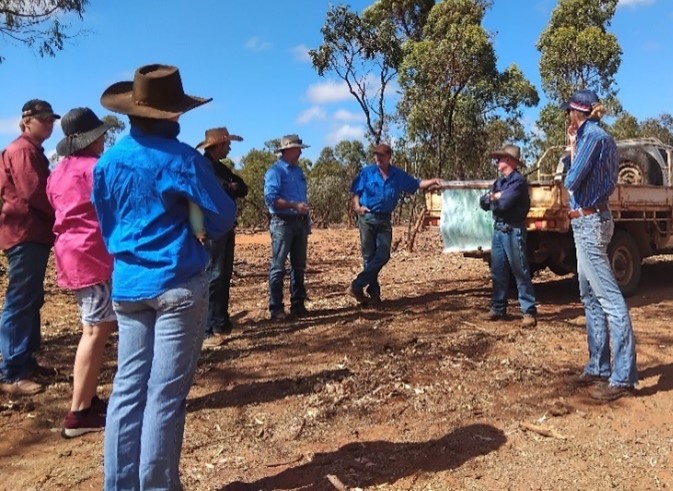
Group member Rachel Weston commented that:
“All properties in the group are in pretty marginal country, and supplementation is one of our major expenses. Being able to understand what the nutritional deficiencies are at different times of year, and the difference between paddocks, means we have been able to fine tune our supplementation program to ensure we are optimising our animal production and getting the best return on the supplement cost.”
Additionally, being able to do this as a group provided extra value, as people were able to see how different grazing systems and land types influenced the pasture quality results, compared to their own property.
“This was very helpful to gauge if the nutritional value of our own pastures was different from that of a neighbour, and then identify methods to make improvements,” Rachel said.
Although all the group’s properties share similar soil types, each had its own supplement regime. The group’s open and collaborative environment allowed members to discuss their approaches, share what was and wasn’t working, and exchange ideas on potential improvements they could implement.
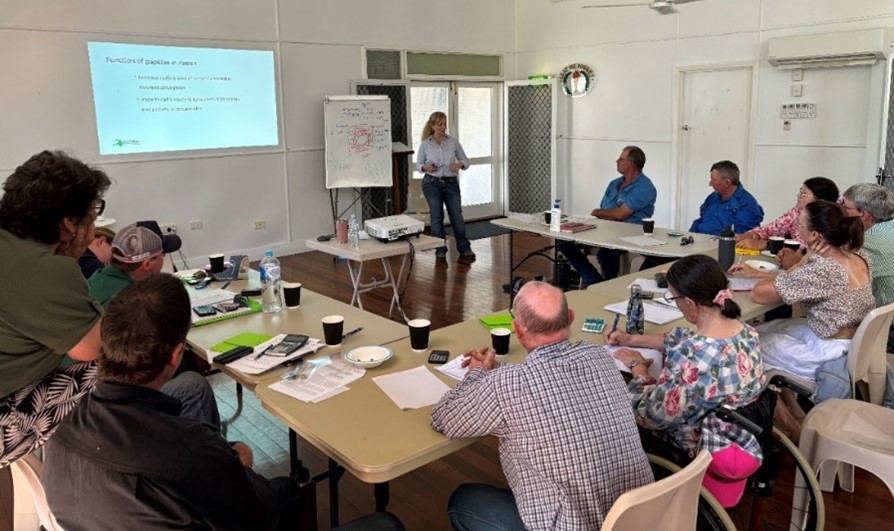
Since conducting the nutritional analysis and training, most businesses have made adjustments to their supplementation programs, and all have expressed feeling more confident in making decision related to nutrition.
The second part of the group project involved a study tour to Spyglass Beef Research Station to observe the latest grazing and pasture trials. The group met with DPI Sown Pastures Scientist Kendrick Cox, who shared insights from a pasture trial focused on identifying optimal pasture and legume combinations, and discussed which species would be most suitable for the Torrens Creek region. They also visited an 80-hectare legume trial on alluvial land and learned about an innovative virtual fencing grazing project. Station Manager Paul Gangemi guided the group through paddocks recently treated for wattle regrowth control. The group was impressed by the affordability of the treatment and the significant positive impact it had on pasture recovery.
Group Member Rachel Weston said the highlight of the study tour was seeing the grass and legume combination plot.
“It opened us up to other legume and pasture varieties that might work in our country,” she said.
This tour couldn’t have come at a better time, as the day before the group had discussed their wet season NIRS test results, and were surprised at how low in protein and phosphorus the pasture was, despite it being green.
After seeing the other legume species growing at Spyglass, Rachel commented that:
“There is a positive feel amongst the group that there are other legume species we can try in our country to boost the nutritional value of our pastures”.
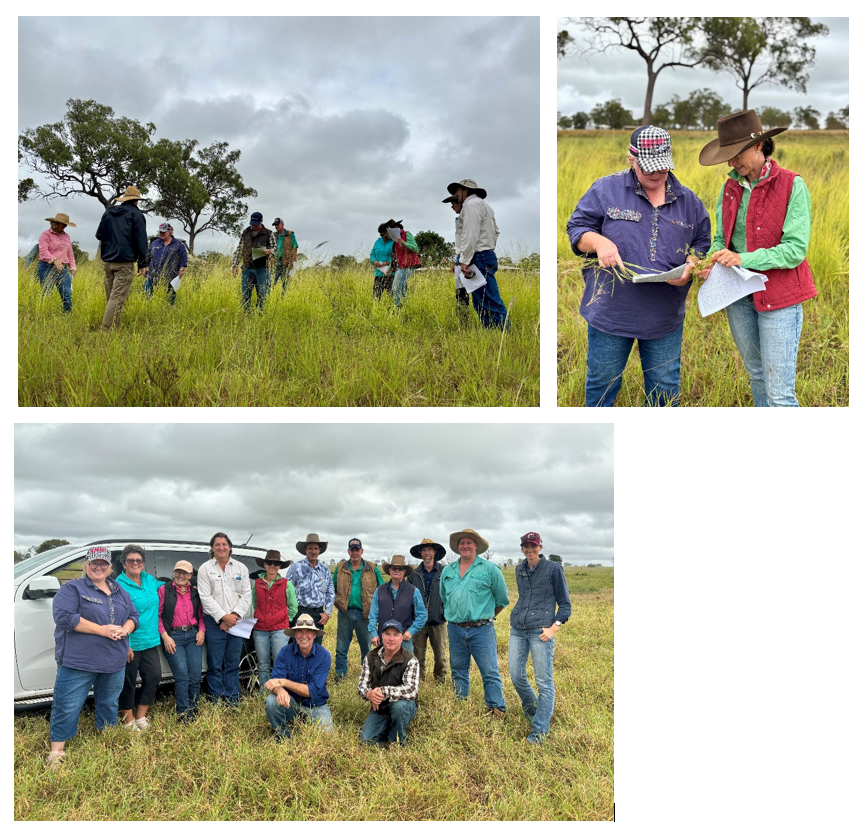
Throughout the project, group members have gained valuable insights into nutritional management and supplementation, making tangible changes to their own practices. The opportunity to share results and discuss strategies as a collective has proven invaluable, further strengthening the group’s collaborative approach.
The group continues to meet twice per year, with properties now beginning to host for the second time. Group members are keen to see the changes and progress made since the previous visit. The group has been very grateful to receive this grant, which has helped all of the group members identify areas to improve land condition and overall business profitability and sustainability.
The Farmer Peer-to-Peer Group Support funding is part of the Integrated Engagement and Capacity Building project, funded through the Queensland Government’s Queensland Reef Water Quality Program and delivered by the Department Primary Industries (DPI).
