It’s all about carbon ….. or is it?
A bus tour of 20 beef producers from various locations across South East Queensland visited the Burnett Mary region on a two-day adventure in late April. The collaborative endeavour was brought about by Healthy Land and Water and the Department of Primary Industries (DPI). The tour aimed to increase understanding of carbon and natural capital in the cattle business.
Active carbon projects
Day one of the tour featured a visit to active carbon projects on Zeebra Plains, a commercial property at Gungaloon, west of Maryborough. Here, attendees heard from producers Christophe Bur and his neighbour Fraser Davey about their personal experiences with carbon projects as part of their beef enterprise, including some potential traps for inexperienced participants to be aware of. While some attendees might have left the tour with the realisation that a carbon project isn’t necessarily for them, everybody had a much greater understanding around the practicalities of establishing and maintaining a carbon project. There was also a great deal of emphasis on the importance of seeking impartial advice.
On the second day, attendees visited the Brian Pastures Research Facility in Gayndah, where multiple researchers presented key projects on site and the results to date. Brian Pastures Research Facility (owned by AgForce and managed by DPI) has a strong history of beef research in southern Queensland dating back to the 1950s.
DPI researchers Nahuel Pachas and Luke Danaher provided the latest results on the ongoing Steak n Wood trial, co-funded by Meat & Livestock Australia. The project is exploring the possibilities of silvopastoral systems as a pathway to becoming carbon neutral. Nahuel and Luke shared practical planting strategies from the project, which uses alley planting rather than traditional block plantations, allowing cattle to graze productively alongside timber production and carbon sequestration.
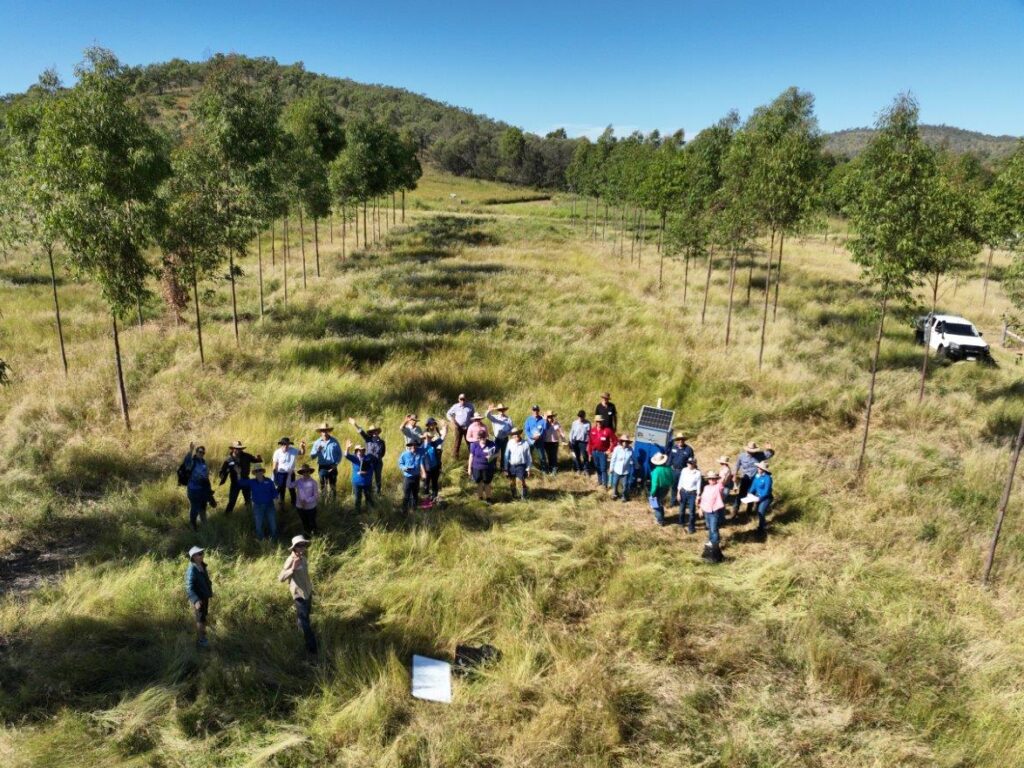
Di Ouwerkerk from DPI talked about the current areas of research being undertaken by the Net Zero Emissions Agriculture CRC. Di shared updates on her research into practical methane reduction strategies, including slow-release rumen boluses carrying methane inhibitors, as well as identifying naturally low-methane pasture species that could help lower emissions while maintaining productivity. DPI’s Technical Officer Melissah Dayman gave a practical demonstration on how to train weaners to use GreenFeed machines – a specialised device used to measure methane production from cattle in-paddock. Producer attendees were excited to learn about some of the technology (i.e. GreenFeed machines and Optiweigh units) being used at Brian Pastures and how passionate the team are about bringing research to the producer community.
Not strictly carbon but impacts methane emissions intensity
The state-wide Queensland Pasture Resilience Program has multiple projects on Brian Pastures looking at renovating pastures with undesirable species, managing leucaena and addressing pasture dieback. Two key conversations lead researcher Stuart Buck and extension officer Kylie Hopkins from the DPI had with attendees included, the importance of inoculating cattle feeding on leucaena and requesting germination reports when sourcing seed for pasture improvement.
Key messages the group heard
The tour was overall a success, with producers highlighting how valuable it was to be able to raise their questions with other producers and researchers over the two days. The group also completed individual Action Plans (as part of GrazingFutures Prepare and Prosper) which focussed on steps they plan to implement at home in the next 12 months. With 100% of attendees planning to make a change, the stand-out in terms of implementation for the group focussed on pasture renovation and incorporating legumes into their pastures.
It is important to note you do not need a soil carbon project or to plant trees to make a difference. Two of the key practical ways producers can reduce carbon emissions for their grazing business is by improving herd efficiency (by culling non-performing cows) and establishing legumes within their pastures. Both of these, not only have carbon reduction benefits but increase overall productivity benefits for the cattle business. For beef producers out there interested in learning more about carbon emissions and reduction strategies or the various projects at Brian Pastures – further information can be found on www.futurebeef.com.au.