eBulletin May 2026
Hello!
In this edition of the FutureBeef eBulletin you’ll find information regarding:
- tips for using and handling vaccines
- virtual fencing technology overview
- time controlled rotational grazing for the win at Amelia Downs
- using stock to restore claypans at Farnham Plains Station
- a summary of environmental markets for Queensland producers
- a request for cattle ticks from the University of Queensland
- tips, tricks and advice regarding adopting technology from the Burdekin 7
- key messages shared at the recent Douglas Daly Research Farm field day
- upcoming webinar: getting the most from spinifex grazing lands
- new land type mapping for South East Queensland
- and more!
Happy reading!
Kind regards
Jodie and Felicity
on behalf of the FutureBeef team
P.S. Let us know what you think of the FutureBeef eBulletin via email or call us on 13 25 23. You can also connect with us on Facebook, X and LinkedIn, or check us out on YouTube.
Vaccination best practice
For a beef business, vaccines sit up there with supplementation as one of those significant costs of production. So, if we’re going to spend the money we want to know we are getting bang for our buck.
Here are some sure-fire tips from former DPI Extension Officer Andrea McKenzie, to ensure you are getting the most out of your investment.
Vaccination guidelines for healthy herds (4:17 minutes) >>
Douglas Daly research farm field day recap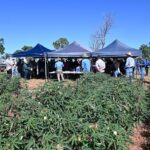
The Douglas Daly research farm (DDRF) field day showcased research and on farm demonstrations, highlighting current work happening at DDRF and its relevance to Top End production systems.
Key topics covered included soil types and constraints, nutrient variability and management, and novel pest management approaches for northern cotton.
Virtual fencing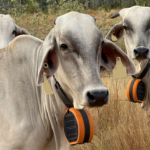
Considering virtual fencing? This guide outlines how the technology works, how cattle are trained and what to consider before getting started.
Upcoming webinar: Insights for productive spinifex lands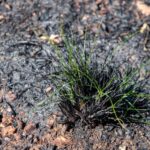
What if spinifex country holds more grazing potential than we’ve been using?
Despite its extensive coverage, practical knowledge around managing spinifex pastures for grazing remains limited and often untapped.
Find out more from Matthew Fletcher (Range Assist, Kununurra WA) and a well known pastoralist during the From fire to forage: Insights for productive and resilient spinifex lands webinar, 21 May at 11am (AWST), 12:30pm (ACST) and 1pm (AEST).
Using technology to turn data into decisions
If you are wondering…
- What should you measure first to lift herd performance and profitability?
- Which digital tools are worth trialling, and how do you pick what fits your business?
- How can a producer peer group help turn data into confident decisions?
Then this compilation of experiences and feedback regarding adoption of technology is for you:
Producer insights into measuring what matters >>
Balancing land health and productivity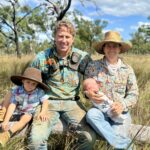
Jane and Jordan Moore manage Amelia Downs near Charters Towers with a time-controlled rotational grazing system. Their innovative approach to grazing management demonstrates how balancing land health and productivity can lead to long-term success.
Using cattle to restore claypans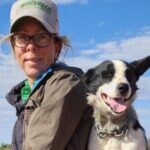
Queensland grazier Lauren Beresford (Farnham Plains Station, Eulo) is using her cattle to regenerate degraded claypan. This article explains how Lauren is demonstrating a low-cost, practical approach that can be easily adapted using existing infrastructure.
Unlocking opportunities in environmental markets for Queensland graziers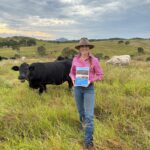
This report highlights how Queensland graziers can engage with environmental market schemes such as the Australian Carbon Credit Units, Reef Credit, Land Restoration Fund, Nature Repair Market, and Cassowary Credit schemes.
Watch the video and download the report >>
It’s all about carbon… or is it?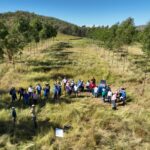
Beef producers from across South East Queensland visited Zeebra Plains and Brian Pastures in a recent 2-day bus tour all about carbon, natural capital and the cattle business. You do not necessarily need a soil carbon project or to plant trees to make a difference. What can you do?
Got ticks? Care to share? UQ wants your cattle ticks
The University of Queensland is conducting research to test cattle tick resistance to chemical control across Queensland. To do this, they need your cattle ticks.
Read more about the research project >>
New land type descriptions and mapping for SEQ
Landholders in South East Queensland can now reap the benefits of a collaborative effort between Healthy Land & Water and the Department of Primary Industries with newly revised and improved land type mapping.
Getting dry where you are?
It continues to be a mixed bag of seasons and feed across northern Australia going into winter. If it is dry or getting that way where you are, the following information and contacts may be helpful. Also check the FutureBeef calendar for dry season workshops in the area.