Tillage equipment for seedbed preparation when establishing pastures
One of the key practices to successfully establish a new pasture is to prepare a suitable seedbed for the intended pasture. Pasture seed can be very small (<5mm diameter) so a fine-but-firm seedbed is required for optimum seed germination and establishment. As there are many ways to prepare a seedbed through cultivation, this article focuses on the range of tillage (cultivation) equipment available and outlines the benefits and potential challenges with each. This equipment is also used to kill the existing pasture, or weeds, to undertake a fallow. A fallow is the process of storing rainfall in the soil for use by the new pasture after planting. Fallowing and seedbed preparation are often happening at the same time.
The steps to successfully establish a new pasture are the same as those to establish forage or grain crops. This article focuses on the tillage equipment that can be used in Steps 2 (Seedbed preparation and fallow) and 3 (Sowing and soil surface) described in the graphic below. These steps aim to create a suitable seedbed for seed germination, remove the existing pasture and reduce the seedbank of grass and weeds, and accumulate/store soil moisture prior to sowing i.e. the fallow. The investment in a fallow that stores moisture, controls weeds and prepares a fine-but-firm seedbed greatly increases the success of pasture establishment and production sooner.
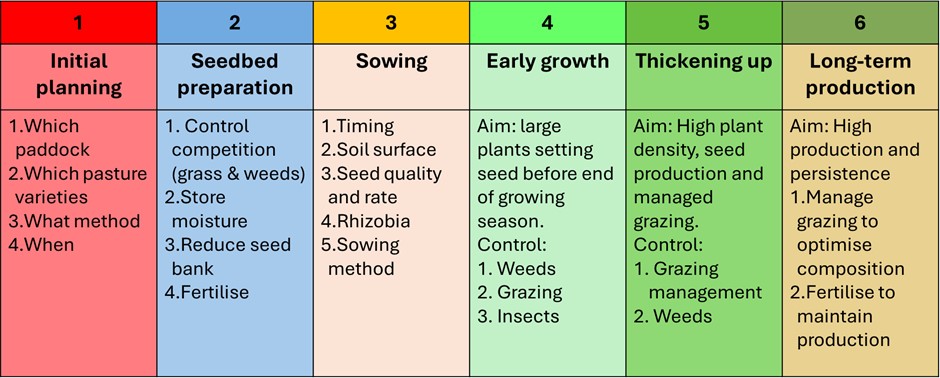
The most commonly used implements available for preparing the seedbed and controlling weeds prior to sowing can be grouped into four categories:
- Primary disturbance – for paddocks that require high-level disturbance, for regrowth control or to fix erosion issues.
- Primary tillage – for previously cleared paddocks that are currently in pasture, are compacted or have high weed loads.
- Secondary tillage – for paddocks that have already been cultivated but are still rough and cloddy, or have weeds growing.
- Soil surface preparation – the final step before or at planting to ensure good seed-soil contact.
The seedbed preparation and fallow process could take several months and multiple workings from more than one implement to achieve the desired seedbed tilth prior to planting. The four categories of implements that may be used in this process are summarised below.
| Pasture establishment step | Category | Examples of implement | Purpose |
|---|---|---|---|
| 2. Seed bed preparation 1. Control competition | Primary disturbance | • Blade plough • Cutter bar • Ripper | • Kill vegetation (grass and regrowth timber) • Break up the soil to make first cultivation easier • Increase infiltration |
| 2. Seed bed preparation 1. Control competition 2. Store moisture 3. Reduce seed bank | Primage tillage | • Chisel point plough | • Open and aerate soil • Kill grass and weeds • Increase infiltration |
| • Offset disc plough | • Break up large clods of soil and organic matter • Kill grass and weeds • Increase infiltration |
||
| Secondary tillage | • Scarifier | • Break up clods and smooth out soil already tilled • Kill weeds |
|
| 3. Sowing 2. Soil surface preparation | Soil surface (seed bed) preparation | • Harrows - Chain - Tyne - Power | • Create fine soil surface texture • Remove small weeds • Reduce trash before sowing |
| • DIY - Chain - Mesh - Gate - Rail | • Create fine soil surface texture • Reduce trash before sowing |
||
| • Roller - Rubber tyre - Flange/ring - Flat drum | • Create firm soil surface • Break down any remaining clods |
Unless the property has an existing farming operation, it is unlikely all the implements mentioned here will be on hand. Therefore, it’s a matter of making the most of what is owned, can be borrowed from neighbours, hired from contractors, or purchased second hand. There are some other tillage implements that are not commonly used for pasture establishment and they are also summarised at the bottom of the page.
Primary disturbance equipment
The purpose of primary disturbance equipment is to kill existing grass and/or undertake timber regrowth control, break open compacted soil layers and aerate and release tied up nutrients, or to fix erosion issues. This is not always needed but can make the first cultivation easier and faster, particularly if the soil is heavily compacted. This practice is not suitable nor recommended for large or remnant timber stands and vegetation clearing legislation should always be consulted before any operation.
Planning for this level of disturbance should begin up to two years before planting to allow for:
- sourcing the required equipment
- managing grazing and paddock rotations to use as much of the available feed as possible or burning vegetation piles prior to disturbance
- time to establish a suitable seedbed using the other tillage equipment listed in the below sections.
Depending on your rainfall zone and vegetation cover, this process can be conducted during the dry season (approx. May to August) to control competition and begin the moisture capture process ahead of a summer planting window.
Blade plough or cutter bar
These implements are used for vegetation or regrowth control. Blade ploughs are large steel framed implements with a V-shaped blade that is pulled underground parallel to the soil surface. Cutter bars are similar but instead of a V-shaped blade, the blade is flat and horizontal and pulled through the soil underground. Both can be pulled at a depth of 25-45cm, depending on the soil type and condition and the size of the machine pulling them. Both work by lifting and loosening the soil and cutting through plant roots.
Ripper
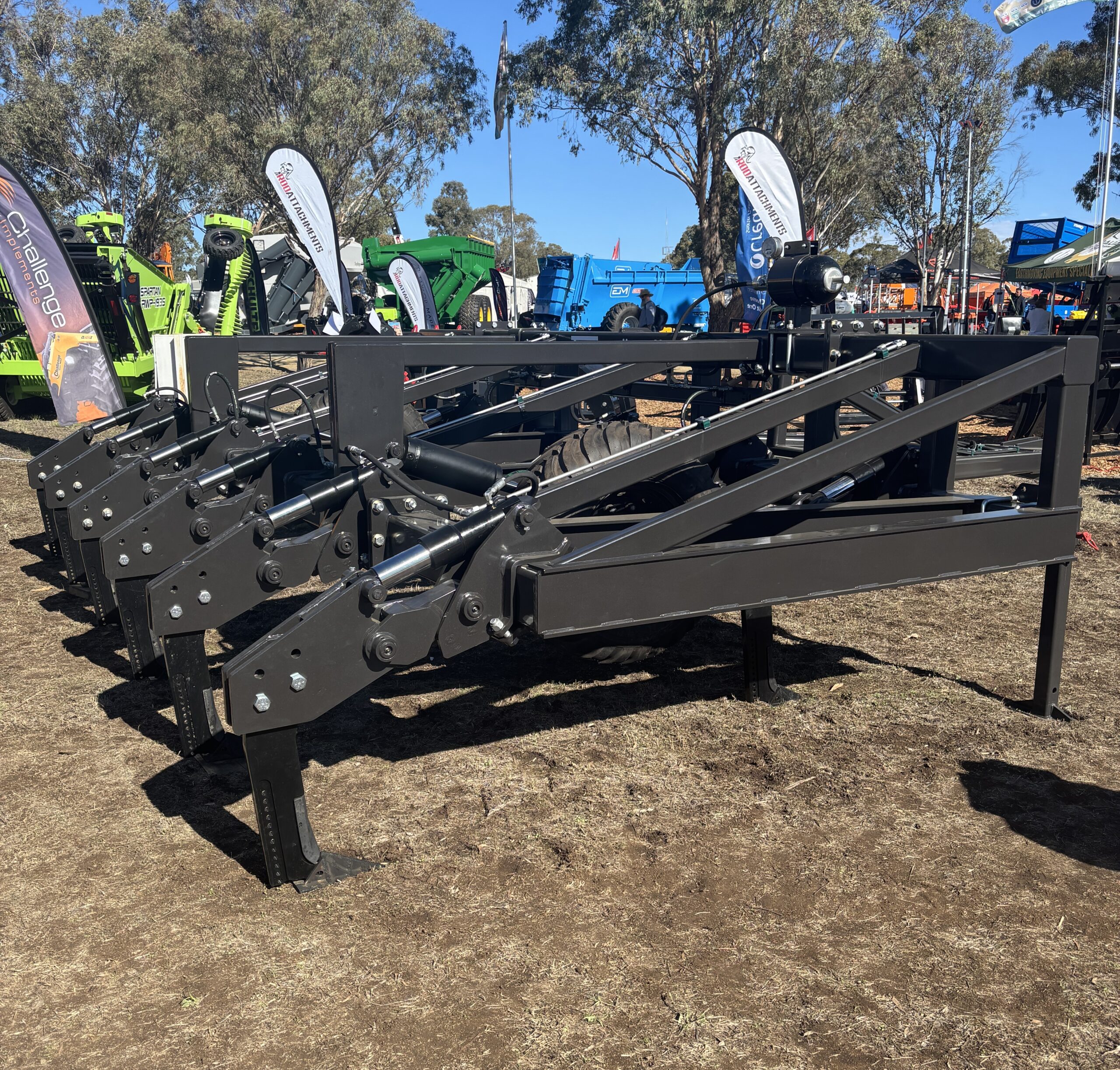
The primary purpose of a ripper to open and aerate the soil by reducing compaction, and capture moisture. Rippers have strong frames with multiple tynes that break up the soil in straight vertical lines to about 30cm deep. The tynes are generally curved to bite into the soil when pulled behind a machine. On some agricultural rippers the tynes have a release mechanism to jump over rocks or logs in the ground. Widely spaced rippers leave the soil surface between the rip lines untouched. Depending on which style of boot is on the tyne, ripping doesn’t always kill all the grass or vegetation on the surface.
Machinery needed to pull the implement
Blade ploughs, cutter bars and some large rippers are generally pulled with a dozer but smaller rippers can be pulled by a tractor. Steel tracked machines are best used when working in ‘dirty’ paddocks where there is a high likelihood of punctures or damage to rubber tyres or tracks. The required horsepower of the tractor will depend on the width of the implement, the number of tynes, soil type/condition and the depth of ripping. Deep ripping can require a minimum of 30HP per tyne.
Considerations
Primary disturbance equipment is best used for vegetation control or highly degraded land. Unfortunately, in some circumstances these can create more problems for pasture establishment than they solve. Blade ploughs and cutter bars can bring up sub-soil that may be sodic or have other characteristics which cause issues for pasture establishment. Ripping is less risky as less sub-soil is generally brought to the soil surface. Also, some graziers have used these types of machinery to sow and establish a new pasture. Generally these implements do not provide a fine enough seedbed for reliable pasture establishment and are not recommended when planting smooth and small seeded pasture species. Overall, the need for this type of equipment should be considered carefully prior to making the significant investment of time and money required. In many cases, primary tillage equipment (mentioned below) is sufficient for fallowing and seedbed preparation at a much lower cost.
Primary tillage equipment
Primary tillage equipment includes heavy duty implements for the first cultivation of the soil. These implements are constructed with strong frames with tynes or discs to withstand the rigours of the initial soil break-up. The first operation is generally slow and leaves the soil surface rough and clumpy with large clods of soil and organic matter. Primary tillage can happen at any time in the dry season to allow for capture of the first rainfall at the break of season.
Chisel point plough
Chisel point ploughs are used for opening and aerating the soil. They are similar to rippers but operate at a shallower depth (generally 10 – 20cm) and provide more soil disturbance due to the higher number of tynes. Each tyne has a break-out capacity (spring or hydraulic) to jump over rocks and debris and a replaceable tip on the end of the shank called a ‘chisel point.’ There are numerous other types and sizes of points that can be fitted to the plough tynes depending on the purpose of the cultivation.
Offset disc plough
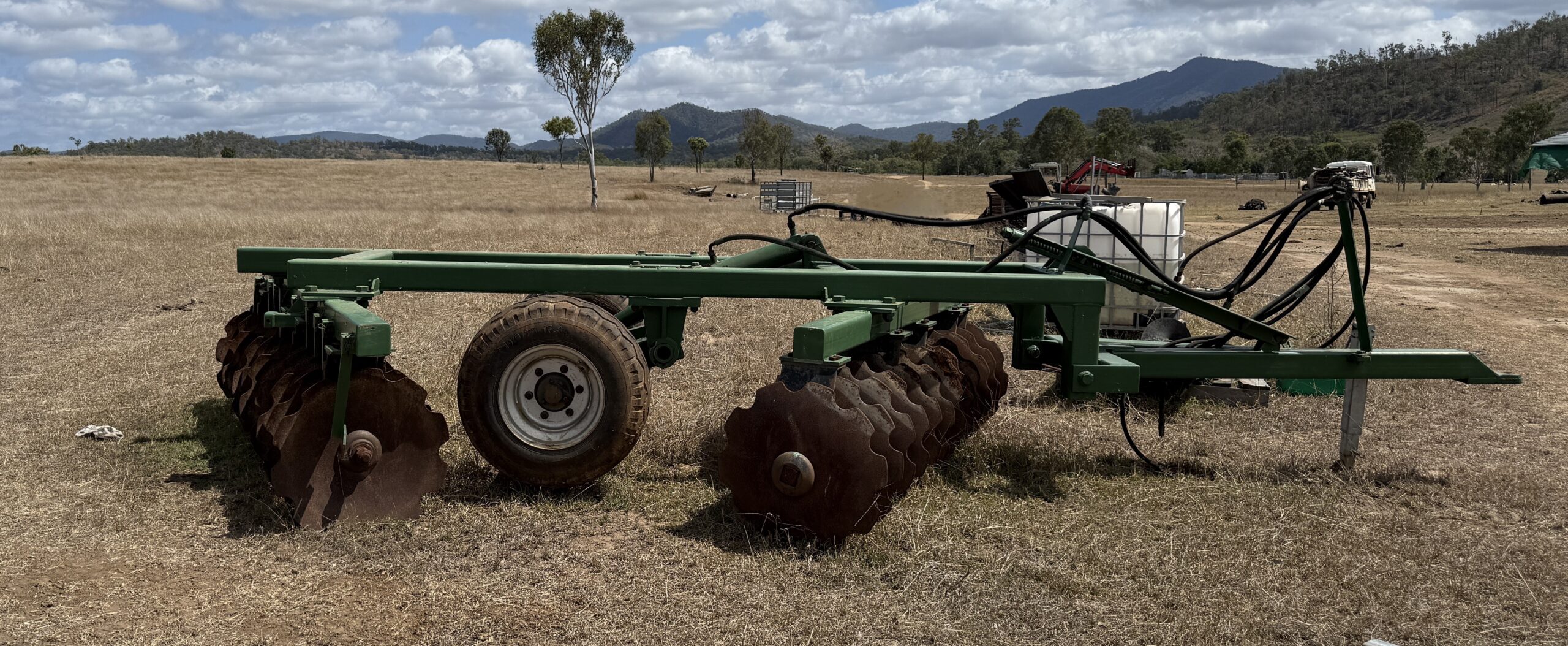
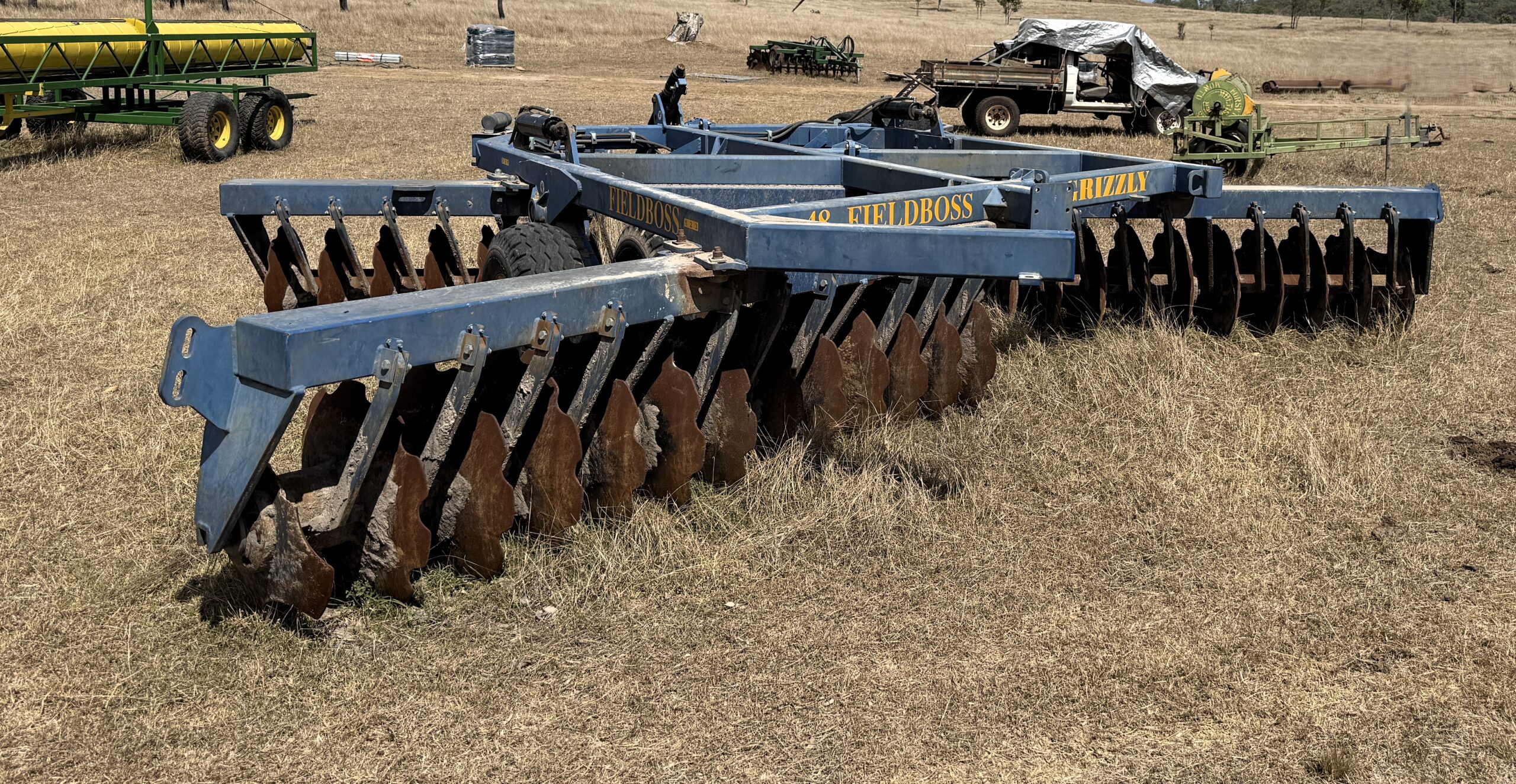
Offset disc ploughs are suited to breaking up soil or incorporating standing grass, thick stubble, soil clods or mulch. They are made of two rows of concave discs that cut and invert the soil. The rows are offset to each other, so that the first row turns the soil in one direction and the next row turns it the other. They are heavy implements that rely on weight and sharp discs to cut into the soil and or stubble. Offset disc ploughs incorporate more stubble or mulch than a chisel plough and undertaking multiple passes will quickly reduce ground cover which may reduce water infiltration and soil-water storage during a fallow, as it may increase water run off and erosion potential.
Machinery needed to pull the implement
These implements are generally towed with a tractor and the horsepower required will depend on the size (width and number of tynes/discs) of the implement. Sometimes large implements are towed with dozers. Primary tillage can require 10HP per tyne or disc as a rough guide.
Considerations
Much like the primary disturbance implements listed above, primary tillage implements can be slow to operate due to high draft when undertaking initial soil cultivation and the relatively narrower working width. They can also bring up unfriendly soil, so the depth of cultivation and soil type being worked should be considered.
Secondary tillage equipment
Secondary tillage implements are lighter duty (made with lighter frames and springs) and used on soil that has already been cultivated at least once with primary tillage equipment. They are used to help create a finer soil tilth by breaking up bigger clods of soil and removing small weeds, which helps control the competition from undesirable species and increases soil moisture storage.. Secondary tillage often happens in the early wet season (spring to early summer) and implements are often wider yet need less power to pull than primary tillage implements which increases operational efficiency.
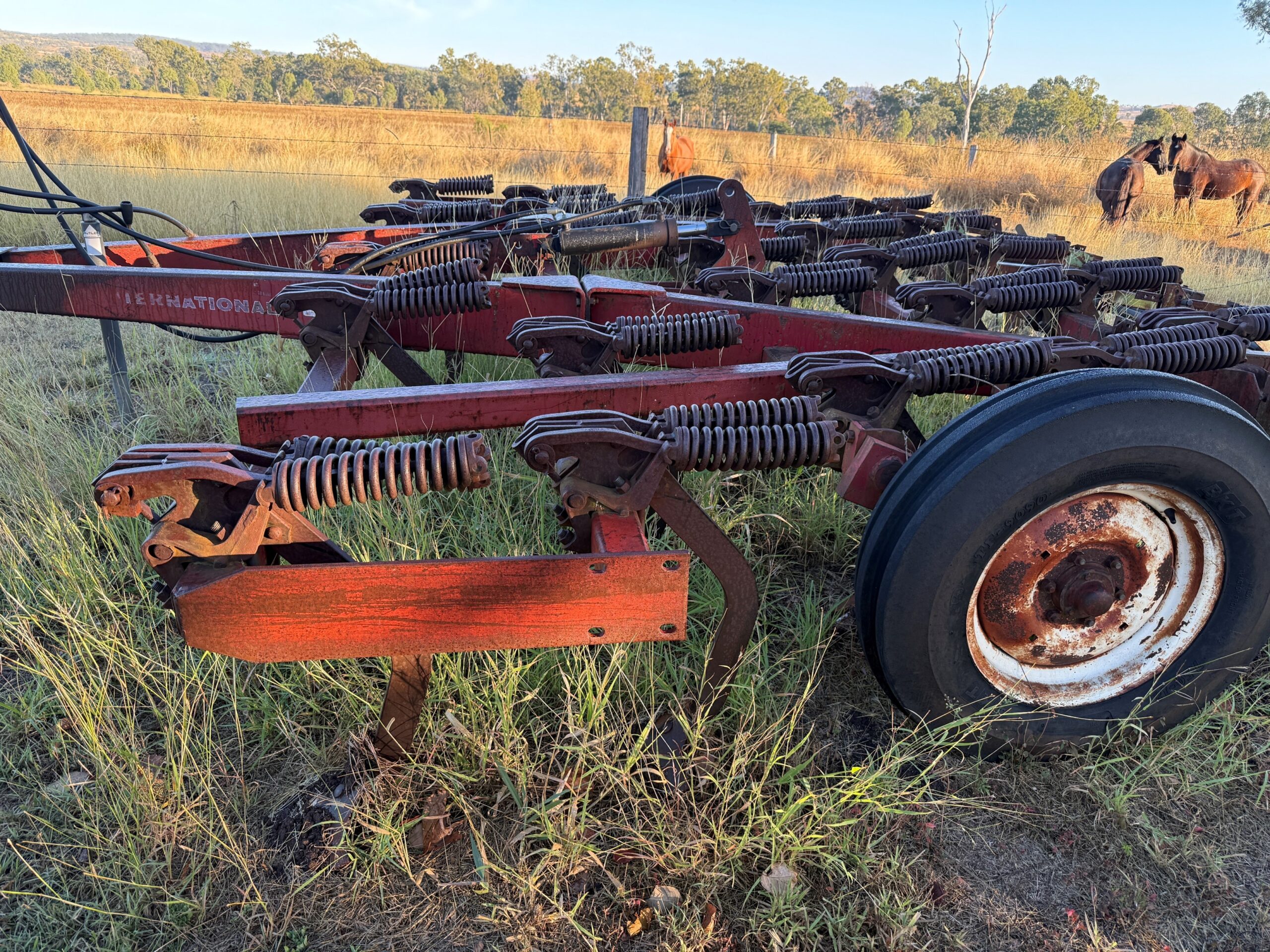
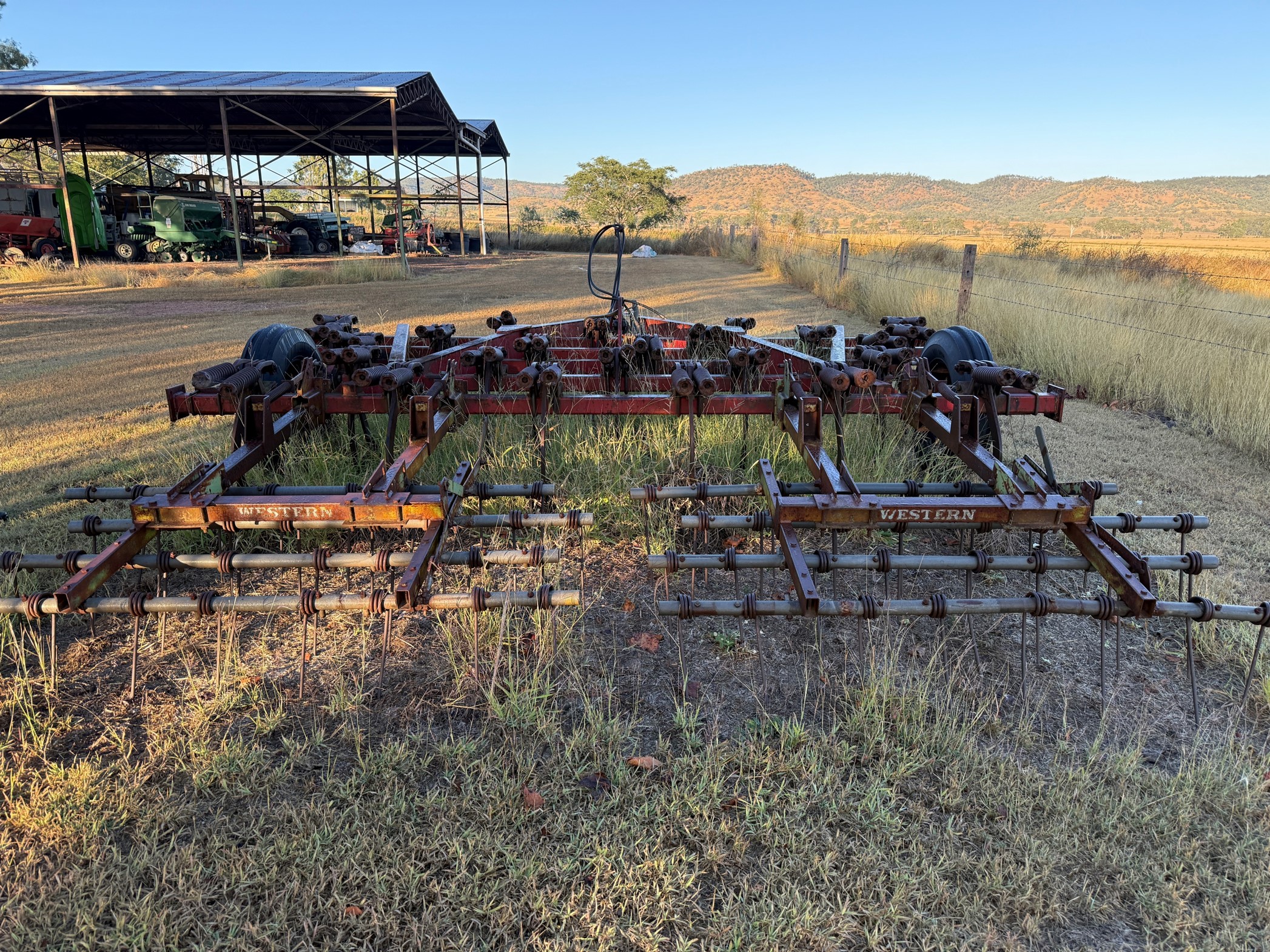
Scarifier
Scarifiers are the most common secondary tillage implement and consist of a frame with tynes (much like a chisel plough). They have lighter springs and smaller tynes and their main function is to break up clods of soil after the primary tillage implement, and to undertake weed control. They generally are pulled through the soil at a depth of approximately 5-10cm.
Machinery needed to pull the implement
Generally these implements require less horsepower than primary disturbance or tillage equipment because they are lighter implements working at shallower depths through already tilled soil. (E.g. the implement shown above can be pulled efficiently by a 100 HP tractor)
Considerations
Scarifying is a step in seedbed preparation that can be skipped if an extra working with primary tillage equipment is conducted that breaks up large clods, and special attention is paid to seed bed preparation using one of the methods described in the next section.
Soil surface preparation equipment
Pasture seeds are very small so require a small soil particle size on the surface to achieve good seed-soil contact for germination. This is described as a’ fine but firm’ seed bed. There are several options to create a final seed bed and each of the methods below have advantages and disadvantages. Harrows and chain/mesh/gates/rail are often attached behind a primary or secondary tillage implement as a way of smoothing the soil surface in one pass, but they can also be used independently in a separate operation. All of these implements are also often used just before or just after sowing, to help increase seed-soil contact.
The choice of which seedbed preparation equipment is required pre or post sowing will depend on the method or type of planting equipment used. For example, a planter with narrow spaced tynes (e.g. combine) will require a seedbed with little trash to prevent blockages. Some disc opener planters can plant directly into retained stubble and mulch. Some planters also have adjustable press wheels behind each planting row to accurately press the seed against the soil removing the need to roll or harrow the soil after planting.
Harrows
Harrows gently break up the soil surface to create a finer texture, but depending on their weight they may not make the surface firm enough for sowing. There are three main types of harrows – chain, tyne and power harrows. Chain harrows are made of steel rings, links or pieces of chain attached to a light frame. Tyne harrows consist of many rows of steel spikes or teeth that scratch and smooth-out the soil surface. Chain and tyne harrows are dragged across the soil surface. Power harrows are PTO driven and use rotating tynes or pegs to disturb the soil surface without cultivating or turning the soil.
DIY – chain, mesh, gate or rail
A simple, home-made version of a chain harrow is pulling a heavy chain, piece of weld mesh, a gate or piece of heavy rail over cultivated soil. It is an easy and cost-effective way to create a finer seed bed and depending on the weight, can add some firmness to the soil surface too.
Roller
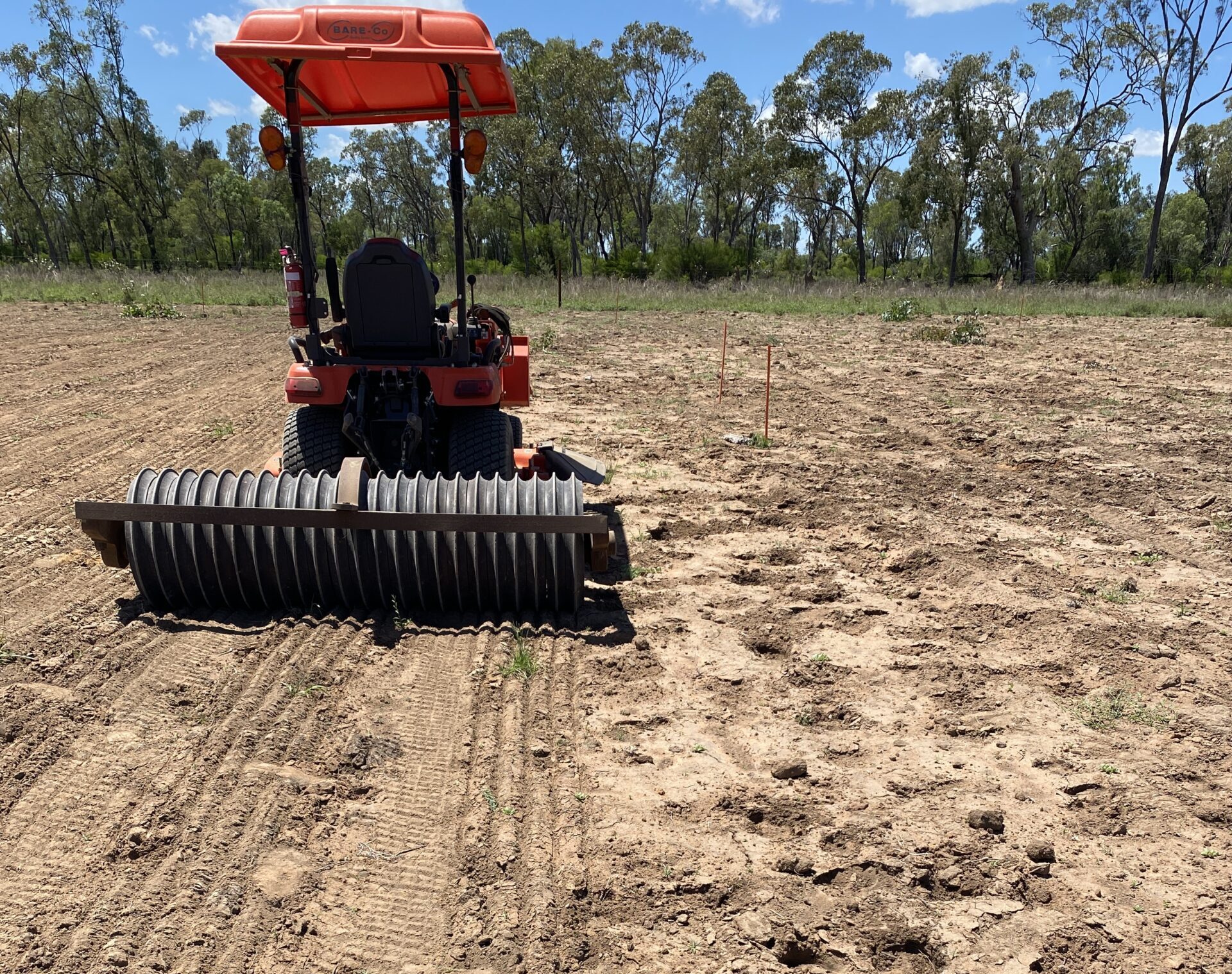
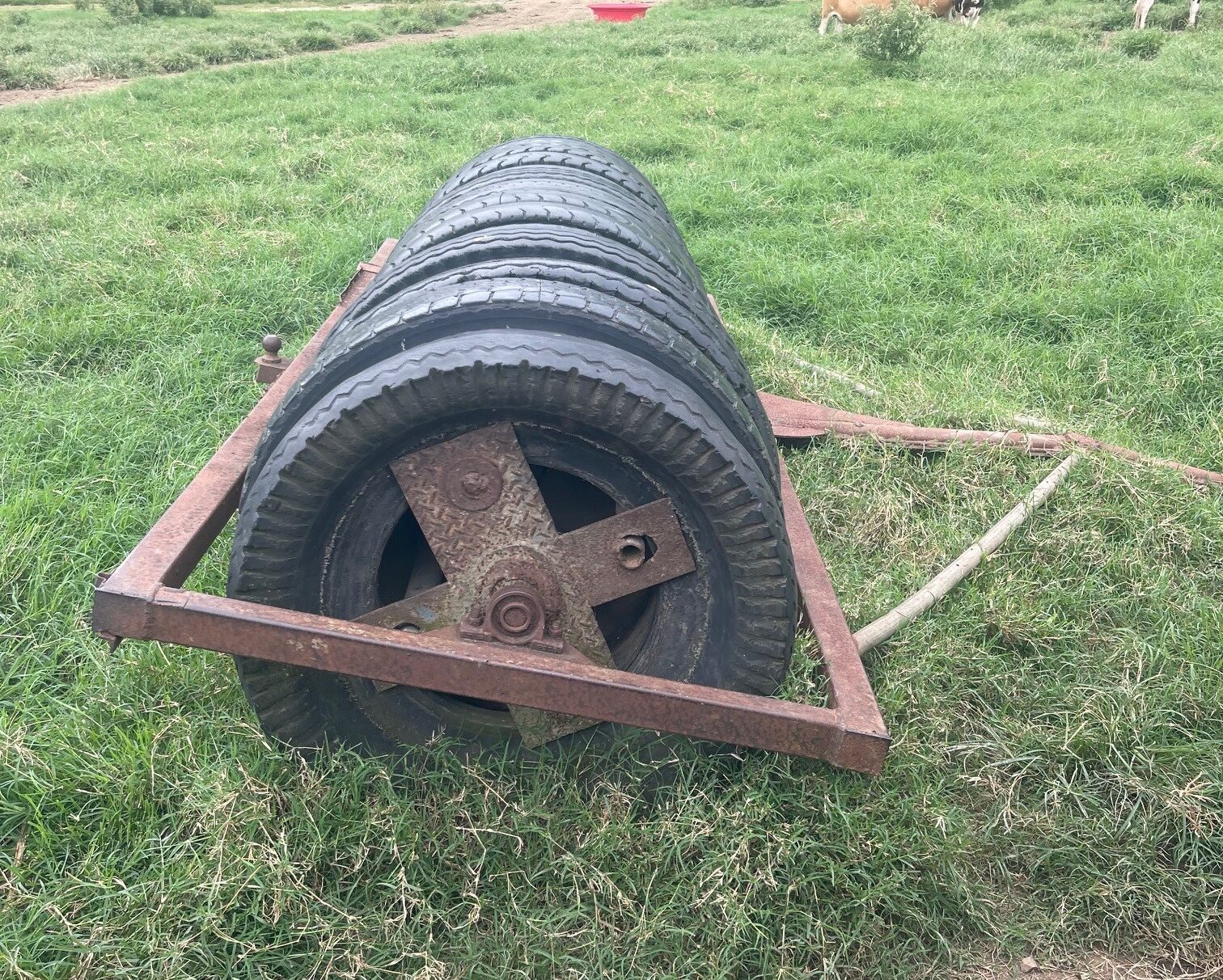
Rollers help create a firm seedbed as they compact the top layer of soil under their weight. There are three main types of rollers – flange/ring, rubber tyre and flat drum rollers. Flange or ring rollers are made with multiple steel flanges or rings on a common axle. These produce a rilled soil surface similar to a corrugated iron roof. These have multiple advantages over the other roller types as they can effectively break up moderate surface crusts to provide better texture, and they can gently firm up fluffy soils. The rills created can help to minimise crusting on dispersive soils, but also hold moisture once rain falls. Rubber tyre rollers utilise multiple rubber tyres grouped together on a common axle. They are cheap to buy (or make), and depending on weight, can do a good job at firming up the seedbed. Flat drum rollers are generally made from a smooth round steel drum. These are heavier than rubber tyre rollers and can leave a flat soil surface which can be prone to sealing or crusting on dispersive soil types.
Rolling a paddock post sowing can also be useful if a seedbed remains too fluffy for good seed contact or to encourage quick germination if there is good soil moisture by ensuring the seed is in contact with that stored moisture.
For more detailed information on rollers, including a video, check out this page: How to achieve good seed-soil contact when planting a pasture
Machinery required to pull the implement
Depending on their size, small versions of these implements can be towed behind a ute or ATV. Rollers can be heavier so will need a tractor. For larger applications, several sets of rollers or harrows can be joined together to cover a larger area is a single operation.
Considerations
Harrows, chain, mesh, gate or rails are best used in fully cultivated seed beds, as they can easily collect organic matter and trash and need to be regularly unclogged. Very heavy chain or single pieces of chain can bog down and disturb the soil too much.
Other tillage implements not commonly used in pasture establishment
These implements are generally inefficient to operate and can damage soil structure over time and as such are not commonly used in pasture establishment. Some are more often used in horticulture crops or farming operations.
One-way plough
One-way ploughs are similar to offset disc ploughs but only have one row of discs, so the soil is turned in one direction only. They significantly reduce surface levels of organic matter which may increase erosion potential.
Rotary hoe
Rotary hoes are made of large rotating wheels with curved tines that pulverise the soil surface. These are generally narrow implements and operate at slow ground speed with high HP required.
Speed tiller
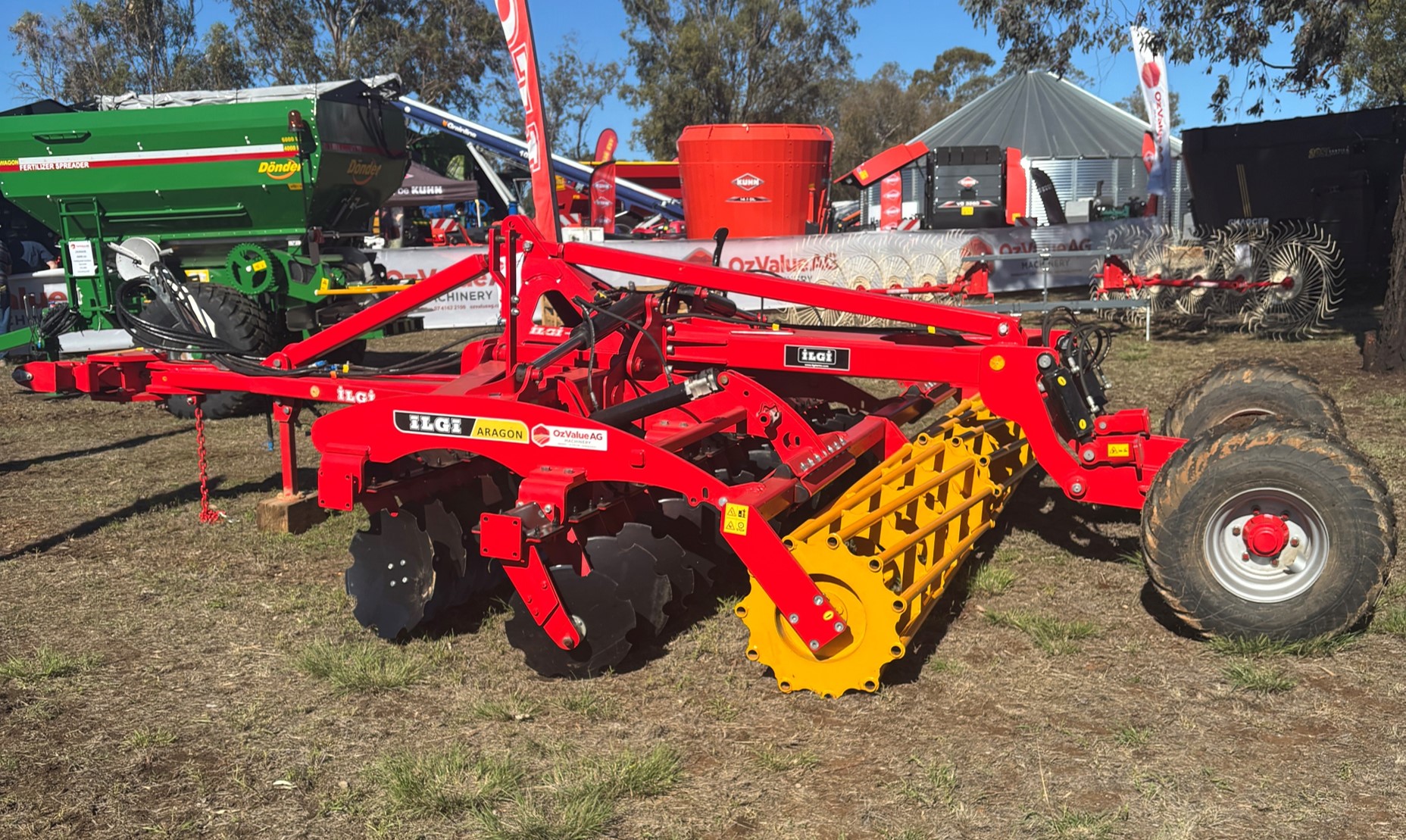
A speed tiller is an implement that combines cultivation and rolling. It contains rows of concaves discs followed by a heavy roller to smooth and compact the soil surface.
Written by Kylie Hopkins, Ted Callanan and Stuart Buck from Rockhampton and Toowoomba DPI, as part of the Queensland Pasture Resilience Program which is a partnership between the Department of Primary Industries, Meat & Livestock Australia and the Australian Government through the MLA Donor Company.