So, you want to do a forage budget?
Forage budgeting is a critical tool on any good grazier’s tool belt. It tells producers what’s in the paddock or the ‘bank’ and what they’ve got to work with. Knowing how long a paddock can carry a particular mob is paramount for informed decision making. Conducting forage budgets at key points in the season ensures that we aren’t ‘over drawing’ on pastures and risking running out of feed, over grazing and land condition decline.
Now that we’ve laid out all the reasons why you should be doing a forage budget, you get on the computer and find your way to the FutureBeef website because you know there’s so many useful resources and tools… But that’s the problem, there’s so many and you don’t have the time to go through each page one by one.
Well don’t worry, we’ve done that for you. This article summarises all the resources and tools you may need to do your own forage budget with links to take you straight there!
The how to
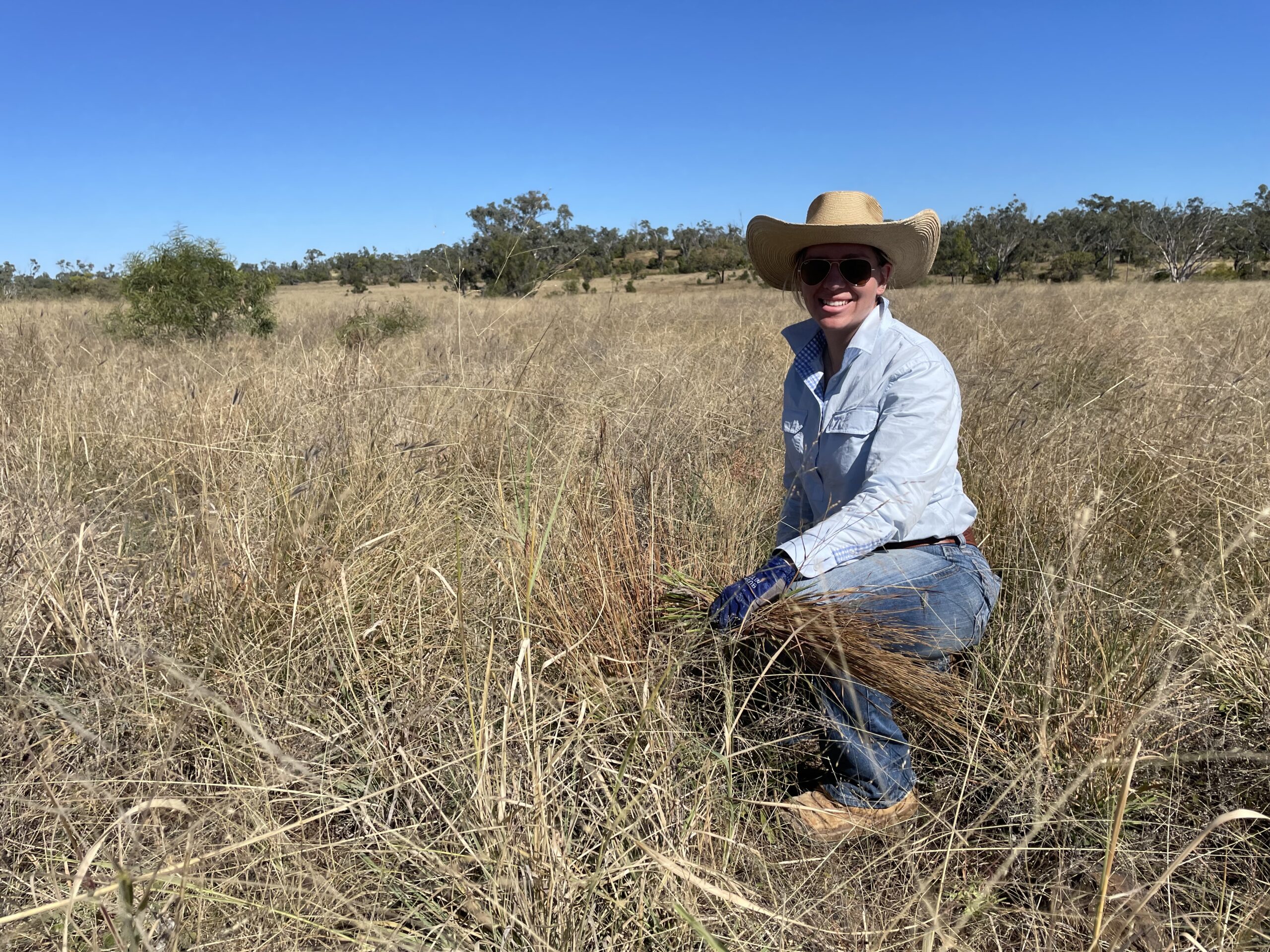
- Calculating your own pasture cuts – the gold standard of accurate yield estimates: Accurate starting yield is key to forage budgeting
- Understanding how long this year’s pasture needs to last: Break of season rules for forage budgets
- Working out the dry matter content: Calculating dry matter content of pastures
- Step by step explanation of forage budget calculations: What do 5 out of 5 beef extension officers recommend? Clue: it has something to do with your grass!
- Calculating stocking rates for the dry season, how long or how many: It’s time to start thinking about how you’re going to manage dry season feed…
Prefer videos?
Handy tools
- Use the CliMate website or app to calculate your green date: CliMate
- Get your adult equivalents right – comparing apples with apples, use this Adult equivalent table to convert stock numbers for your production zone (from MLA and Bush Agribusiness): AE Tables and AE ratings & calculating forage demand
- Not sure what grasses are in the paddock and if they’re palatable? Here’s a handy pasture ID guide you can download on your phone: LCAT pasture guide
- Pasture photo standards – find the right ones for each region here (remember these are just a guide): Pasture photo standards
Case studies
- DPI staff practicing what they preach at Brian Pastures Research station: Forage budgeting – a valuable tool for pasture management at Brian Pastures
- Graziers on the basalt at Charters Towers using forage budgeting to help manage their grazing system: Sustainable grazing management at Amelia Downs: a blueprint for resilience
More of a hands-on learner and prefer to be in the paddock? That’s cool, so are we!
Our Stepping Stones workshops run by the Improved Grazing Land Management (IGLM) project team are designed to help graziers develop action plans to implement strategies like forage budgeting and wet season spelling. Read about a recent workshop in McKinlay here. If you’d like one of these workshops to be run in your region, contact your local extension officer or the IGLM project team.
- Megan Willis (Townsville) on 0467 801 777 or at megan.willis@dpi.qld.gov.au
- Brad Hough (Townsville) on 0499 850 158 or at brad.hough@dpi.qld.gov.au
- Dana Walkington (Emerald) on 0436 863 380 or at dana.walkington@dpi.qld.gov.au
- Peter O’Reagain (Charters Towers) on 0428 100 493 or at peter.oreagain@dpi.qld.gov.au
Written by Dana Walkington from Emerald DPI, as part of the Queensland Pasture Resilience Program which is a partnership between the Department of Primary Industries, Meat & Livestock Australia and the Australian Government through the MLA Donor Company.