Building confidence and knowledge for a first-generation producer
Bodie Willmot, Goolman QLD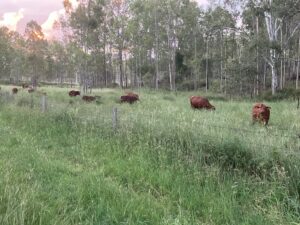
I own Corymbia, a 42 ha property at Goolman, just outside Ipswich on the border of the Scenic Rim. The property is heavily timbered with spotted gum and ironbark and runs a small herd of Droughtmaster breeders and a Boran bull. I’ve also run goats and pigs as part of a regenerative approach to managing the property.
Purchasing a cattle property was a lifelong dream of mine. When I bought the property in 2021, I had no farming background or family connection to agriculture. One of the hardest things about starting out was not knowing what questions to ask.
Like most people, when something breaks or something dies, I go looking for answers. That’s when I started using FutureBeef.
Early on, I lost four of my first eight cattle to lantana poisoning within three weeks of bringing them onto the property. I’d heard of lantana and could identify it, but I didn’t realise how toxic it was. Losing cattle that I’d wanted since I was six years old was devastating.
FutureBeef’s resources on lantana and plant poisoning, including “Poisonous trees and shrubs”, helped me understand what had happened and, more importantly, how to reduce the risk of it happening again. I learnt that completely removing lantana wasn’t realistic in the short term, so I needed to focus on sourcing cattle that were bulletproof to it and ensuring they had enough quality forage so they didn’t go looking for something else to eat.
As a practical first step, I created a safe paddock for my existing stock and started clearing the other paddocks. Before they were ready, the cattle had already grazed out the safe paddock in three weeks. I soon learnt just how much cattle eat. That led me to FutureBeef’s “Forage budgeting resources” page and eventually to further training in grazing management. Already, the information I’ve applied has helped me increase carrying capacity from eight head to around 12–15 head.
Since then, it’s one of the first places I go when I have a question. There’s very rarely anything I’ve researched to do with cattle and agriculture that isn’t covered in FutureBeef. I also use it to fact-check information I see elsewhere. Just because it’s what the neighbours reckon or what the old fellas say doesn’t mean it’s right. If a question comes up on Facebook, I’ll often go to FutureBeef to read more about it. Not necessarily because the person is wrong, but because every property is different. I like knowing it’s been vetted, which gives me confidence that it’s reliable and relevant to my situation.
FutureBeef has helped me avoid costly mistakes and make better decisions, especially around weaner management. Resources such as “Weaner management in northern beef herds” have helped me better understand what good weaning looks like. A lot of advice is geared towards larger properties, but being on a small block, I need to adapt those practices to suit my situation. This year, I know what I’m doing with my weaners and have a plan in place.
Most importantly, FutureBeef has given me confidence. When you’re new to the industry, it’s easy to feel isolated or think you’re the only one dealing with a particular problem. The information and resources help you understand what’s normal, explore new ideas and make informed decisions.
For someone without that intergenerational knowledge and experience, FutureBeef has been invaluable.