Wynn cassia – love it or hate it – tips for management
Wynn cassia is one of those legumes that polarises people – you either love it or hate it. But why is it so divisive? Regular commentary from graziers is that ‘the cattle won’t eat it’ or ‘it’s taking over.’ In this article we take a deeper look at how this legume got its bad name, and what can be done to clean up its reputation.
Skip ahead:
Managing Wynn cassia dominance at Spyglass Research Facility
What is Wynn cassia and where does it grow?
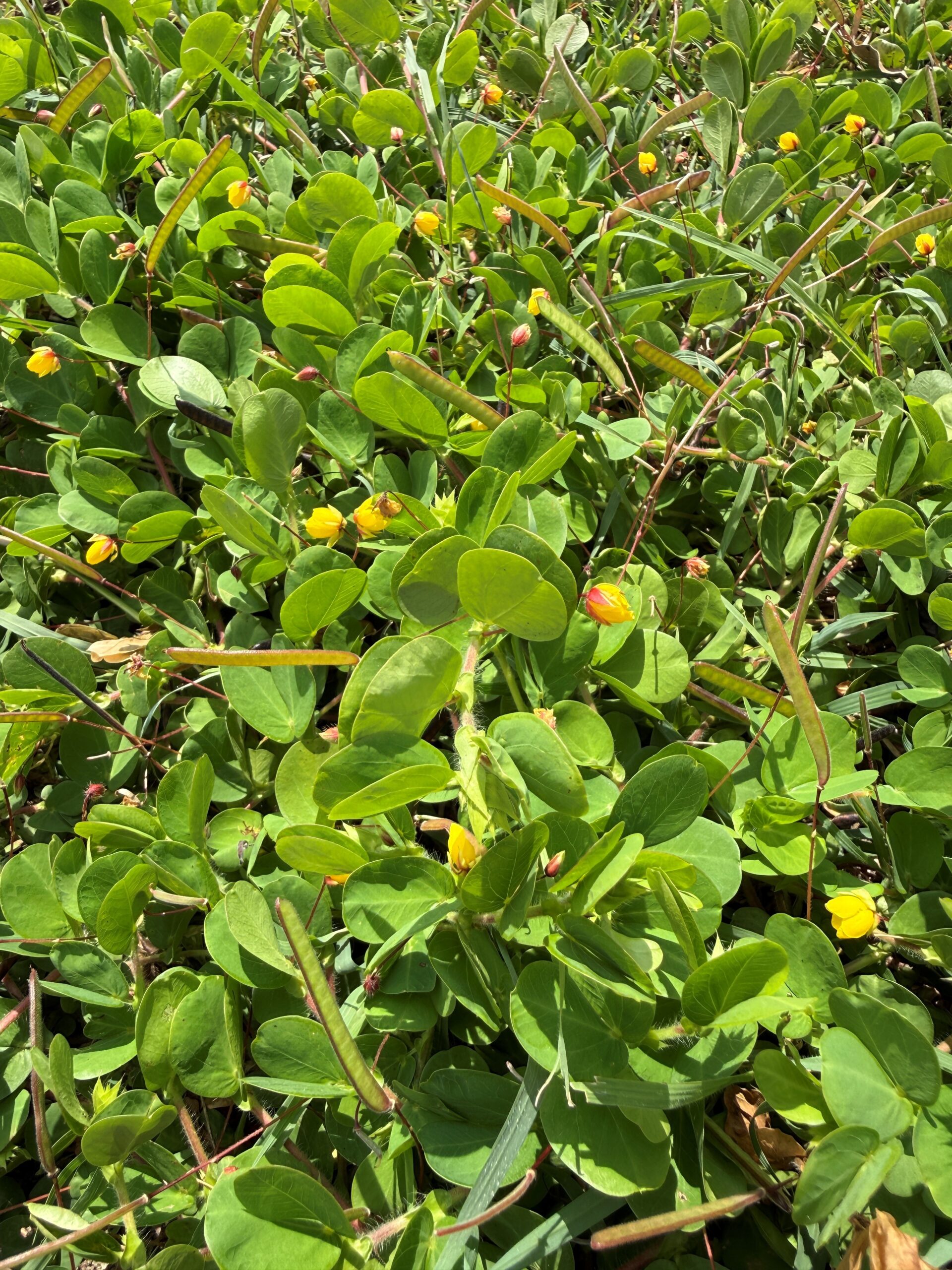
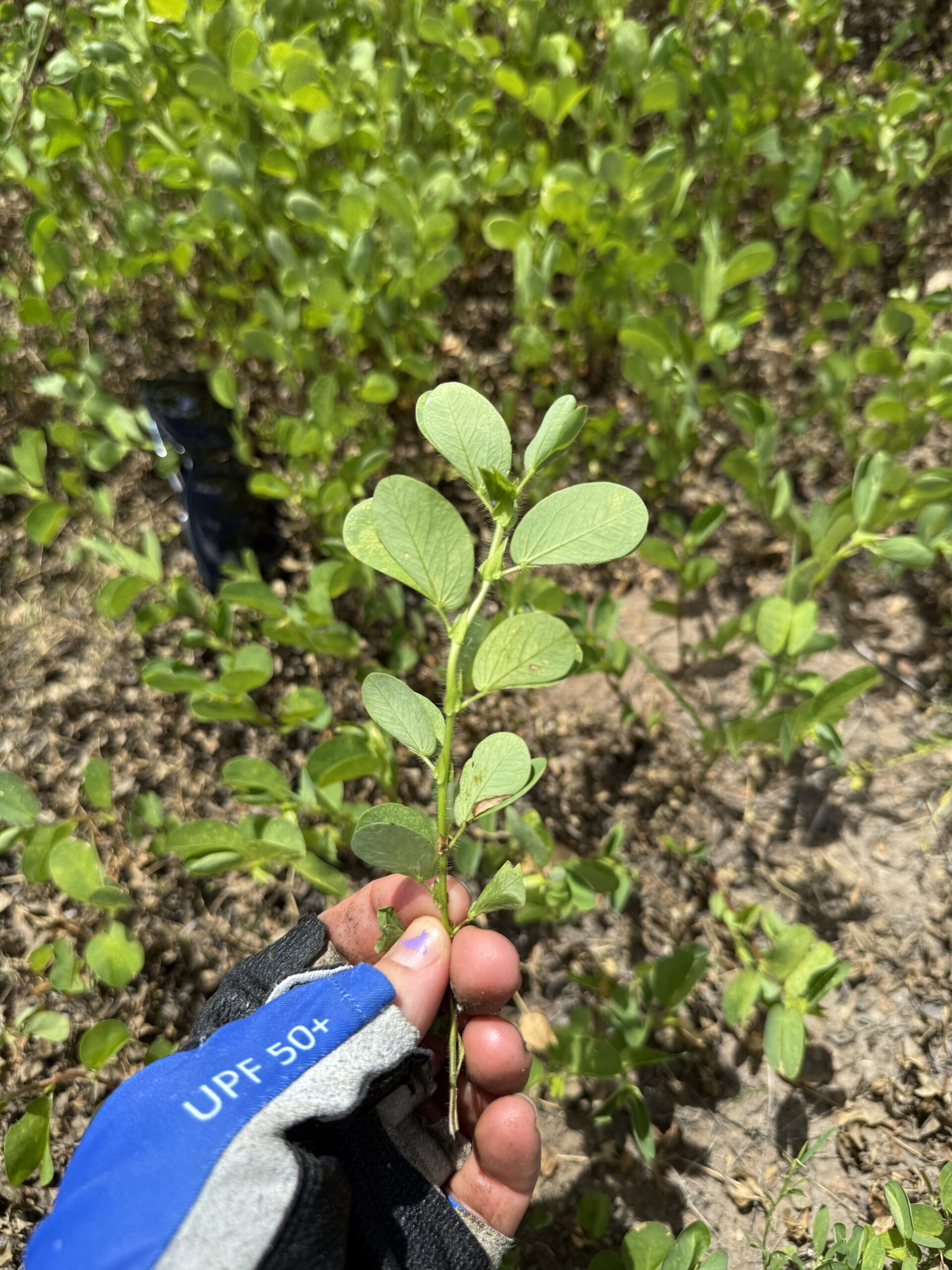
Wynn cassia or round-leafed cassia (Chamaecrista rotundifolia cultivar ‘Wynn’) is a short-lived perennial tropical legume which generally grows in higher rainfall areas of about 600mm average annual rainfall and above. It is native to the Americas but is now naturalised across northern Australia from northern coastal NSW, through coastal QLD and up into the northern reaches of the NT. It loves sandy, well drained soils and can tolerate acidic soils high in aluminium. Wynn cassia does not like heavy soils or being waterlogged. Despite growing in higher rainfall zones, it is drought hardy and very tolerant of heavy grazing once established. It is an excellent seeder and can colonise bare areas easily. In areas that have regular heavy frosts, it behaves as an annual plant – frost kills it and it germinates from seed again. In warm environments with about 800mm rainfall it’s perennial, but below that it tends to be more of an annual. Palatability varies across environments and seasonal conditions.
Wynn cassia is considered a semi-erect plant and its height depends on soil fertility and rainfall. In the NT it is regularly seen at 50-70cm tall, in QLD and NSW Wynn cassia is more often seen as a prostrate (low growing or flat) plant, under about 40cm high. It has long slightly woody main stems that have alternating bifoliate leaves (two leaflets that make up the one leaf).
How productive is it for grazing?
Wynn cassia is an important legume in perennial pasture systems. It can provide much needed protein and energy into the dry season when grasses are declining in quality. Young Wynn cassia leaves are higher quality than older leaves, which is typical of growing legumes. The crude protein and dry matter digestibility is higher in the wet season than the dry season. Data collected at Pinnarendi leucaena trial (Mt Garnet, QLD) in 2020 show that in the wet season Wynn cassia leaf had higher crude protein and dry matter digestibility than leucaena in the same paddocks, but in the dry season it was lower. It seemed to have more of a seasonal fluctuation in quality than what was recorded for leucaena, meaning the quality of leaf on offer varied drastically between seasons whilst leucaena was steady and of high quality all year round.
Research on Wynn cassia productivity in grazing paddocks has been conducted since the mid-1980’s when it was commercially released. Generally speaking, cattle do not perform well on Wynn cassia only paddocks. However, on Wynn cassia and grass paddocks, weight gains of up to 40% higher than cattle on grass only pastures has been recorded. This is about 25-50kg more per head per annum compared to native pasture only, and is comparable to weight gain on stylo pastures.
Why the bad name?
Wynn cassia is an incredibly hardy plant – able to survive and reproduce on very low fertility country under high grazing pressure – but it is known by some as the unpalatable plant that takes over. The factors that determine whether Wynn cassia will become dominant in a pasture are soil fertility, grass competition, seasonal conditions and grazing management. All of which are linked.
Soil fertility
Soil nutrient status greatly impacts the palatability of Wynn cassia. Wynn cassia growing on country with low fertility is much less palatable than grass in the same paddock. Soil nutrients that can impact palatability are phosphorus (the most important), and sometimes potassium, sulfur and molybdenum. Unpalatable Wynn cassia means cattle graze grass more – allowing the Wynn cassia to grow unchecked and flower and set seed. Wynn cassia is not known to contain any anti-nutritive compounds or particularly high tannins (which can impact the palatability and nutritional quality of plants).
Grass competition
Wynn cassia is fantastic at colonising bare areas because it can survive in relatively harsh conditions. When grasses become less competitive – usually due to soil fertility and grazing management – Wynn cassia can easily fill the gaps. Soil fertility as described above, is important for the palatability of Wynn cassia, but it is also critical to how well grasses grow. Nitrogen is the major driver of grass production and grasses are significantly less competitive in a pasture that is ‘run down’ in nitrogen.
Grass species also differ in their competitiveness. Stoloniferous grasses (grasses that send out runners) are fantastic at maintaining ground cover and most can survive on less fertile country too – think signal grass, Humidicola, Rhodes grass, Kikuyu, Bisset, Couch. These grasses are less likely to leave bare areas where the low growing Wynn cassia can grow, unlike tussock grasses (i.e. buffel, panics, Mekong brizantha) that often have bare soil between crowns.
Seasonal conditions
Wynn cassia leaves are less palatable when they are young and growing rapidly, than when they are mature. At the same time of year, rapidly growing grass is very palatable to cattle. Grazing during the height of the wet season will mean cattle utilise the grass and leave the Wynn cassia alone. Cattle will eat more Wynn cassia in their diet towards the end of summer, through autumn and into winter depending on the location and seasonal conditions. At this time of year, the quality of grass is starting to decline and the Wynn cassia is maturing and setting seed which increases its palatability – some graziers even report cattle licking dead Wynn cassia leaves off the ground.
Grazing management
This leads us to grazing management. As described above, the timing of grazing is really important with Wynn cassia but so is grazing pressure. Grasses are much more palatable in the wet season, so heavy, long grazes at this time of year will mean Wynn cassia can grow and reproduce with no limitations – soil moisture is readily available and there is no grazing pressure setting it back. Meanwhile, the grasses take a hammering. Just a few seasons of grazing like this can easily lead to a pasture with more Wynn cassia than grass.
How to flip the balance
How to ensure a Wynn cassia-grass pasture stays well balanced and productive.
Grazing management – within everyone’s control
It’s a grazier’s conundrum – grazing green grass gives great liveweight gain but takes the pressure off Wynn cassia that may need to be kept in check. Heavier grazes in the wet season when there is more moisture coming and the grass will keep growing, seem safe. But it’s all a balance. It is still important to spell grasses over the wet season to allow them to grow more leaf and set seed. And setting paddocks up to provide feed through long dry seasons is vital to reduce the need or cost of supplementation.
Having paddocks in a rotation makes this more manageable. Paddocks with more Wynn cassia can be spelled in the wet season, or grazed lightly, and then grazed more heavily into autumn and winter when cattle increase utilisation of Wynn cassia.
The type of cattle grazing Wynn cassia paddocks is also important. Adult cattle tend to be less selective and will eat more Wynn cassia when it is palatable. Young cattle, particularly weaners, will not readily eat it especially if there are other more palatable plants to choose from.
Keeping records of how different pasture mixes in paddocks respond to seasons and grazing strategies can really help. Every paddock on every property is different. Finding the combination of time of year, type of cattle, length of graze and number of animals in response to the season conditionals will be slightly different for every grazier.
Fertilising what you’ve got
Fertilising pastures that are dominated by Wynn cassia can sound counterintuitive – why fertilise something that is a problem? As discussed earlier, fertility impacts the palatability of Wynn cassia and how competitive grasses are. Most areas where Wynn cassia grows are deficient in phosphorus. Country that requires cattle supplementation for phosphorus (below 5ppm) will benefit from fertilising with phosphorus, and nitrogen. This will increase the palatability of the Wynn cassia and the aggressiveness of the grass, helping cattle to eat more Wynn cassia and the grass to compete with it. Fertilising legumes with phosphorus in turn helps the legumes fertilise the grass with the nitrogen they contribute back to the soil (through nitrogen fixation). Fertilising is also likely to reduce the cattle requirement for supplementation.
Grass species – choosing something more competitive
Resowing grass species that are more competitive can be an option in some areas. Planting a new pasture can be expensive and should be done following best practice agronomic advice, to ensure a return on the investment. Often native tussock grass species that are less competitive with Wynn cassia are successfully replaced with highly productive sown species.
Herbicide – a knockback to get the ball rolling
Selective herbicide use can be an option for paddocks that need some help with an initial knock back of the Wynn cassia population. Herbicides that target broadleaf plants (i.e. legumes) can be used strategically and in conjunction with fertilising, reseeding and grazing management to ensure that the desirable grasses are encouraged, while the Wynn cassia is knocked back temporarily.
Important considerations for using herbicides include:
- Choosing a product that is registered for use on pastures and following the label application rates and directions
- Adhering to the grazing withholding period
- Foliar herbicides only work when actively growing plants are sprayed – so spraying usually occurs in the wet season
- Unless the herbicide has a residual effect, it will only kill the sprayed plants, so more seeds will germinate when the growing conditions (moisture and temperature) are right
- Following LPA requirements for chemical record keeping
Experiences managing Wynn cassia
Many graziers are successfully managing pastures with Wynn cassia for good livestock production, whilst keeping the pasture balanced.
Coastal dry tropics, Bowen district
Jim Fletcher, DPI Mackay
In the Dry Tropics region close to the coast, Wynn cassia can appear to be a burden to producers where soils are of moderate to low fertility and lighter texture. It has a habit of outcompeting the good grasses that can grow well on those soils due to its high grazing tolerance and low palatability. Graziers report that cattle prefer to eat the older leaf just before it drops, even eating it off the ground after it has dropped off the plant. Timing grazing at the right point in the season is important to make sure it is utilised.
In the coarse sands on poorer soils like the tea tree country, Wynn cassia is generally providing ground cover where there is a low population of preferred grasses. On this country grasses are mostly native wiregrasses and provide low grazing value compared to other land types. Some grazing value can still be achieved by using the time of grazing and the type of cattle to graze. Wynn cassia does however serve a purpose for good ground cover on this country, which is usually fenced off by graziers so it can be managed separately to more productive country. The land can be fragile, so Wynn cassia is valuable from a ground cover perspective even if cattle production is low.
Under good grazing management and moderate fertility there are better legumes to plant (such as stylos) than Wynn cassia on the vast majority of land types and the poorer land types are certainly low priority for pasture improvement.
Rangelands of Queensland – Upper Burdekin and Thompson River catchments, Lake Eyre Basin, The Gulf
Bob Shepherd, DPI Charters Towers
One important limitation of Wynn cassia is the short window in which it is palatable. In most areas in the Upper Burdekin catchment and the Upper Thompson River catchment e.g. the Torrens Creek area (450mm annual rainfall), the grazing window is only about 10 to 14 days before the leaves drop. Cattle will attempt to lick the fallen leaf off the ground which results in an extremely poor quality diet.
Applying fertiliser to improve the palatability of Wynn cassia and give grasses a competitive advantage, may only be applicable in some areas. I think most commercial beef producers in the rangelands e.g. Upper Burdekin, Upper Lake Eyre Basin and the Northern & Southern Gulf are less likely to fertilise.
There are better legumes to sow e.g. stylos (even on low fertility sandy soils) and personally I haven’t recommended that beef producers sow Wynn cassia since the early 1990s. The emphasis must be on managing the areas that already have established Wynn cassia.
Coastal central Queensland
Trevor Mylrea, grazier at Calliope
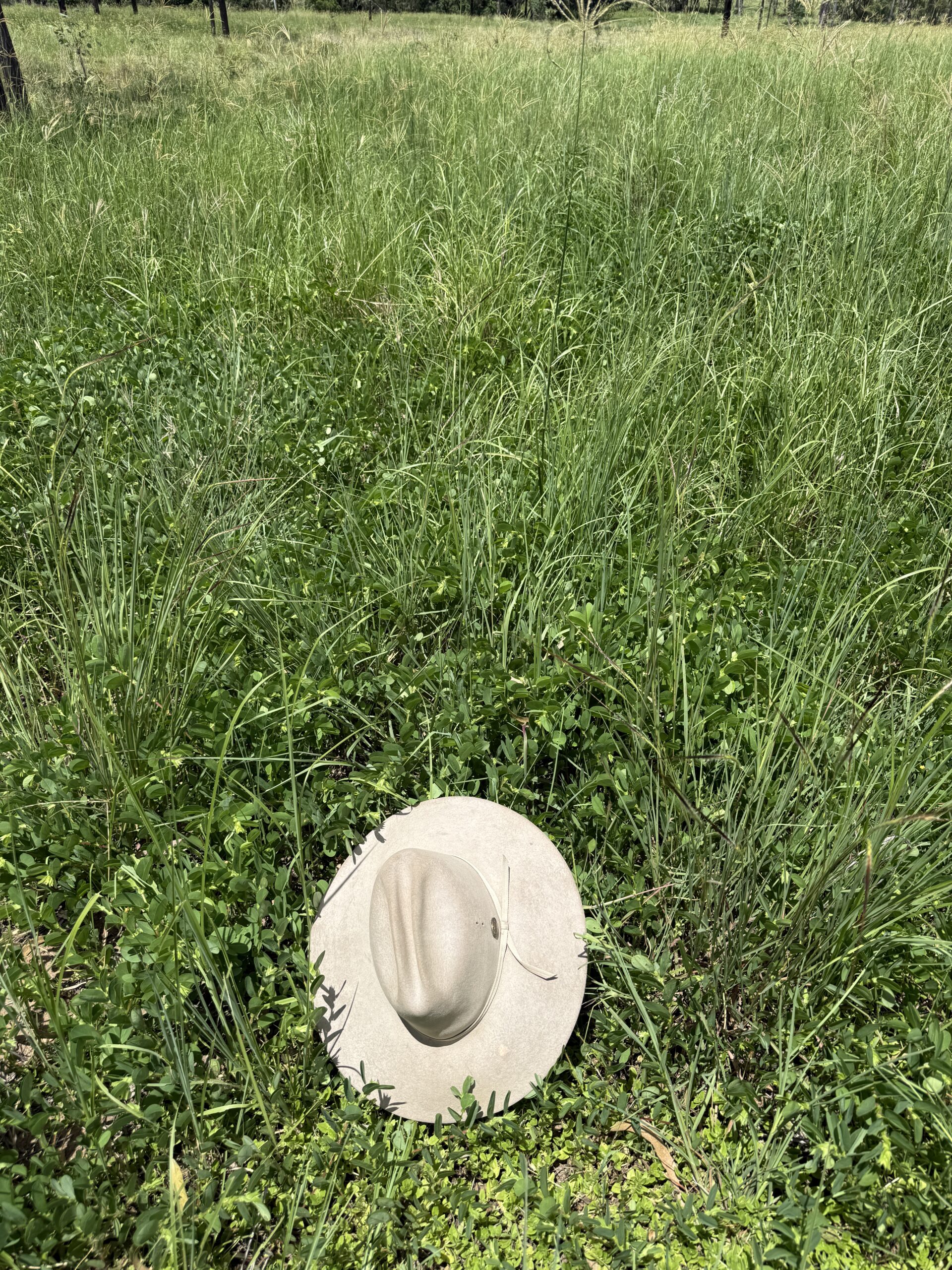
I had a paddock that was wall-to-wall thatch grass and I have planted it to Wynn cassia, Rhodes grass and signal grass to make it productive again. The lower part of the paddock that could be worked with a plough was sown to Wynn cassia and Reclaimer Rhodes and the steep rocky part was sown to signal grass. For three years, I have been stocking it quite heavily – about 1 head to 3 acres – and the pasture is going great. The signal grass has covered the hill and given me feed where I never had it before and the Wynn and Rhodes is thick and dense (pictured January 2026). The Rhodes is greener where the Wynn is thicker. I know a lot of people don’t like Wynn cassia but it can give good ground cover and can handle heavy grazing. I make sure I manage the legume and grass together in all of my paddocks so I am keeping my pasture productive.
Inland southern Queensland
Kerry Goodwin, grazier at Wetheron and DPI officer
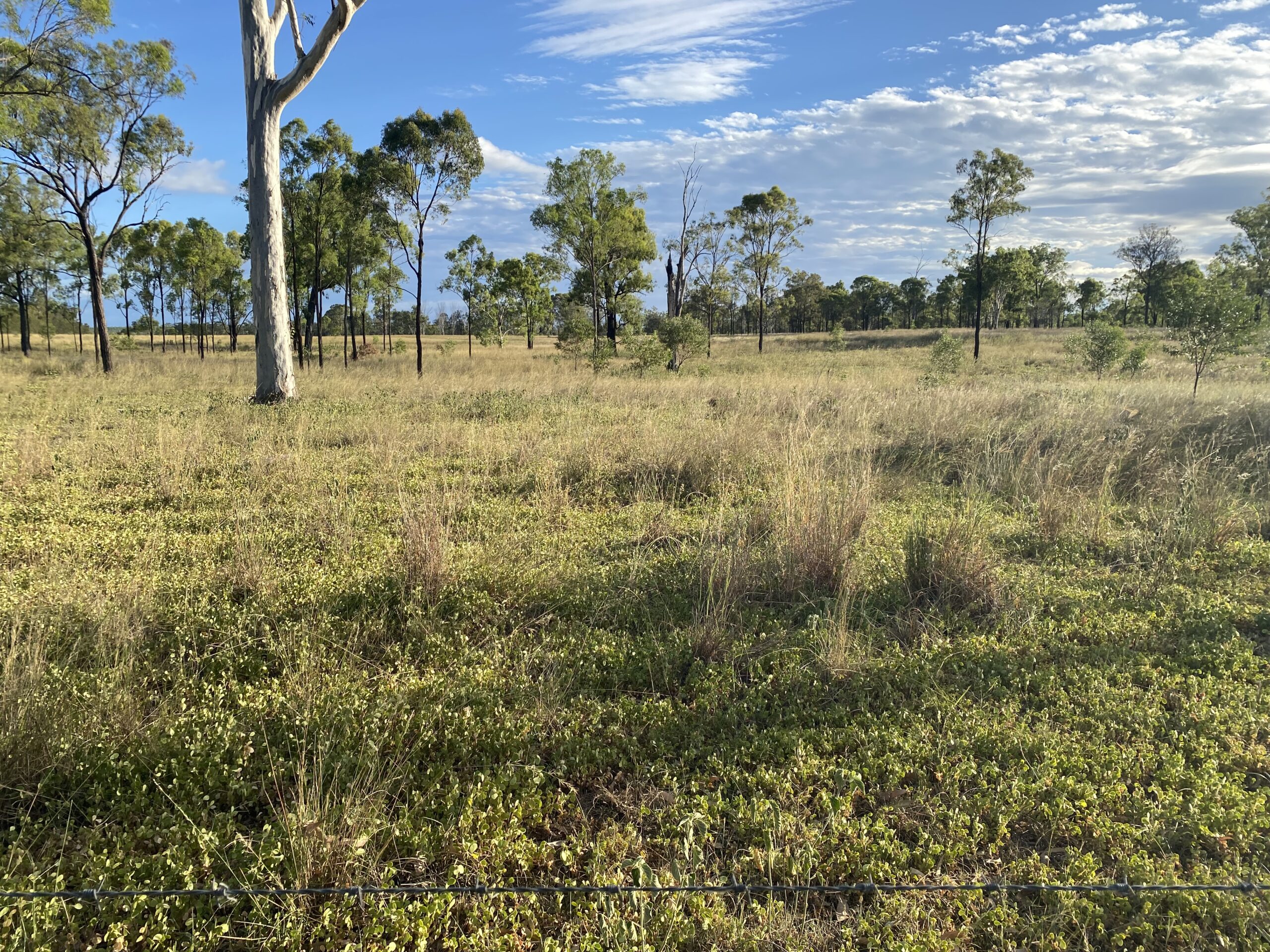
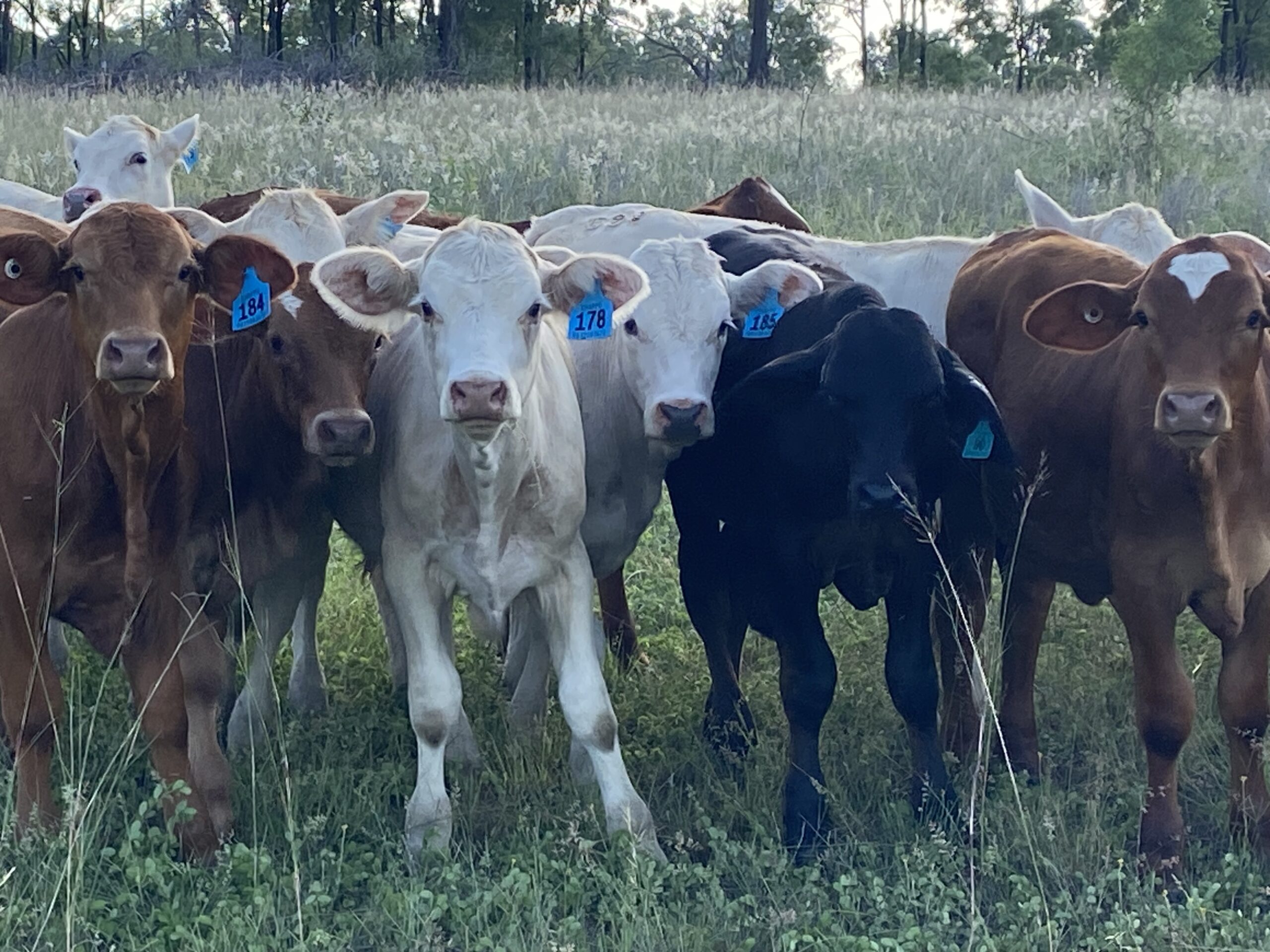
We have an agistment paddock at Wetheron which is very much dominated by Wynn cassia in areas. We have put weaners in there after weaning in a drought year and they did fabulous (pictured at weaning) but we have also been struck with a wet winter once and the cattle would not touch the Wynn cassia. We have breeders in there now (January) and we don’t supplement that paddock as they do so well all through the dry and the calves grow so well.
North Queensland
Kelvin Bethel, grazier at Georgetown and Croydon
I have country in the Georgetown and Croydon districts and Wynn cassia is managed differently on each place. At Georgetown I have granite country high in phosphorus where good sown grasses and legumes grow well. I prefer the stylos as long term legumes (caatinga, seca and verano) because cattle graze them more in the wet season as well as the dry. They keep their leaf and nutrition into the dry season. Wynn cassia is about 5-10% of the pasture and that’s enough. Cattle won’t eat it in the wet, they wait until its haying off. It can grow up through the thick grasses but we manage the grass conservatively so the grass is keeping it in check at the moment. I try and lighten off our stocking rate by selling cattle before Easter so I can wet season spell some paddocks every year.
In my Croydon forest country, I wish I had more Wynn cassia. The soils are light and the country is timbered and there is about 10% Wynn cassia with native grasses like spinifex and wiregrass. It handles very heavy grazing and fire. It comes back every year no problem. I can run 5,000 head on 250,000 acres and I think if I had double the Wynn cassia I could easily run over 6,000 head.
Wynn cassia hay
Making hay from Wynn cassia is quite popular amongst some producers – anecdotally the leaf is reasonably palatable as hay but the stem is not, so lots of stem is left behind when feeding cattle. Most producers also say that if cattle have the choice of other hay, they will select it before the Wynn cassia hay.
Wynn cassia and weeds
Renovating leucaena pasture with Wynn cassia and weeds dominating the interrow pasture at Pinnarendi, Mt Garnet.
A summary of how Wynn cassia dominance was reversed with fertiliser, herbicide and reseeding.
Leucaena pastures are the most productive and profitable option for cattle production in the northern dry tropics but require careful management to ensure a good leucaena-grass balance is maintained. Pinnarendi is a property in the Mt Garnet district where Redlands and Wondergraze leucaena were planted in 2017 in a grazing trial to compare their productivity. Set stocking of the paddocks for four years under the experimental grazing regime and the low available fertility of the soil, led to the inter-row pasture becoming degraded with an increase in weeds, decline in 3-P species and dominance of the less desirable Wynn cassia. The decision was made to renovate the leucaena rows and the interrow pasture in 2024. A full description of the trial and the process of renovation can be found here – Renovating leucaena pastures to maintain productivity – the north Queensland perspective.
To renovate the leucaena and pasture, these steps were followed:
- Sept 2024 – leucaena was cut and interrow thickets mulched.
- Week before Christmas 2024 – interrow areas ploughed with discs after storms had stimulated growth/germination of pasture/weeds.
- Jan 2025 – good rain germinated weed seeds and annual grasses.
- Last week of Jan 2025 – sprayed with glyphosate @ 2 L/ha and selective broadleaf herbicide (mixed) and got thorough kill.
- 18 Feb 2025 – fertiliser applied Di-Ammonium Phosphate-S (DAPS) @ 200 kg/ha.
- 19 Feb 2025 – light discing to kill new weeds, incorporate fertiliser and form seedbed.
- 19-21 Feb 2025 – grass seed mix spread on surface (3.33 kg/ha coated Bisset bluegrass, 3.33 kg/ha bare signal grass, 1.33 kg/ha bare Callide Rhodes grass) and rolled immediately.
- Good rain received 1st half of March (which was timely as planting date was a bit late in the season).
- 16-17 Apr 2025 – sprayed with selective broadleaf herbicide for broadleaf weed and Wynn cassia control.
- Mid Jun 2025 – cattle introduced at low stocking on a 2-3 week rotation.
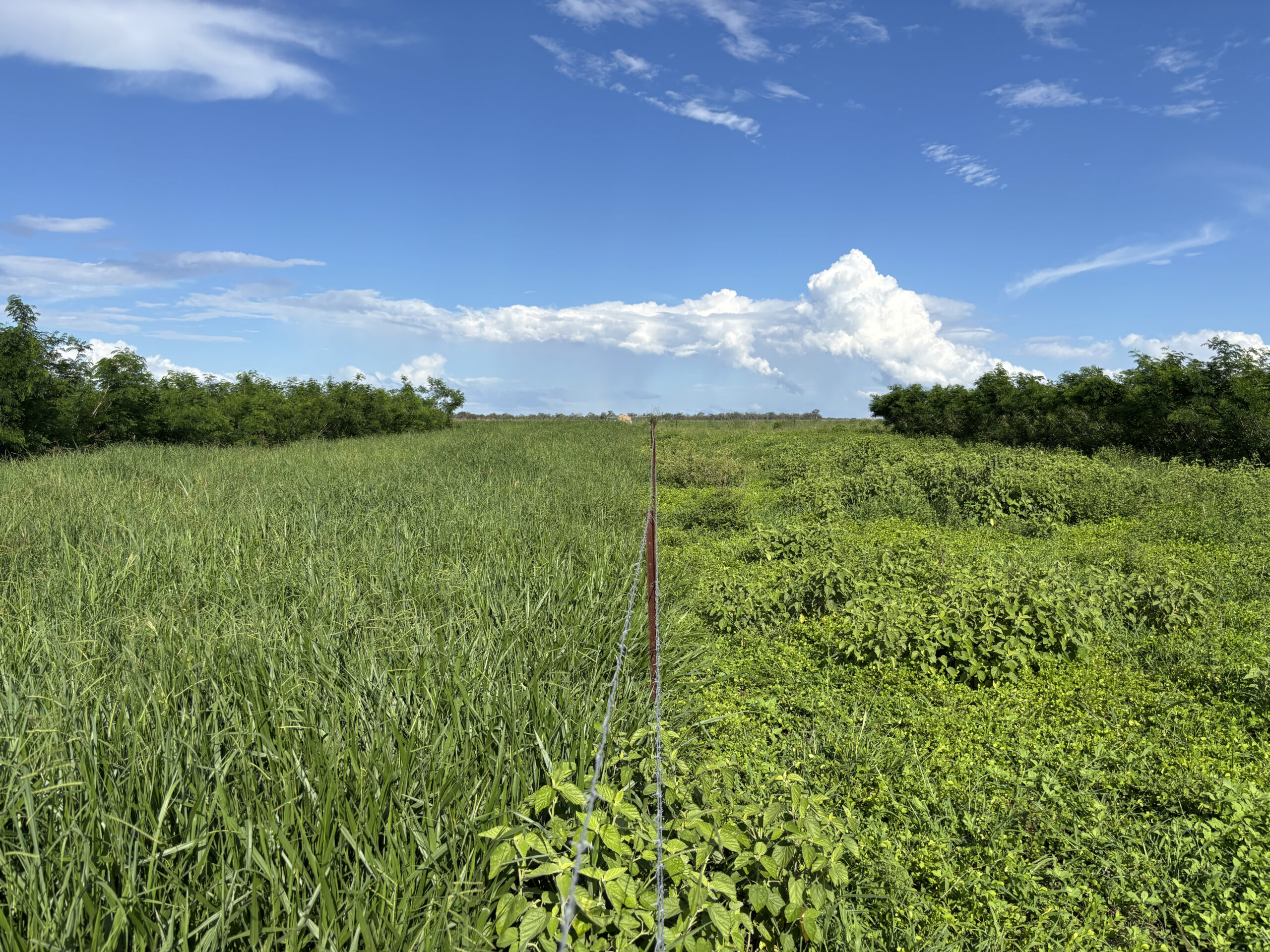
Note, the second selective broadleaf herbicide application killed broadleaf weeds and Wynn cassia or made it sick enough that the Rhodes grass overwhelmed it. This wet season has seen strong growth of signal grass which will probably take over. The photo below was taken late January 2026 looking down the fence line between a renovated (left) and un-renovated (right) paddock at Pinnarendi. Note the tall thick Wynn cassia growing amongst the broadleaf weeds on the right. No Wynn cassia can be seen on the left.
Managing Wynn cassia dominance at Spyglass Research Facility, Charters Towers
A summary of new Wynn cassia dominance research.
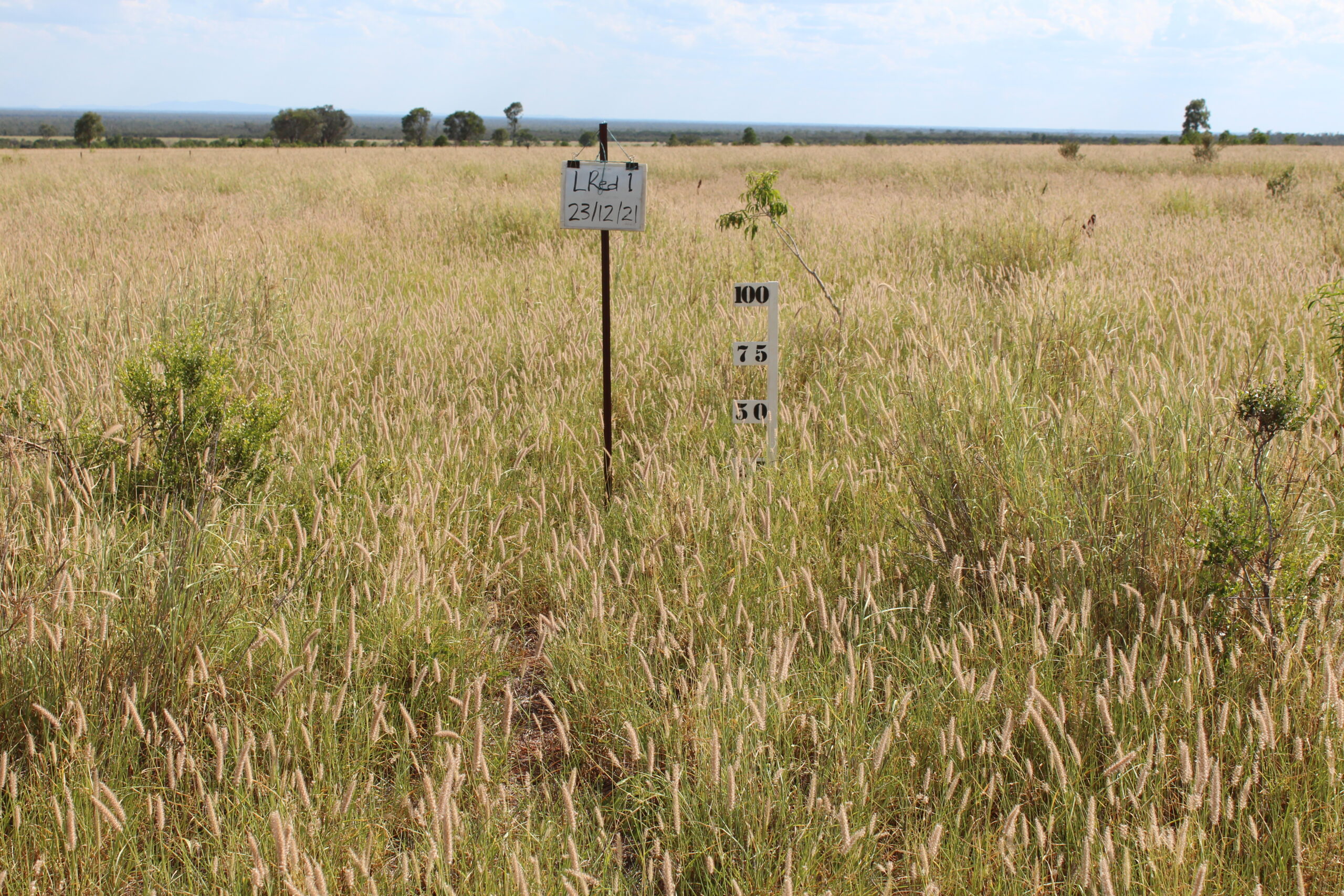
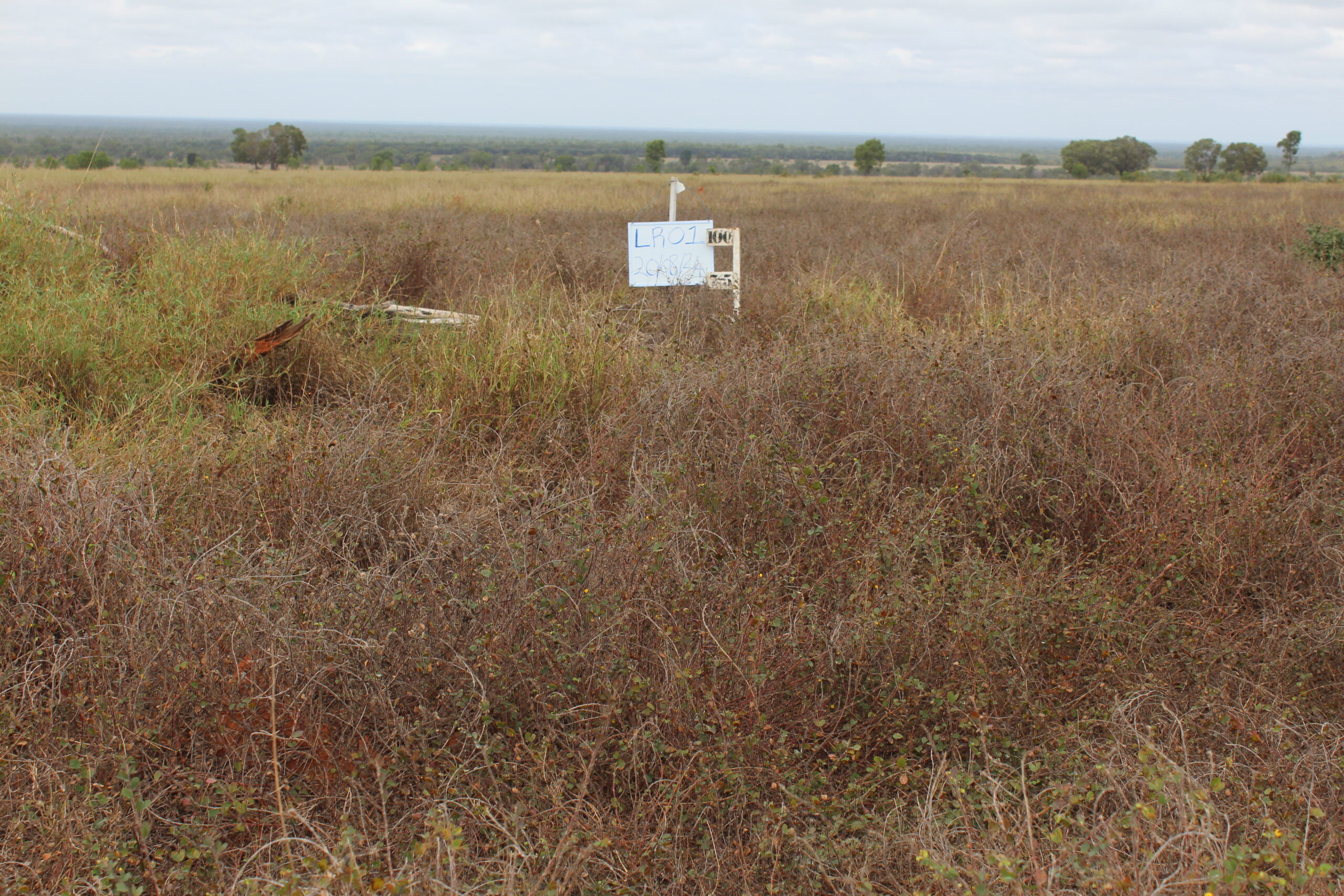
At Spyglass Research Station, Wynn cassia has come to be the dominant pasture plant in some areas where it was originally sown alongside Buffel grass. This shift has been observed in paddocks located on red earth soils with low fertility. These paddocks are frequently used for calving animals each year, due to their suitability for research requirements, proximity to the yards and pasture quality. This dominance has become a significant challenge for pasture management
At Spyglass, Wynn cassia is generally unpalatable, particularly when grasses are growing and nutritious. Following several good rainy seasons and high grazing pressure in the early wet season, Wynn cassia has dramatically increased in the pasture mix. At one site, its proportion of the available feed rose from 40% to over 80%.
Work is now underway to reduce the dominance of Wynn cassia in the pasture at Spyglass station, where researchers have established a demonstration site. The study will initially test the effect of different rates of herbicide application, coupled with wet season spelling for reversing Wynn cassia dominance. Future work may look at exploring additional strategies to enhance Buffel grass recovery and pasture quality. This research will help inform the best approach to controlling Wynn cassia and restoring a desirable grass/legume composition.
Written by Kylie Hopkins from Rockhampton DPI, with contributions from Craig Lemin, Kendrick Cox, Brad Hough, Kerry Goodwin, Jim Fletcher and Bernie English as part of the Queensland Pasture Resilience Program which is a partnership between the Department of Primary Industries, Meat & Livestock Australia and the Australian Government through the MLA Donor Company.
Links for more reading:
Wynn Round Leaf Cassia – Agnote from NT Government written by A. Cameron in 2010.
Round-leaf cassia – Agnote from NSW DPI
Pastures: Mackay Whitsunday region – A guide for developing productive and sustainable pasture-fed grazing systems published by DPI.
Pasture management for the Burnett catchment – A guide to help land managers better understand the development and management of pastures suited to the region published by DPI.
Pasture management for South East Queensland catchments – A guide to help land managers better understand the development and management of pastures suited to the region published by DPI.
Evaluation of Wynn cassia as a pasture and hay crop for the Douglas Daly area of the Northern Territory – Technical bulletin published by F. O’Gara of NT Department of Business, Industry and Resource Development in 2005.
The value of round-leaf cassia (Cassia rotundifolia cv. Wynn) in a native pasture grazed with steers in south-east Queensland – Research paper published in Tropical Grasslands journal by I. Partridge and J. Wright in 1992.