
Weaner supplementation is one of the most critical aspects of successful weaner management. The type of supplement fed should be selected—based on weaner age and weight. This will determine the level of crude protein, energy and nutrients required. Ideally weaners should have positive weight gains of 0.2 to 0.5kg/head/day. Therefore, the total weaner diet on offer needs to be nutritionally balanced, palatable and digestible to satisfy required daily intake.
Most classes of weaners will need to be fed supplements as soon as they are drafted off their mothers. In many situations, supplementation will be fed to weaners in the yards for 5–7 days whilst being educated and processed. Additionally, smaller weaners may need to remain in the yards for some weeks on a high protein/high energy ration. Interrupting the feed supply to weaners for as little as one day can compromise the gut’s immune system and precipitate coccidiosis. Minimising and preventing coccidiosis can be achieved by ensuring adequate feed intake, clean troughs and sufficient water supply and using Rumensin® in your feed ration.
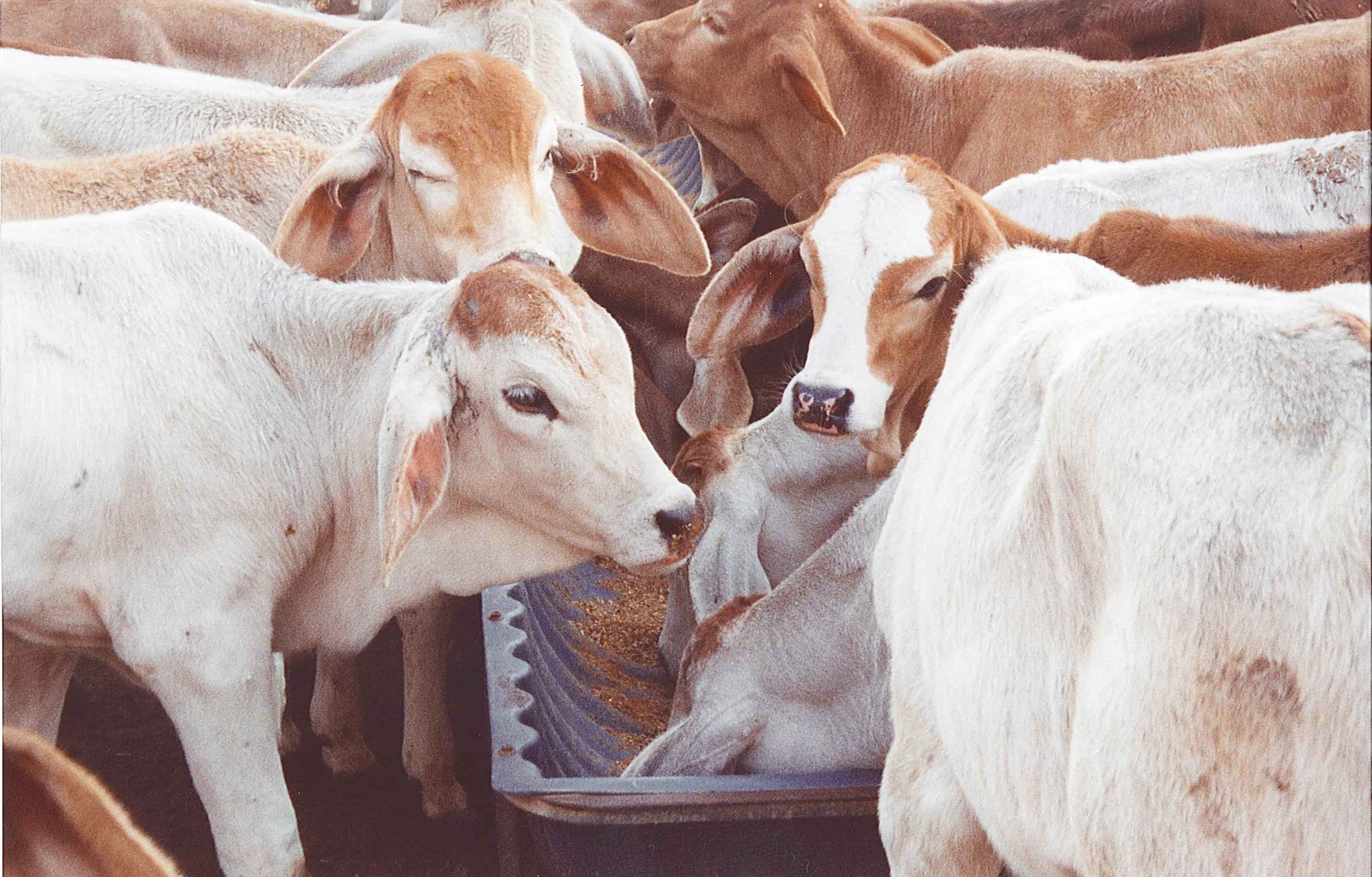
Key points when feeding weaners
Good quality hay is essential
- Weaners should have immediate access to good quality hay in addition to suitable supplementation while they are in the yards.
- Good quality hay has a high proportion of leaf to stem, is green and sweet smelling. Hay containing legume leaf is usually more nutritious and digestible than hay made from grass alone. Hay with too much legume (as in pure lucerne hay) often causes scouring in weaners. Hay should be clean and free of mould.
- Be careful when purchasing hay from areas with widespread declared weeds. Weedy hay will be less nutritious (and a biosecurity risk).
Protein and urea
- Suitable protein sources for weaners include soybean and copra meal. Younger weaners may perform better on copra meal.
- Urea must be thoroughly dissolved into molasses supplements to avoid toxicity. Mechanical mixers should be used to thoroughly mix the urea prior to feeding. Take particular care with granulated urea.
Dry licks and phosphorus
- When feeding dry licks and blocks to weaners over 150 kg, the lick should supply 75g of protein per head per day. If weaners are not eating enough, protein meal can be added to improve palatability of the lick.
- Phosphorus should be included in supplements fed to weaners on phosphorus deficient country, in both the wet season and the dry season.
Rumensin
- Include Rumensin (active ingredient monensin) in weaner rations to achieve an intake of 25mg/head/day. Rumensin may also help control a coccidiosis outbreak. Care should be exercised as over-dosing is quite toxic. Note Rumensin is toxic in small amounts to dogs and horses.
Special consideration for calves under 100kg
- When reading the product label of calf meals/pellets, avoid feeds that include urea for weaners under 100kg. Young calves cannot utilise urea as their rumen is not fully developed.
- Calves of <100kg liveweight must have continual access to concentrate supplements.
Segregation and yard/trough space is important
- Segregation of weaners is important as it will minimise bullying of smaller animals and enable all weaners to have enough access to available feed.
- Adequate yard space (3–4m² per head) and trough space (15–20cm per head) is required to allow weaners enough room to access the available feed and supplement.
Timing/amount of feeding and monitoring intakes
-
- Feeding pellets or protein meals every third day (or twice a week) results in plenty of feed available on the day, and reduces bullying.
- Feed concentrate supplements before putting hay out to ensure the weaners eat the concentrate first.
- Make any changes in the amount or type of feed gradually to prevent digestive upsets.
- Monitor intakes of weaners to ensure adequate intakes of supplement are achieved.
Recommended supplements
The following table is a guide to the type of supplements different size weaners should be fed to achieve target growth rates.
| Pasture quality | Weight of weaners (kg) | Growth target (kg/day) | Recommended feed | Suggested daily intake (kg/hd/day) |
|---|---|---|---|---|
| Good hay | <60 | 0.4 | Milk replacer and high-quality baby calf meal or pellets (24% protein in the ration) including Rumensin®. Energy levels of at least 12 MJ/ME Free access to good quality hay Do not feed molasses | 1–1.5 |
| Good hay | 60–100 | 0.25+ | Calf meal or calf pellet (21% protein in the ration) including Rumensin®. Energy levels of at least 12 MJ/ME Free access at all times to good quality hay | 1–1.5+ |
| Poor pasture DMD1 <50% CP2 <5% | 100–150 | 0.25+ | Protein meals, MP3, MUP4 , weaner pellets or meals, protein/energy mixes5 (18% protein in the ration) | 1–1.5 MUP4 0.5+ protein meal, grain mix |
| 150–200 | 0.2+ | M8U6, M3U7, protein/energy mixes5, protein meal or pellets | 1 M8U6 or M3U7 0.5 protein meal |
|
| Over 200 | 0.1–0.2 | Protein supplements (dry licks, blocks) M8U6 , M3U7 | Provide 75 g protein/hd/day 1.5–2 M8U6, M3U7 |
|
| Marginal pasture DMD1 >50% CP 5–6% | 100–150 | 0.25+ | MUP4 , M8U6 , M3U7 , protein/energy mixes5, protein meal or pellets (18% protein in the ration) | 1 M8U6 or M3U7 or MUP4 0.5 protein meal |
| 150–200 | >0.2 | MUP4 , M8U6 , M3U7, protein/energy mixes5, grain mixes | 1 | |
| Over 200 | >0.2 | M8U6, M3U7 | 1–1.5 | |
| Good pasture DMD >55% CP >8% | 100–150 | 0.25+ | Protein meal or pellets, protein/energy mixes5 (18% protein in the ration) | 0.3 protein meal |
| 150–200 | >0.2 | Phosphorus (P) where required | 5 g P/day | |
| Over 200 | >0.2 | Phosphorus (P) where required | 5 g P/day |
1DMD = dry matter digestibility
2CP = crude protein
3MP = molasses + protein meal
4MUP = a mixture of molasses + 3% urea + 8 to 10% protein meal
5Protein/energy mixes = protein meal + grain + urea (small amounts)
6M8U = a mixture of molasses + 8% urea (it is essential to use a mechanical mixer)
7M3U = a mixture of molasses + 3% urea (it is essential to use a mechanical mixer) + 1% salt + 1% dicalcium phosphate or Kynophos®
Proprietary mixes should be fed according to manufacturers recommendations.
Originally written by Rebecca Gunther and Felicity Hamlyn-Hill formerly Queensland Government.
Reviewed and updated by Bernie English and Megan Munchenberg, Department of Primary Industries.
This document was reviewed as part of the GrazingFutures Project. GrazingFutures is funded by the Queensland Government’s Drought and Climate Adaptation Program (DCAP) that aims to build drought and business resilience for Queensland livestock producers.
A helpful weaner supplementation publication
Meat & Livestock Australia have released a comprehensive publication regarding weaner management, click here to download a copy of Weaner management in northern beef herds.
